The White Mountain That Invited the First True Travelers
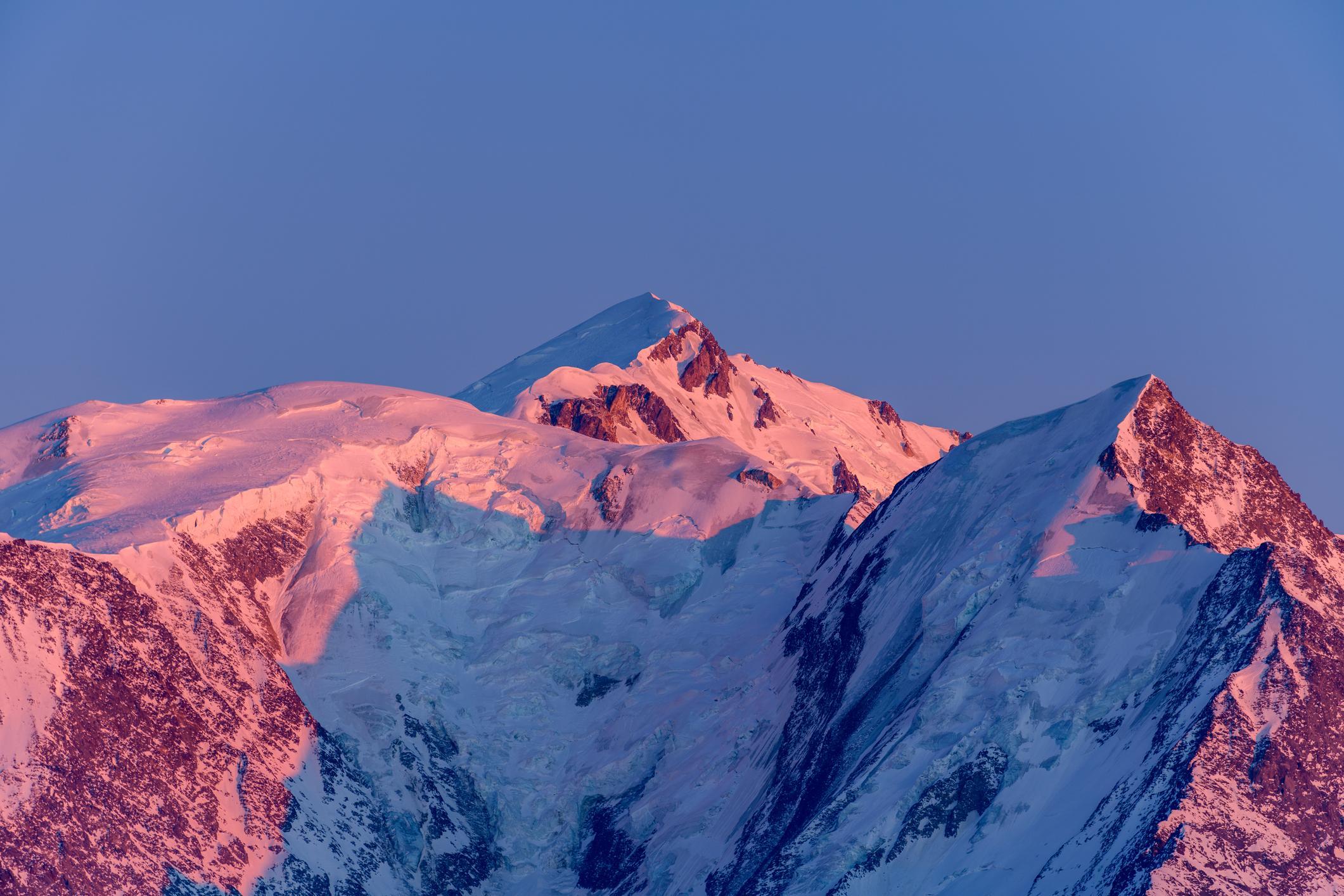
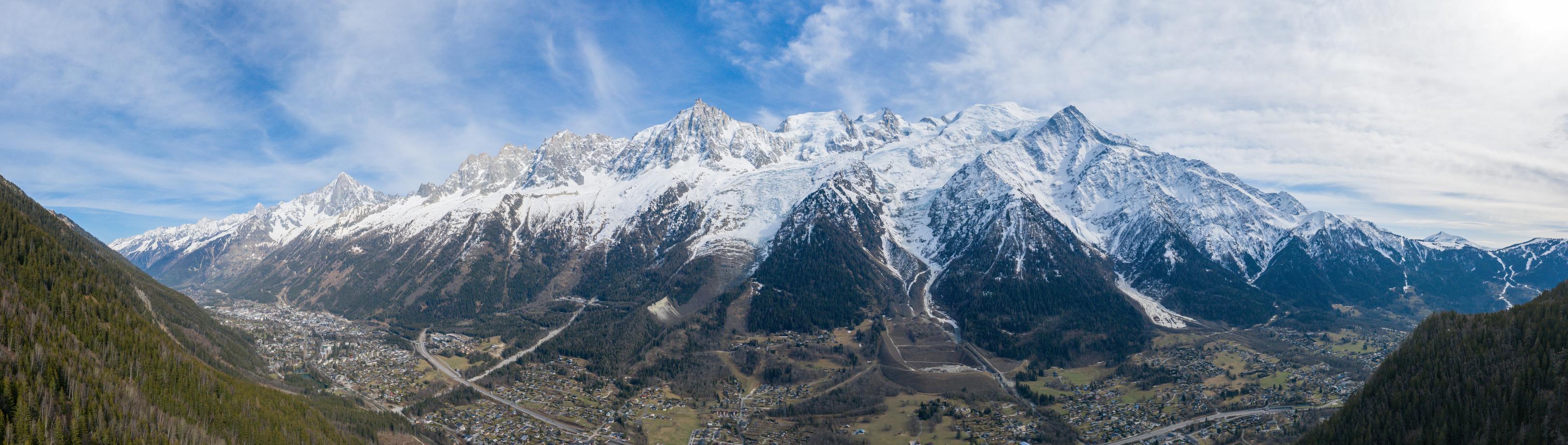
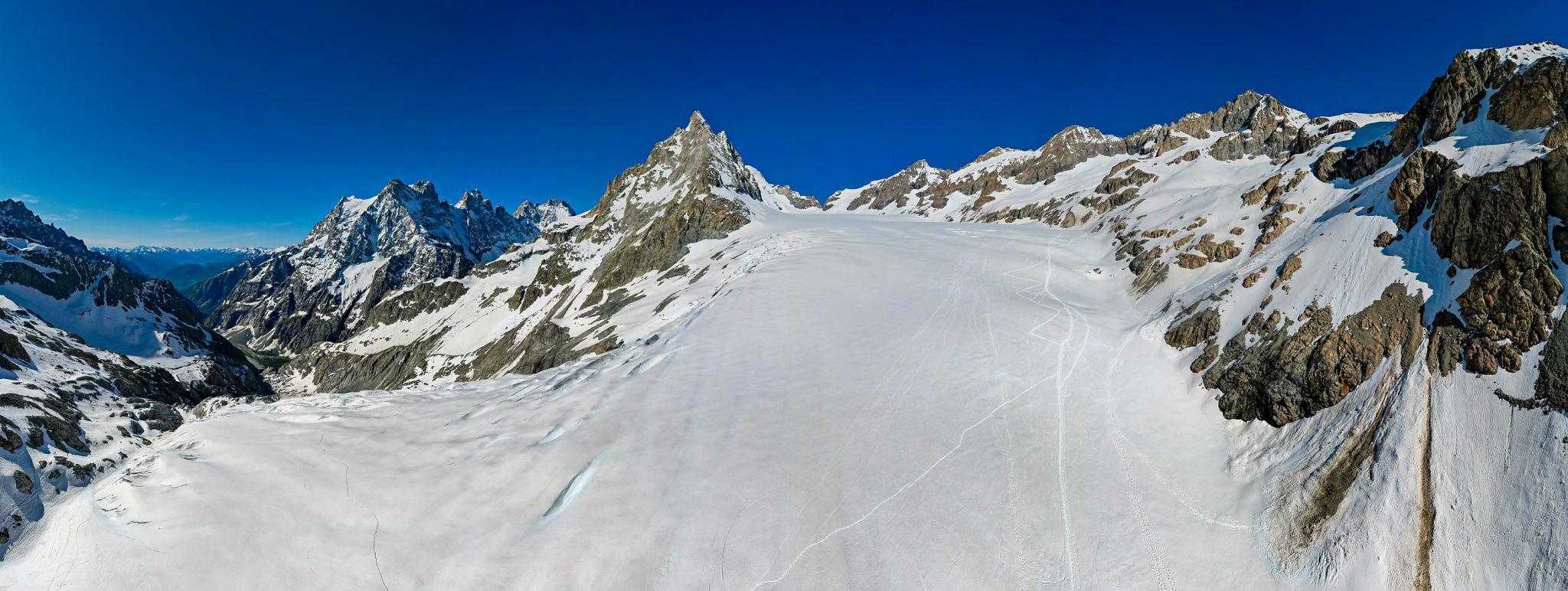
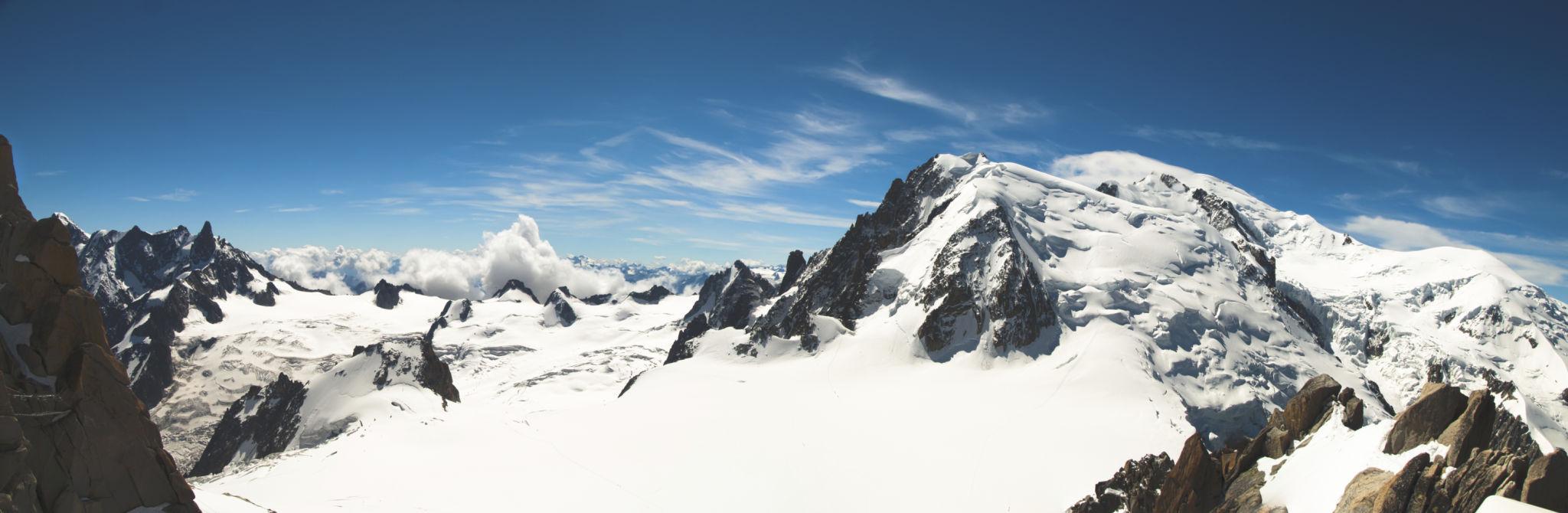
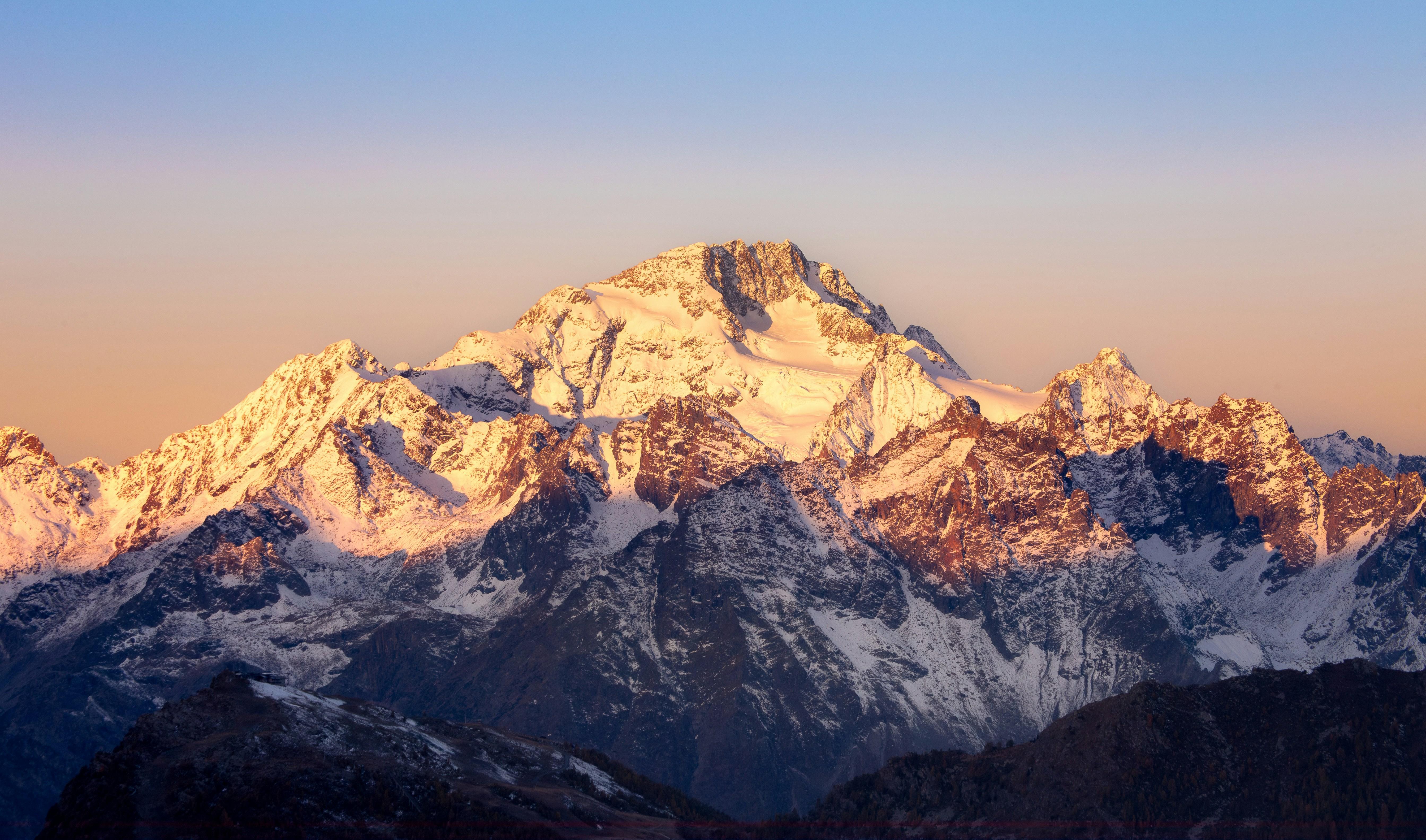
The great white summit of Mont Blanc rising above the Alpine valleys.
The Mountain That People Once Only Observed
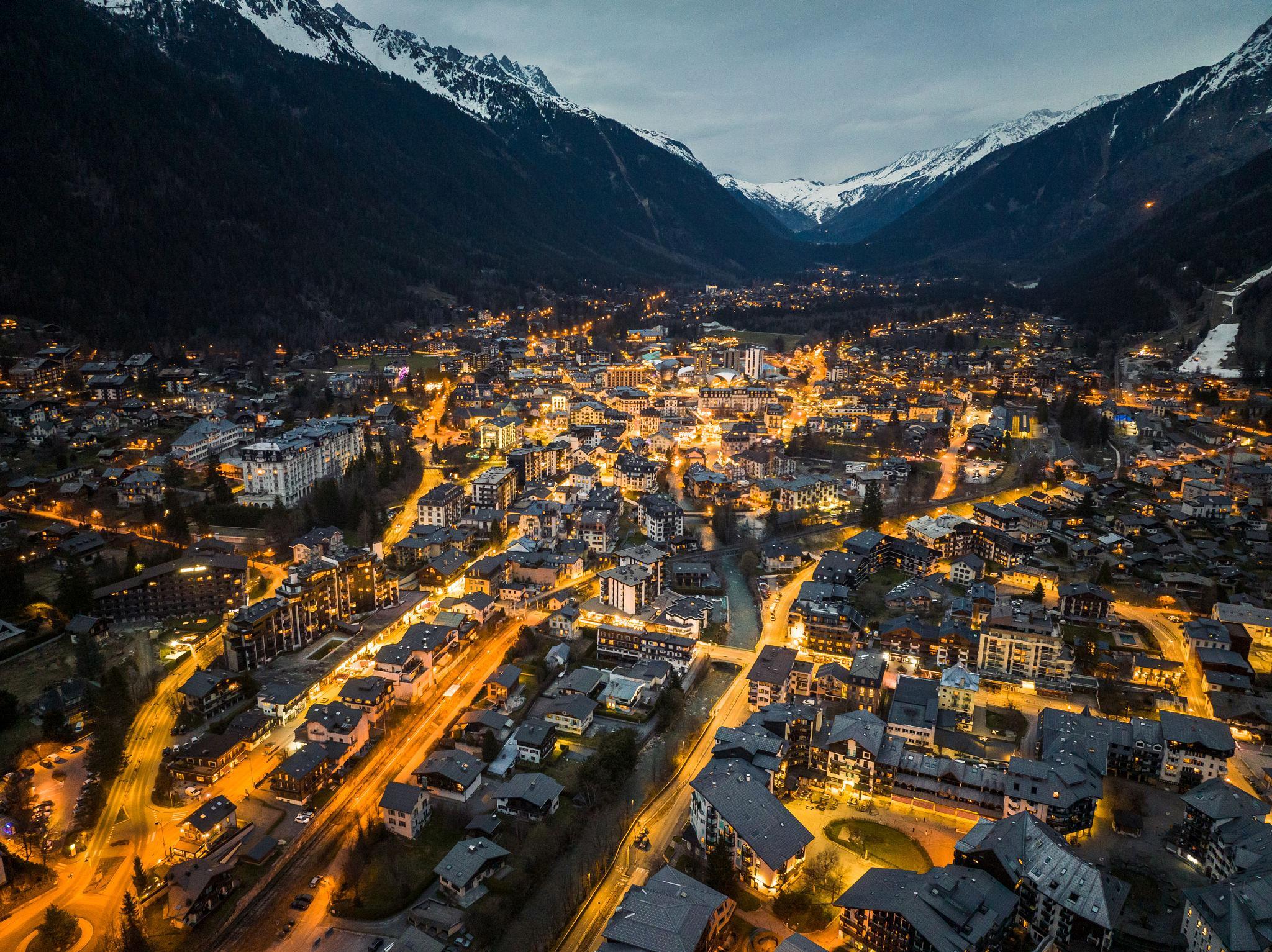
Long before modern tourism and transportation, the highest mountain in the Alps stood quietly above the valleys of what is now France and Italy. Mont Blanc rises to more than 4,800 meters and dominates the region around the town of Chamonix.
For centuries local communities lived in the valleys below, but very few people attempted to approach the summit. The glaciers moved slowly but constantly, avalanches echoed through the mountains, and the upper slopes appeared dangerous and unpredictable.
Many people believed the summit was unreachable. Travelers who passed through the valley usually admired the mountain from a distance. It was something to observe, not something to climb.
During the eighteenth century, however, Europe was changing. Scientists, naturalists, and explorers began traveling through the Alps to study geology, weather, and the natural world. These travelers were motivated by curiosity rather than survival or trade.
One of the places that attracted their attention was the valley of Chamonix, where the great white summit of Mont Blanc dominated the horizon.
The First Curious Visitors
Early visitors did not immediately attempt to climb the mountain. Instead they studied it carefully. Travelers spent time observing the glaciers, sketching the landscape, and discussing possible routes to the summit.
The mountain seemed different every day. Clouds often hid the summit, while sunlight reflected strongly from the snow and ice. From the valley, the glaciers appeared enormous and constantly shifting.
At night travelers gathered in small inns and houses in the valley to discuss whether the summit might actually be reachable. At the time no one could say for certain.
Eventually curiosity led to action. If the mountain could be studied from below, some believed it might also be possible to reach the top.
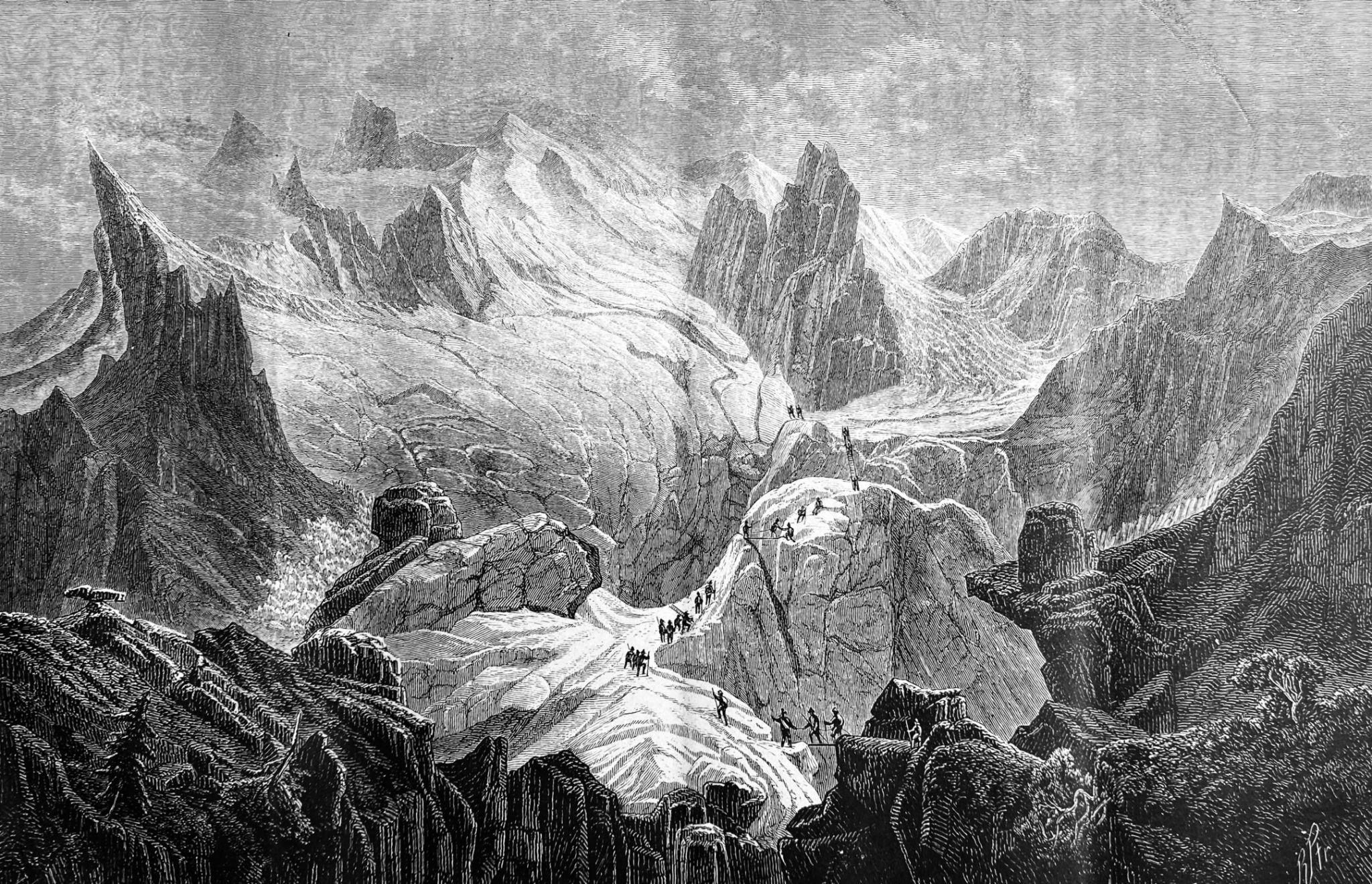
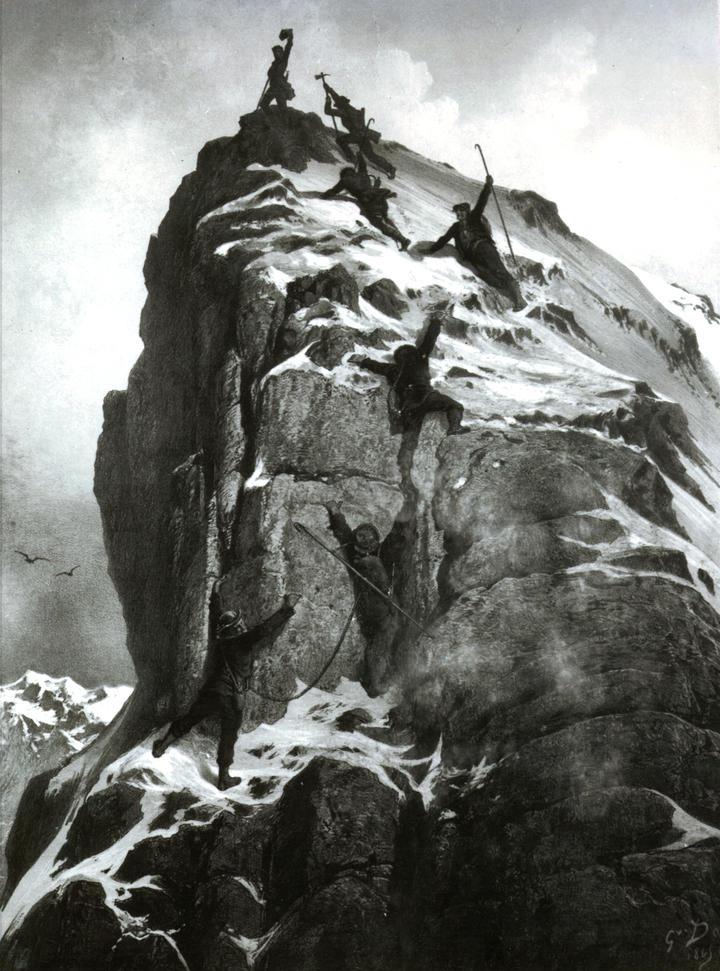
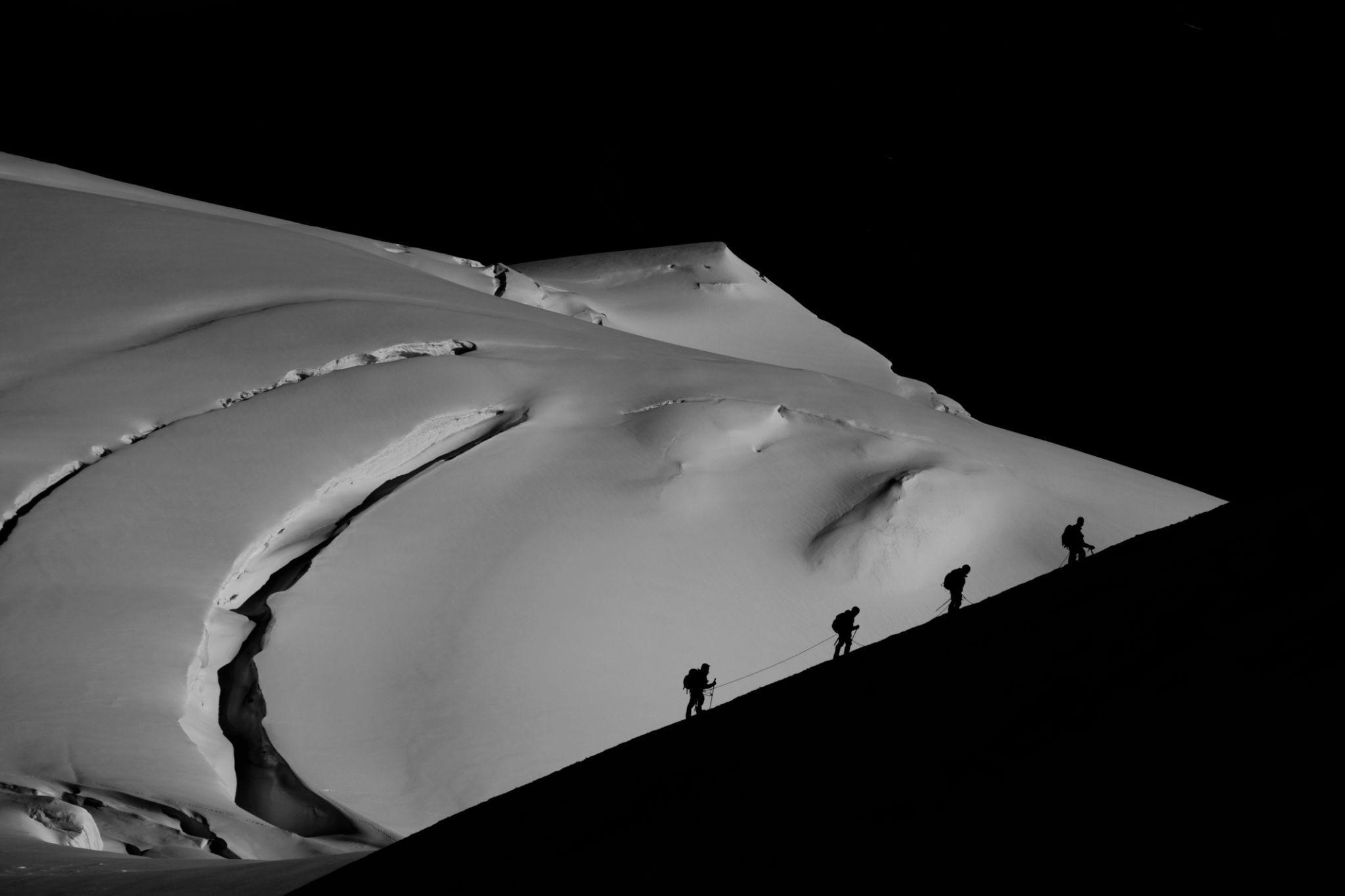
Early explorers crossing Alpine glaciers with very limited equipment.
First Attempts on the Mountain
The first climbing attempts were cautious and experimental. Visitors often hired local hunters, shepherds, and crystal collectors as guides because these residents knew the terrain better than anyone else.
Equipment at that time was very simple. Climbers wore wool clothing, leather shoes, and carried wooden staffs for balance. Ropes were basic and there was little understanding of high-altitude conditions.
Many early attempts ended quickly because of storms, unstable snow, or steep ice. Climbers frequently turned back when the terrain became too dangerous.
Although these attempts did not reach the summit, they gradually improved knowledge of the mountain. Each expedition discovered safer paths and identified dangerous areas of glacier and icefall.
Over time Mont Blanc changed from a distant curiosity into a serious objective for explorers across Europe.
The First Successful Ascent
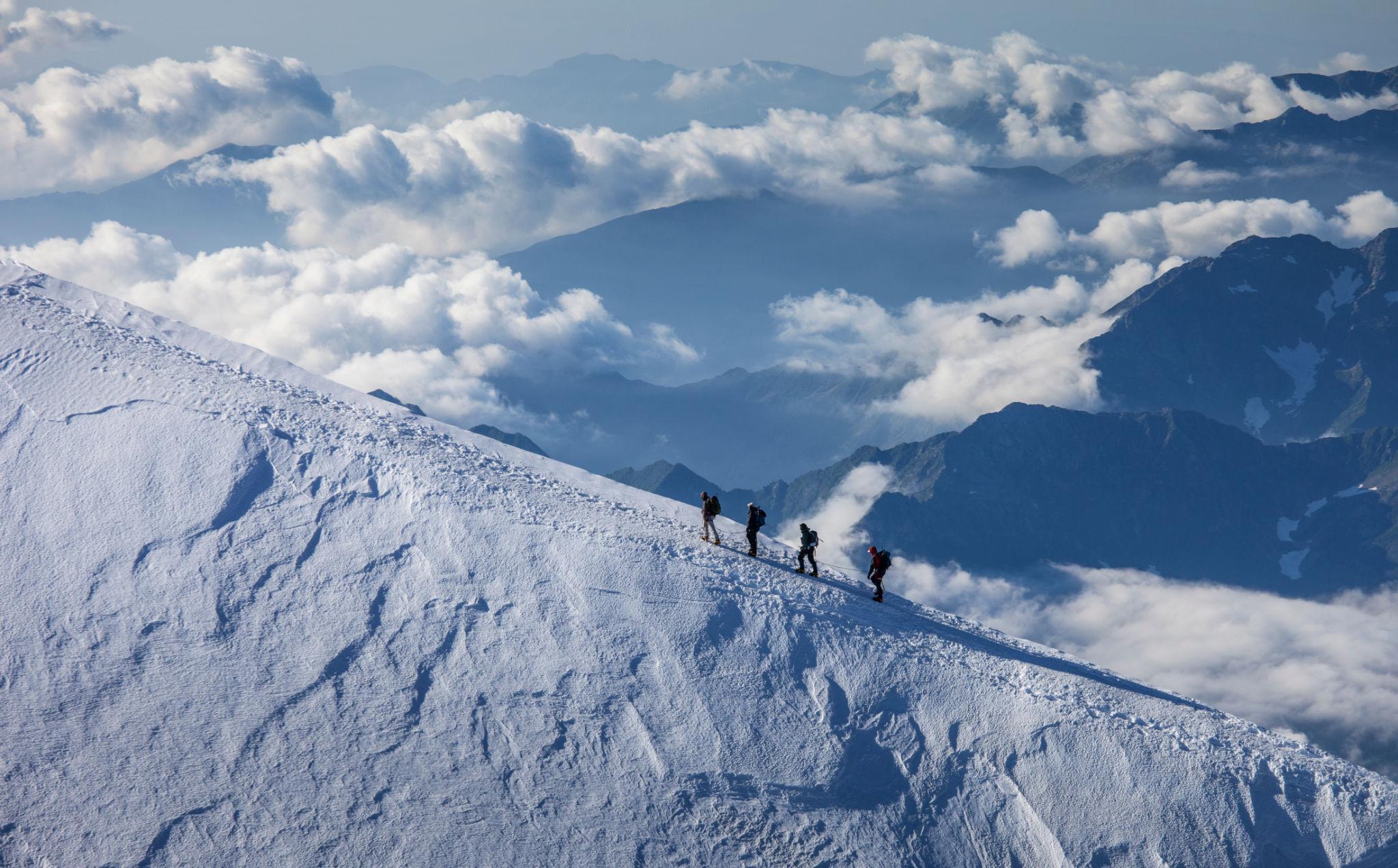
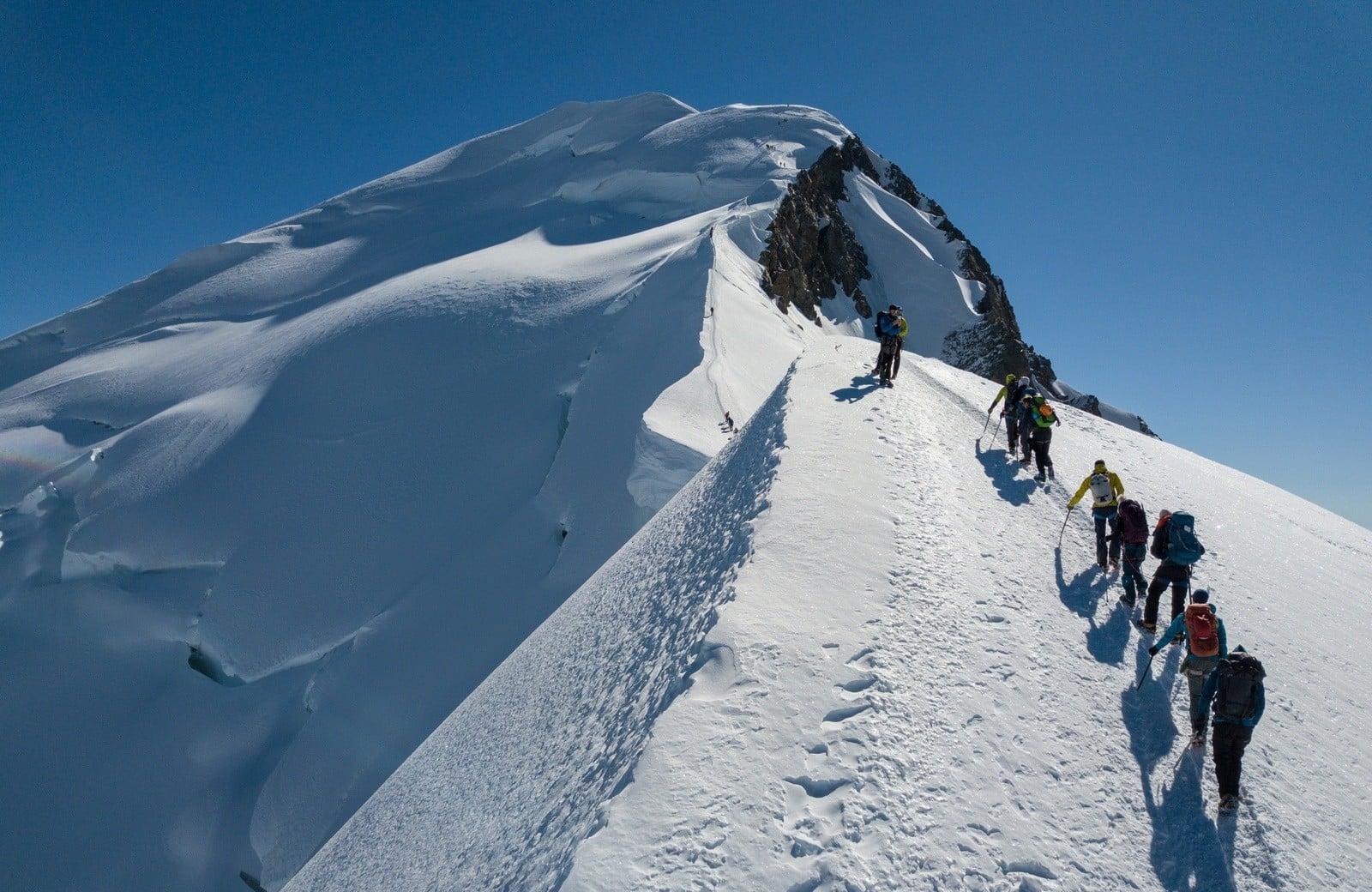
The high snowy ridges leading toward the summit of Mont Blanc.
In 1786 two men finally succeeded in reaching the summit. They were Jacques Balmat, a local mountain guide, and Dr. Michel-Gabriel Paccard, a physician who had studied the mountain carefully for years.
Their climb required patience and careful navigation through glaciers and steep snowfields. At that time there were no established routes and very little understanding of how the mountain behaved.
When they finally reached the summit, they stood alone above the Alps. There were no witnesses and no celebration beyond the two climbers themselves. Their ascent demonstrated that the highest mountain in the Alps could indeed be climbed.
News of the achievement spread across Europe and inspired many more visitors to travel to the valley of Chamonix.
The Beginning of Mountain Tourism
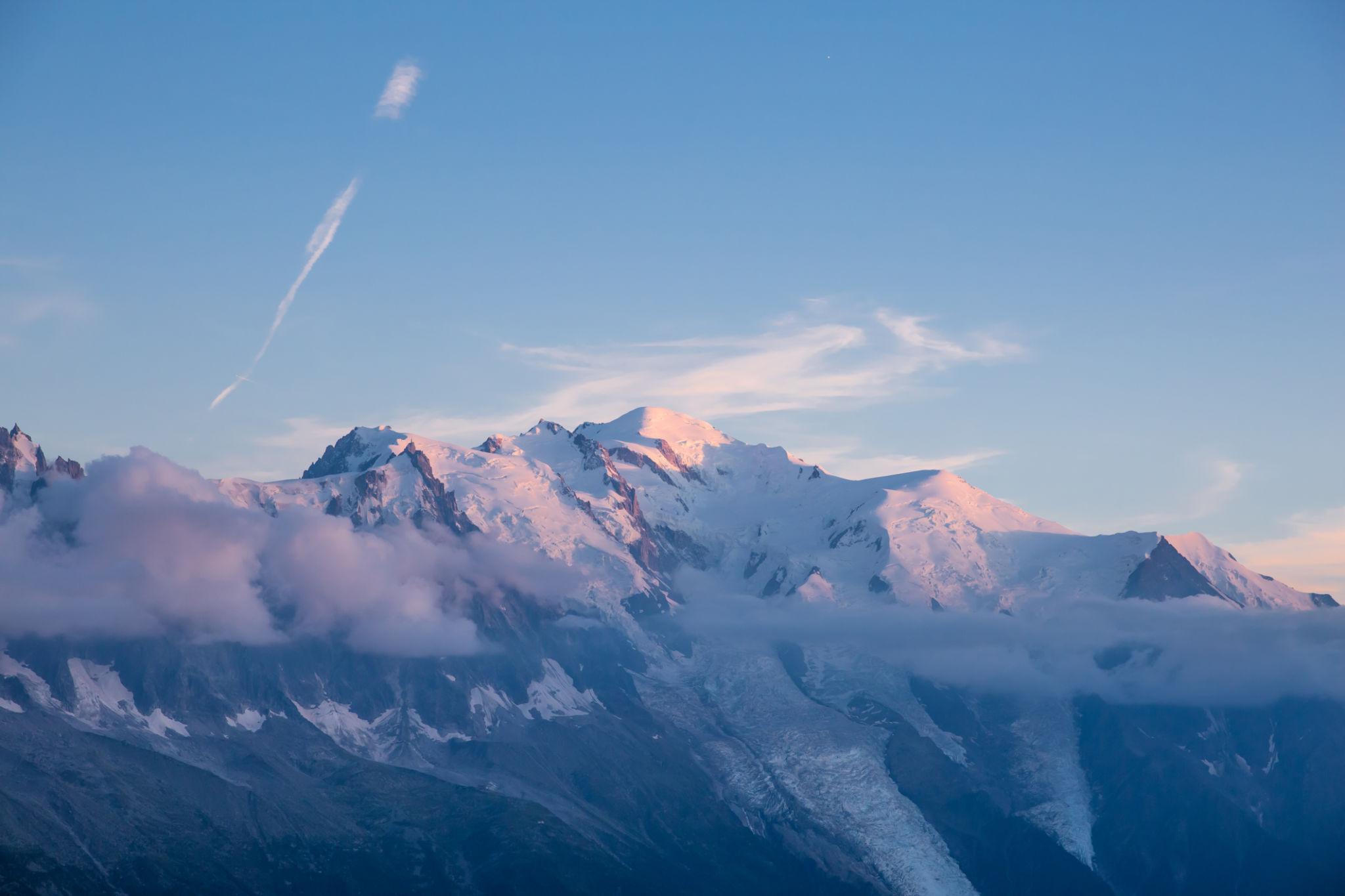
Modern visitors walking paths once explored by the first Alpine travelers.
After the first ascent, the valley of Chamonix began attracting more visitors. Scientists, artists, and travelers came to see the mountain and experience the Alpine landscape for themselves.
Local residents gradually became professional mountain guides, helping visitors travel safely through the glaciers and valleys. Inns and lodges expanded to accommodate the increasing number of travelers.
These developments marked the early beginnings of mountain tourism in Europe.
A Mountain That Still Inspires Travelers
Today Mont Blanc remains one of the most visited mountain regions in the world. Modern transportation, cable cars, and marked hiking trails allow people to experience the Alpine environment more easily than early explorers ever could.
Despite these changes, the mountain itself has remained the same. Its glaciers continue to move slowly across the landscape, and the weather can still change quickly in the high mountains.
Visitors who stand in the Chamonix valley today often experience the same feeling that early travelers described more than two centuries ago. The sight of the white summit rising above the Alps continues to inspire curiosity and exploration.
Mont Blanc represents an important moment in the history of travel. It marks the time when people began journeying into the mountains not only for necessity, but for discovery, knowledge, and personal experience.
Narrated by KarakoramDiaries

![K2 Base Camp Trek: Ultimate Guide k2 Trek 2026 [UPDATED]](https://karakoramdiaries.com/storage/ultimate-guide-to-k2-base-camp-trek-full-document-150x150.png)