K2 Base Camp Trek: Ultimate Guide to the World’s Toughest Trek
Table of contents [Show]
- 1- Understanding the Trek and the Region
- Introduction
- Where Is K2 Base Camp Located?
- Why the K2 Base Camp Trek Is Considered the World’s Toughest
- The Karakoram: A Different Mountain World
- Who Should Consider the K2 Base Camp Trek
- Trek Duration and Overall Commitment
- Access Restrictions and Legal Requirements (Overview)
- What Makes Concordia Unique
- 2- Access, Logistics, and Reaching the Trailhead
- Arrival in Pakistan: The Journey Begins in Islamabad
- Traveling from Islamabad to Skardu
- Skardu: The Last Major Town
- From Skardu to Askole: Entering the Karakoram
- Askole Village: The Final Link to Civilization
- Permit System and Legal Requirements (Detailed Overview)
- Why Professional Logistics Are Non-Negotiable
- Psychological Adjustment: The Real Start of the Trek
- 3 – Complete Trekking Itinerary from Askole to Concordia
- Introduction: Understanding This Section of the Trek
- Day 1: Askole to Jhula
- Day 2: Jhula to Paiju
- Day 3: Rest and Acclimatization Day at Paiju
- Day 4: Paiju to Khoburtse
- Day 5: Khoburtse to Urdukas
- Day 6: Urdukas to Goro II
- Day 7: Goro II to Concordia
- Day 8: Rest and Acclimatization Day at Concordia
- 4 – Concordia to K2 Base Camp and Broad Peak Base Camp
- Introduction: Entering the Highest Arena
- Day 9: Concordia to Broad Peak Base Camp
- Day 10: Broad Peak Base Camp to K2 Base Camp
- What K2 Base Camp Is (and Is Not)
- Day 11: Exploration and Acclimatization at K2 Base Camp
- Optional Side Trip: Gasherbrum Viewpoint
- Day 12: Return from K2 Base Camp to Concordia
- Altitude Reality Above 5,000 Meters
- Emotional Impact of This Section
- 5 – The Return Journey: Concordia Back to Askole
- Introduction: Why the Return Is Often Harder
- Day 13: Concordia to Goro II (Return)
- Day 14: Goro II to Urdukas
- Day 15: Urdukas to Khoburtse
- Day 16: Khoburtse to Paiju
- Day 17: Paiju to Jhula
- Day 18: Jhula to Askole
- Physical Condition at the End of the Trek
- Mental Shift: Leaving the Wilderness
- 6 – Physical Preparation, Fitness, and Altitude Readiness
- Introduction: Why Preparation Determines Success
- Understanding the Physical Demands of the Trek
- Minimum Fitness Level Required
- Recommended Training Before the Trek
- The Importance of Mental Endurance
- Altitude Exposure and Acclimatization Strategy
- Common Altitude-Related Issues
- Hydration and Nutrition at Altitude
- Weight Management and Personal Load
- Recovery and Injury Prevention
- Who Should Reconsider the Trek
- Introduction: Why Gear Is a Safety System, Not a Checklist
- Understanding the Environment
- Clothing Strategy: The Layering System
- Footwear Strategy
- Sleeping System
- Backpack and Load Management
- Trekking Poles
- Sun and UV Protection
- Electronics and Power Management
- Water Management Gear
- Personal Medical Kit
- Items You Do Not Need
- Renting vs Bringing Equipment
- Psychological Impact of Proper Gear
- Final Equipment Philosophy
- 9 – Food, Water, Hygiene, and Daily Life on the Baltoro
- Introduction: Living Without Infrastructure
- Camp Life: Structure and Routine
- Food on the K2 Base Camp Trek
- Hydration and Water Management
- Hygiene Realities in a Glacial Environment
- Waste Management and Environmental Responsibility
- Managing Health and Energy Daily
- Mental Adjustment to Isolation
- Weather and Daily Decision-Making
- 10 – Weather, Objective Dangers, and Safety Management
- Introduction: Why Risk Is Inherent, Not Accidental
- Karakoram Weather: A Class of Its Own
- Best Season and Remaining Risks
- Objective Dangers Along the Route
- Wind: The Silent Threat
- Altitude-Related Medical Emergencies
- Evacuation Reality in the Karakoram
- Role of Guides and Leadership
- Decision-Making Under Pressure
- Psychological Stress and Risk Perception
- 9 – Cost, Operators, Ethics, and Final Professional Assessment
- Introduction: Understanding the True Commitment
- Cost of the K2 Base Camp Trek
- Why Choosing the Right Operator Is Critical
- Ethical Responsibility Toward Local Communities
- Environmental Responsibility in the Karakoram
- Who Should Attempt the K2 Base Camp Trek
- Who Should Not Attempt This Trek
- What Makes the K2 Base Camp Trek Different From All Others
- Final Professional Assessment
1- Understanding the Trek and the Region
4
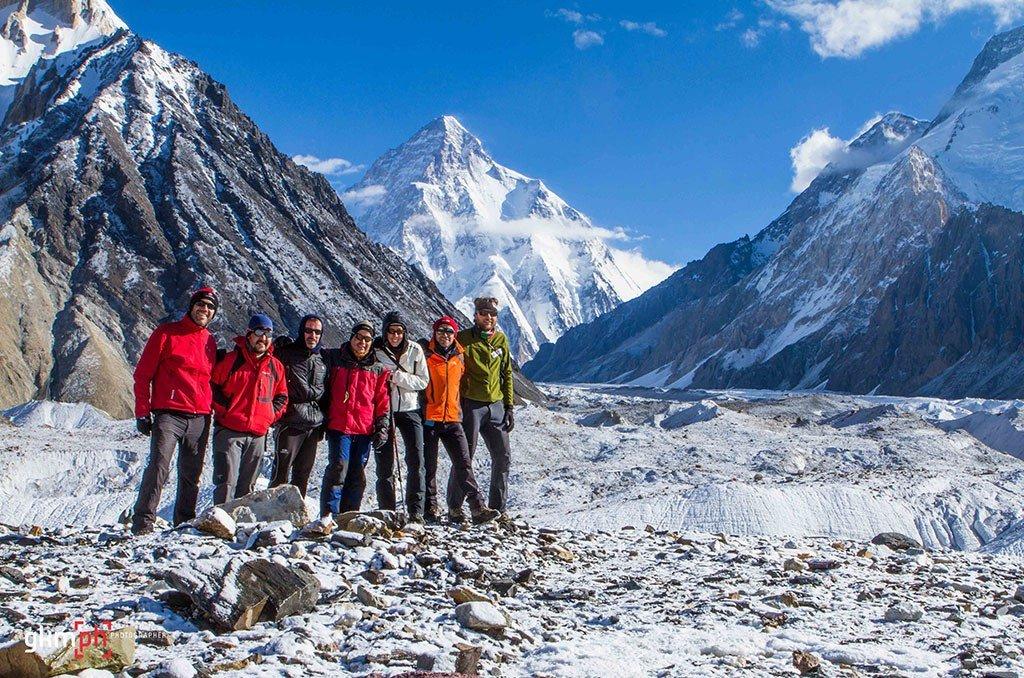
K2 (8,611 m) seen from the upper Baltoro Glacier near Concordia, the meeting point of the world’s greatest mountain giants.
Introduction
The K2 Base Camp Trek is widely regarded as the most demanding long trekking route on Earth. Unlike Everest Base Camp, which benefits from villages, lodges, and helicopter access, the K2 Base Camp trek leads through one of the most remote glacial wildernesses in the world, where there are no permanent settlements, no road access, and no possibility of rescue without significant delay.
Located in the Karakoram Range of northern Pakistan, this trek takes travelers deep into the heart of the Baltoro Glacier , culminating at Concordia, often called the throne room of the mountain gods, where four 8,000-meter peaks stand in a single panorama.
This guide presents the K2 Base Camp trek as it truly is: physically demanding, logistically complex, and mentally testing, yet unmatched in scale and reward.
C
Chogori Adventure
chogoriadventure.com
Sponsored
K2 Base Camp Trek 2026 — Explore Pakistan’s Ultimate Mountain Adventure
Join expert-guided K2 Base Camp trekking tours through the breathtaking Karakoram Range. Small groups, licensed local guides, full logistics, and unforgettable views of the world’s most iconic peaks.
Trusted Local Operator • Baltistan, Pakistan
Where Is K2 Base Camp Located?
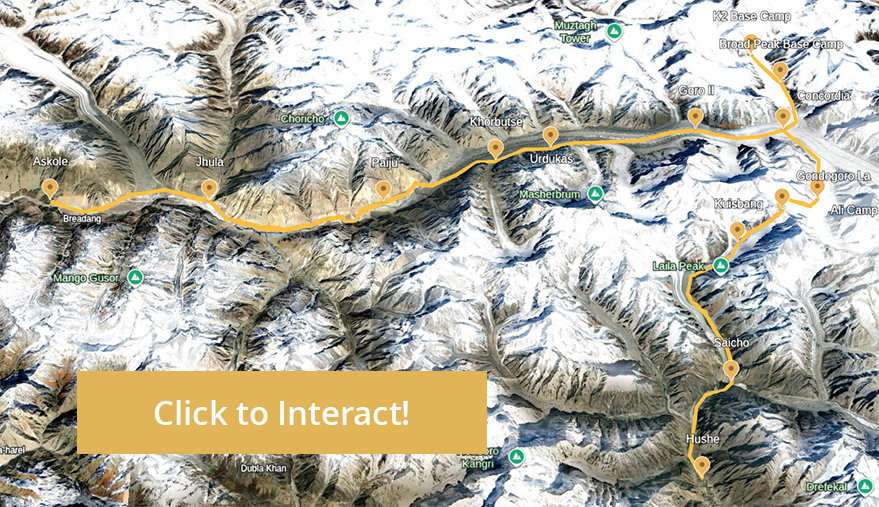
K2 Base Camp lies at the upper end of the Baltoro Glacier in Gilgit-Baltistan, Pakistan, near the Pakistan–China border.
K2 Base Camp is located in Gilgit-Baltistan , in the extreme north of Pakistan, close to the borders with China and India. The base camp itself sits at an elevation of approximately 5,150 meters, at the foot of K2’s north face.
The trek passes entirely through glaciated terrain once beyond the lower valleys, meaning trekkers walk for days on ice, rock, and moraine rather than soil or forest paths.
Why the K2 Base Camp Trek Is Considered the World’s Toughest
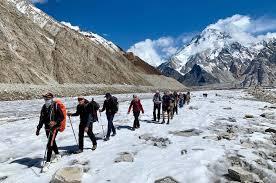
Trekkers crossing the Baltoro Glacier must navigate unstable moraine, ice, and long daily distances without villages or shelters.
(Image credit: (chogori)
(Image credit: (chogori)
The K2 Base Camp trek earns its reputation due to a combination of factors, not altitude alone. The physical difficulty comes from prolonged glacier travel, heavy packs, and repeated ascents and descents over uneven terrain.
Several elements distinguish it from other famous treks:
- There are no teahouses or lodges anywhere on the route.
- All food, tents, fuel, and equipment must be carried by porters from the trailhead.
- Evacuation is extremely difficult due to weather, terrain, and distance.
- Daily walking distances are long, often on unstable ground.
The trek is not technically difficult in a climbing sense, but it is relentless.
The Karakoram: A Different Mountain World
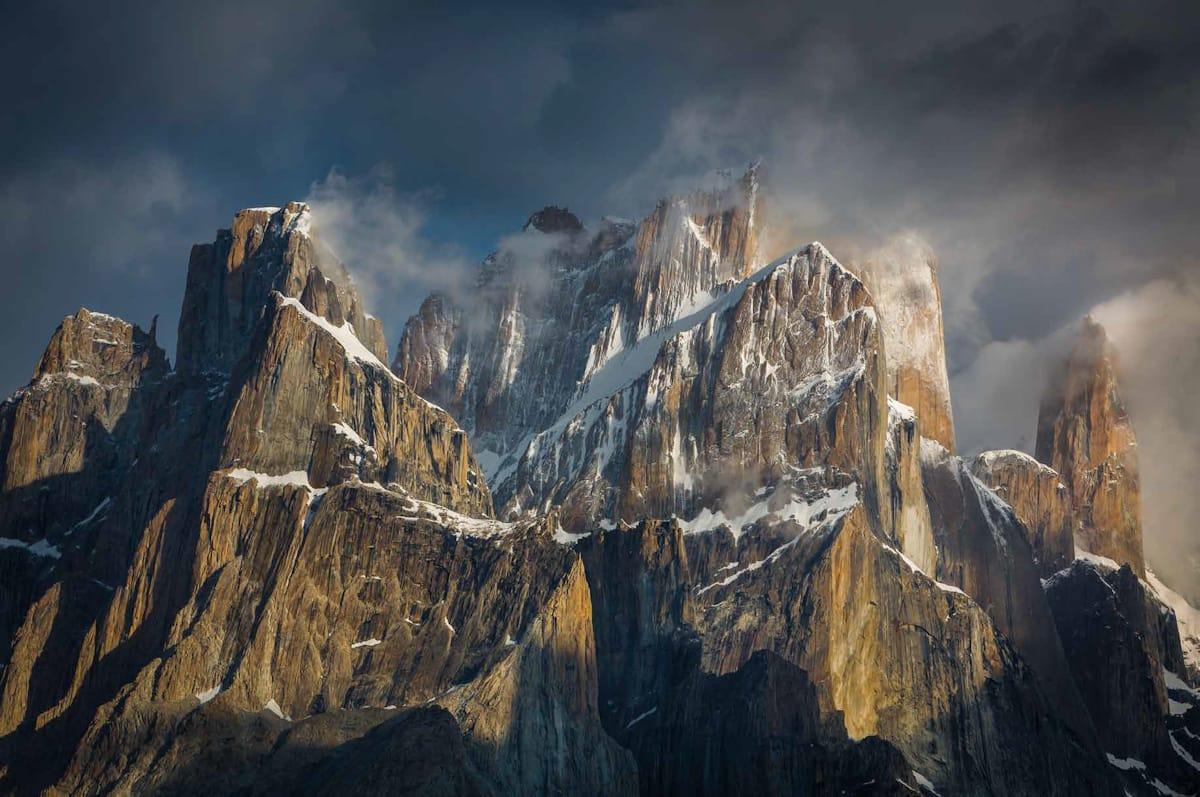
The Karakoram Range is steeper, colder, and more heavily glaciated than the Himalayas.
The Karakoram Range differs significantly from the Himalayas. Peaks are steeper, glaciers are larger, and weather patterns are harsher and less predictable. The Karakoram contains the highest concentration of 7,000- and 8,000-meter peaks in the world, including K2 , Broad Peak , and the Gasherbrum Massif .
This environment demands respect. Even experienced Himalayan trekkers often find the Karakoram more exhausting due to terrain rather than altitude.
Who Should Consider the K2 Base Camp Trek
The K2 Base Camp trek is not suitable for casual hikers or first-time trekkers. It is best suited for individuals who already understand long-duration trekking in remote regions.
This trek is appropriate for:
- Experienced trekkers with prior high-altitude exposure
- Individuals comfortable with camping for multiple weeks
- Travelers prepared for limited comfort and isolation
- Those seeking wilderness rather than convenience
It is not recommended for:
- Beginners
- Travelers with limited time flexibility
- Those expecting lodge-based trekking
Trek Duration and Overall Commitment
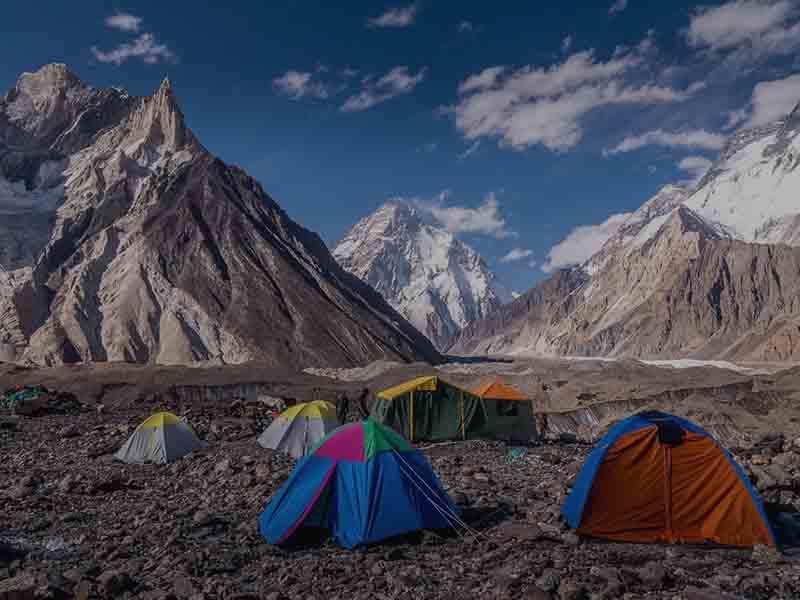
The K2 Base Camp trek typically lasts three weeks from arrival to return, including travel and acclimatization.
From arrival in Pakistan to return, the K2 Base Camp trek requires approximately 21–24 days. The actual walking portion of the trek usually takes 14 to 16 days, depending on weather and acclimatization days.
This time commitment includes:
- Road travel to and from the trailhead
- Acclimatization days at higher camps
- Contingency days for weather delays
Access Restrictions and Legal Requirements (Overview)
Unlike many trekking routes worldwide, the K2 Base Camp trek is regulated. Independent trekking is generally not permitted for foreign travelers.
Key points at this stage:
- A licensed Pakistani tour operator is required
- Trekking permits must be issued in advance
- Registered guides and porters are mandatory
These requirements exist due to the remoteness and security protocols of the region.
What Makes Concordia Unique
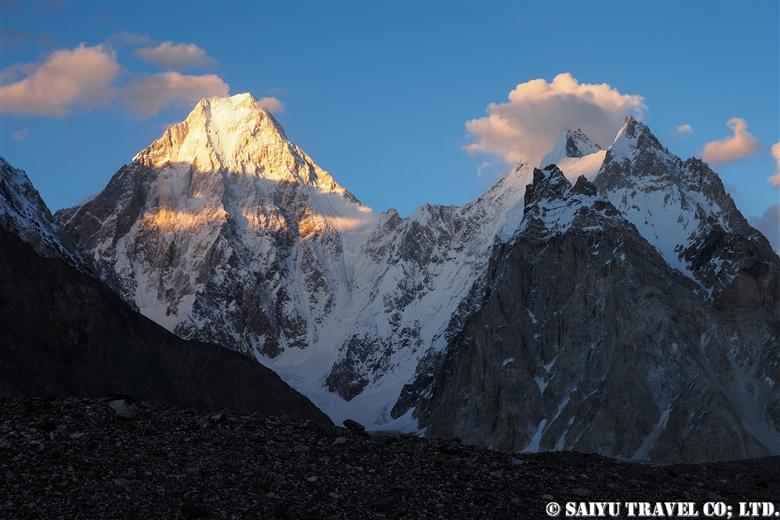
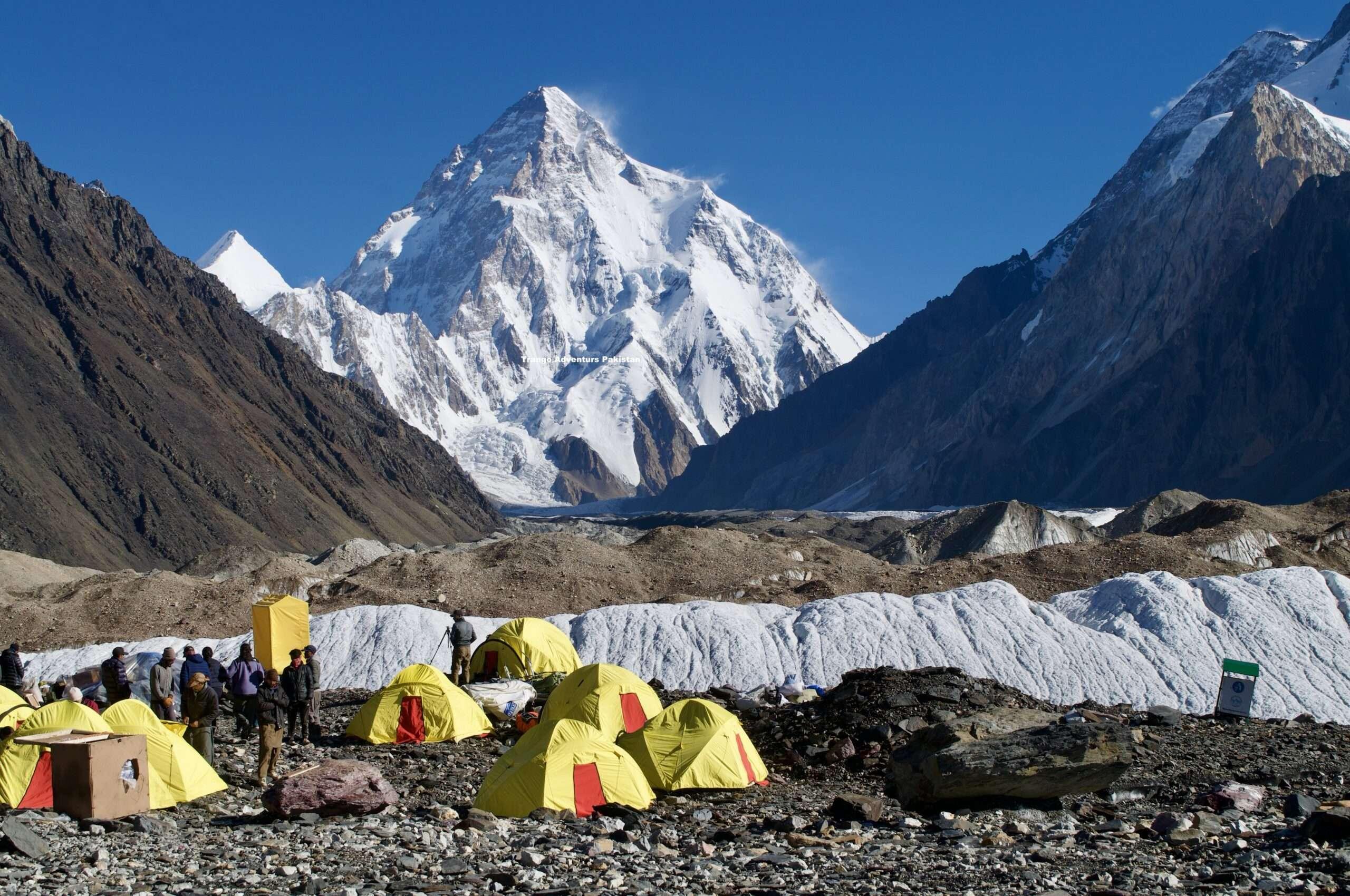
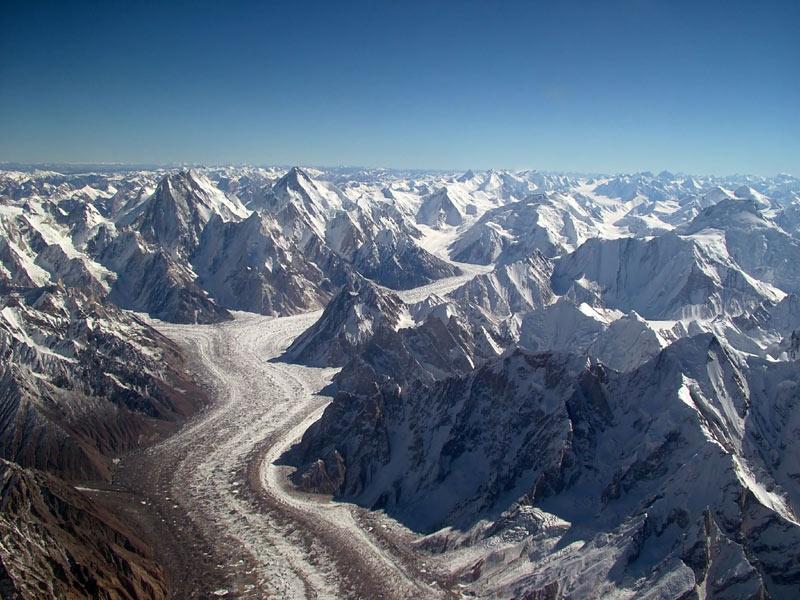
Concordia is one of the few places on Earth where multiple 8,000-meter peaks are visible at once.
(Image credit: Wikimedia Commons)
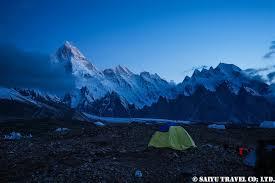
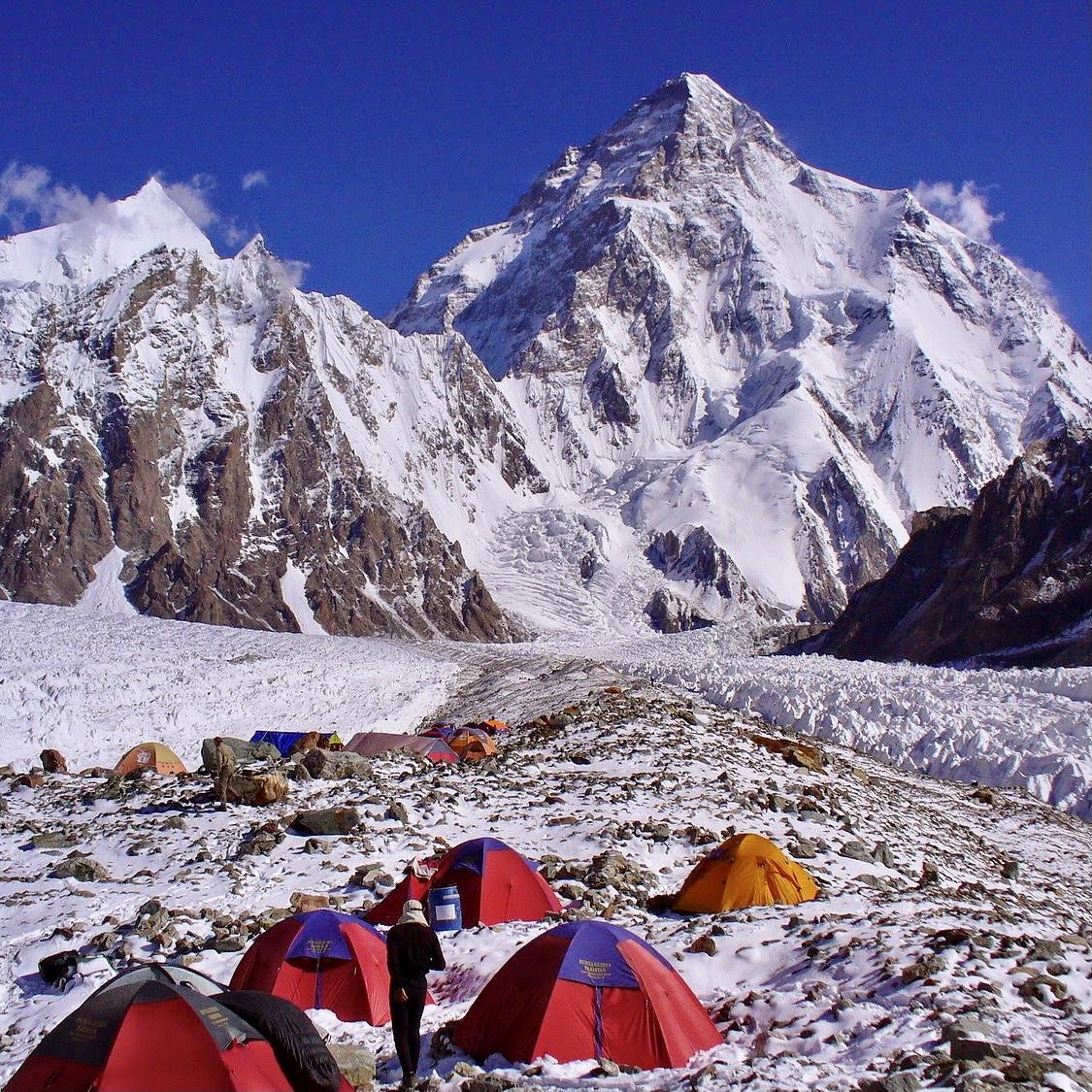
Concordia is the emotional and visual climax of the trek. From this single point, trekkers can see K2, Broad Peak, Gasherbrum I, and Gasherbrum II rising from the surrounding glaciers.
There are very few locations on Earth that offer such concentration of extreme mountain giants without technical climbing.
2- Access, Logistics, and Reaching the Trailhead
4
Reaching the Karakoram requires multiple stages of travel, beginning in Pakistan’s capital and ending at the last road-accessible village.
Arrival in Pakistan: The Journey Begins in Islamabad
All international travelers undertaking the K2 Base Camp trek begin their journey in Islamabad , Pakistan’s capital and the primary logistical hub for northern expeditions. Islamabad is where permits are finalized, team briefings are conducted, and last-minute supplies are checked.
Unlike trekking destinations with direct access to trailheads, the Karakoram requires patience and flexibility from the very first day. Weather, infrastructure, and administrative procedures all influence timelines.
Most trekkers should plan to spend at least two to three nights in Islamabad before attempting to move north.
Traveling from Islamabad to Skardu
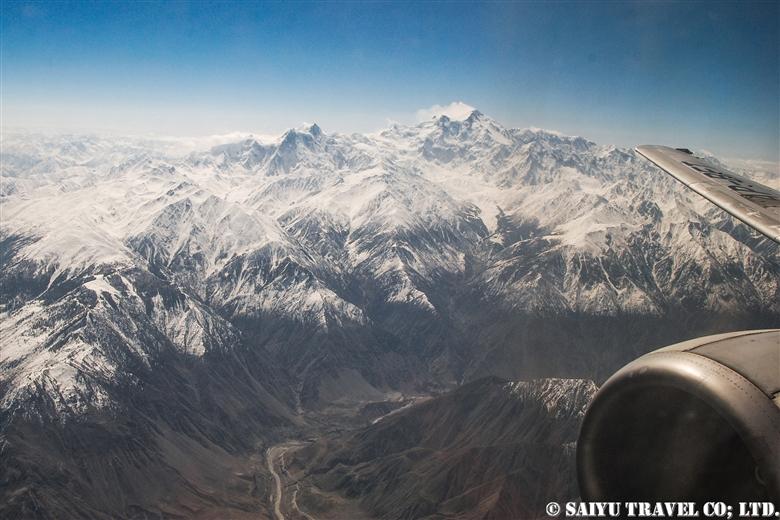
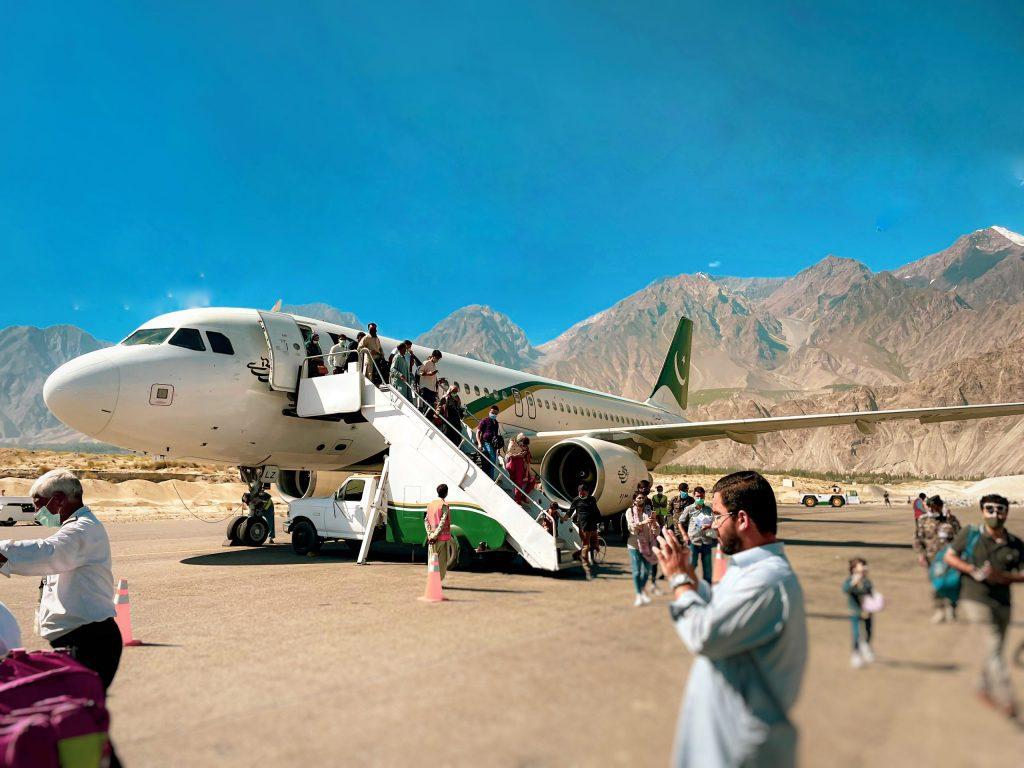
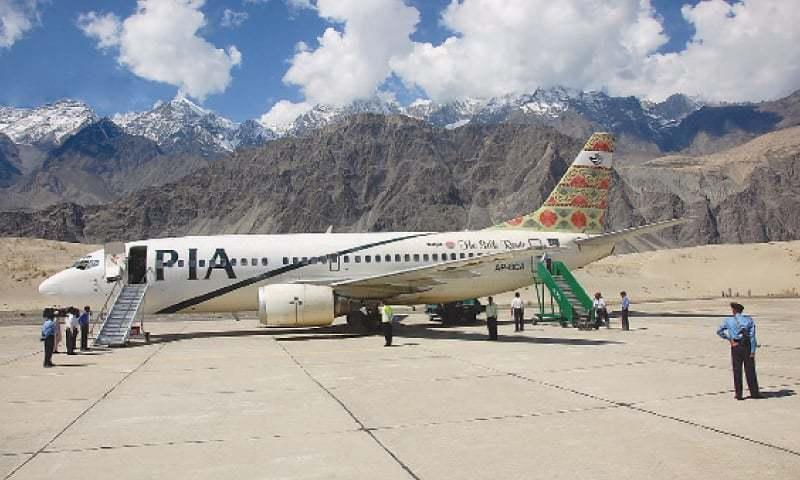
Flights to Skardu offer spectacular views but are highly weather-dependent and frequently delayed or canceled.
By Air: Fast but Unreliable
The preferred route to Skardu is by domestic flight from Islamabad. The flight takes approximately one hour and, on clear days, provides extraordinary views of Nanga Parbat and the western Himalaya.
However, flights to Skardu are notoriously unreliable. Weather conditions in the mountains often lead to last-minute cancellations, sometimes for several consecutive days. Trekkers must mentally prepare for delays and should never schedule tight international connections after the trek.
By Road: Slow but Certain
When flights are canceled, travel continues by road. The overland journey from Islamabad to Skardu takes 18 to 22 hours, usually split over two days with an overnight stop.
While exhausting, road travel ensures forward progress and is often the only option during unstable weather periods.
Skardu: The Last Major Town
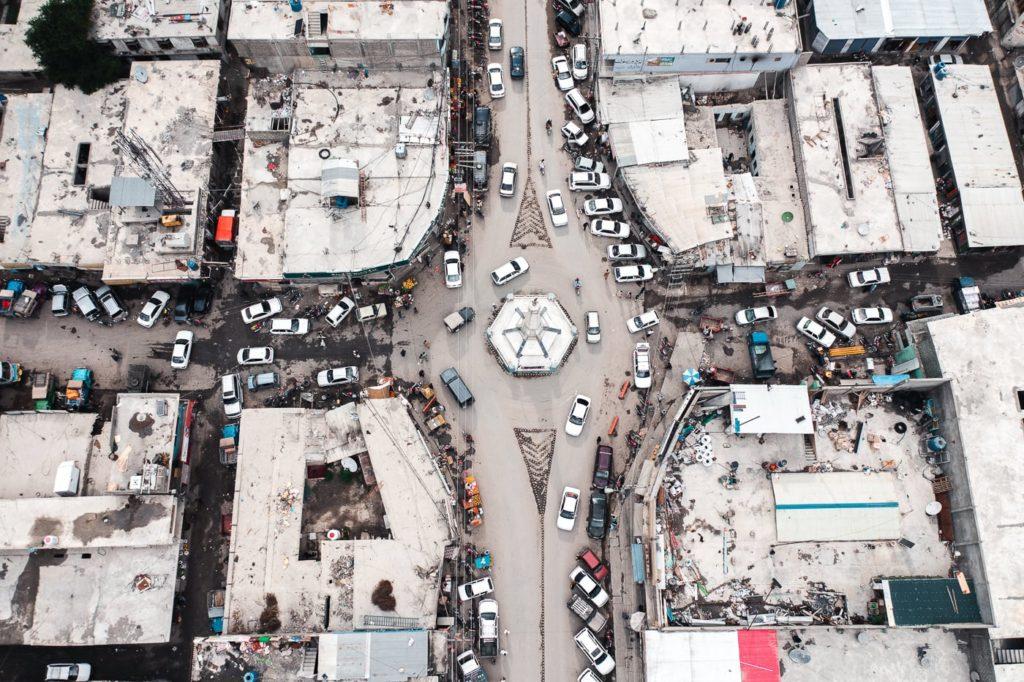
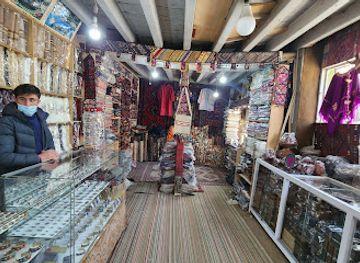
Skardu is the final urban center before entering the remote Karakoram wilderness.
Skardu is the main administrative and supply center for Baltistan. Once beyond Skardu, there are no proper markets, pharmacies, or equipment shops. Everything required for the trek must be organized here.
In Skardu, trekkers typically:
- Finalize trekking permits and paperwork
- Meet the full trekking team
- Organize porters and loads
- Purchase fresh food and fuel
Skardu is also where trekkers begin to sense the scale of isolation that lies ahead.
From Skardu to Askole: Entering the Karakoram
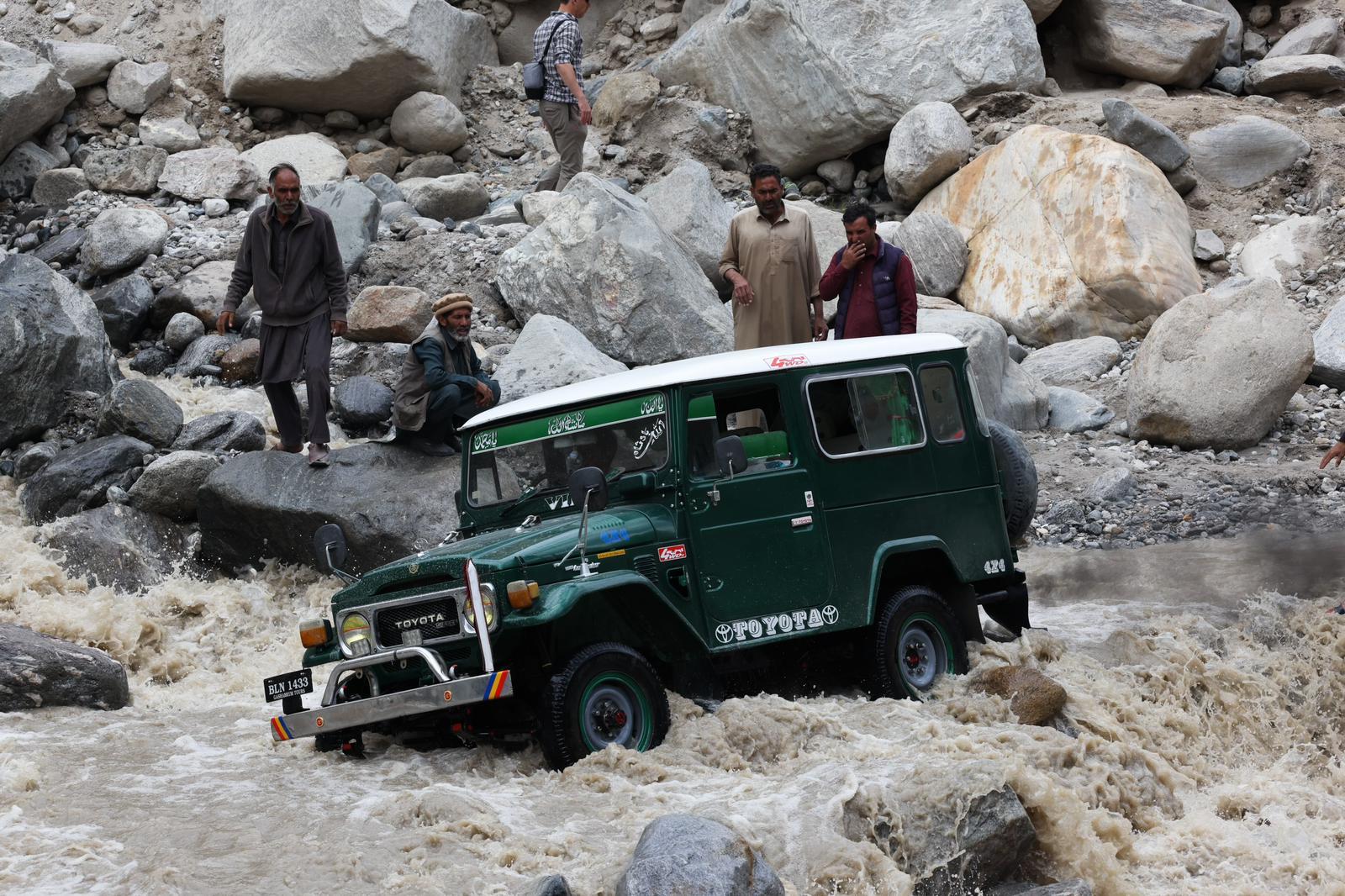
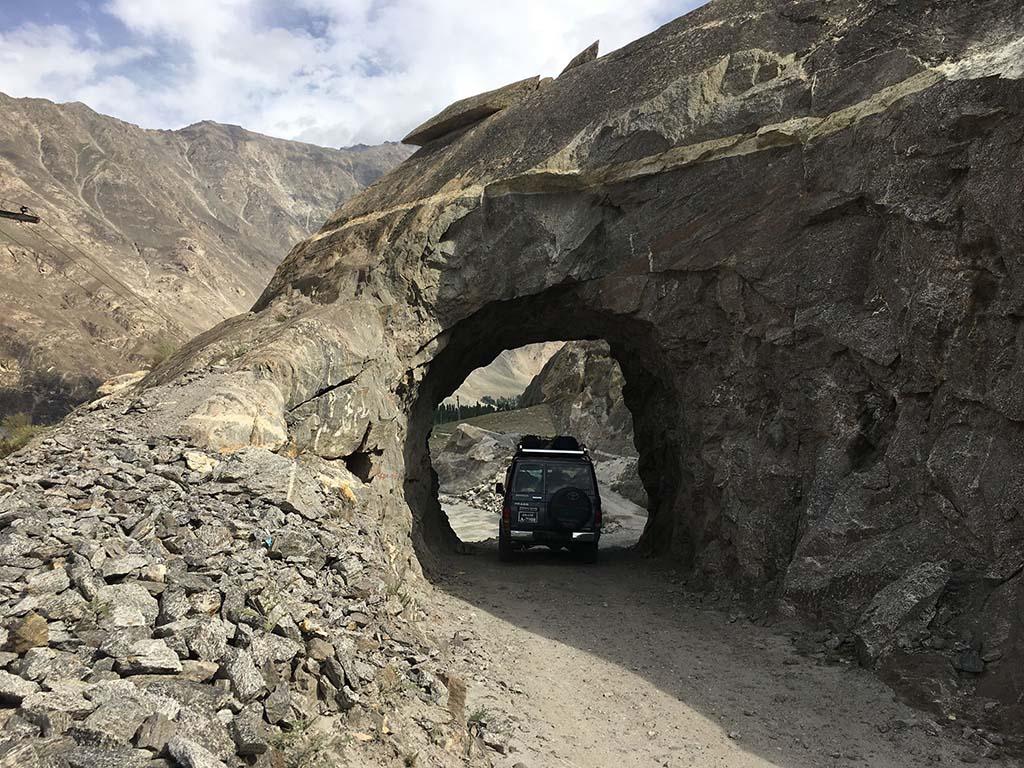
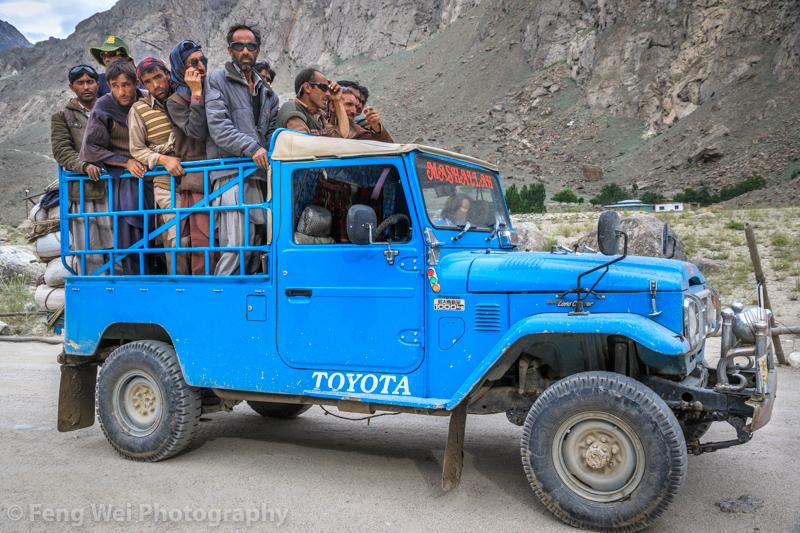
The jeep road to Askole marks the transition from civilization to wilderness.
From Skardu, the journey continues by 4x4 jeep into the Shigar Valley, following narrow roads carved into cliffs and riverbanks. This drive takes 6 to 8 hours, depending on road conditions.
Askole is the last permanently inhabited village on the route. It sits at approximately 3,000 meters and serves as the official starting point of the K2 Base Camp trek.
Once leaving Askole, there are no villages, shops, or shelters until the trek returns.
Askole Village: The Final Link to Civilization
Askole is the final village before entering the Baltoro Glacier system.
(Image credit: Wikimedia Commons)
Askole is a small mountain settlement where porters join the expedition in large numbers. Here, loads are weighed, distributed, and assigned. This process can take several hours and often involves negotiation and coordination.
Askole is also where trekkers must mentally adjust to the reality that everything ahead must be carried in and everything brought back out.
Permit System and Legal Requirements (Detailed Overview)
Trekking permits are mandatory and strictly checked at multiple points along the route.
(Image credit: Alamy)
The K2 Base Camp trek lies within a restricted zone, and foreign trekkers must comply with Pakistani regulations.
Key requirements include:
- A registered Pakistani tour operator must sponsor the trek.
- A Trekking Permit for the Central Karakoram National Park is required.
- Official documentation is checked at multiple security posts along the route.
Independent trekking is generally not permitted for foreigners due to security and logistical reasons.
Why Professional Logistics Are Non-Negotiable
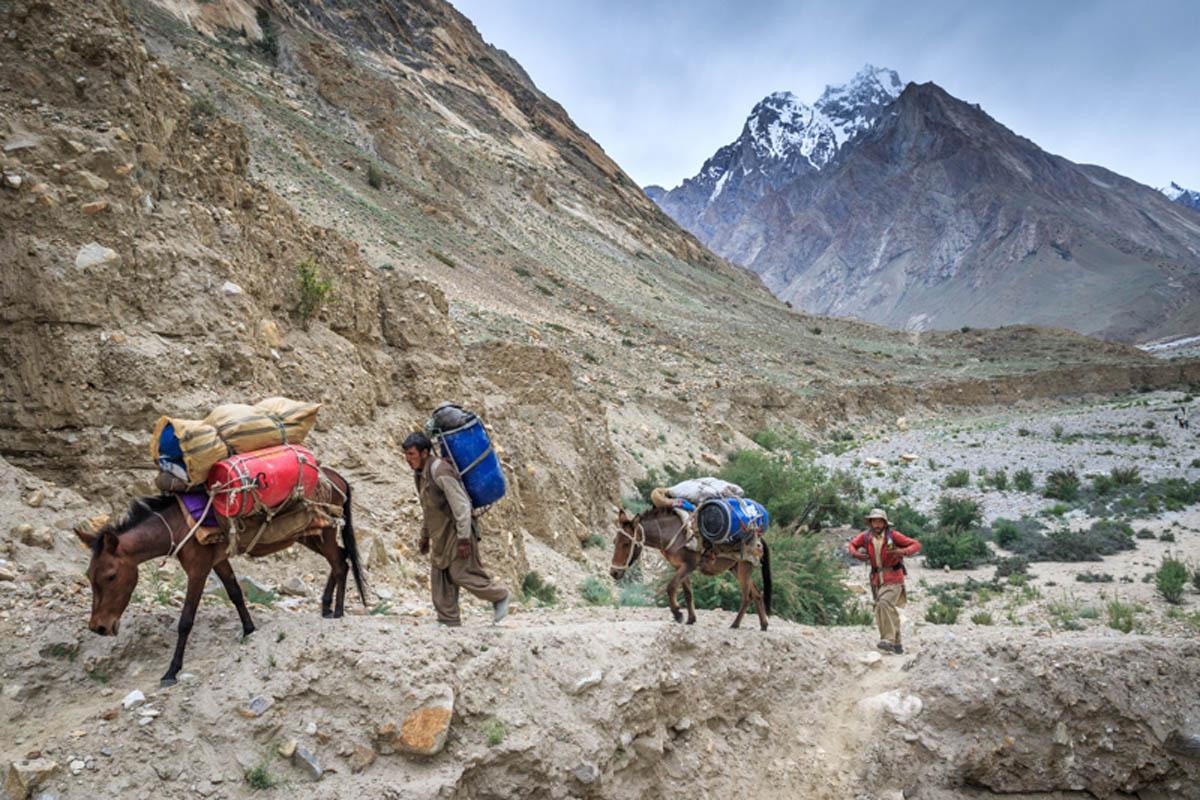
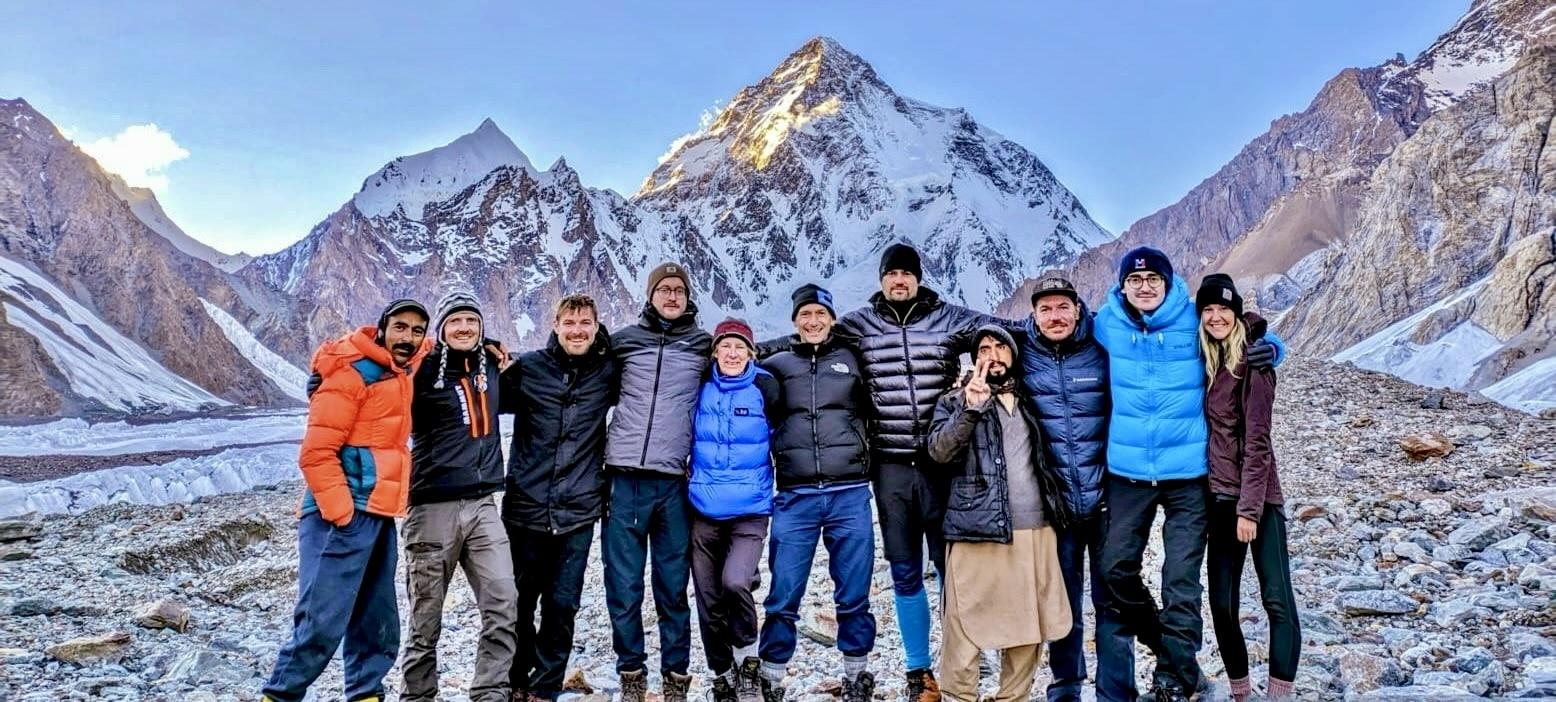
Porters, cooks, and guides are essential for transporting supplies through the glacier system.
Unlike lodge-based treks, the K2 Base Camp trek depends entirely on a mobile support system. Food, tents, cooking equipment, fuel, and emergency supplies are carried by porters for the entire duration.
This system requires precise planning, correct load limits, and experienced leadership. Poor logistics can lead to shortages, exhaustion, or serious safety risks.
Psychological Adjustment: The Real Start of the Trek
By the time trekkers leave Askole, they have already experienced delays, long journeys, and uncertainty. This is intentional preparation for what lies ahead.
The K2 Base Camp trek is not just a physical challenge; it demands mental resilience, patience, and acceptance of conditions beyond one’s control.
3 – Complete Trekking Itinerary from Askole to Concordia
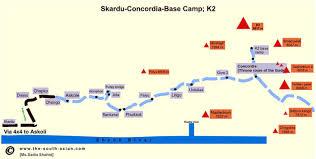
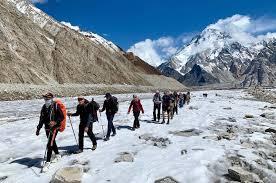
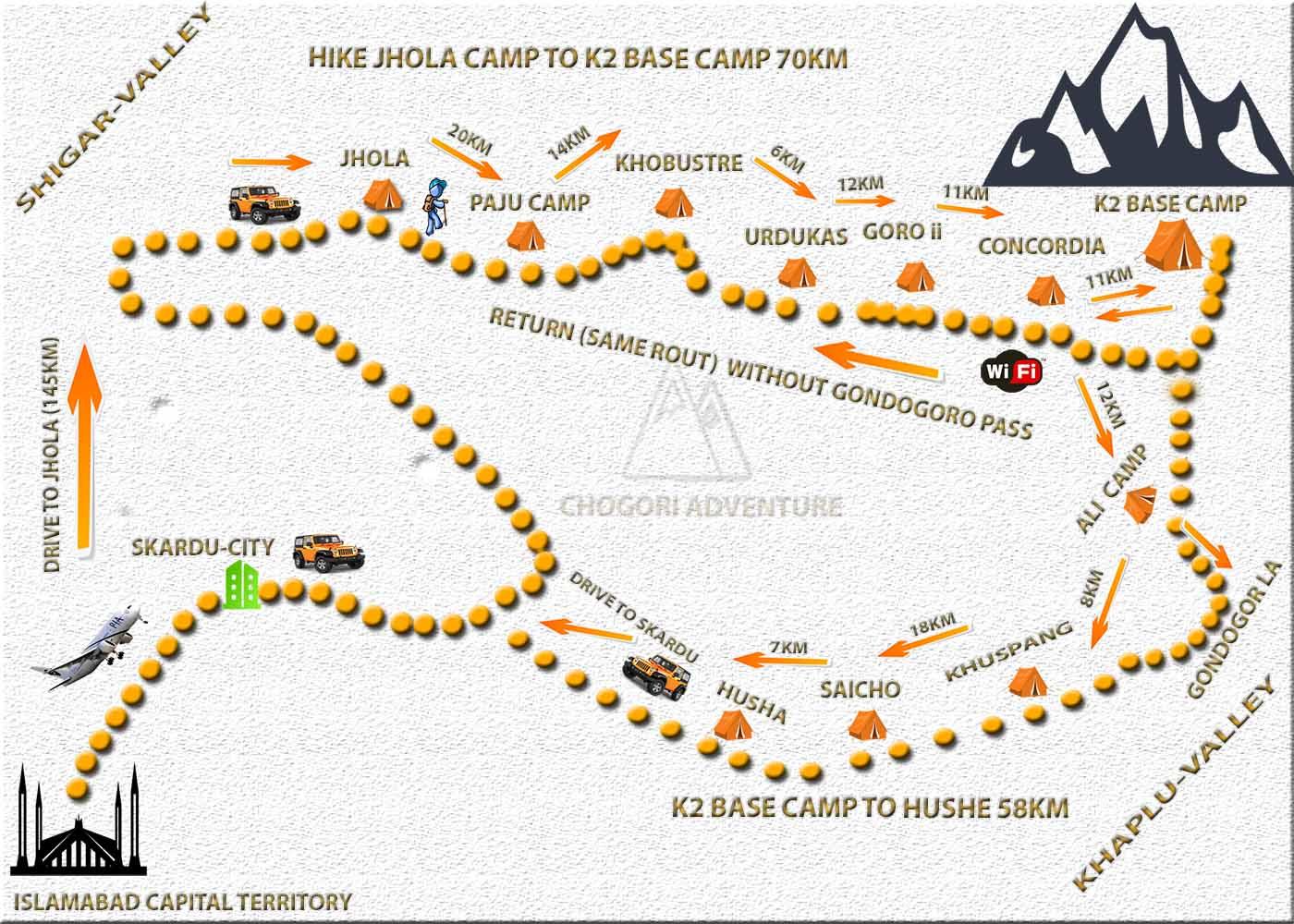
The approach to Concordia follows the Baltoro Glacier through a sequence of increasingly remote and demanding camps.
Introduction: Understanding This Section of the Trek
The route from Askole to Concordia forms the approach march of the K2 Base Camp trek. While altitude gain is gradual, this section is physically exhausting due to long distances, unstable terrain, heat at lower elevations, and the progressive transition onto glacial ice.
There are no villages, shops, or permanent shelters beyond Askole. Every camp listed below is a temporary campsite, occupied only during the trekking season.
This itinerary reflects the standard, safe, and widely accepted approach used by professional operators.
Day 1: Askole to Jhula
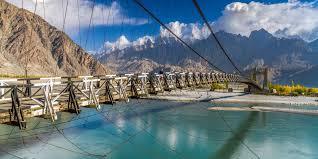
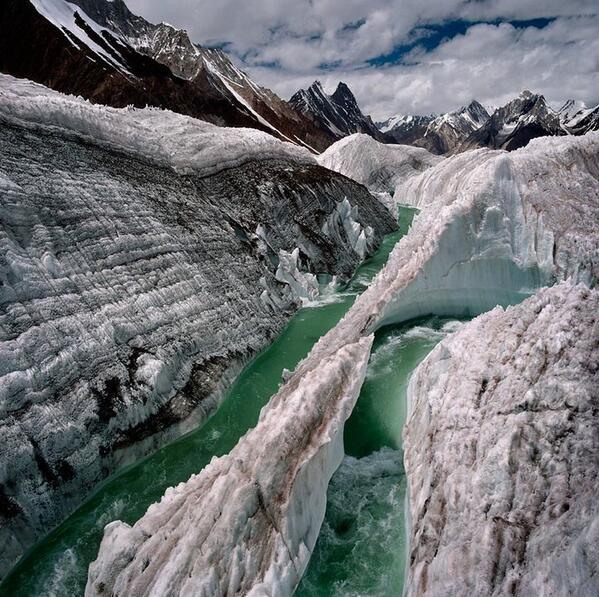
The trek begins at Askole, following the Braldo River toward the first campsite at Jhula.
The trek begins by leaving Askole and moving upstream along the Braldo River. The path alternates between sandy riverbanks and rocky terraces, with repeated short climbs and descents. Temperatures can be high during the day, particularly in July and August, and shade is limited.
Jhula is a simple campsite named after a suspension bridge that crosses the river. It serves primarily as a first-stage transition point rather than a scenic highlight.
Day 2: Jhula to Paiju
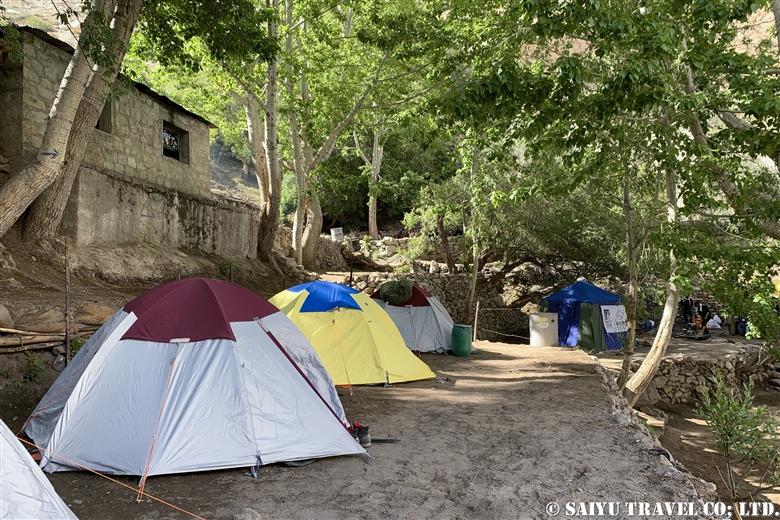
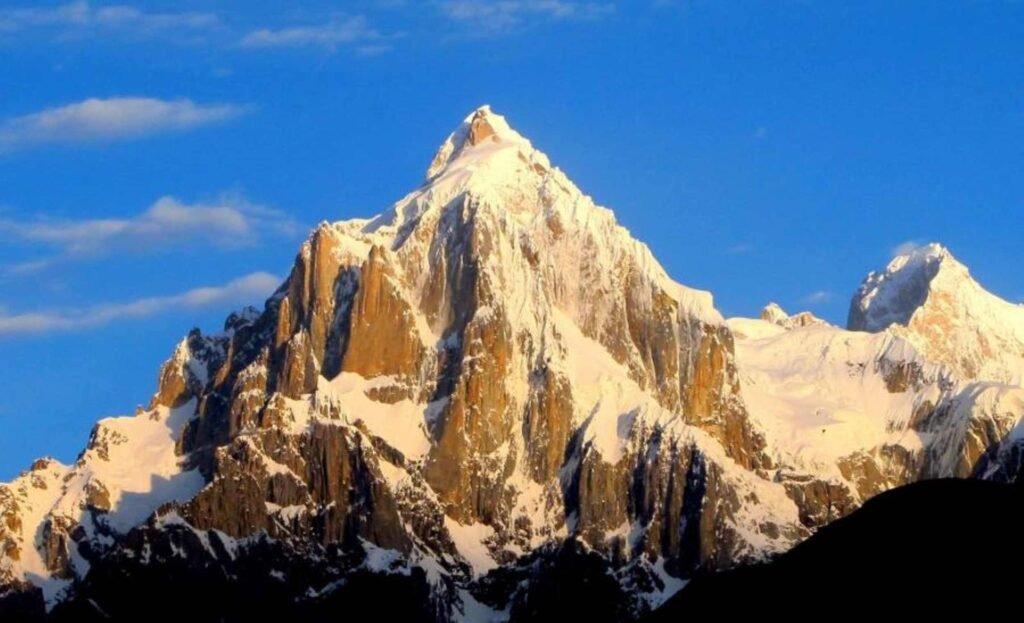
Paiju is the last campsite with trees and grass before entering the glacier system.
The walk from Jhula to Paiju is longer and more demanding. The route climbs over river terraces and passes beneath rock walls prone to small rockfall. As elevation increases, vegetation becomes sparse.
Paiju is a critical location on the trek. It is the last campsite with trees, shade, and running streams, and it marks the psychological boundary between valley trekking and true glacial travel.
Day 3: Rest and Acclimatization Day at Paiju
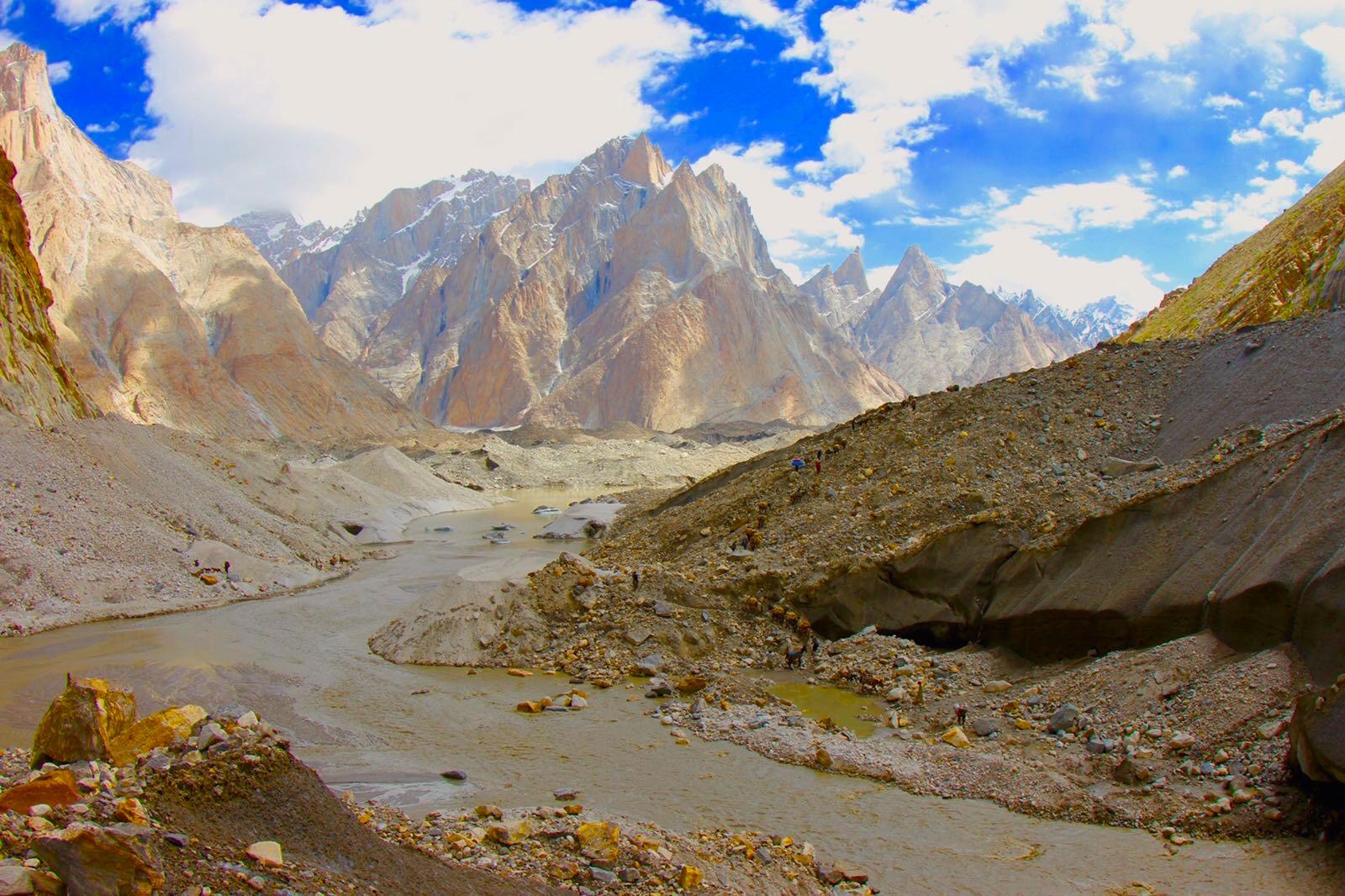
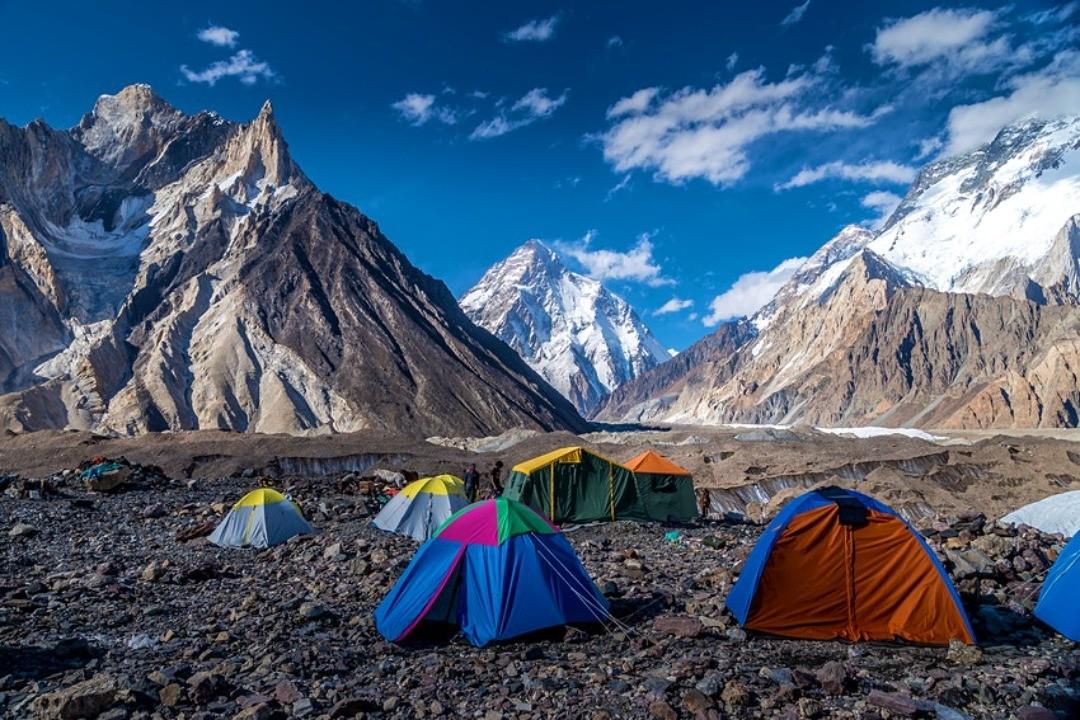
A rest day at Paiju allows for recovery and preparation before entering the Baltoro Glacier.
A full rest day is commonly scheduled at Paiju. This day is used to recover from the initial approach, wash clothing, and reorganize loads. It also allows trekkers to begin adjusting to altitude in a controlled environment.
Strong winds are common at Paiju, and delays here are not unusual. From this point onward, weather conditions become increasingly influential.
Day 4: Paiju to Khoburtse
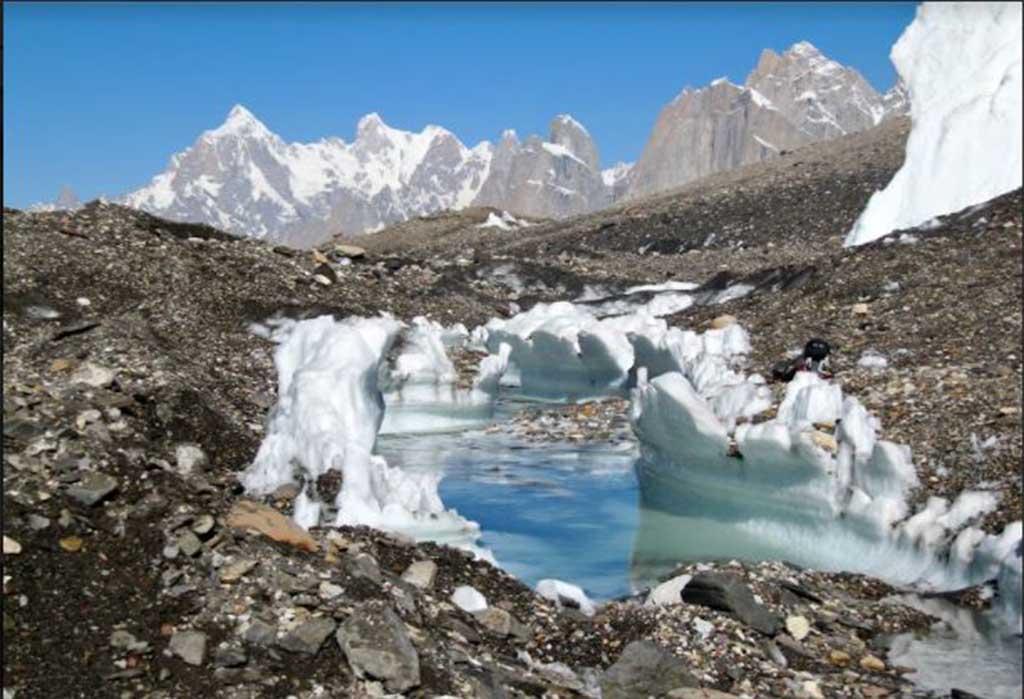
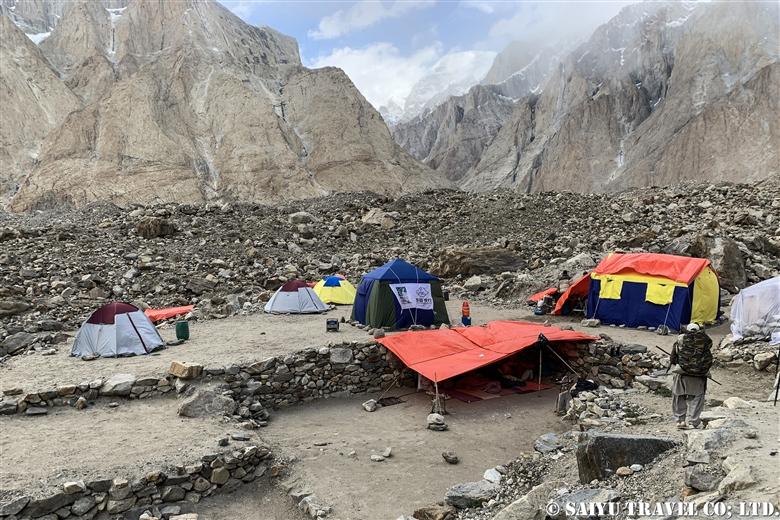
This stage marks the first sustained walking on the Baltoro Glacier’s rocky moraine.
The route from Paiju to Khoburtse introduces trekkers to the Baltoro Glacier system. Walking conditions deteriorate noticeably, with loose rocks, ice patches, and uneven footing slowing progress.
Khoburtse is a narrow campsite hemmed in by rock walls. Space is limited, and cold winds often sweep through the camp after sunset.
Day 5: Khoburtse to Urdukas
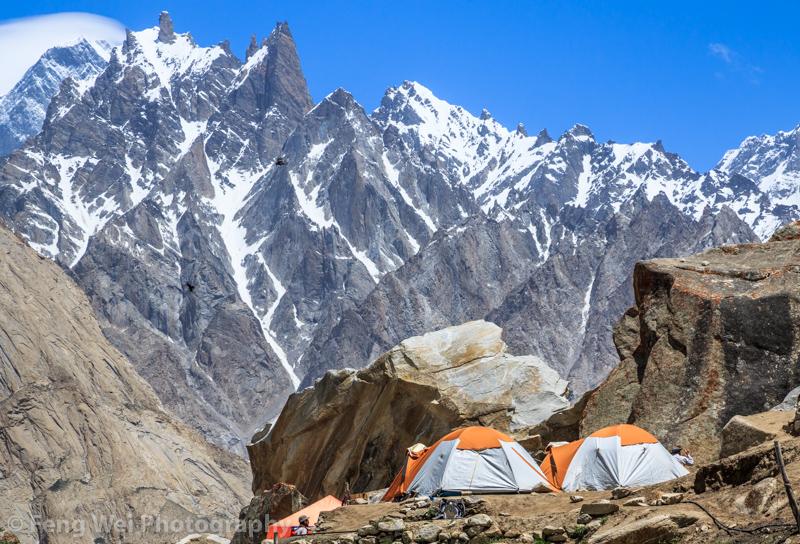
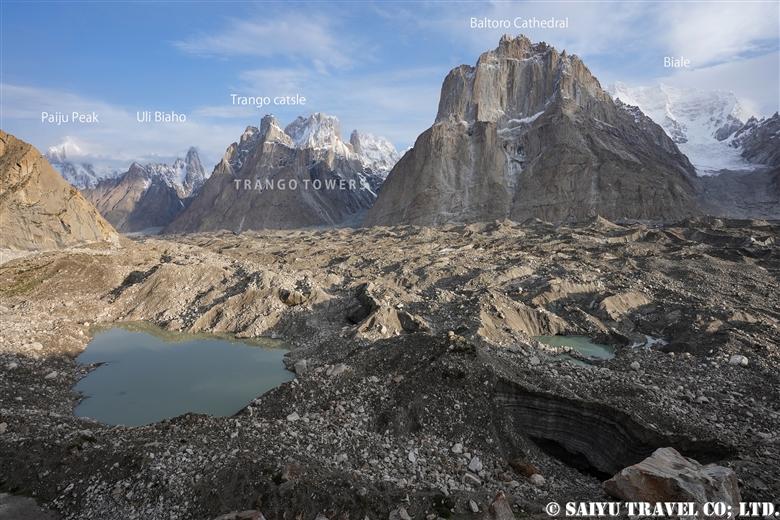
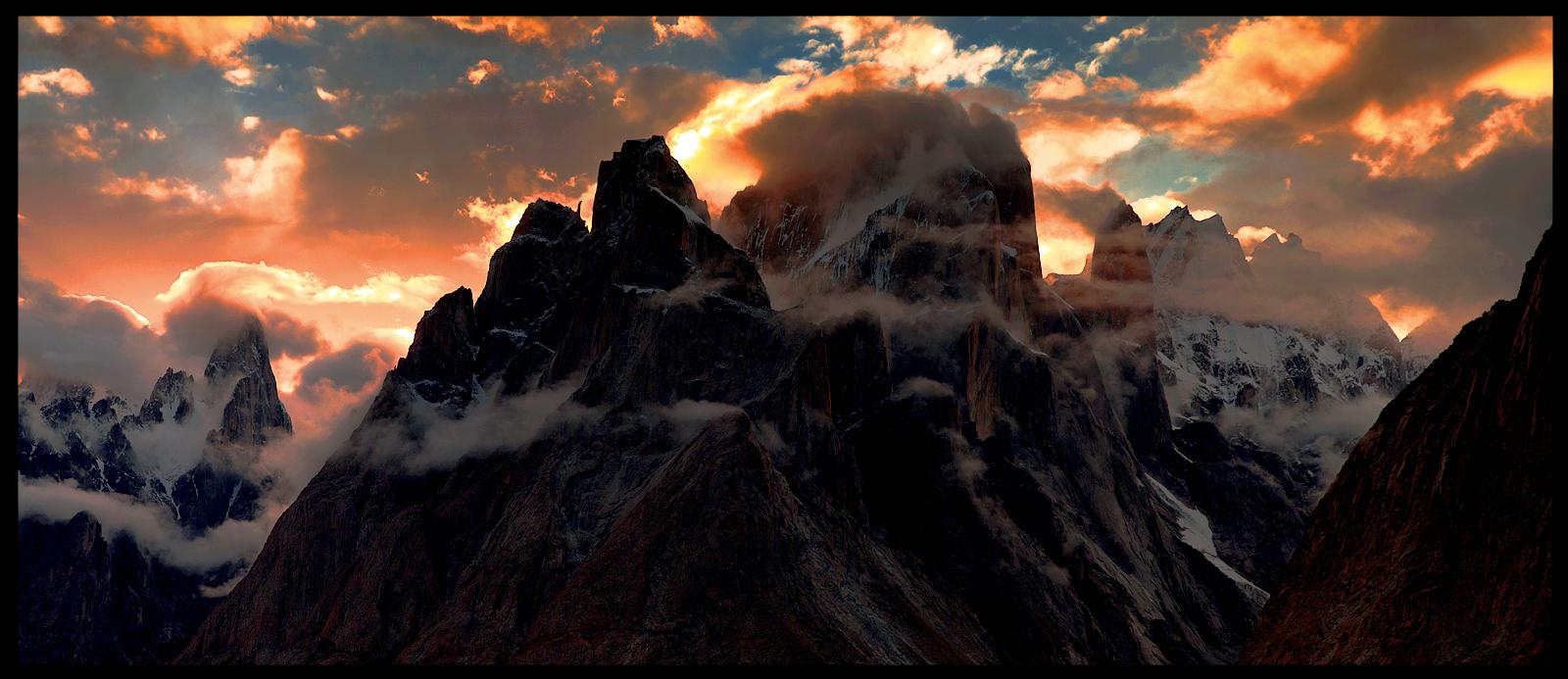
Urdukas sits above the glacier and offers one of the most dramatic views on the entire trek.
The trail climbs above the glacier onto rocky ledges, offering expansive views of the Baltoro below. Urdukas is often regarded as one of the most scenic campsites of the trek.
This is usually the last campsite on solid ground. From here onward, all camps lie directly on ice or moraine.
Day 6: Urdukas to Goro II
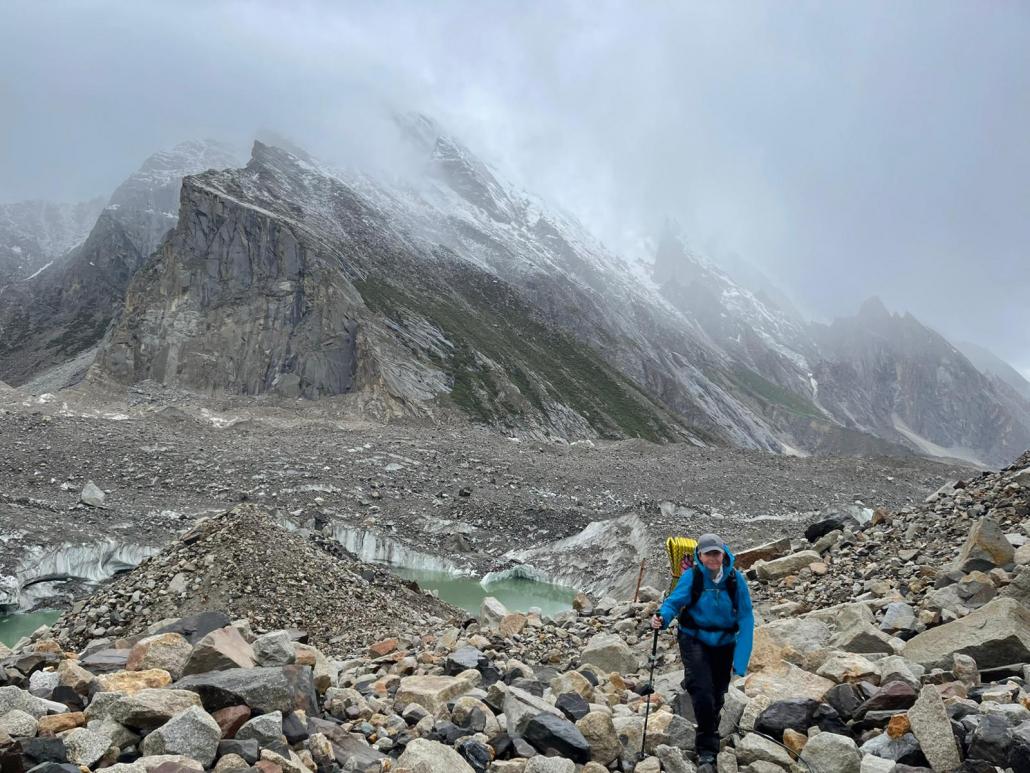
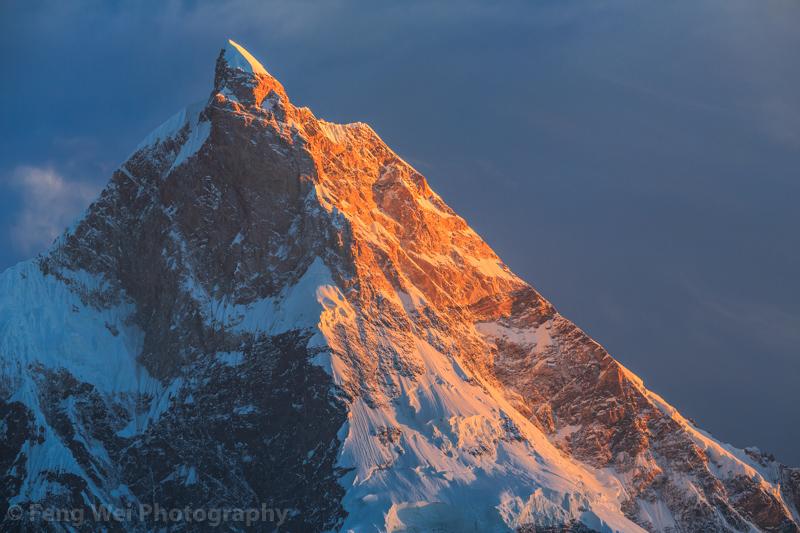
Goro II lies fully on the Baltoro Glacier, surrounded by ice, wind, and high peaks.
(Image credit: Alamy)
Descending from Urdukas, trekkers step onto the glacier permanently. Goro II is an exposed campsite with no natural shelter. Water must be obtained by melting ice, and nights are consistently cold.
From this point, the scale of the Karakoram becomes overwhelming, with peaks such as Masherbrum dominating the skyline.
Day 7: Goro II to Concordia
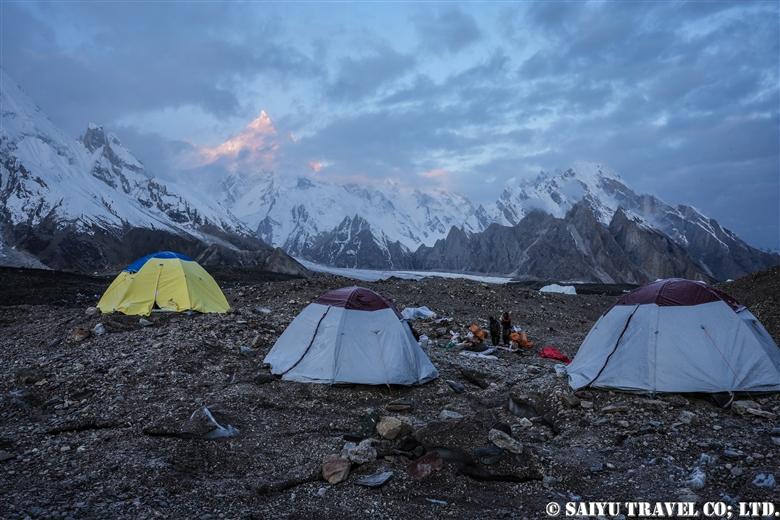
Concordia is one of the greatest high-mountain panoramas on Earth.
The trek to Concordia is long but unforgettable. The Baltoro Glacier widens, and the surrounding peaks rise dramatically with every step. Eventually, the massive north face of K2 comes into view.
Concordia sits at approximately 4,700 meters and is the confluence point of multiple glaciers. It offers views of K2, Broad Peak, and the Gasherbrum group from a single location.
Day 8: Rest and Acclimatization Day at Concordia
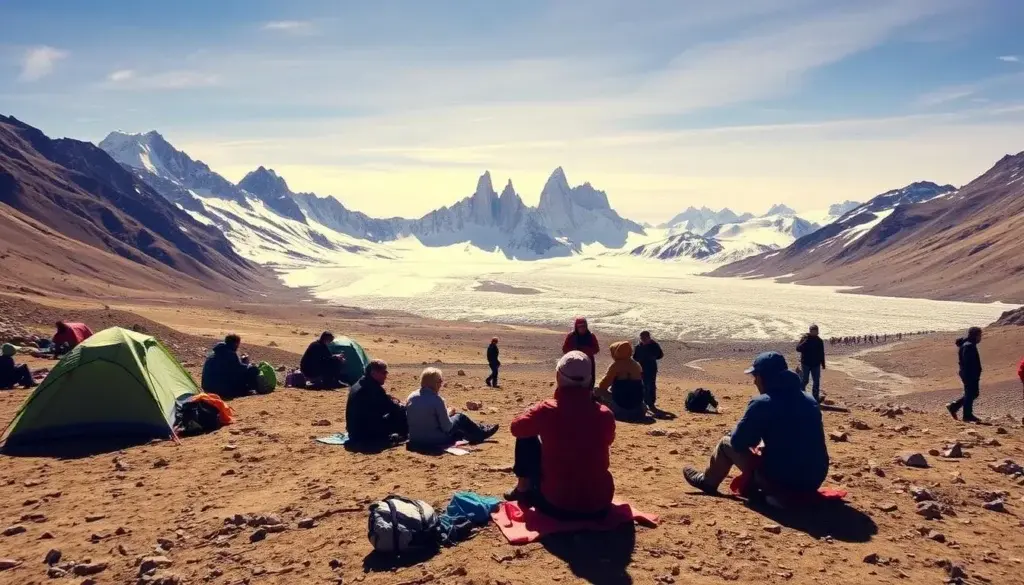
A rest day at Concordia is essential for acclimatization before moving higher.
A full rest day at Concordia is non-negotiable for safe progression. The body must adapt before moving toward K2 Base Camp, which lies at a higher elevation and in harsher conditions.
Trekkers often use this day to explore the surrounding glacier lightly, monitor health, and prepare mentally for the final approach.
4 – Concordia to K2 Base Camp and Broad Peak Base Camp
4
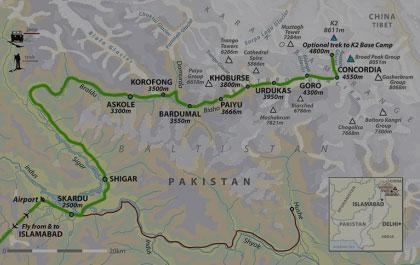
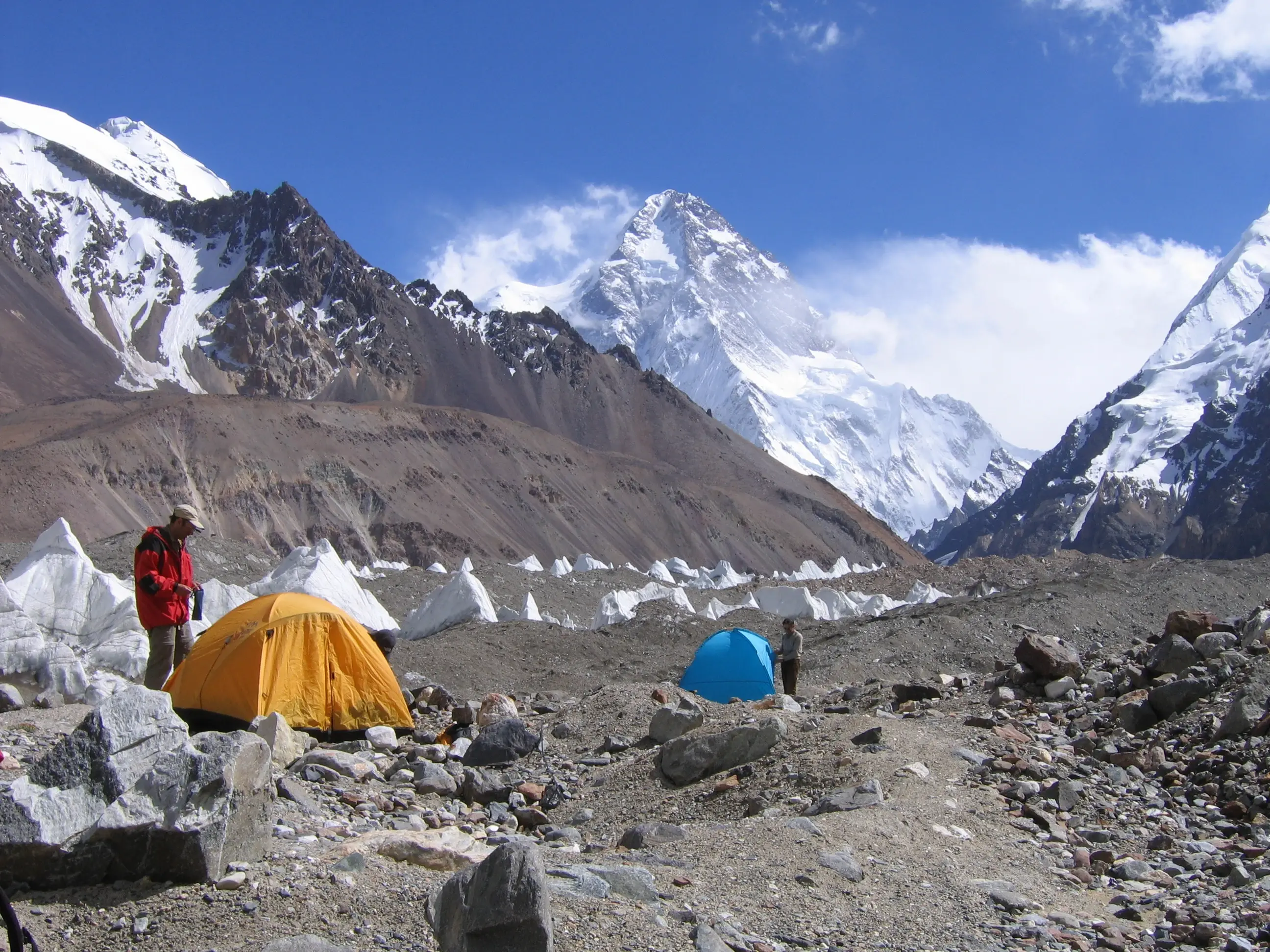
The final approach from Concordia follows the upper Godwin-Austen Glacier toward the base of K2 and Broad Peak.
Introduction: Entering the Highest Arena
From Concordia onward, the K2 Base Camp trek enters its most serious phase. Altitude now exceeds 4,700 meters, temperatures drop sharply, and the environment becomes harsher and more exposed. While distances are shorter than earlier stages, physical effort increases significantly, and even simple movements feel heavier.
This section of the trek is not only about reaching a destination. It is about operating safely at extreme altitude, maintaining health, and recognizing limits.
Day 9: Concordia to Broad Peak Base Camp
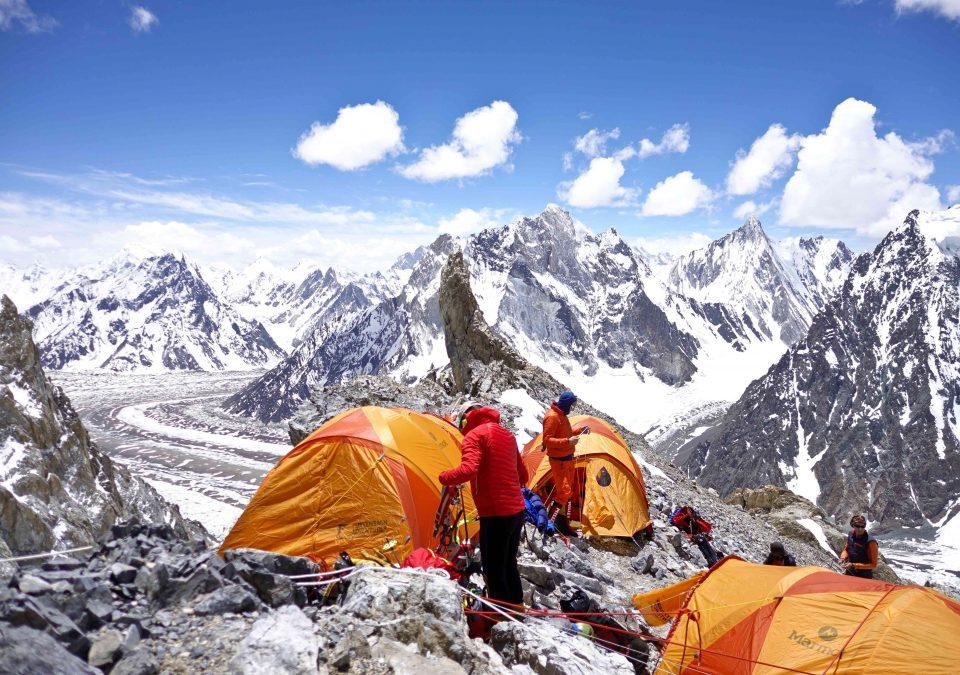
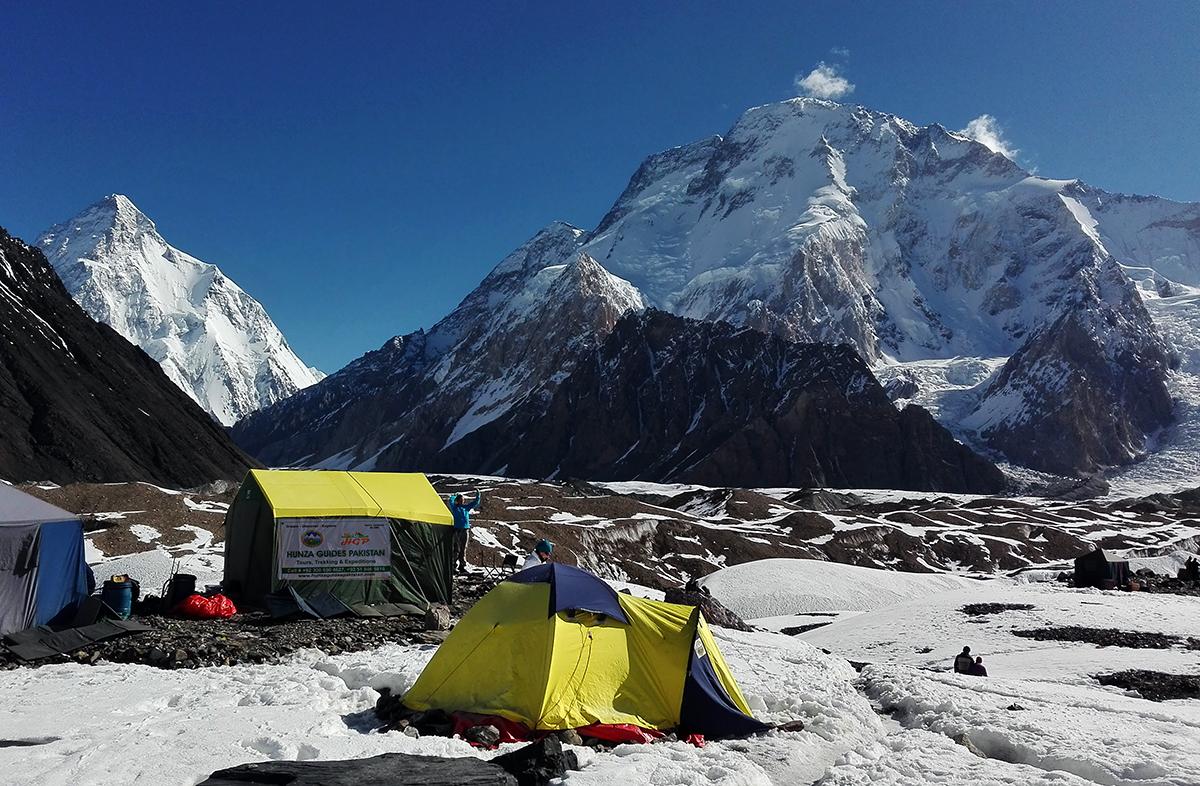
Broad Peak Base Camp lies beneath the massive north face of Broad Peak at the edge of the Godwin-Austen Glacier.
The walk from Concordia toward Broad Peak Base Camp follows the Godwin-Austen Glacier, a tributary of the Baltoro Glacier. The terrain consists of hard ice, frozen moraine, and occasional snow patches, depending on the season.
Although the altitude gain is moderate, the thin air slows progress. Breathing becomes deliberate, and walking rhythm settles into a slow, steady pace. Broad Peak Base Camp sits at approximately 4,900 meters and is often used as a staging point for climbers and trekkers alike.
For many trekkers, this is the first moment of standing beneath an 8,000-meter peak at close range.
Day 10: Broad Peak Base Camp to K2 Base Camp
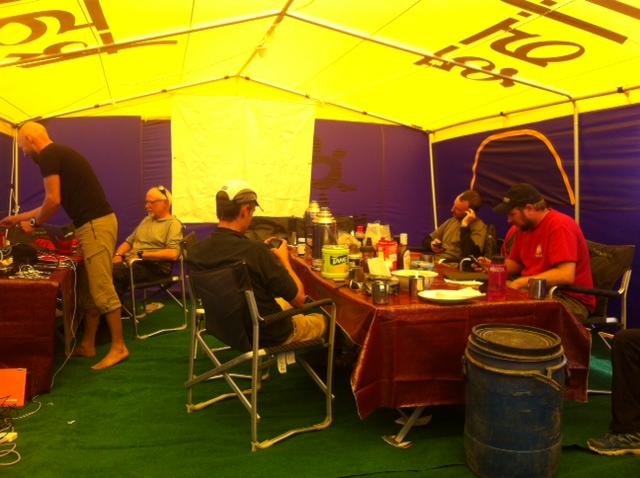
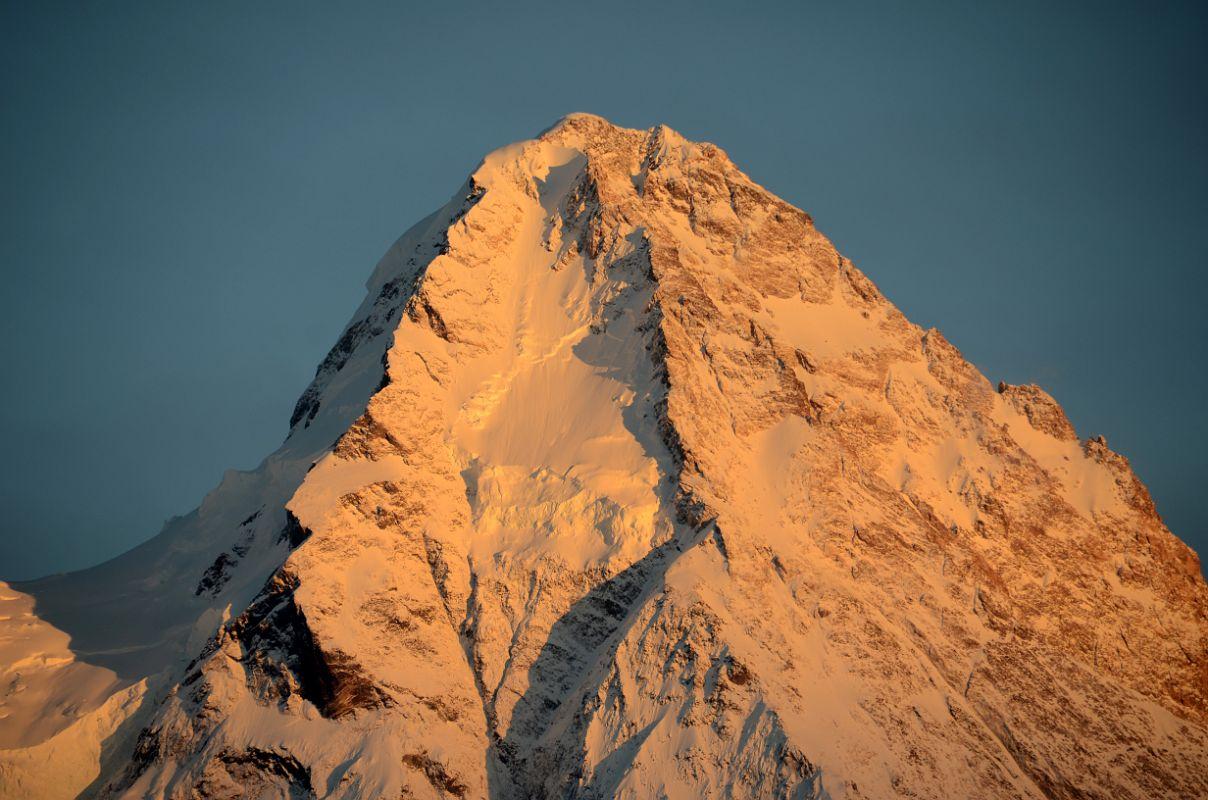
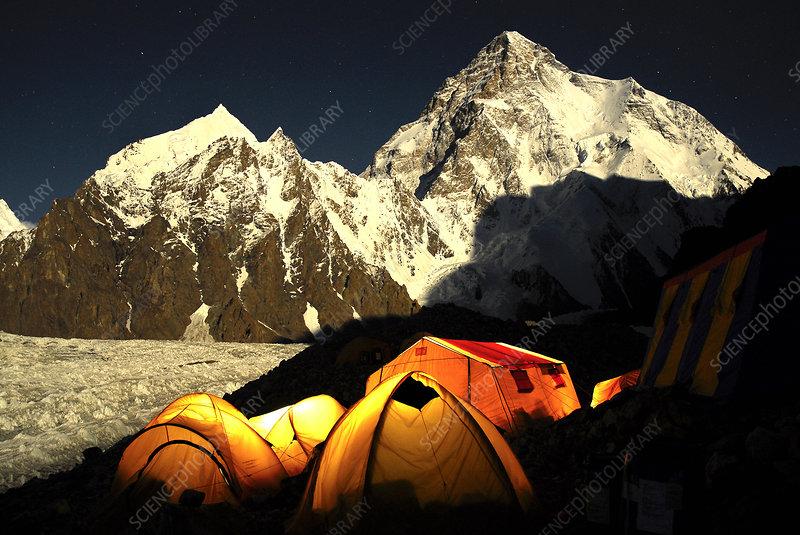
K2 Base Camp sits directly beneath the immense north face of the world’s second-highest mountain.
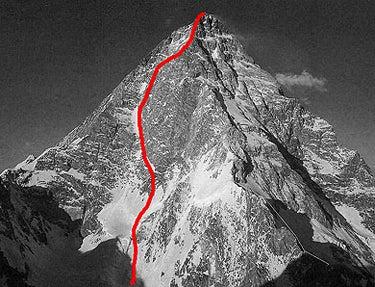
The final approach to K2 Base Camp is emotionally powerful and physically demanding. The north face of K2 dominates the skyline, rising steeply and without mercy above the glacier.
The campsite itself is austere and exposed. There is no natural shelter from wind, and temperatures frequently remain below freezing even during the day. At approximately 5,150 meters, altitude effects are noticeable for nearly everyone.
Reaching K2 Base Camp marks the end of the outward journey. There is no higher point on the trek.
What K2 Base Camp Is (and Is Not)
K2 Base Camp is not a place of comfort or celebration. It is a working environment for climbers, surrounded by ice, rock, and constant wind. There are no facilities, no permanent structures, and no protection from the elements.
What it offers instead is proximity to one of the most formidable mountains on Earth. Standing beneath K2 provides a sense of scale and seriousness that photographs cannot convey.
Day 11: Exploration and Acclimatization at K2 Base Camp
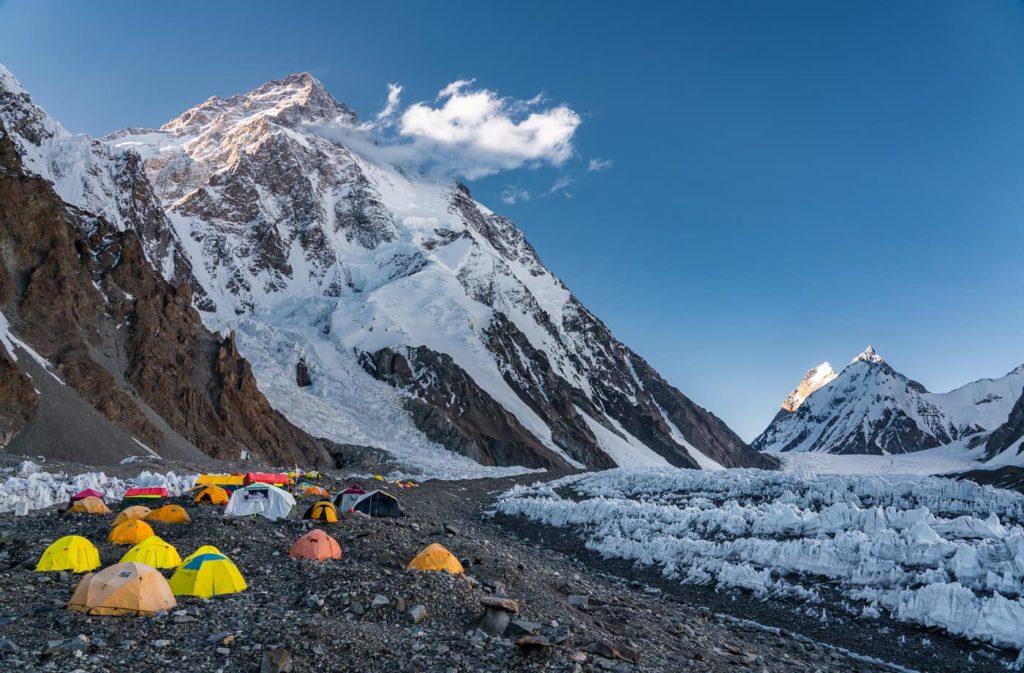
A full day at K2 Base Camp allows the body to adapt and the mind to absorb the surroundings.
A full day is usually spent at or near K2 Base Camp. This day serves two purposes. First, it allows the body to acclimatize before the return journey. Second, it gives trekkers time to absorb the environment without the pressure of movement.
Short walks around camp are possible, but strenuous activity is avoided. Many trekkers experience mild altitude symptoms here, including headaches, appetite loss, and disturbed sleep.
Optional Side Trip: Gasherbrum Viewpoint
Some itineraries include a short excursion toward the Gasherbrum Glacier, weather and health permitting. This side trip offers distant views of Gasherbrum I and II, adding to the sense of being surrounded by the world’s highest peaks.
Such excursions are optional and always secondary to health and safety considerations.
Day 12: Return from K2 Base Camp to Concordia
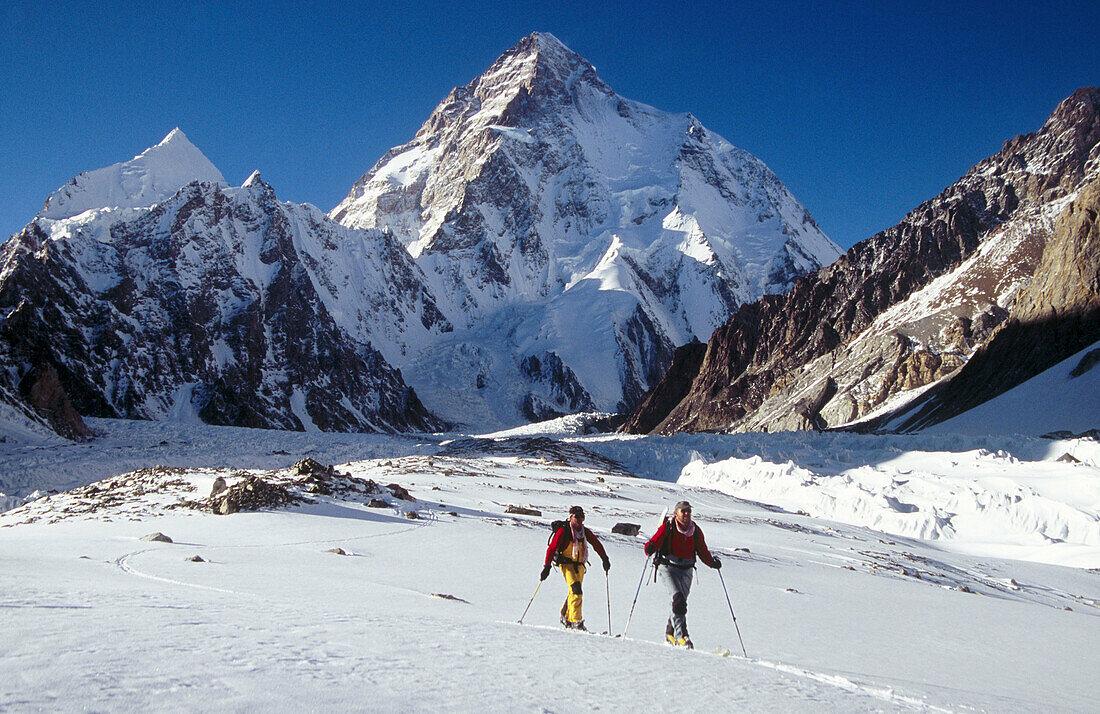
The return to Concordia follows the same route but feels physically harder due to accumulated fatigue.
The return journey begins almost immediately after reaching the trek’s highest point. Although altitude decreases slightly, fatigue accumulated over previous days makes walking feel heavier.
Reaching Concordia again often brings a sense of relief. Many trekkers report improved sleep and appetite once back below 5,000 meters.
Altitude Reality Above 5,000 Meters
At elevations above 5,000 meters, the human body operates under constant stress. Oxygen levels are roughly half of those at sea level. Appetite decreases, dehydration increases, and recovery slows.
This is why rest days and conservative pacing are essential. The goal is not speed, but safe completion.
Emotional Impact of This Section
For many trekkers, this portion of the journey defines the entire experience. The scale of K2, the silence of the glacier, and the knowledge of being days away from civilization combine into a powerful emotional experience.
There is no sense of conquest here. Only respect.
5 – The Return Journey: Concordia Back to Askole
4
The return from K2 Base Camp retraces the Baltoro Glacier route, demanding endurance despite decreasing altitude.
Introduction: Why the Return Is Often Harder
Many trekkers assume that once K2 Base Camp has been reached, the hardest part is over. In reality, the return journey from Concordia back to Askole is often physically more demanding. Fatigue has accumulated, minor injuries may have appeared, and concentration can lapse on familiar terrain.
Although altitude gradually decreases, glacier travel remains constant, and the need for careful foot placement never disappears. This section of the trek tests discipline and patience more than motivation.
Day 13: Concordia to Goro II (Return)
The walk from Concordia back to Goro II retraces the same route used on the ascent. Despite familiarity, the terrain feels harsher due to accumulated fatigue. Knees and ankles are under increased strain, especially when stepping down across uneven moraine.
Weather conditions can change rapidly, and strong afternoon winds are common.
Day 14: Goro II to Urdukas
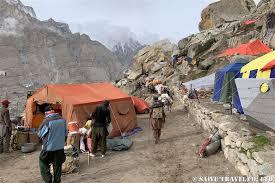
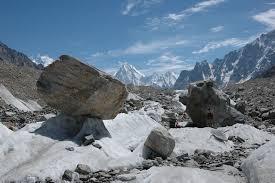
Returning to Urdukas brings the first sense of relief after days spent entirely on ice.
Reaching Urdukas again feels psychologically significant. This is the first campsite back on solid ground after days of continuous glacier travel. Many trekkers notice immediate improvement in sleep and appetite.
Despite this, the climb up from the glacier to the campsite can feel steep and demanding at this stage of the trek.
Day 15: Urdukas to Khoburtse
Descending through moraine and rocky terrain requires continued concentration.
The route from Urdukas to Khoburtse involves careful navigation across loose rock and uneven surfaces. Although altitude is lower, tired legs and joints increase the risk of slips or minor injuries.
Porters often slow their pace here, reflecting the cumulative load they have carried for weeks.
Day 16: Khoburtse to Paiju
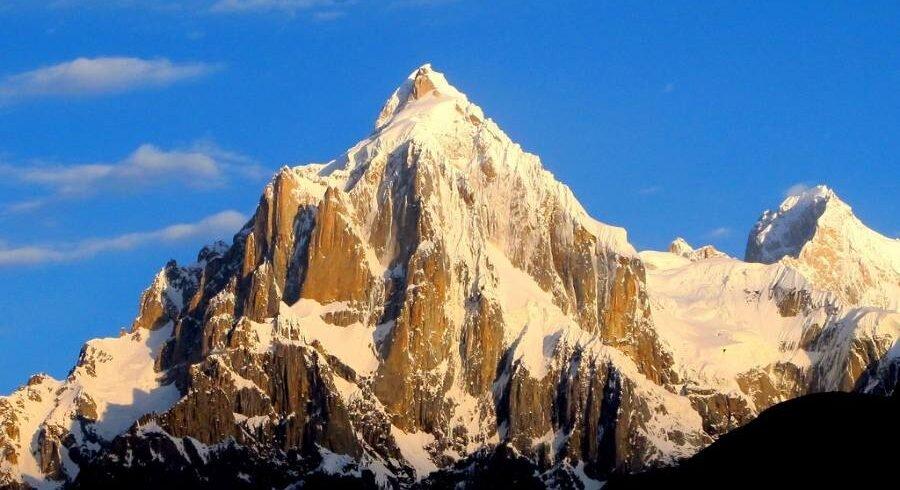
Paiju marks the end of sustained glacier travel and the return to vegetation.
Reaching Paiju again is a major milestone. Trees, running water, and softer ground provide immediate comfort. This is often the first opportunity for a more thorough wash and relaxed rest.
Many trekking teams choose to spend an additional night here if weather or fatigue requires.
Day 17: Paiju to Jhula
Descending back toward Jhula reintroduces warmer temperatures and river crossings.
As altitude decreases, temperatures rise noticeably. The return to sandy paths and riverbanks feels easier on the lungs but harder on overheated bodies. Dehydration can become an issue if water intake is not carefully managed.
Day 18: Jhula to Askole
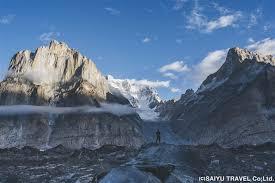
The trek ends where it began, at Askole, the last village of the Karakoram.
The final walking day brings trekkers back to Askole. While the terrain is familiar, emotions are often mixed. There is relief at completing the journey, but also a sense of loss as the isolation of the Karakoram comes to an end.
Reaching Askole signals the end of foot travel but not the end of logistical challenges.
Physical Condition at the End of the Trek
By the time trekkers return to Askole, most experience:
- Significant physical fatigue
- Weight loss due to prolonged exertion
- Minor joint or muscle pain
- Heightened sensitivity to temperature changes
Despite this, serious injuries are relatively uncommon when pacing and rest have been respected.
Mental Shift: Leaving the Wilderness
Leaving the Karakoram can feel abrupt. The sudden presence of vehicles, noise, and communication contrasts sharply with the silence of the glacier. Many trekkers describe the return to civilization as disorienting.
This emotional adjustment is a natural part of long remote expeditions.
6 – Physical Preparation, Fitness, and Altitude Readiness
4
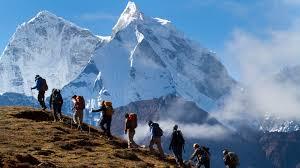
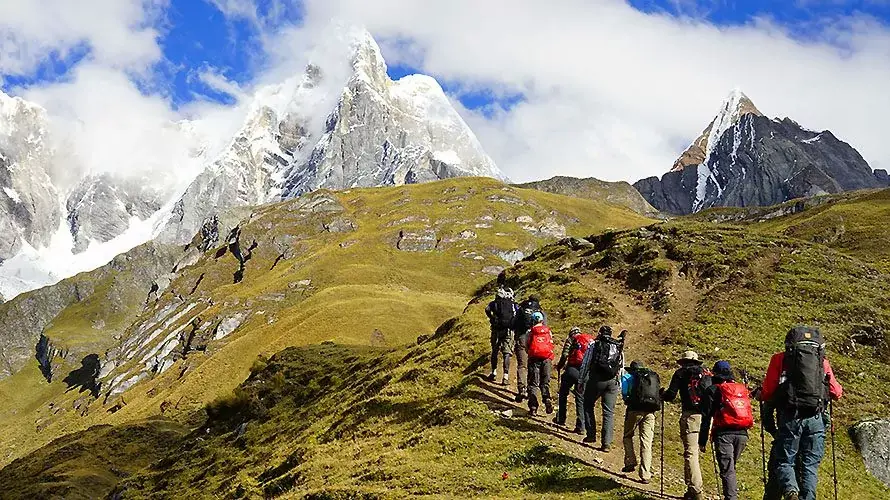
Physical preparation and altitude readiness are critical for safe travel in the Karakoram.
Introduction: Why Preparation Determines Success
The K2 Base Camp trek is not completed by strength alone. It is completed by prepared bodies, disciplined pacing, and realistic expectations. Many trekkers who underestimate preparation fail not because of altitude alone, but because accumulated fatigue, poor conditioning, and slow recovery overwhelm them.
Unlike lodge-based treks, this expedition offers no opportunity to restock, shorten stages, or escape quickly. Once beyond Askole, physical readiness becomes non-negotiable.
Understanding the Physical Demands of the Trek
The trek requires walking for six to eight hours per day over rough terrain, often while carrying a personal daypack. The challenge does not come from steep climbs alone but from continuous uneven footing, which places constant stress on ankles, knees, and lower back.
Daily movement on moraine and ice demands balance and concentration, even when legs feel exhausted. This is why trekkers who train only on smooth trails often struggle in the Karakoram.
Minimum Fitness Level Required
Trekkers should already be comfortable with:
- Consecutive long walking days
- Carrying weight over uneven ground
- Cold weather exposure
- Sleeping in tents for extended periods
The K2 Base Camp trek is unsuitable for individuals whose only experience is short or lodge-supported treks.
Recommended Training Before the Trek
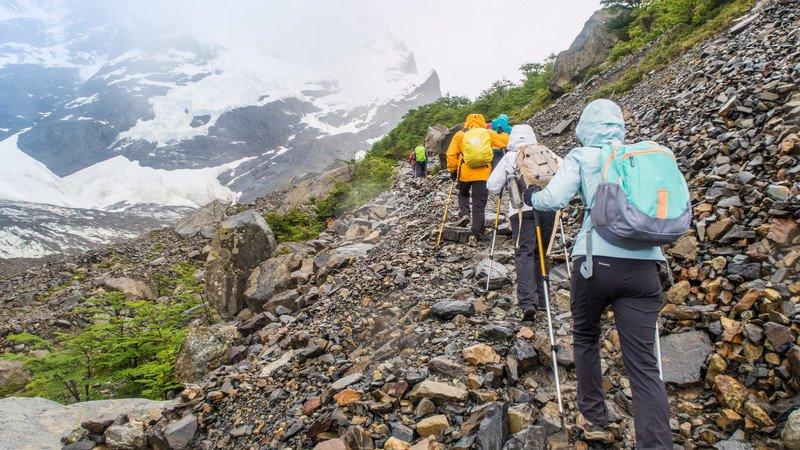
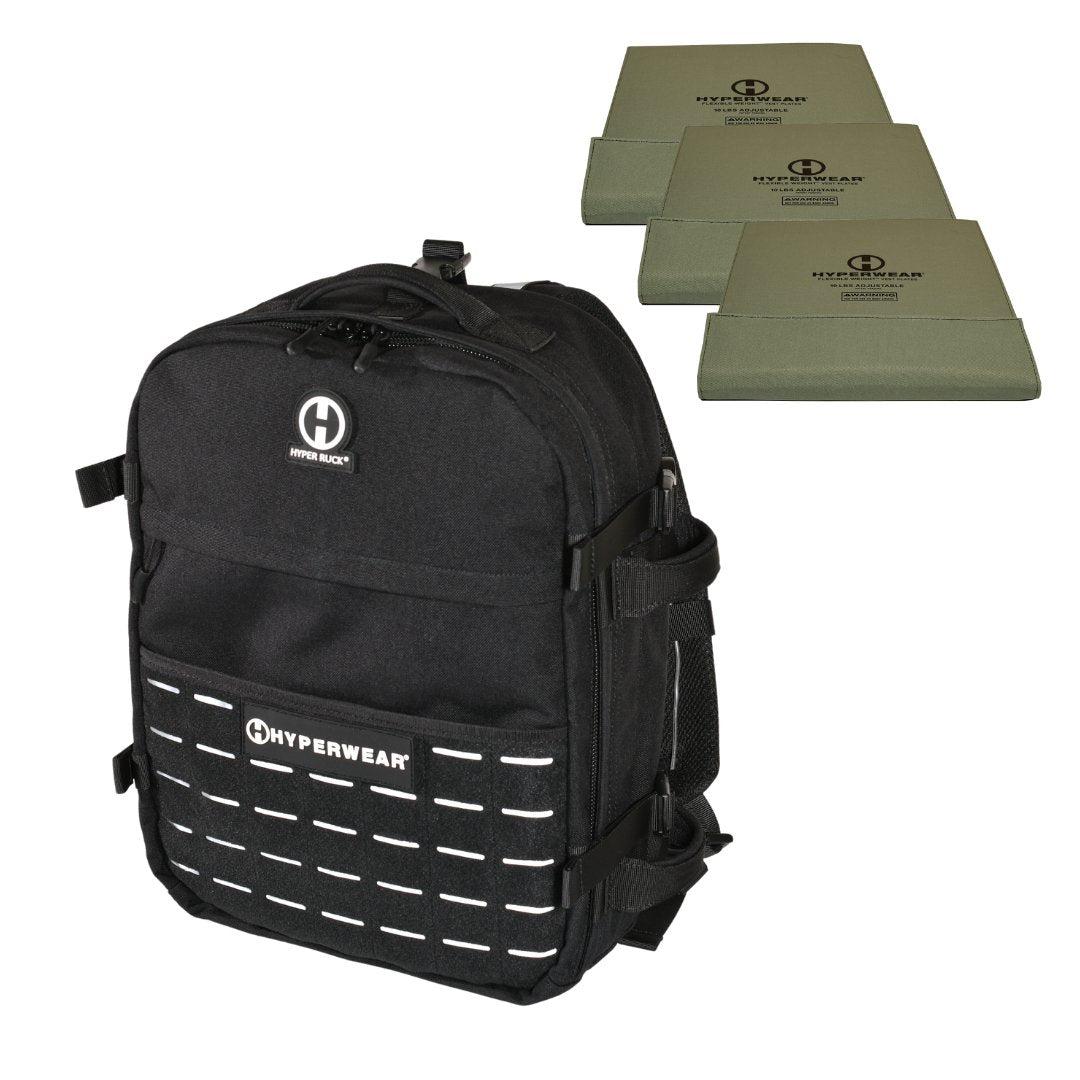
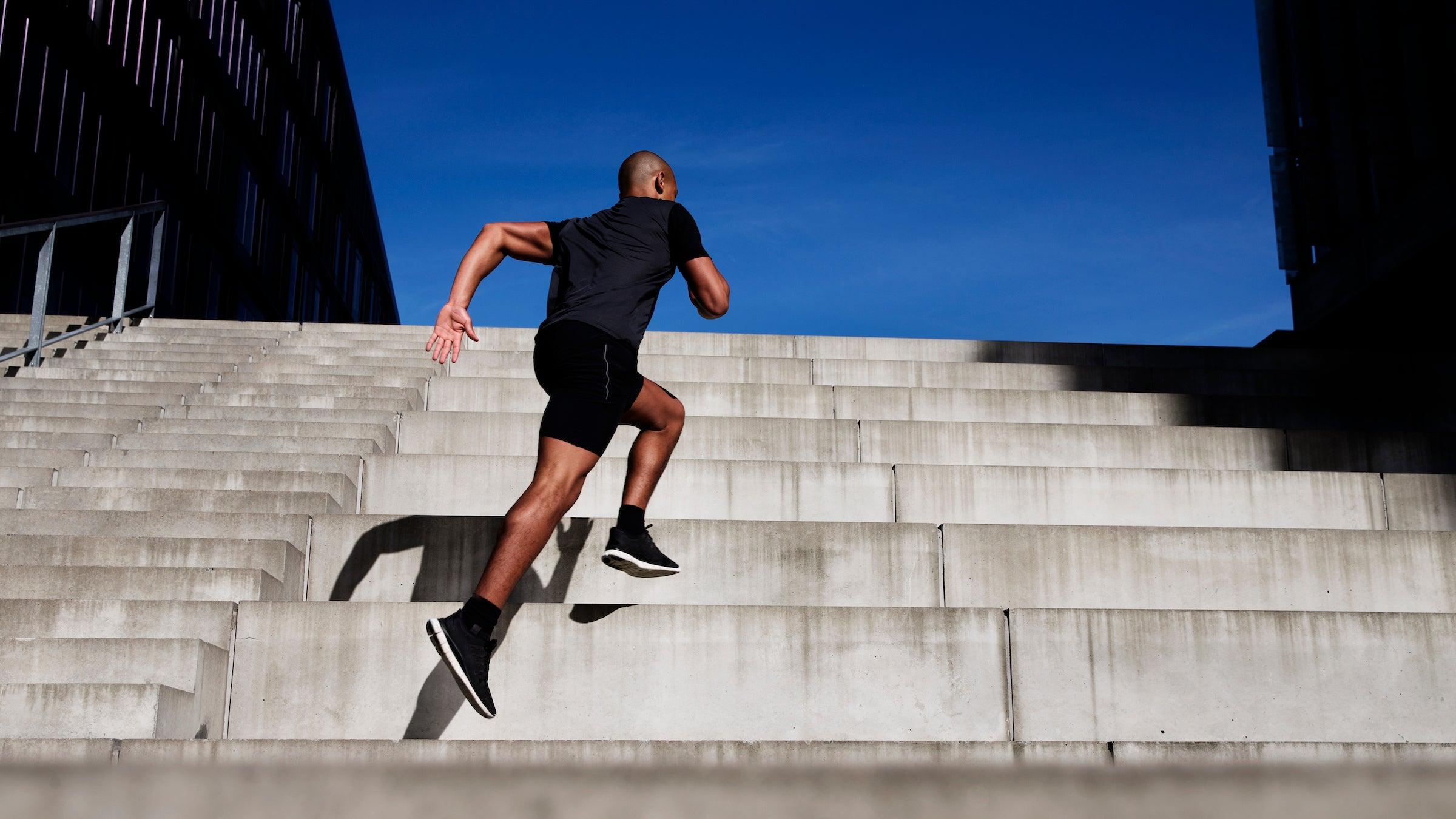
Training should focus on endurance, strength, and stability rather than speed.
Preparation should begin at least three to four months before departure. Training should prioritize endurance rather than explosive strength. Long hikes with a weighted backpack are essential.
Key areas of focus include:
- Cardiovascular endurance for sustained effort
- Leg strength for long descents
- Core stability for balance on uneven terrain
Training on rocky trails or stair climbs replicates the demands of moraine walking better than flat ground.
The Importance of Mental Endurance
Physical strength alone is not enough. The monotony of glacier travel, repetitive campsites, cold nights, and limited privacy place heavy demands on mental resilience.
Trekkers must be comfortable with:
- Routine and repetition
- Delayed gratification
- Limited personal space
- Weather-related delays
Mental fatigue often appears before physical exhaustion on this trek.
Altitude Exposure and Acclimatization Strategy
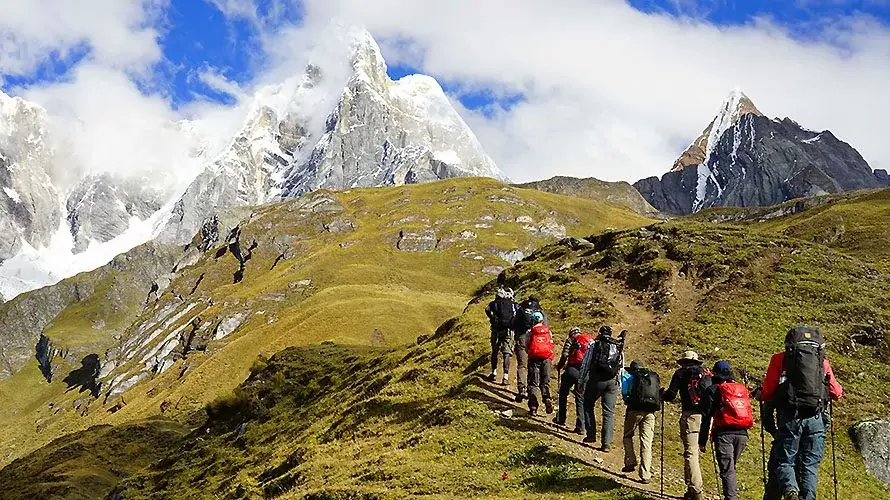
Gradual altitude exposure is the most effective defense against altitude illness.
(Image credit: Wikimedia Commons)
The itinerary of the K2 Base Camp trek is deliberately slow to allow the body to adapt to decreasing oxygen levels. Camps are spaced to limit daily altitude gain, and rest days at Paiju and Concordia are essential.
There is no safe way to rush acclimatization. Ignoring early symptoms of altitude illness is one of the most dangerous mistakes trekkers can make.
Above 4,000 meters, most trekkers experience some degree of:
- Shortness of breath
- Reduced appetite
- Disturbed sleep
- Mild headaches
These symptoms are normal but must be monitored. Severe symptoms such as confusion, persistent vomiting, or loss of coordination require immediate descent.
Hydration and Nutrition at Altitude
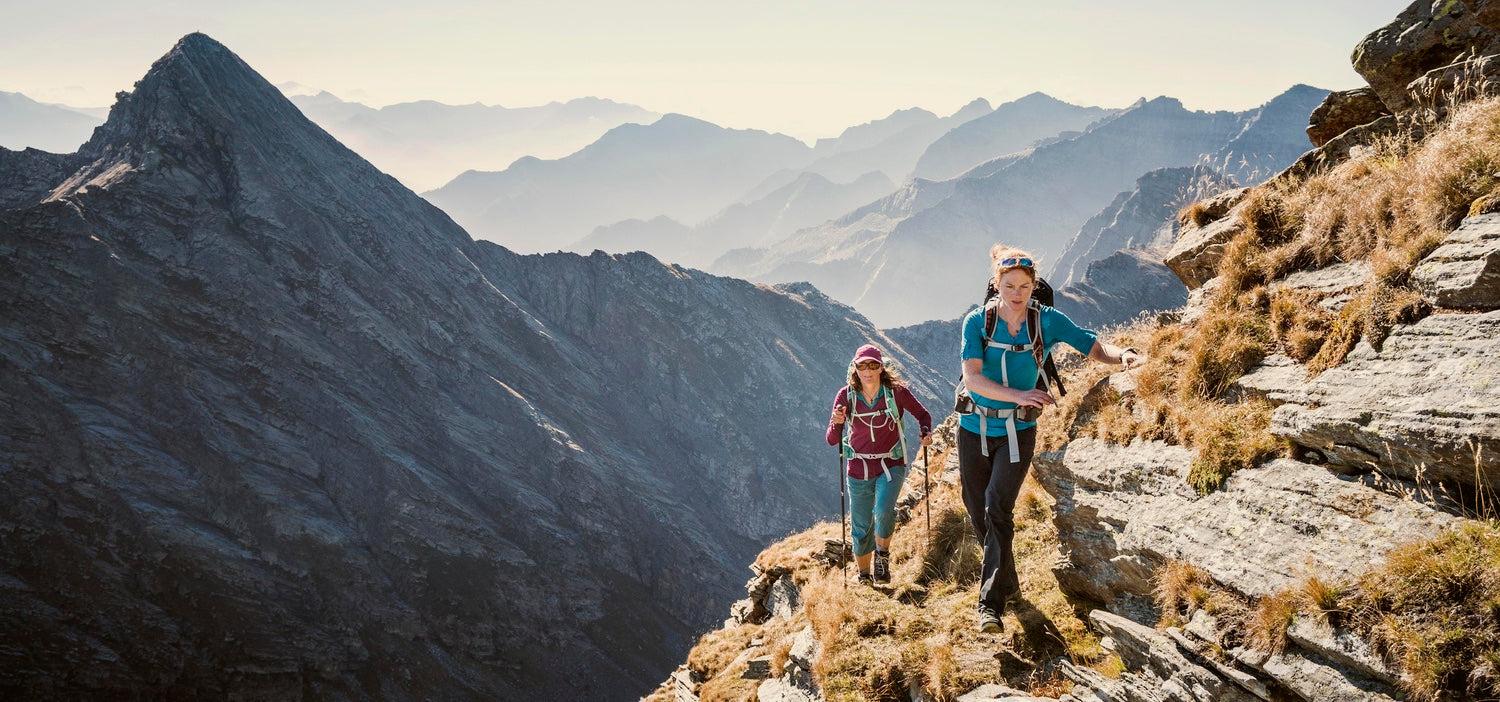
Hydration and calorie intake are critical for acclimatization and recovery.
At high altitude, dehydration occurs quickly due to dry air and increased breathing rate. Trekkers must drink consistently, even when not thirsty.
Caloric intake should remain high despite appetite loss. Warm meals and frequent snacks help maintain energy and body temperature.
Weight Management and Personal Load
While porters carry the main expedition loads, trekkers are still responsible for their personal daypacks. Carrying unnecessary weight increases fatigue and injury risk.
Daypacks should contain only essential items such as water, insulation layers, sunscreen, and personal medication.
Recovery and Injury Prevention
Minor issues such as blisters, sore knees, and muscle stiffness are common. Addressing these early prevents escalation.
Daily stretching, proper footwear, and pacing are essential. Ignoring small problems can end a trek prematurely.
Who Should Reconsider the Trek
The K2 Base Camp trek may not be suitable for individuals who:
- Have not trained consistently
- Struggle with cold exposure
- Have limited experience in remote environments
- Require regular medical support
Recognizing personal limits is a sign of experience, not weakness.
7 – Gear and Equipment Strategy for the K2 Base Camp Trek
Introduction: Why Gear Is a Safety System, Not a Checklist
On the K2 Base Camp Trek, equipment is not about comfort alone. It is about survival, efficiency, and energy preservation over nearly three weeks on a glacier system above 4,000 meters.
Temperatures fluctuate widely. Wind exposure is constant. The Baltoro Glacier surface is uneven and abrasive. Camp infrastructure is temporary. There are no gear shops once you leave Skardu.
Every item must serve a purpose. Every kilogram matters.
Understanding the Environment
The route includes:
- Rocky moraine
- Glacier ice
- Dust storms
- Subzero nights at higher camps
- Strong UV radiation
- Long sun exposure during walking hours
Gear must handle abrasion, cold, and wind simultaneously.
Clothing Strategy: The Layering System
Layering is essential. Heavy single garments are inefficient. You need modular insulation.
Base Layers
- Moisture-wicking thermal tops and bottoms
- Avoid cotton entirely
- Two rotating sets recommended
Mid Layers
- Fleece or light insulated jacket
- Softshell hiking layer
- Lightweight down or synthetic jacket
Outer Layer
- Waterproof breathable shell jacket
- Waterproof pants for wind and snow
- Wind resistance is critical above Urdukas
Insulation for Camp
- Heavy down jacket rated for subzero temperatures
- Down pants optional but useful for cold sleepers
Night temperatures at Concordia can drop well below freezing.
Footwear Strategy
Foot care determines success on this trek.
Hiking Boots
- High ankle support
- Waterproof membrane
- Already broken in
- Compatible with microspikes if needed
Camp Shoes
- Lightweight sandals or insulated camp boots
- Necessary for evening recovery
Socks
- Multiple pairs of wool hiking socks
- Liner socks to prevent blisters
The Baltoro Glacier surface causes constant foot fatigue.
Sleeping System
Operators provide tents and basic sleeping arrangements, but personal sleeping comfort is your responsibility.
Sleeping Bag
- Rated to at least -10°C comfort
- Down recommended for weight efficiency
- Compression sack required
Sleeping Pad
- Inflatable insulated pad
- Backup foam pad optional
Cold nights reduce recovery if insulation is inadequate.
Backpack and Load Management
Most trekkers use porters. However:
- You will carry a daypack daily
- Porters carry main duffel bags
Daypack (30–40 liters)
Must carry:
- Water
- Insulation layer
- Snacks
- Camera
- Rain protection
- Personal medication
Duffel Bag
Carried by porters
- Weight limit usually 12–15 kg
- Waterproof lining required
Weight discipline is critical.
Trekking Poles
Trekking poles are strongly recommended.
They reduce:
- Knee strain on moraine
- Slips on glacier
- Fatigue during long days
Descending back to Askole is especially demanding without poles.
Sun and UV Protection
UV intensity is high above 4,000 meters.
Required:
- Category 4 glacier sunglasses
- Sunscreen SPF 50+
- Lip protection
- Wide brim hat or cap
- Buff or face covering
Snow reflection near Concordia increases exposure.
Electronics and Power Management
There is no electricity after Askole.
Recommended:
- Power bank
- Solar charger
- Spare camera batteries
- Headlamp with extra batteries
Cold drains batteries quickly.
Water Management Gear
You must treat glacier melt water.
Essential:
- Water bottles (2 liters capacity minimum)
- Insulated bottle cover
- Water purification tablets or filter
Hydration reduces altitude sickness risk.
Personal Medical Kit
Carry:
- Altitude medication if prescribed
- Pain relievers
- Blister care kit
- Rehydration salts
- Personal prescriptions
Operators carry group kits, but personal medication is your responsibility.
Items You Do Not Need
Avoid:
- Excess clothing
- Heavy books
- Large camera systems unless professional
- Unnecessary duplicate gear
Overpacking increases porter load and personal inefficiency.
Renting vs Bringing Equipment
In Skardu and Islamabad, some gear can be rented, including:
- Sleeping bags
- Down jackets
- Trekking poles
However, for reliability and hygiene, bringing critical personal gear is recommended.
Psychological Impact of Proper Gear
Confidence increases when:
- You remain warm at night
- Your boots are dry
- You are not struggling with weight
- Your sleeping system is reliable
Poor gear decisions amplify stress.
Final Equipment Philosophy
On K2 Base Camp Trek:
Lightweight + Reliable + Proven > Heavy + New + Untested
Every item should have been used before departure. This is not a trek to test new boots.
9 – Food, Water, Hygiene, and Daily Life on the Baltoro
4
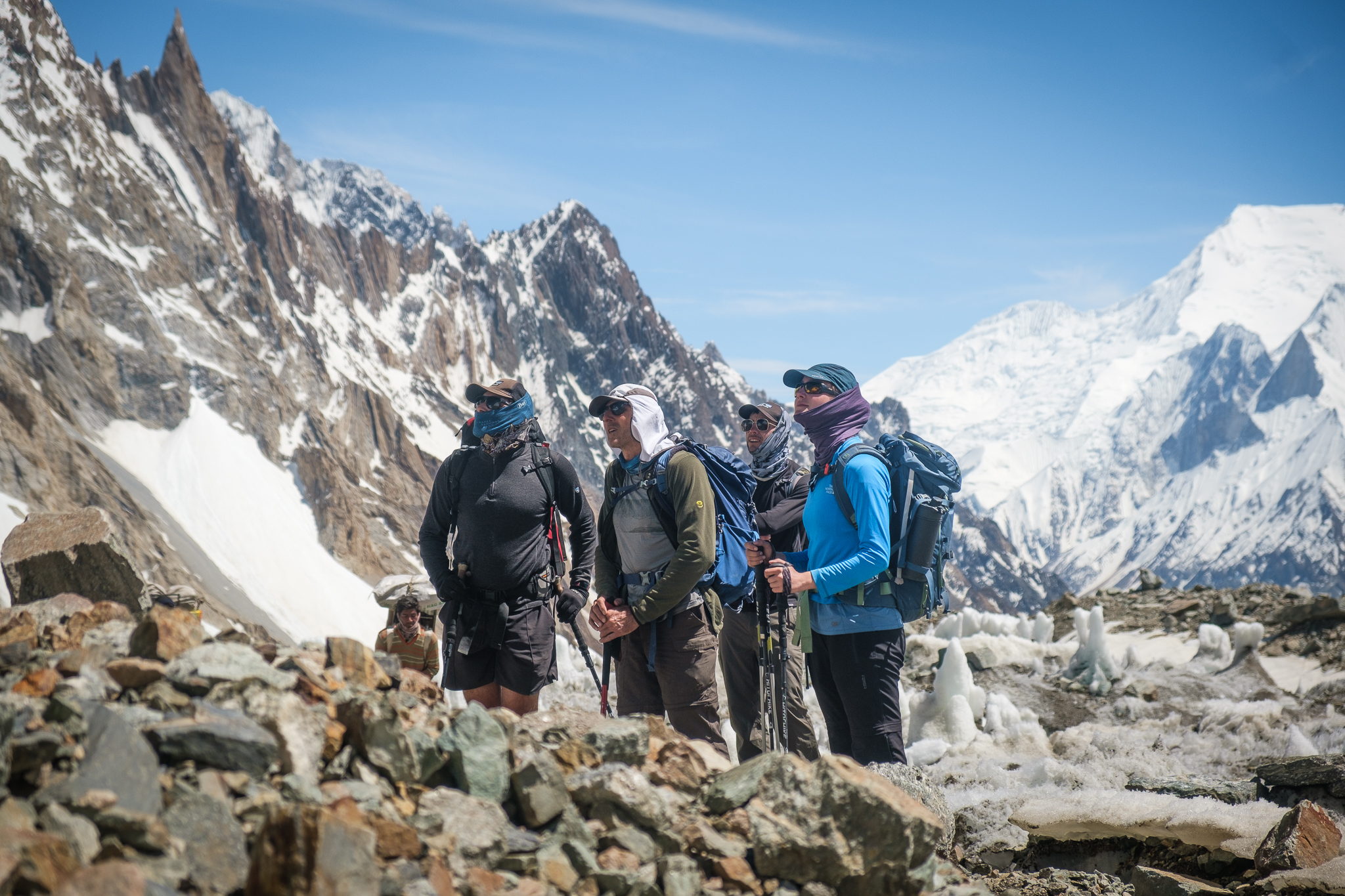
Life on the Baltoro Glacier revolves around simple routines focused on nourishment, rest, and survival in extreme conditions.
Introduction: Living Without Infrastructure
Once beyond Askole, daily life on the K2 Base Camp trek becomes completely detached from modern infrastructure. There are no permanent shelters, no shops, no sanitation facilities, and no external support. Every aspect of daily living is planned, transported, and managed by the expedition team.
Understanding these realities before departure helps trekkers adjust mentally and avoid frustration.
Camp Life: Structure and Routine
Life on the trek follows a predictable rhythm designed to conserve energy and maintain health. Each morning begins early, often before sunrise, especially at higher camps where afternoon winds intensify.
Tents are dismantled after breakfast, loads are distributed to porters, and trekking begins once the route is deemed safe. Afternoons are typically reserved for rest, hydration, and recovery.
Evenings are quiet. Darkness falls quickly, and temperatures drop sharply, encouraging early sleep.
Food on the K2 Base Camp Trek
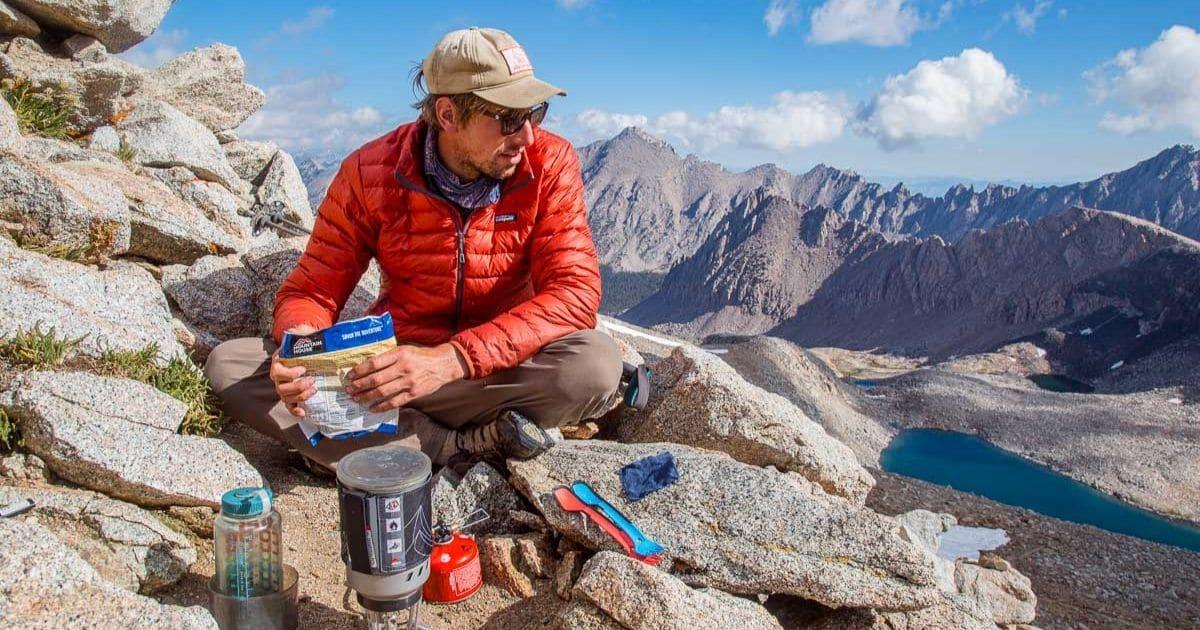
Meals on the Baltoro are designed to provide calories and warmth rather than variety or luxury.
Food on the trek is functional rather than indulgent. Meals are planned to provide sufficient calories, warmth, and digestibility at altitude. A professional cook accompanies most trekking teams and prepares meals using portable stoves.
Breakfast typically consists of porridge, eggs, bread, and hot drinks. Lunch is usually a packed meal eaten along the route. Dinner is the main hot meal of the day and often includes rice, lentils, vegetables, or simple pasta.
At higher camps, appetite commonly decreases, making warm, easily digestible foods especially important.
Hydration and Water Management
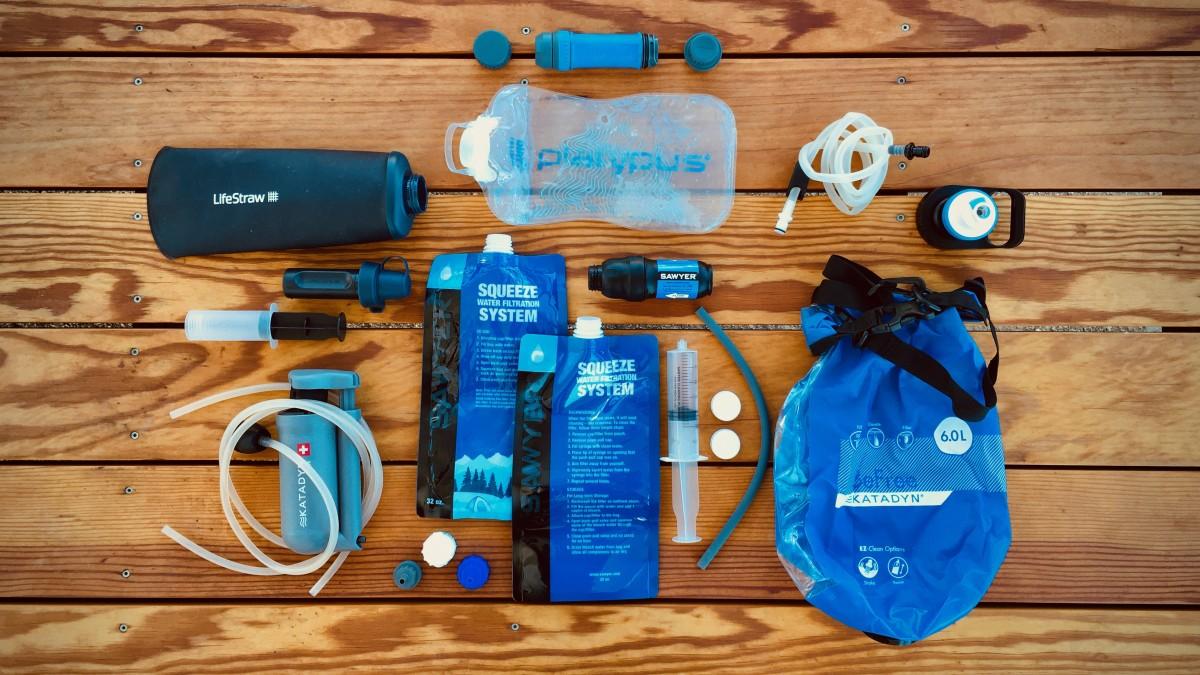
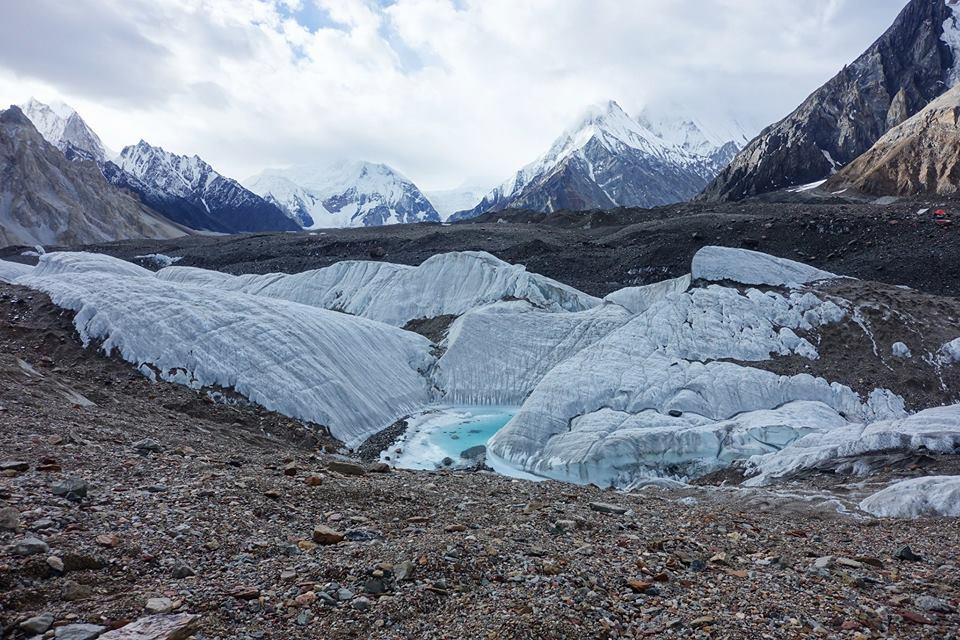
Water on the Baltoro Glacier is obtained from streams or melted ice and must always be treated.
Hydration is one of the most critical factors in acclimatization and overall health. Water sources vary along the route. In lower sections, streams are available, while higher camps rely almost entirely on melted glacier ice.
All water must be treated through boiling, filtration, or chemical purification. Dehydration increases the risk of altitude illness and fatigue, even when temperatures feel cold.
Trekkers are encouraged to drink consistently throughout the day, not only at meals.
Hygiene Realities in a Glacial Environment
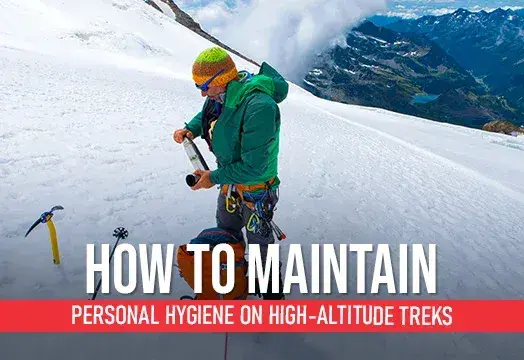
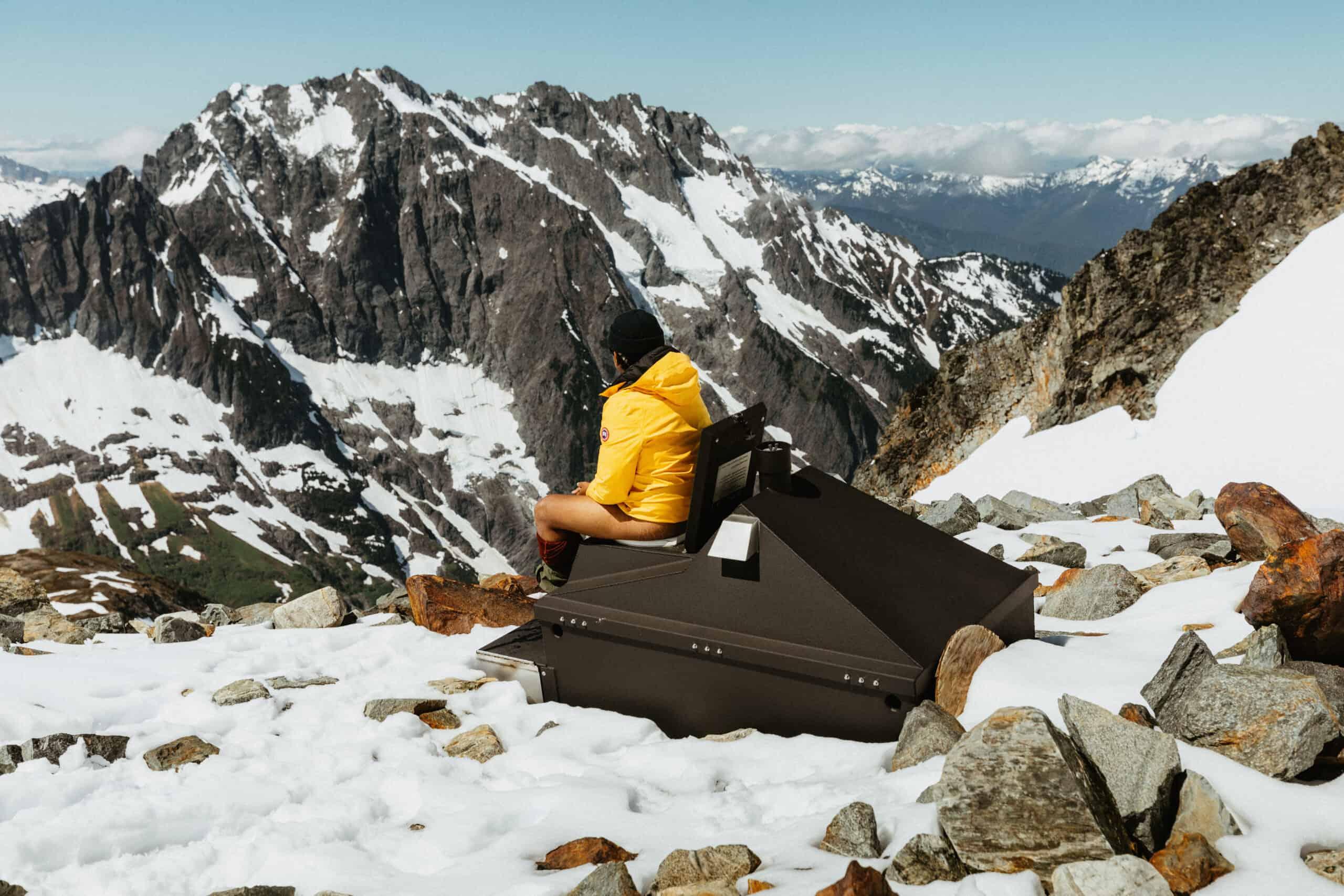
Maintaining basic hygiene is challenging but essential for health during the trek.
Hygiene on the K2 Base Camp trek is basic. There are no showers, and washing is limited to face, hands, and occasional sponge cleaning. Wet wipes and biodegradable soap are commonly used, but water conservation is necessary.
Toilet arrangements consist of designated areas or portable toilet tents managed by the expedition. Strict waste management is enforced to protect the fragile environment.
Waste Management and Environmental Responsibility
The Baltoro Glacier lies within a protected region, and trekkers are expected to follow Leave No Trace principles. All non-biodegradable waste must be carried out.
Responsible operators ensure that human waste is managed properly and that campsites are left clean.
Environmental discipline is not optional in this environment.
Managing Health and Energy Daily
Small issues can escalate quickly if ignored. Blisters, minor stomach problems, and dehydration must be addressed immediately. Daily self-monitoring is essential.
Rest periods are built into the itinerary, but trekkers must also listen to their bodies and communicate openly with guides.
Mental Adjustment to Isolation
Extended isolation is one of the defining characteristics of the K2 Base Camp trek. Communication with the outside world is limited, and distractions are minimal.
Some trekkers find this deeply rewarding, while others find it challenging. Accepting the simplicity of daily life helps maintain morale.
Weather and Daily Decision-Making
Weather plays a dominant role in daily planning. Strong winds, snowfall, or whiteout conditions can delay departures or force early stops.
Flexibility is essential. Progress is dictated by safety rather than schedule.
10 – Weather, Objective Dangers, and Safety Management
4
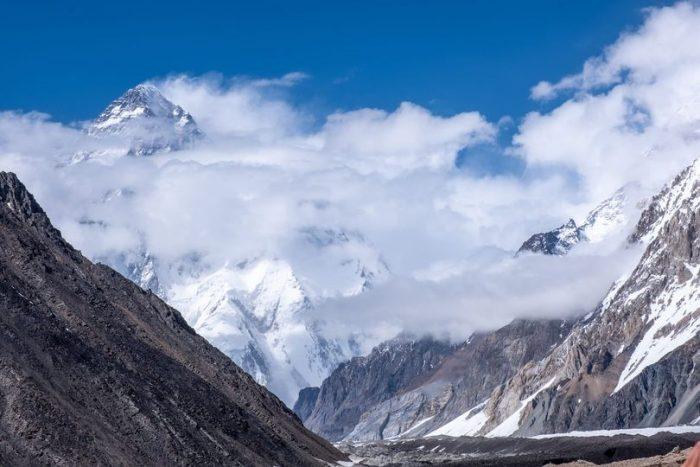
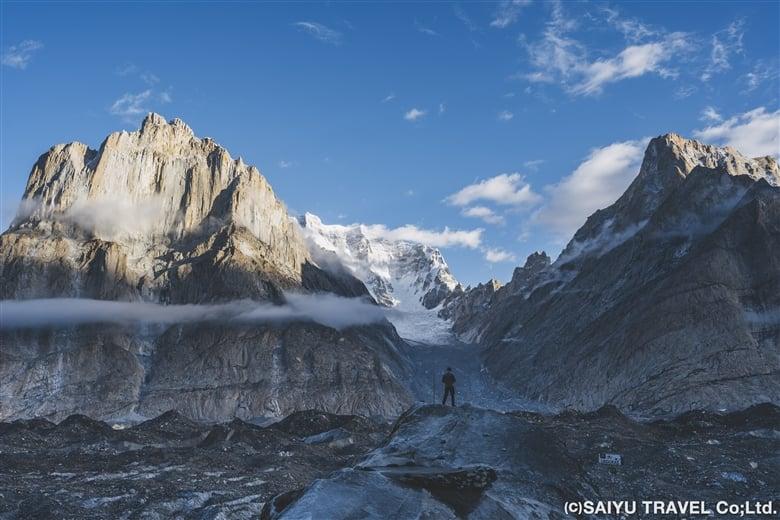
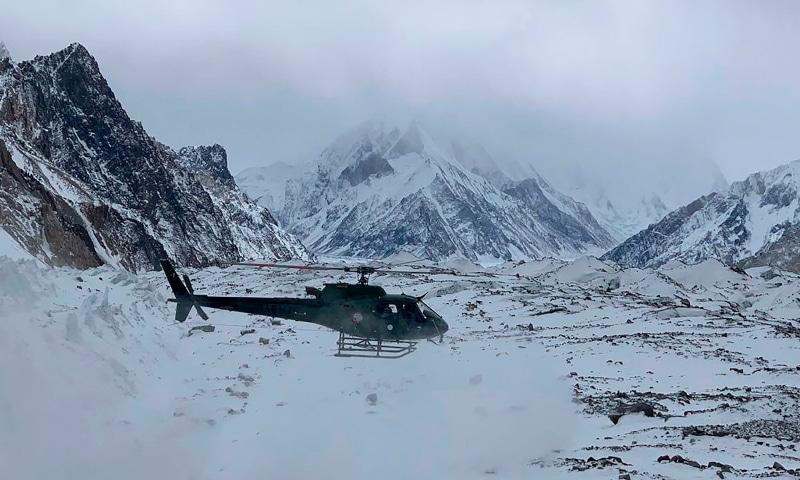
Weather and objective hazards in the Karakoram are unpredictable and often determine the success or failure of a trek.
Introduction: Why Risk Is Inherent, Not Accidental
The K2 Base Camp trek passes through an environment where danger cannot be eliminated, only managed. Unlike controlled trekking regions, the Karakoram is a dynamic high-mountain system, shaped by ice movement, extreme weather, and geological instability.
Understanding risk before departure is essential. This trek demands acceptance of uncertainty and respect for conditions beyond human control.
Karakoram Weather: A Class of Its Own
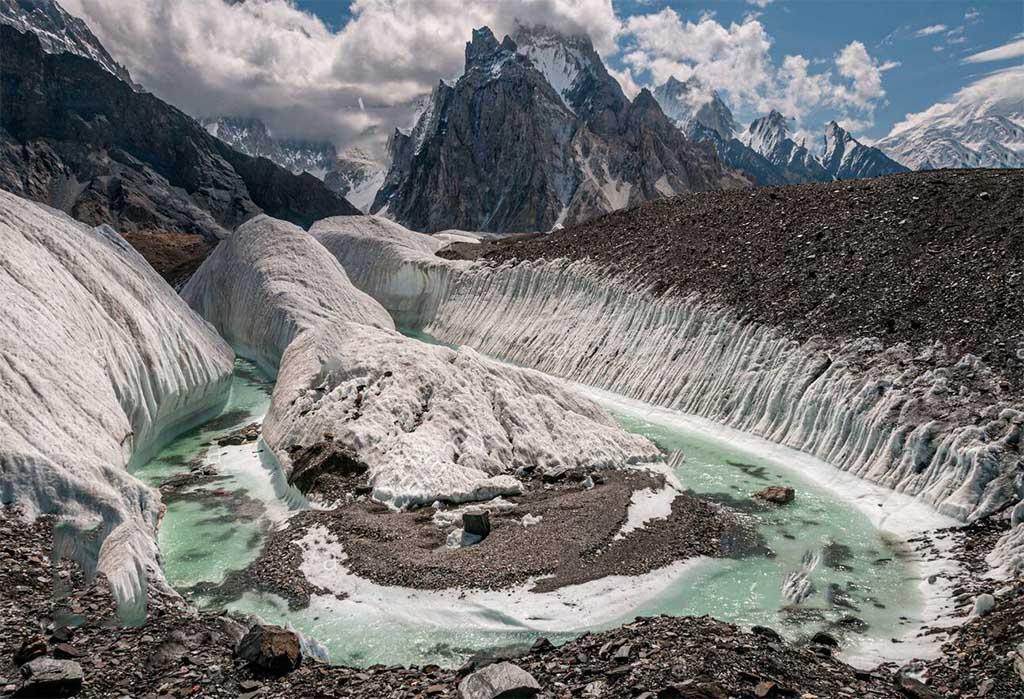
The Karakoram experiences harsher and less predictable weather than many Himalayan regions.
The Karakoram Range has a reputation for unstable and severe weather, even during the trekking season. Unlike the central Himalaya, where weather patterns are relatively predictable, the Karakoram is influenced by both monsoon systems and continental air masses.
Clear mornings can quickly give way to strong winds, snowfall, or whiteout conditions. Temperatures can drop sharply within hours, particularly at Concordia and K2 Base Camp.
Best Season and Remaining Risks
The official trekking season typically runs from late June to early September. Even within this window, weather risks remain significant.
Seasonal realities include:
- July and August offer the best access but still carry storm risk
- Snowfall can occur at any time above 4,000 meters
- Wind chill often presents a greater danger than temperature alone
There is no completely “safe” window for this trek.
Objective Dangers Along the Route
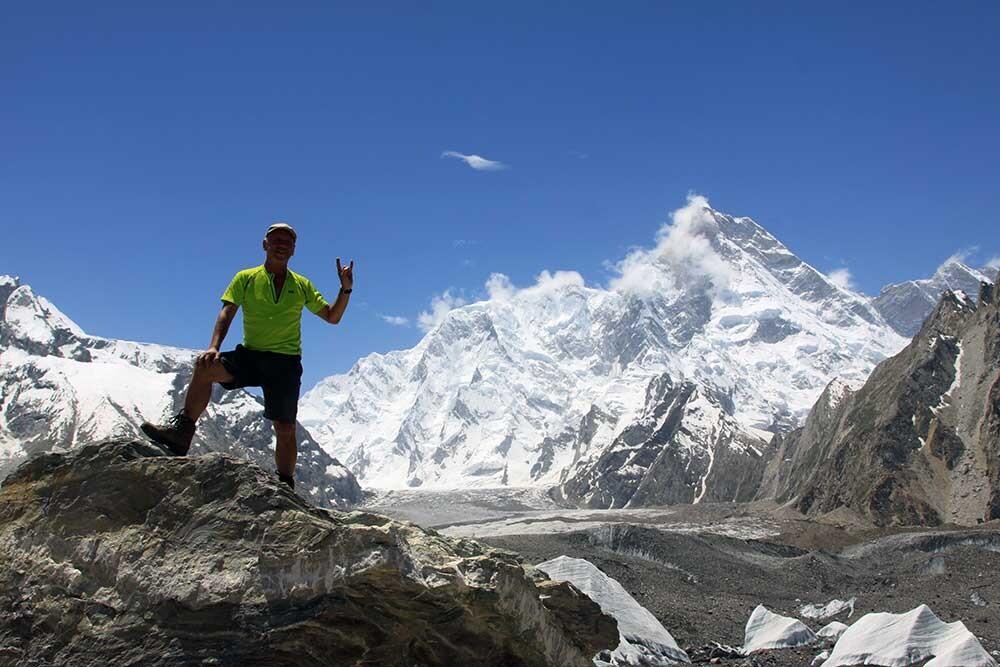
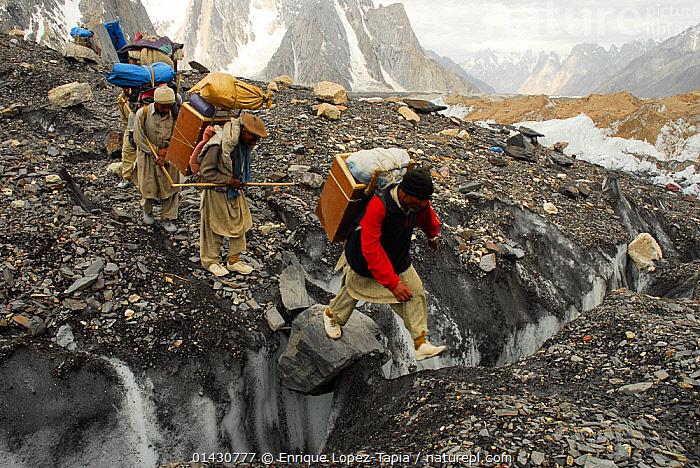
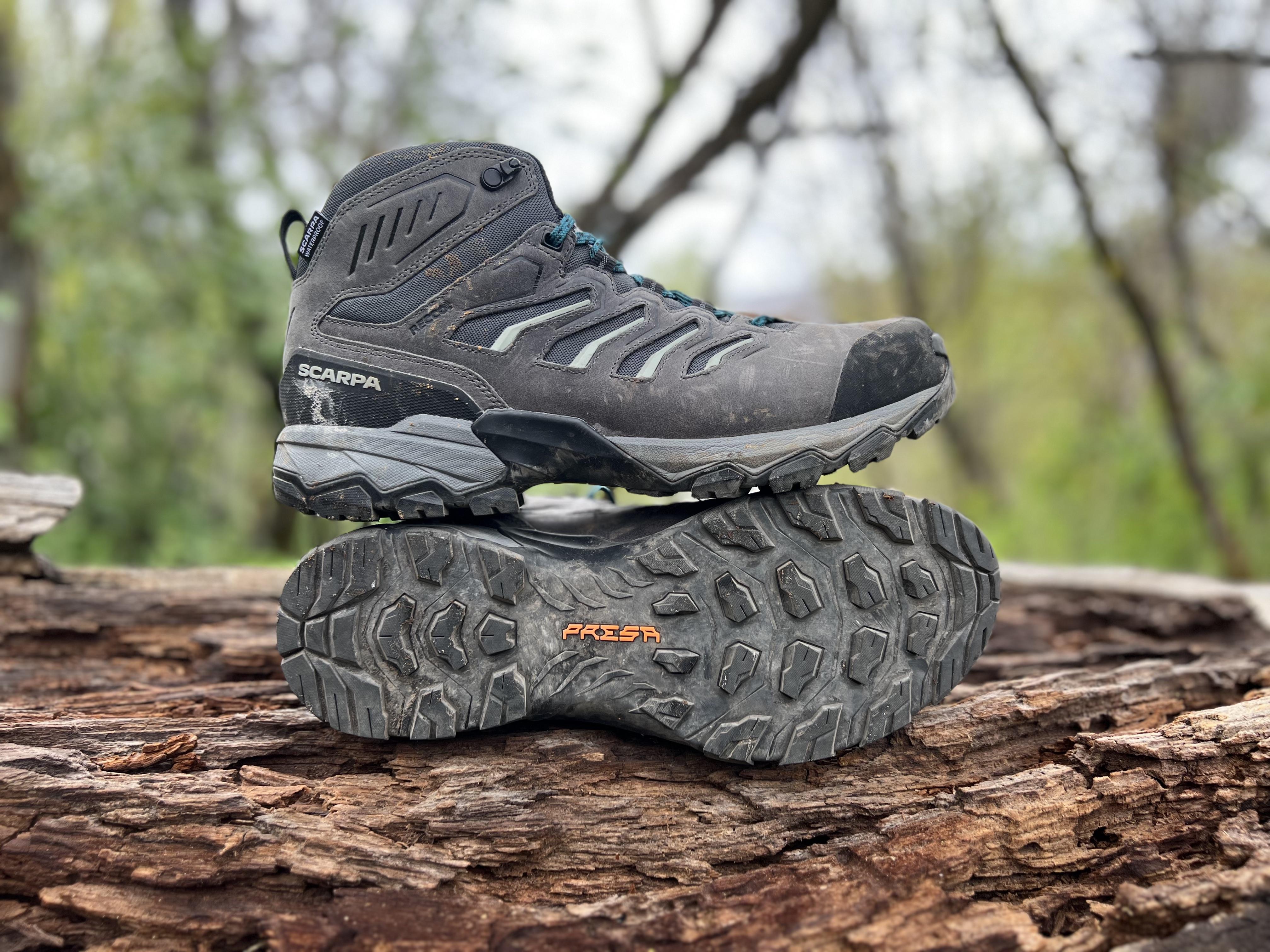
Objective hazards exist regardless of skill or preparation.
Objective dangers are risks that cannot be controlled by individual behavior. On the K2 Base Camp trek, these include rockfall, icefall, crevasses, and sudden weather changes.
Rockfall is most common in lower sections of the trek, particularly near river valleys and steep rock walls. Glacier travel introduces the risk of hidden crevasses, especially during warm afternoons.
Careful timing, route selection, and experienced leadership reduce but do not eliminate these dangers.
Wind: The Silent Threat
Wind is one of the most underestimated dangers in the Karakoram. At higher camps, strong winds can persist for days, increasing heat loss and fatigue.
Extended wind exposure leads to:
- Rapid dehydration
- Increased risk of frostbite
- Reduced morale and sleep quality
Wind management influences decisions about when to move, rest, or wait.
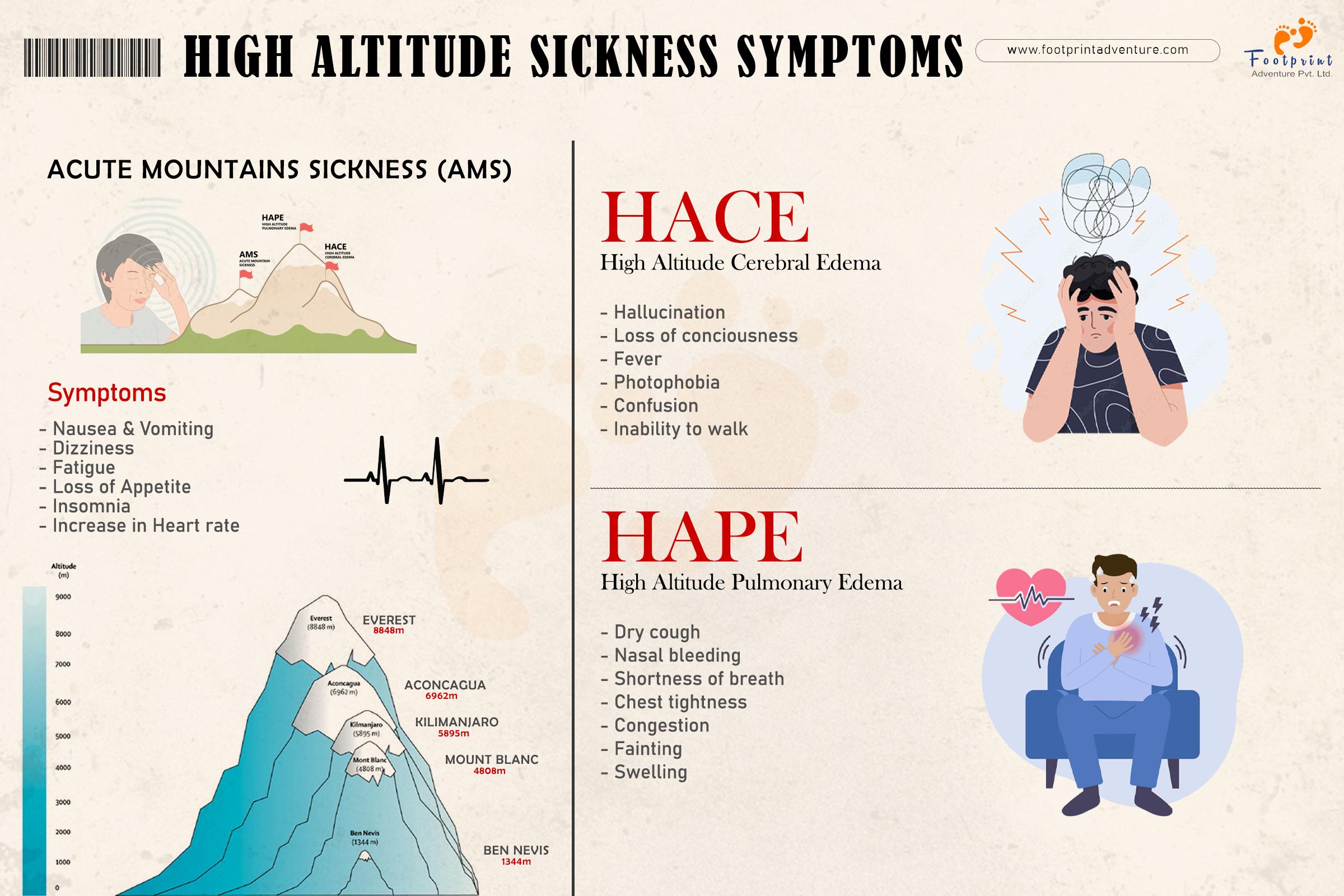
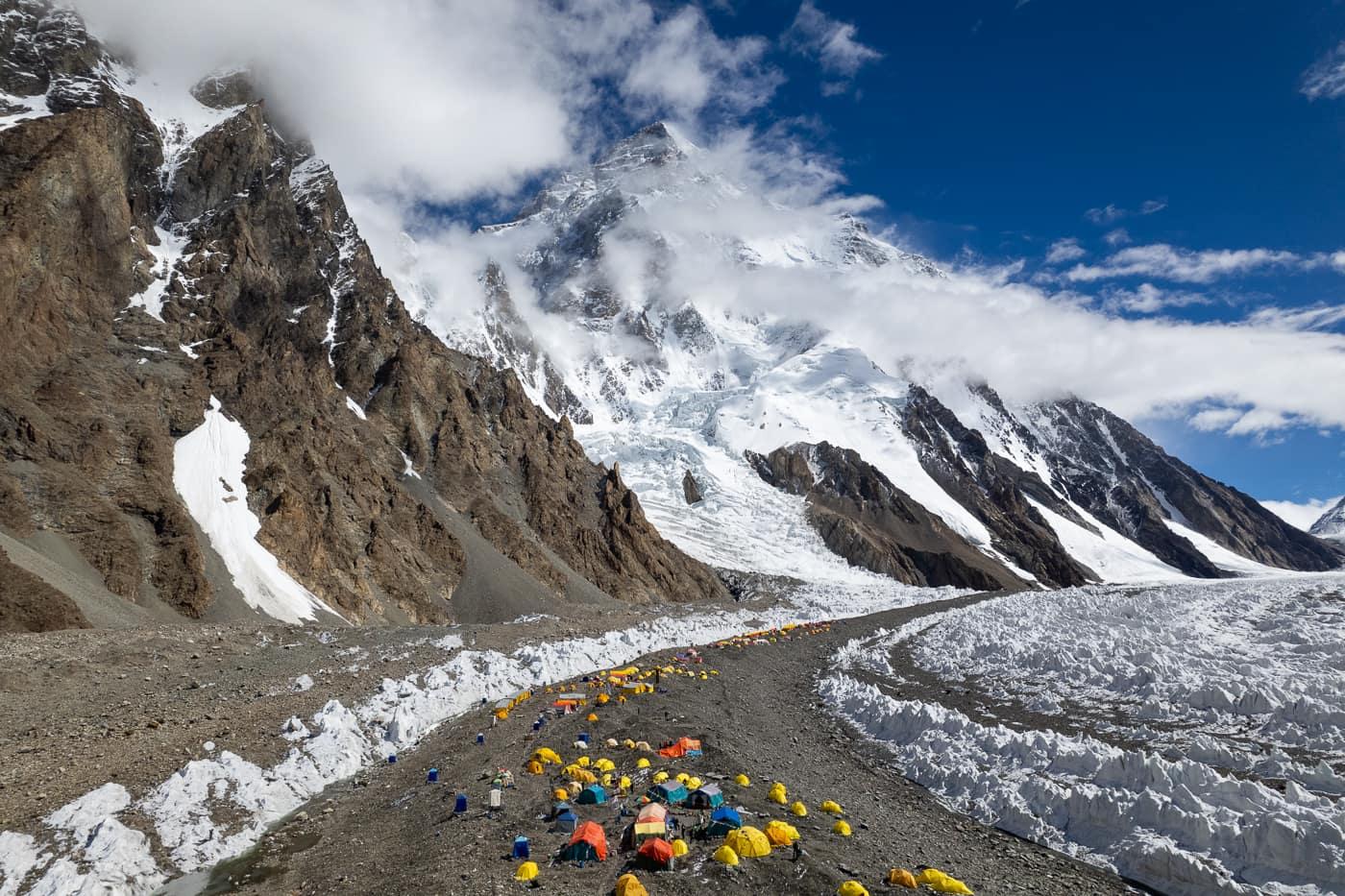
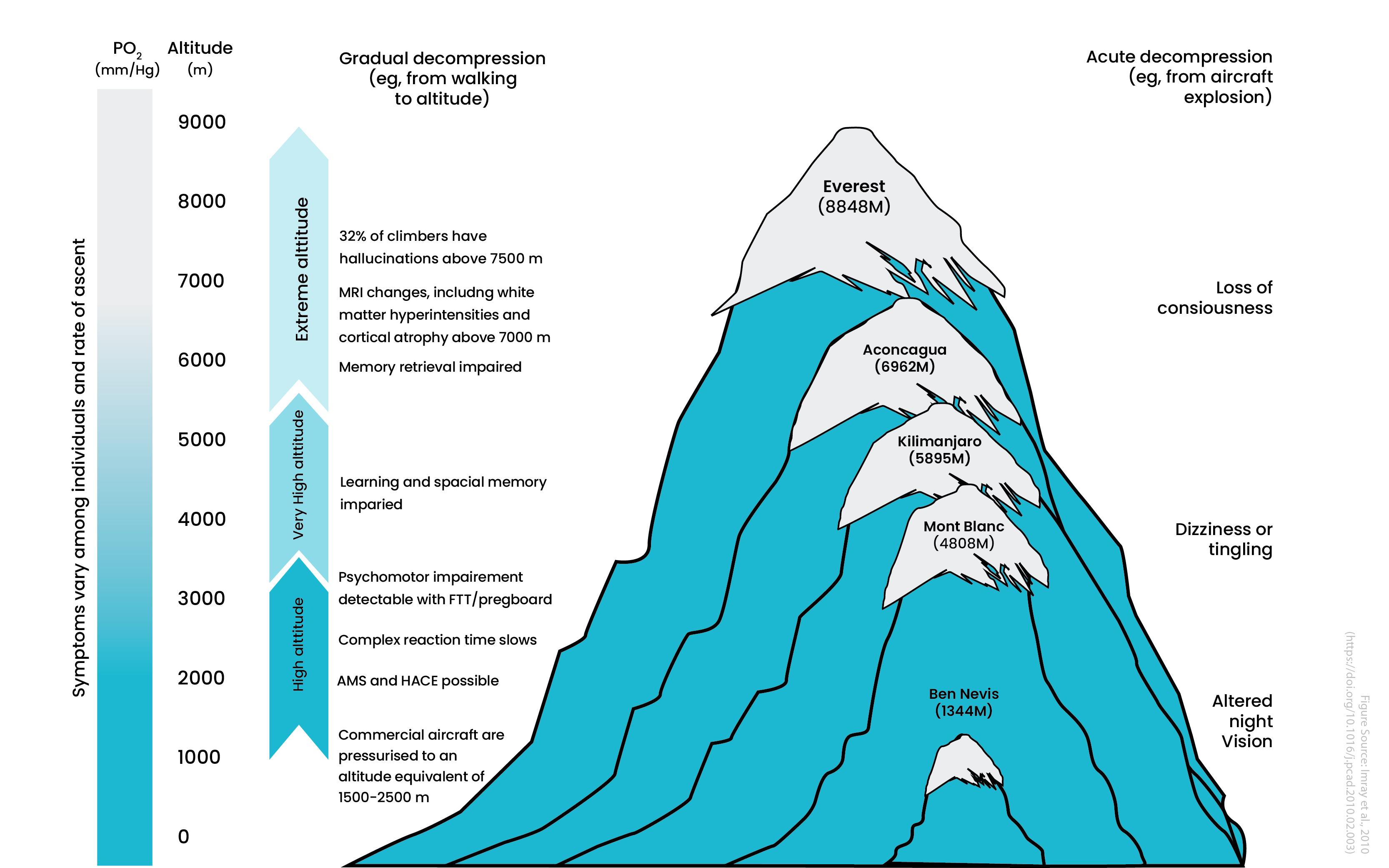
Altitude illness remains one of the most serious risks on the trek.
Acute Mountain Sickness (AMS) is common at elevations above 4,000 meters. More severe conditions such as High Altitude Pulmonary Edema (HAPE) and High Altitude Cerebral Edema (HACE), while rare, are life-threatening.
The only effective treatment for serious altitude illness is immediate descent. There is no substitute and no reliable medication-only solution.
Evacuation Reality in the Karakoram
Evacuation on the K2 Base Camp trek is extremely difficult. Helicopter rescue is not guaranteed and depends on:
- Weather conditions
- Visibility
- Aircraft availability
- Location of the casualty
In many cases, evacuation involves manual descent with assistance, often over multiple days.
This reality reinforces the importance of conservative decision-making.
Role of Guides and Leadership
Professional guides play a critical role in risk management. Their responsibilities include:
- Monitoring weather patterns
- Assessing team health daily
- Adjusting itineraries when needed
- Enforcing rest or descent when necessary
Ignoring guide advice is one of the most dangerous behaviors a trekker can exhibit.
Decision-Making Under Pressure
The Karakoram rewards patience. Attempting to “push through” poor weather, illness, or exhaustion often leads to serious consequences.
Experienced trekkers understand that turning back is sometimes the correct decision. The mountain will remain long after individual plans change.
Psychological Stress and Risk Perception
Extended exposure to cold, isolation, and physical strain can distort judgment. Fatigue reduces caution, and familiarity with the route on return can encourage complacency.
Maintaining discipline until the final day is essential.
9 – Cost, Operators, Ethics, and Final Professional Assessment
4
The K2 Base Camp trek is not a commercial hike but a full expedition requiring planning, discipline, and respect for people and place.
Introduction: Understanding the True Commitment
By the time a trekker considers K2 Base Camp, the question is no longer whether the trek is beautiful. It is whether the trek is appropriate. This final section addresses the realities that are often misunderstood: cost, operator quality, ethical responsibility, and the type of person for whom this trek is truly suitable.
This is not a destination that rewards impulse or casual ambition.
Cost of the K2 Base Camp Trek
The K2 Base Camp trek is one of the most expensive trekking experiences in Asia, not because of luxury, but because of logistics. Everything must be transported by hand across glaciers for weeks, including food, fuel, tents, and safety equipment.
A realistic cost range for foreign trekkers generally falls between USD 3,500 and USD 6,000, depending on group size, operator quality, and inclusions. Lower prices often indicate compromised logistics, underpaid staff, or inadequate safety margins.
The cost typically covers permits, porters, guides, food, tents, group equipment, and domestic transport. International flights, insurance, personal gear, and emergency evacuation costs are usually excluded.
Why Choosing the Right Operator Is Critical
A professional tour operator is not a convenience on this trek; it is a safety system. The difference between a reputable operator and a poorly organized one can determine whether the trek is completed safely or abandoned under stress.
A reliable operator ensures proper load limits for porters, experienced glacier guides, hygienic food preparation, realistic pacing, and strict adherence to safety protocols. Poor operators often attempt to reduce costs by cutting staff, skipping rest days, or pressuring trekkers to continue despite illness.
On the Baltoro, mistakes compound quickly.
Ethical Responsibility Toward Local Communities
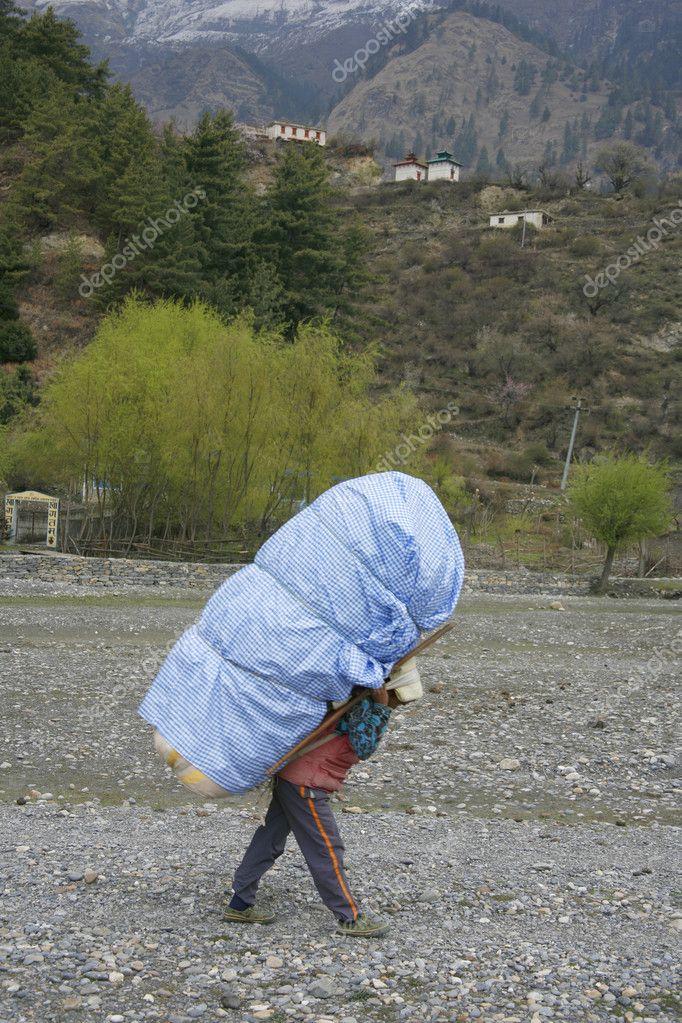
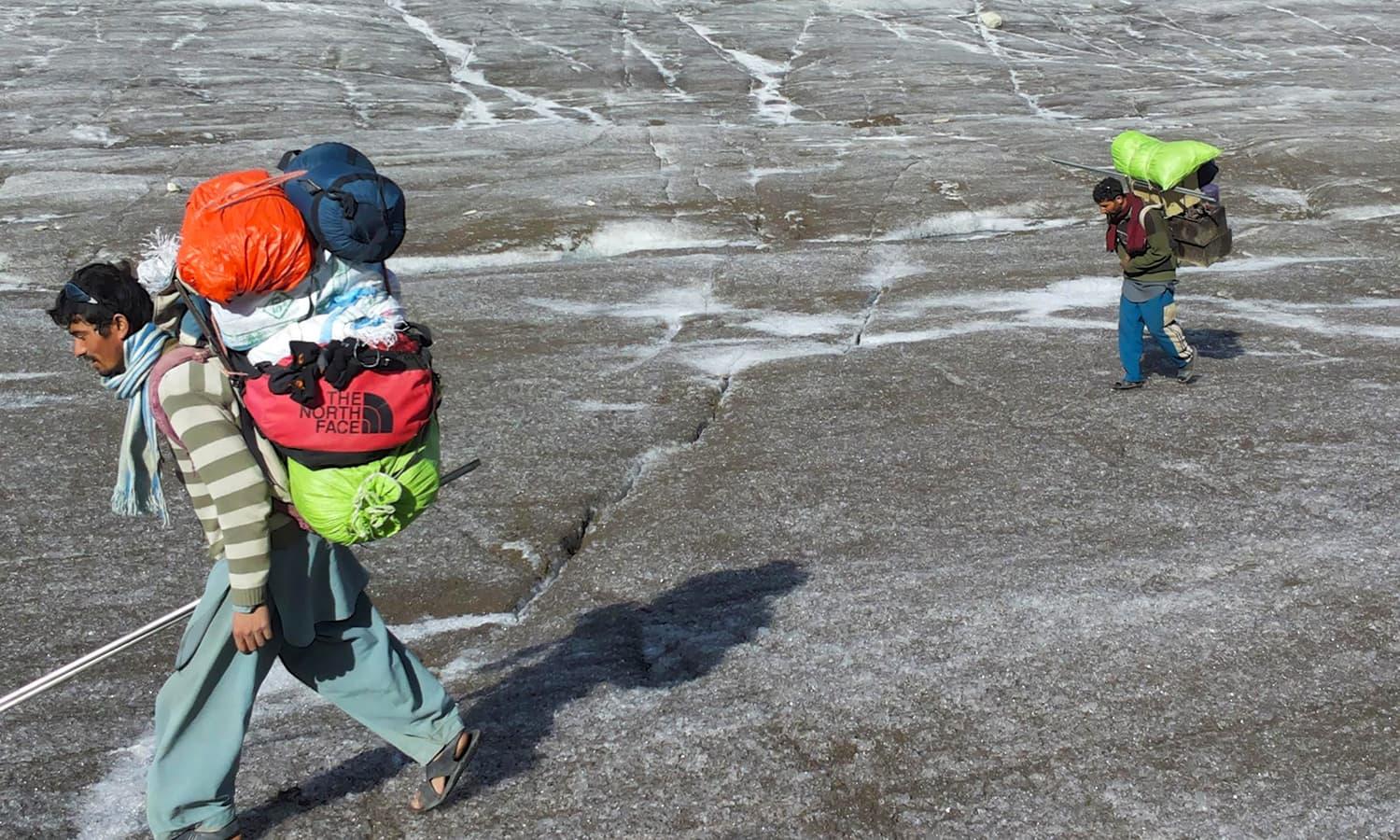
Local porters and staff are the backbone of every Karakoram expedition.
The K2 Base Camp trek relies heavily on local porters from villages such as Askole. Ethical trekking requires respect for fair wages, reasonable load limits, and humane treatment. Trekkers share responsibility for this, even when working through an operator.
Supporting ethical operators helps sustain livelihoods while reducing exploitation in one of the world’s harshest working environments.
Environmental Responsibility in the Karakoram
The Baltoro Glacier is a fragile high-altitude ecosystem. Waste left behind remains frozen for decades. Responsible trekking includes strict waste management, minimizing plastic use, and respecting campsite discipline.
The reputation of trekkers directly influences future access regulations. Poor behavior risks tighter restrictions for everyone.
Who Should Attempt the K2 Base Camp Trek
The K2 Base Camp trek is appropriate for individuals who already understand long-duration trekking in remote environments. Prior experience in high-altitude regions, comfort with camping, and mental resilience are essential.
This trek suits those who value wilderness, patience, and process over achievement or social recognition.
Who Should Not Attempt This Trek
This trek is not suitable for individuals seeking comfort, quick success, or guaranteed outcomes. Those with limited trekking experience, unresolved medical conditions, or a low tolerance for uncertainty should reconsider.
There is no shame in choosing a different destination. The Karakoram rewards humility, not ambition alone.
What Makes the K2 Base Camp Trek Different From All Others
Unlike Everest Base Camp or Annapurna, the K2 Base Camp trek offers no infrastructure, no backup comfort, and no shortcuts. It remains one of the last true wilderness treks accessible to non-climbers.
The reward is not convenience, but proximity to the raw forces that shape the highest mountains on Earth.
Final Professional Assessment
The K2 Base Camp trek is not a bucket-list item. It is an expedition-level undertaking that demands preparation, patience, and respect. Those who complete it successfully often describe it not as an adventure, but as a formative experience that reshapes their understanding of scale, effort, and limitation.
It is not the toughest trek because it is extreme every moment. It is the toughest because it never stops demanding attention.
(Image credit: Wikimedia Commons,Alamy , global cdns)

![K2 Base Camp Trek: Ultimate Guide k2 Trek 2026 [UPDATED]](https://karakoramdiaries.com/storage/ultimate-guide-to-k2-base-camp-trek-full-document-150x150.png)