Aconcagua Trekking and Expedition Guide
Table of contents [Show]
- 1. Understanding Aconcagua and the Andean Environment
- Geographic Position and Access Region
- Why Aconcagua Is Considered One of the Seven Summits
- The Andean Environment
- Routes on Aconcagua
- Who Should Consider Aconcagua
- Expedition Duration and Commitment
- Permit System and Legal Requirements Overview
- What Makes Aconcagua Unique
- 2. Access, Logistics, and Reaching Base Camp
- 3. Acclimatization Strategy and Camp Rotation System
- 3. Acclimatization Strategy and Camp Rotation System
- 5. Gear and Equipment Strategy for Aconcagua
- 6. Weather Patterns, Objective Dangers, and Risk Management
- 7. Cost, Operators, Ethics, and Final Professional Assessment
1. Understanding Aconcagua and the Andean Environment
Aconcagua
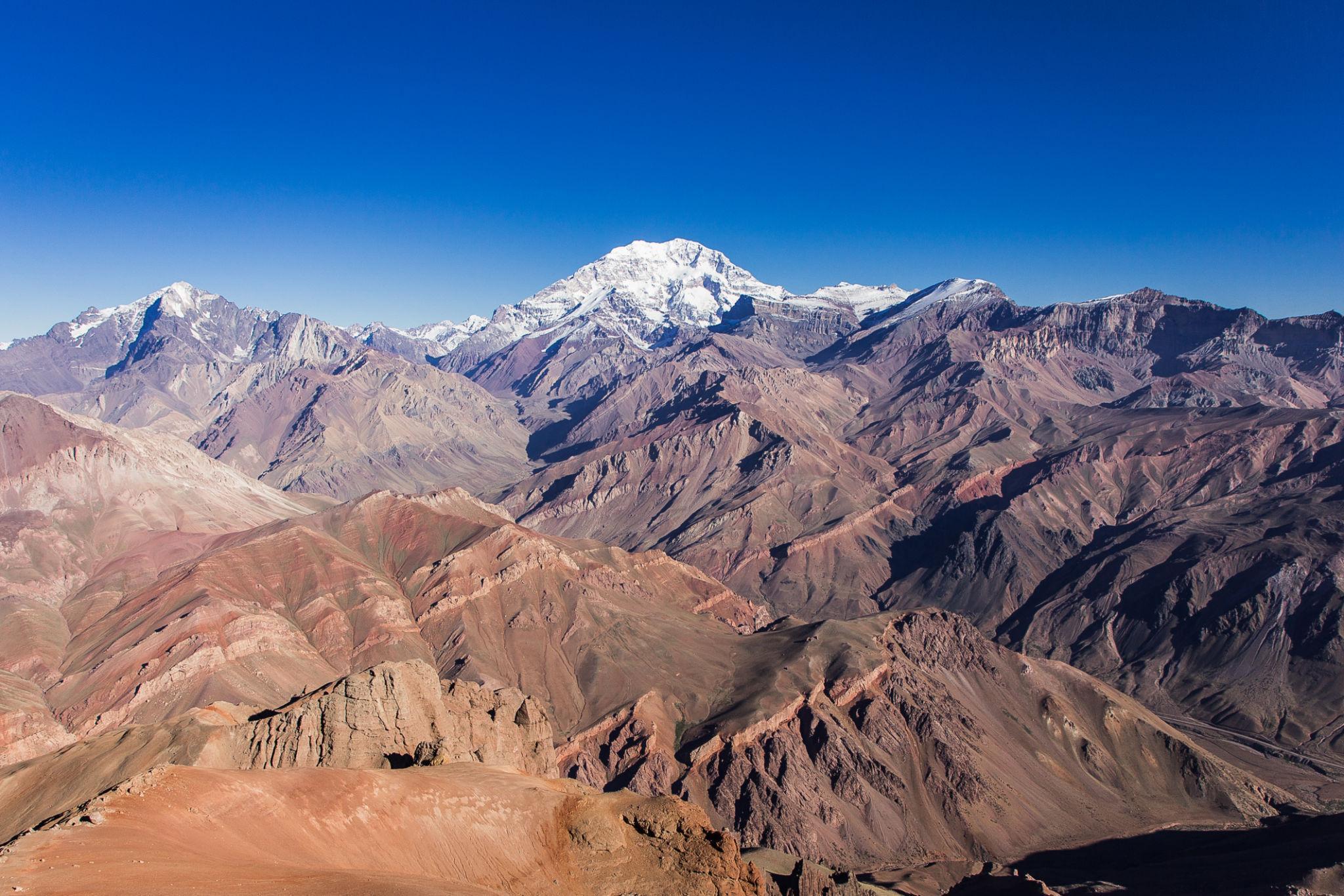
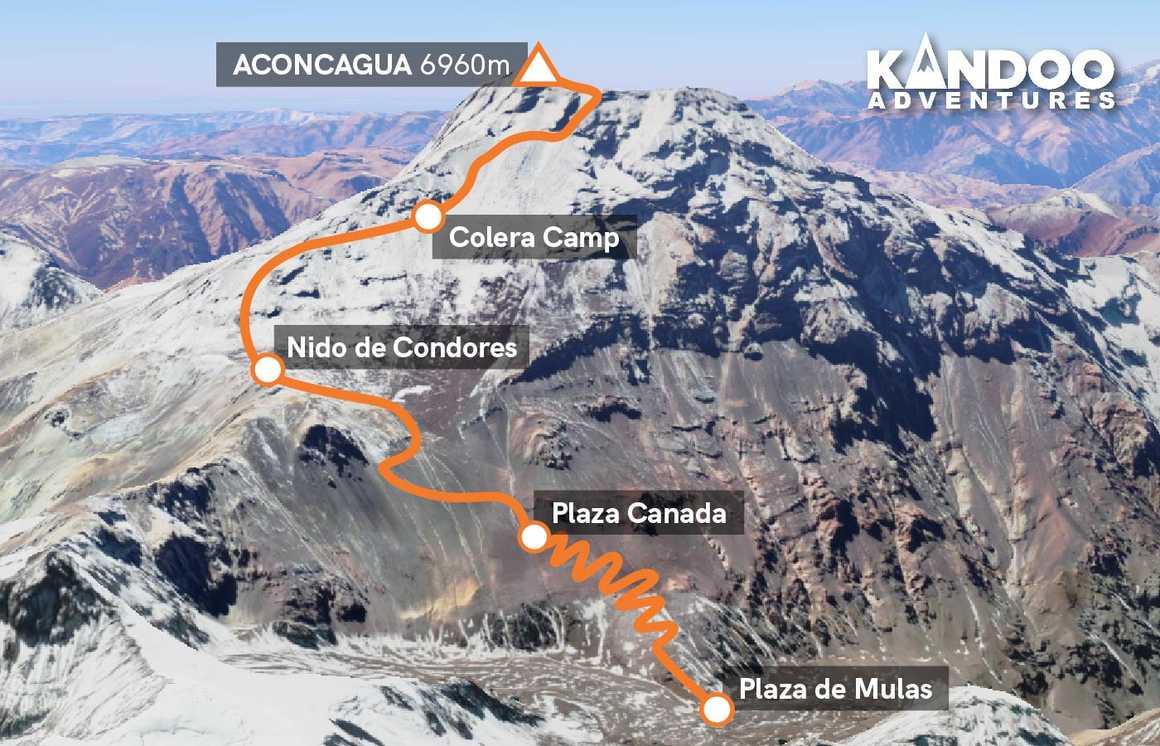
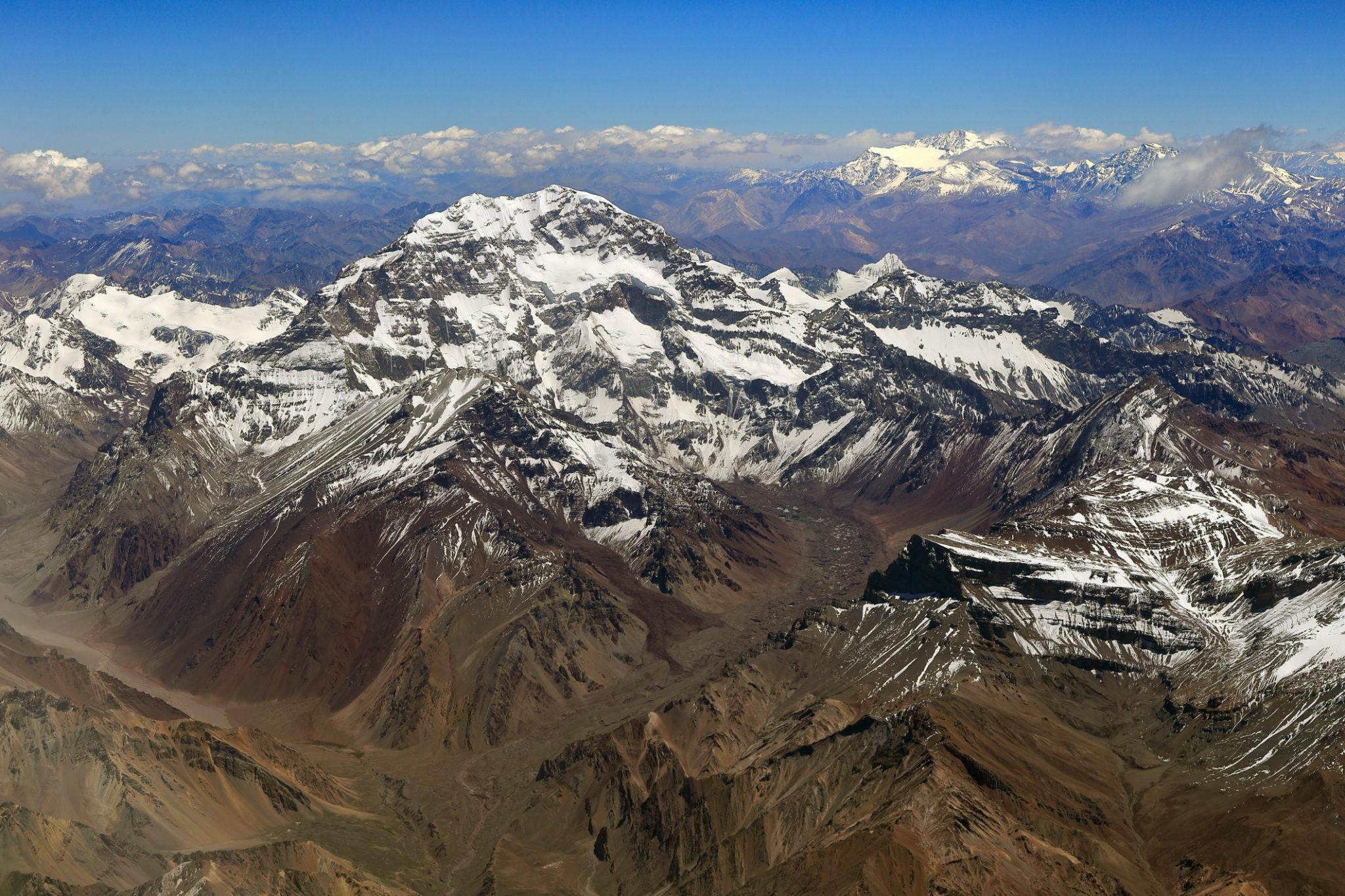
Aconcagua summit and upper Normal Route terrain
Aconcagua stands at 6,961 meters and is the highest mountain outside Asia. It is located in western Argentina near the Chilean border in the Andes mountain range.
Although often described as a “non-technical” peak via the Normal Route, Aconcagua is not an easy mountain. It is a high altitude expedition requiring careful acclimatization, physical conditioning, and weather management.
The mountain’s height places it firmly in the extreme altitude category. The primary difficulty is altitude, wind exposure, and prolonged expedition logistics rather than technical climbing.
Geographic Position and Access Region
Aconcagua lies inside Aconcagua Provincial Park in Mendoza Province, Argentina.
The nearest major city is:
- Mendoza
Mendoza serves as the logistical base for permits, gear checks, and final preparation.
The mountain rises above a dry high-altitude desert environment. Unlike Himalayan peaks, there are no glaciers along the Normal Route requiring rope travel. However, conditions can change with snow and wind.
Why Aconcagua Is Considered One of the Seven Summits
Aconcagua is one of the Seven Summits, meaning it is the highest mountain on the South American continent.
Climbers attempt Aconcagua for several reasons:
- Entry-level exposure to extreme altitude
- Training peak before Everest
- Completion of the Seven Summits list
- Personal high-altitude challenge
However, it is important to understand that although technically straightforward, altitude above 6,500 meters introduces serious physiological stress.
The Andean Environment
The Andes differ significantly from the Himalaya or Karakoram.
Characteristics include:
- Dry air and strong solar radiation
- Extreme wind systems
- Rapid weather changes
- Large temperature swings between day and night
- Very low humidity
Wind is the primary objective hazard on Aconcagua. Gusts can exceed 80 kilometers per hour even in stable conditions.
Routes on Aconcagua
The two main routes are:
- Normal Route
- Polish Glacier Route
This guide focuses on the Normal Route, which is the most commonly climbed and does not require technical ice climbing under standard conditions.
Who Should Consider Aconcagua
Aconcagua is suitable for:
- Experienced trekkers who have climbed above 5,000 meters
- Mountaineers seeking first 6,000 meter peak
- Climbers preparing for Himalayan expeditions
It is not suitable for:
- First-time high-altitude climbers
- Individuals without prior multi-day expedition experience
- Climbers with unmanaged altitude sensitivity
Expedition Duration and Commitment
Typical expedition length:
- 18 to 21 days including acclimatization
- 14 to 16 days on the mountain itself
This includes:
- Trek to base camp
- Load carries
- Rotation climbs
- Rest days
- Summit window waiting
Weather delays are common.
Permit System and Legal Requirements Overview
Aconcagua lies within a regulated provincial park.
Climbers must obtain:
- Official climbing permit
- Park entry registration
- Medical clearance form
Permits vary in cost depending on season and nationality.
Guides are not mandatory for the Normal Route, but strongly recommended for first-time high-altitude climbers.
What Makes Aconcagua Unique
Aconcagua is unique because:
- It is extremely high without technical glacier climbing
- It exposes climbers to true expedition conditions
- It combines desert approach with alpine summit
- It tests endurance more than technical ability
The final 1,000 vertical meters from high camp to summit are physically demanding due to altitude and wind.
2. Access, Logistics, and Reaching Base Camp
Climbing Aconcagua begins long before stepping onto the mountain. Logistics are structured, regulated, and time sensitive. The expedition officially starts in Mendoza.
Arrival in Argentina
Most climbers arrive via:
- Buenos Aires
- Then connect to Mendoza
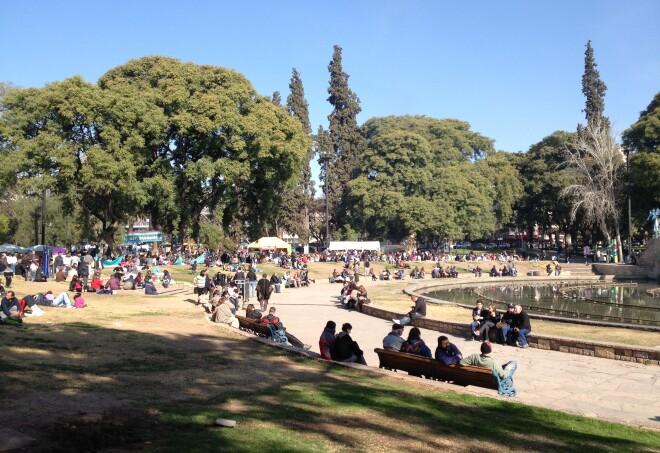
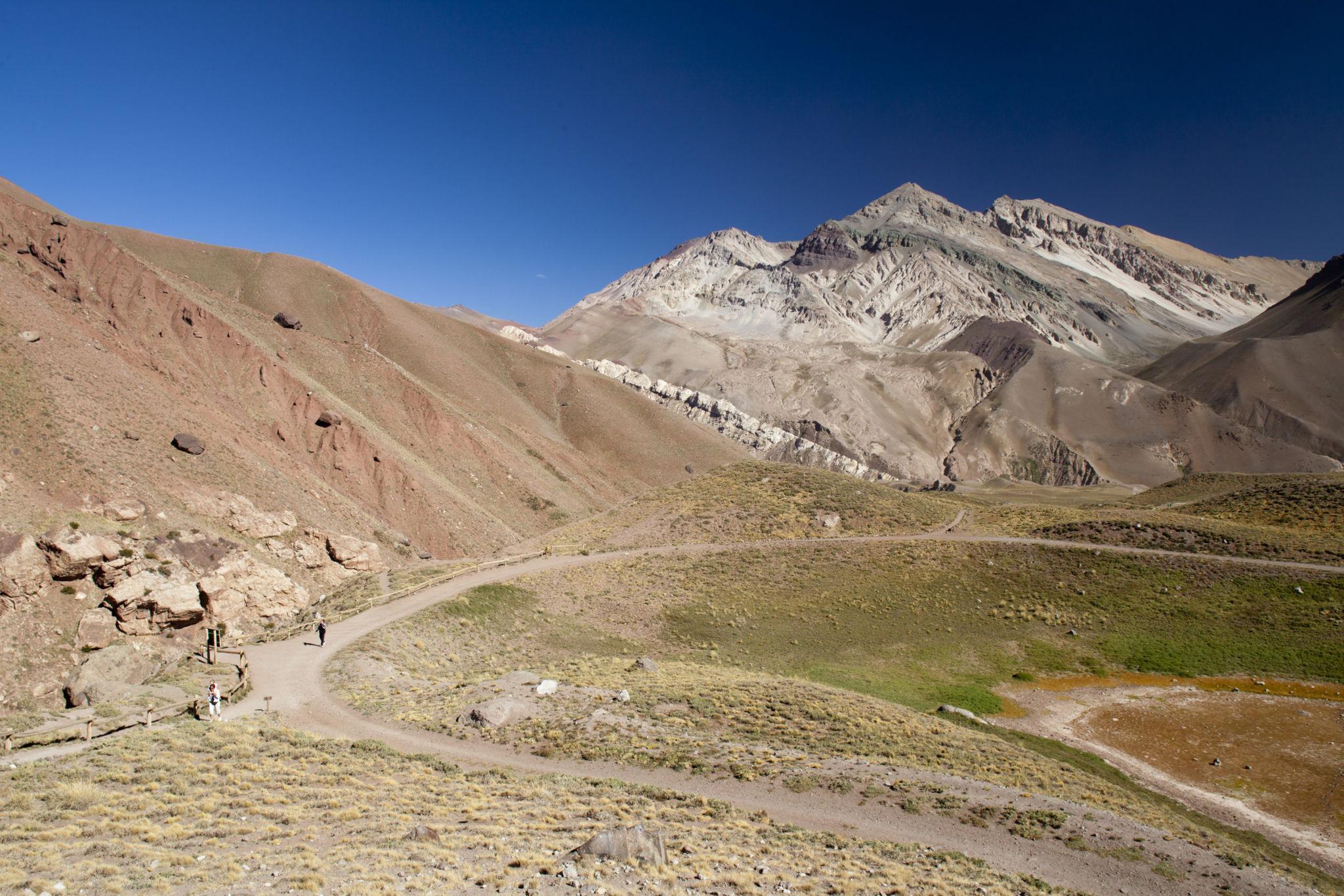
Mendoza city center and Horcones park entrance
Mendoza is the operational hub for all Aconcagua expeditions. It provides:
- Permit offices
- Gear rental shops
- Expedition companies
- Medical certificate verification
- Last supply purchases
Most climbers spend two to three days in Mendoza preparing before entering the park.
Permit System and Seasonal Windows
Aconcagua lies inside Aconcagua Provincial Park, which strictly regulates access.
Permit types vary based on:
- High season versus low season
- Guided versus independent
- Nationality category
The climbing season typically runs from late November through February.
Each climber must:
- Obtain an official climbing permit
- Register emergency contact details
- Complete a medical form
- Undergo health checks at base camp
Park rangers perform medical screenings during the expedition.
Travel from Mendoza to the Trailhead
From Mendoza, climbers travel by road approximately three hours west toward the Chilean border.
The Normal Route approach begins at:
- Horcones Valley entrance
This is the official park entry.
Mule Logistics and Load Transport
Aconcagua logistics are structured around mule transport.
From Horcones to Base Camp:
- Mules carry heavy expedition duffel bags
- Climbers carry light daypacks
- Maximum weight per duffel is usually 25 to 30 kilograms
This system allows climbers to conserve energy during the approach.
Mules do not continue above base camp. Above Plaza de Mulas, climbers must carry their own loads during acclimatization rotations.
Trek to Plaza de Mulas Base Camp
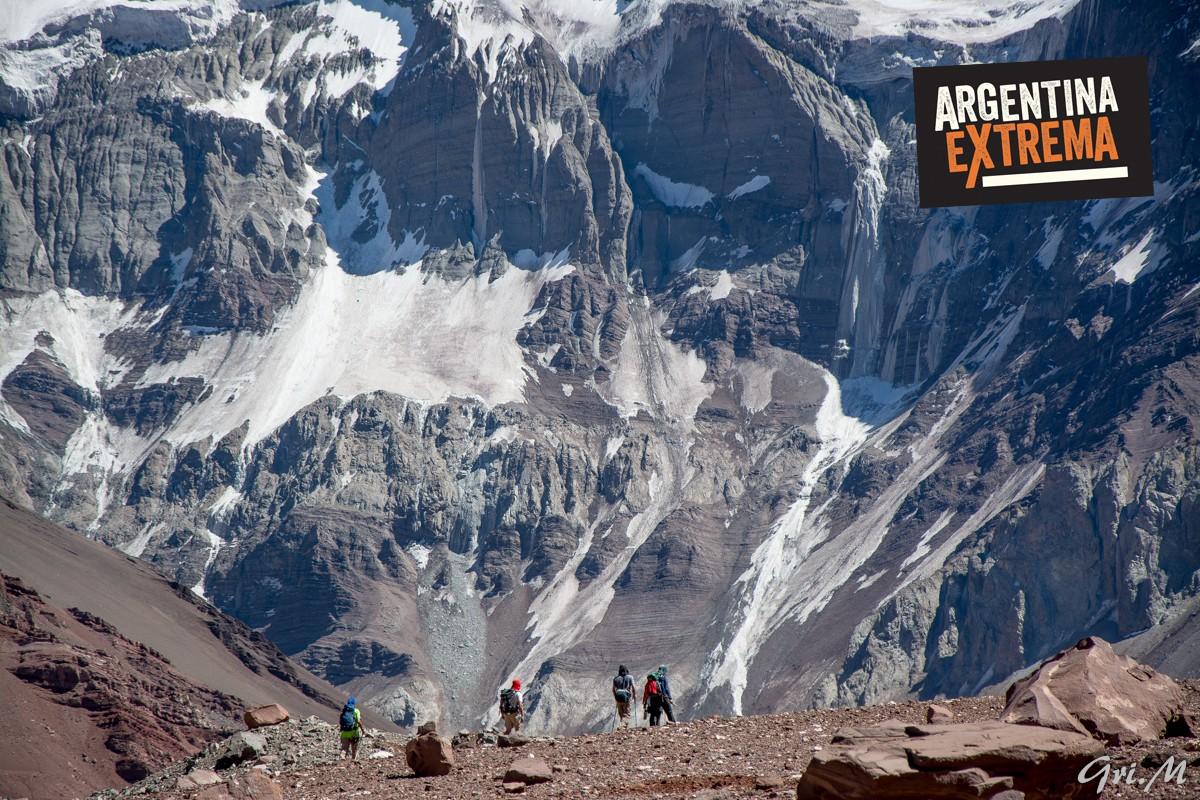
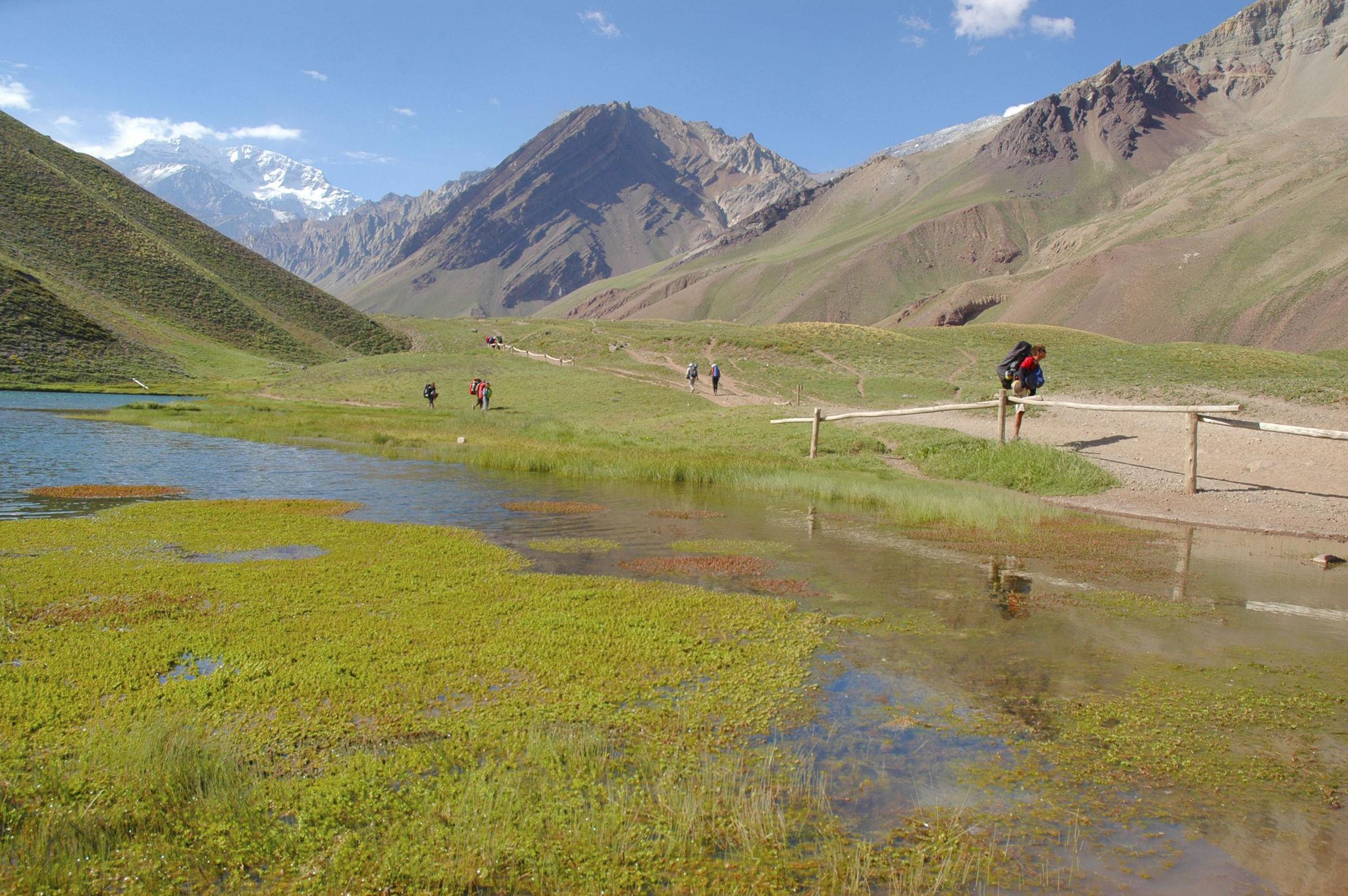
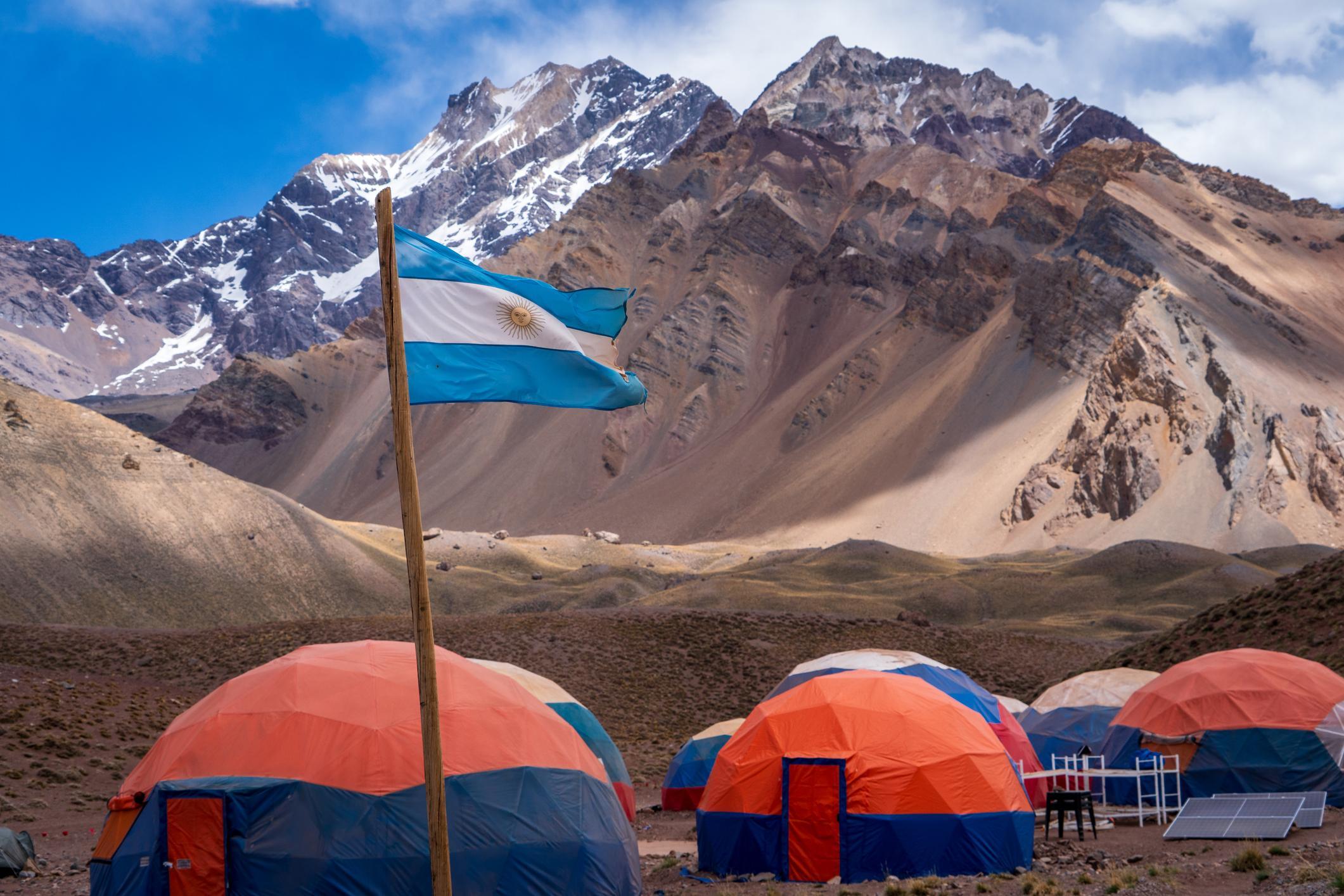
Plaza de Mulas Base Camp and Horcones Valley approach
The approach trek takes approximately three days:
Day 1: Horcones to Confluencia
Day 2: Confluencia to Plaza Francia viewpoint and return
Day 3: Confluencia to Plaza de Mulas
Plaza de Mulas sits at approximately 4,300 meters. It is one of the largest base camps outside the Himalaya.
Facilities include:
- Medical check station
- Communication tents
- Organized camp areas
- Expedition service domes
The environment is dry, dusty, and exposed to wind.
Base Camp Medical Control
At Plaza de Mulas, park doctors check:
- Blood oxygen levels
- Pulse rate
- Signs of altitude illness
Climbers showing severe symptoms may be required to descend.
Medical oversight is stricter here than on many other high peaks.
Independent vs Guided Logistics
Guides are not legally mandatory on the Normal Route.
However, logistical services are highly recommended because they provide:
- Base camp infrastructure
- Food services
- Communication support
- Emergency coordination
Independent climbers must manage:
- Camp setup
- Meal planning
- Weather interpretation
- Evacuation coordination
At nearly 7,000 meters, poor logistical decisions carry serious consequences.
Psychological Adjustment at Base Camp
Base camp marks the transition from trek to expedition.
Common psychological shifts include:
- First real exposure to altitude
- Awareness of summit scale
- Long waiting periods for weather windows
- Realization of isolation
From here, the climb becomes a rotation based acclimatization system.
Good. We now move into the core structure of the climb.
3. Acclimatization Strategy and Camp Rotation System
Aconcagua is not technically complex on the Normal Route. The difficulty comes from altitude, wind exposure, and sustained physical effort above 5,500 meters.
The success of the expedition depends almost entirely on how well the acclimatization schedule is executed.
Understanding the Camp Structure
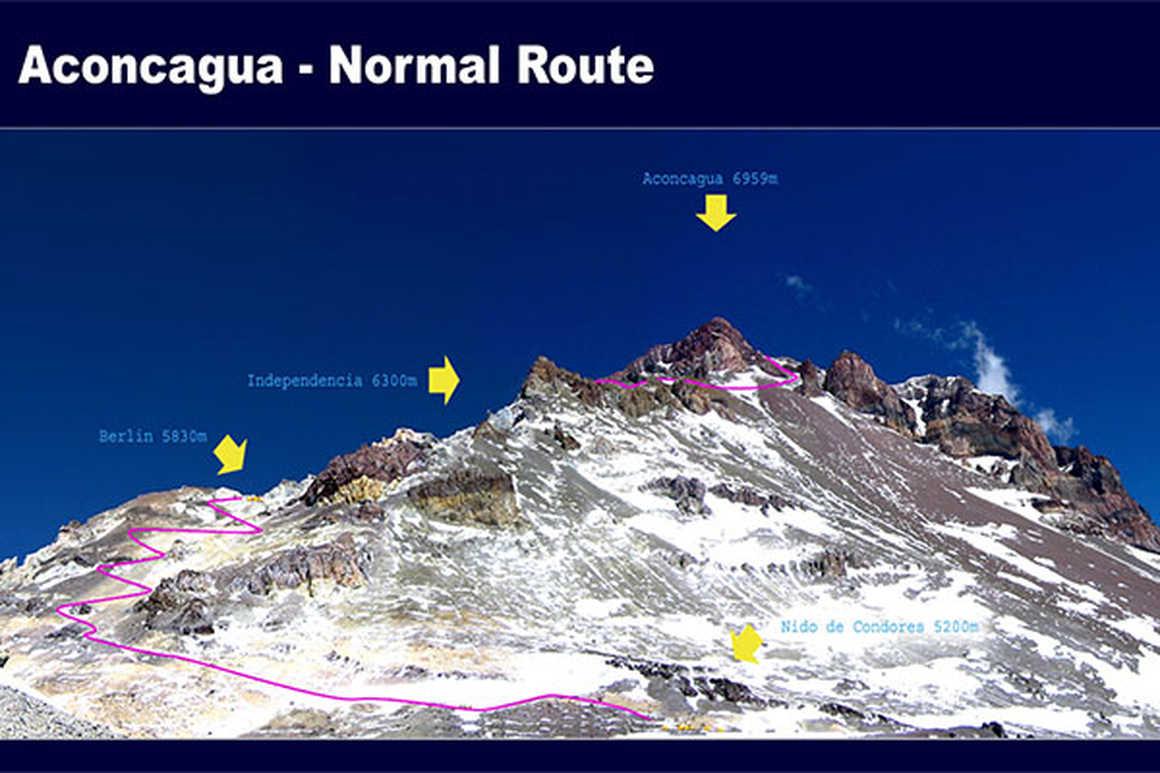
The Normal Route typically follows this structure:
- Base Camp: Plaza de Mulas at 4,300 m
- Camp I: Canada Camp at approximately 5,050 m
- Camp II: Nido de Cóndores at approximately 5,560 m
- Camp III: Colera or Berlin Camp at approximately 5,950 to 6,000 m
- Summit: 6,961 m
Each higher camp introduces greater physiological stress.
The Carry High Sleep Low Principle
The standard acclimatization strategy is based on progressive load carries.
The pattern usually follows:
- Carry gear from Base Camp to Camp I
- Return to sleep at Base Camp
- Move and sleep at Camp I
- Carry load to Camp II
- Descend to Camp I
- Move and sleep at Camp II
- Carry to Camp III
- Descend for rest
- Final summit rotation
This method allows the body to adapt gradually to reduced oxygen pressure.
Skipping rotations increases risk of acute mountain sickness.
Camp I: Canada Camp
Canada Camp and lower slopes of the Normal Route
Canada Camp is the first step into sustained high altitude.
Characteristics:
- Rocky terrain
- Wind exposure
- Limited flat tent platforms
Many climbers experience mild altitude symptoms here, including headache and appetite suppression.
Camp II: Nido de Cóndores
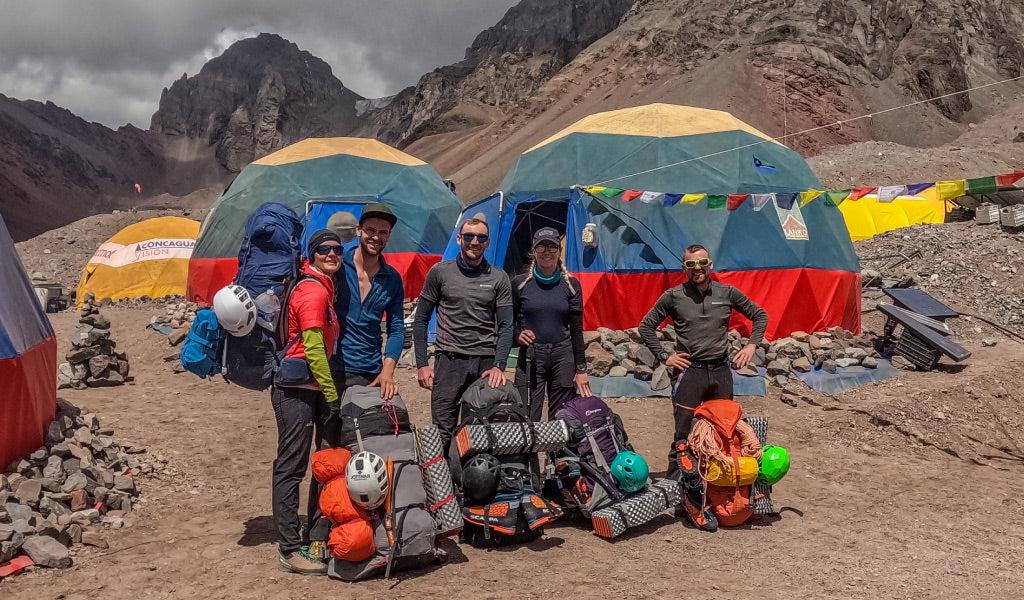
Nido de Cóndores high altitude camp
Nido de Cóndores is a large, exposed plateau. Wind speeds here can become severe.
This camp represents a psychological threshold. Climbers are now well above 5,500 meters, where recovery slows significantly.
Common experiences include:
- Insomnia
- Reduced appetite
- Fatigue despite light activity
Proper hydration is critical at this level.
Camp III: Colera or Berlin
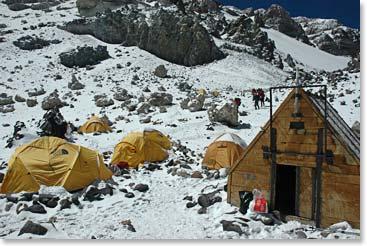
High camp at Colera on Aconcagua
Camp III sits near 6,000 meters. This is summit camp.
At this altitude:
- Sleep is shallow
- Appetite is minimal
- Dehydration risk increases
- Simple tasks require effort
Most summit pushes begin between 3:00 and 5:00 AM depending on weather.
Summit Day: The Final Ascent
The summit day from Colera involves:
- Independent Plaza Canada slopes
- Traversing to the Canaleta
- Steep scree ascent through the Canaleta
- Final ridge to summit
The Canaleta section is often the slowest and most exhausting portion.
Wind exposure is significant near the summit ridge.
Summit duration from high camp typically ranges from 8 to 12 hours round trip.
Altitude Above 6,500 Meters
Above 6,500 meters:
- Decision making slows
- Coordination decreases
- Dehydration accelerates
- Frostbite risk increases in wind
There is no fixed rope infrastructure. Climbers move independently.
This is extreme altitude territory.
Common Reasons for Summit Failure
The most common causes of failed summit attempts are:
- High winds
- Inadequate acclimatization
- Gastrointestinal issues
- Dehydration
- Mental fatigue
The mountain has a high attempt rate but a significantly lower summit success rate.
Psychological Pressure at High Camp
High camp brings:
- Anxiety about summit window
- Sleep disturbance
- Physical weakness
- Concern over weather
Experienced climbers understand that turning around is often the correct decision.
Good. We now move into the core structure of the climb.
3. Acclimatization Strategy and Camp Rotation System
Aconcagua is not technically complex on the Normal Route. The difficulty comes from altitude, wind exposure, and sustained physical effort above 5,500 meters.
The success of the expedition depends almost entirely on how well the acclimatization schedule is executed.
Understanding the Camp Structure
The Normal Route typically follows this structure:
- Base Camp: Plaza de Mulas at 4,300 m
- Camp I: Canada Camp at approximately 5,050 m
- Camp II: Nido de Cóndores at approximately 5,560 m
- Camp III: Colera or Berlin Camp at approximately 5,950 to 6,000 m
- Summit: 6,961 m
Each higher camp introduces greater physiological stress.
The Carry High Sleep Low Principle
The standard acclimatization strategy is based on progressive load carries.
The pattern usually follows:
- Carry gear from Base Camp to Camp I
- Return to sleep at Base Camp
- Move and sleep at Camp I
- Carry load to Camp II
- Descend to Camp I
- Move and sleep at Camp II
- Carry to Camp III
- Descend for rest
- Final summit rotation
This method allows the body to adapt gradually to reduced oxygen pressure.
Skipping rotations increases risk of acute mountain sickness.
Camp I: Canada Camp
Canada Camp and lower slopes of the Normal Route
Canada Camp is the first step into sustained high altitude.
Characteristics:
- Rocky terrain
- Wind exposure
- Limited flat tent platforms
Many climbers experience mild altitude symptoms here, including headache and appetite suppression.
Camp II: Nido de Cóndores
Nido de Cóndores high altitude camp
Nido de Cóndores is a large, exposed plateau. Wind speeds here can become severe.
This camp represents a psychological threshold. Climbers are now well above 5,500 meters, where recovery slows significantly.
Common experiences include:
- Insomnia
- Reduced appetite
- Fatigue despite light activity
Proper hydration is critical at this level.
Camp III: Colera or Berlin
High camp at Colera on Aconcagua
Camp III sits near 6,000 meters. This is summit camp.
At this altitude:
- Sleep is shallow
- Appetite is minimal
- Dehydration risk increases
- Simple tasks require effort
Most summit pushes begin between 3:00 and 5:00 AM depending on weather.
Summit Day: The Final Ascent
The summit day from Colera involves:
- Independent Plaza Canada slopes
- Traversing to the Canaleta
- Steep scree ascent through the Canaleta
- Final ridge to summit
The Canaleta section is often the slowest and most exhausting portion.
Wind exposure is significant near the summit ridge.
Summit duration from high camp typically ranges from 8 to 12 hours round trip.
Altitude Above 6,500 Meters
Above 6,500 meters:
- Decision making slows
- Coordination decreases
- Dehydration accelerates
- Frostbite risk increases in wind
There is no fixed rope infrastructure. Climbers move independently.
This is extreme altitude territory.
Common Reasons for Summit Failure
The most common causes of failed summit attempts are:
- High winds
- Inadequate acclimatization
- Gastrointestinal issues
- Dehydration
- Mental fatigue
The mountain has a high attempt rate but a significantly lower summit success rate.
Psychological Pressure at High Camp
High camp brings:
- Anxiety about summit window
- Sleep disturbance
- Physical weakness
- Concern over weather
Experienced climbers understand that turning around is often the correct decision.
5. Gear and Equipment Strategy for Aconcagua
On Aconcagua, equipment is not about convenience. It is about survival in wind, cold, and extreme altitude. The mountain is dry, but wind exposure can create dangerous wind chill even in relatively moderate temperatures.
Incorrect gear choices are one of the most common causes of summit failure.
Clothing System and Layering Strategy
A layered clothing system is mandatory. The mountain involves large temperature variations between base camp and summit.
Base Layers
- Moisture wicking thermal top and bottom
- No cotton
- Two rotating sets recommended
Mid Layers
- Fleece or lightweight synthetic jacket
- Softshell hiking layer
- Lightweight insulated jacket
Shell Layer
- Waterproof breathable jacket
- Waterproof windproof pants
- Wind resistance is more important than heavy insulation
Above 6,000 meters, wind protection becomes critical.
High Altitude Insulation
For Camp III and summit day:
- Expedition grade down jacket
- Insulated pants optional but recommended
- Thick gloves and spare liners
- Balaclava or face protection
Wind exposure on summit day is severe.
Footwear Strategy
Proper boots determine safety and comfort.
Most climbers use:
- Double mountaineering boots rated for 7,000 meters
Single boots are sometimes used in warm seasons but increase frostbite risk.
Essential items:
- High altitude socks
- Spare dry pair
- Gaiters
Cold feet are a major risk during summit push.
Sleeping System
At high camps, recovery depends on insulation.
Required:
- Sleeping bag rated to at least -20°C comfort
- Insulated inflatable sleeping pad
- Optional foam backup pad
Poor sleep reduces summit performance significantly.
Two systems are typically used:
- Large expedition backpack for carries
- Smaller summit pack
Load carries between camps may involve 15 to 20 kilograms.
Pack fit must be tested before expedition.
Technical Equipment
Normal Route does not require:
- Fixed rope gear
- Ice axes under standard conditions
However, recommended items include:
- Trekking poles
- Crampons in case of icy conditions
- Helmet optional but useful in rocky sections
Conditions vary year to year.
Stove and Fuel Management
At high altitude:
- Melting snow becomes necessary
- Fuel consumption increases
- Wind protection for stoves is essential
Guided expeditions usually handle stove logistics. Independent climbers must plan fuel carefully.
Hydration Equipment
Dehydration is one of the most common causes of altitude problems.
Required:
- Insulated water bottles
- Thermos for summit day
- Water purification system at base camp
Water must not freeze during summit push.
Electronics and Power
Cold drains batteries rapidly.
Essential:
- Headlamp with spare batteries
- Power bank stored inside insulated layer
- Communication device depending on expedition style
Solar charging works at base camp but less effectively at high camps.
Common Gear Mistakes
Frequent errors include:
- Underestimating wind exposure
- Bringing new untested boots
- Insufficient glove systems
- Heavy unnecessary clothing
- Poor sleeping insulation
Weight discipline is critical. Every extra kilogram increases fatigue.
6. Weather Patterns, Objective Dangers, and Risk Management
Aconcagua’s greatest threat is not technical terrain. It is weather, wind, and altitude exposure.
The mountain has a reputation for sudden shifts in conditions. Climbers who underestimate wind systems or misjudge summit windows often fail or are forced to descend.
Andean Weather Systems
Aconcagua sits in a high altitude desert zone, but that does not mean stable weather.
Typical characteristics include:
- Strong upper-level jet stream winds
- Rapid pressure changes
- Clear mornings followed by afternoon wind increase
- Temperature swings between sun exposure and shadow
The mountain often appears calm from base camp while summit winds exceed safe limits.
The Viento Blanco
The most feared condition is the Viento Blanco.
This phenomenon involves:
- Intense whiteout conditions
- High velocity wind
- Blowing snow
- Extreme wind chill
During a Viento Blanco event, summit attempts are impossible.
Climbers must remain in tents and wait for stabilization.
Temperature and Wind Chill
Summit temperatures may range between:
- -15°C to -30°C depending on season
With wind, perceived temperature drops significantly lower.
Frostbite risk increases on:
- Fingers
- Toes
- Nose
- Cheeks
Wind management is more important than raw temperature.
Objective Hazards Along the Route
Normal Route hazards include:
- Rockfall in certain sections
- Loose scree in the Canaleta
- Wind knockdowns
- Dehydration
The route does not involve glacier crevasses under normal conditions, but snow accumulation can alter terrain.
Altitude Illness Risk
Altitude illness remains the primary medical risk.
Potential conditions include:
- Acute Mountain Sickness
- High Altitude Pulmonary Edema
- High Altitude Cerebral Edema
Symptoms to monitor:
- Severe headache
- Persistent nausea
- Loss of coordination
- Confusion
- Shortness of breath at rest
Medical checks at Plaza de Mulas help detect early signs.
Above Camp II, evacuation becomes more complex.
Evacuation Reality
Below base camp:
- Mule transport and helicopter evacuation are possible
Above base camp:
- Descent is the primary rescue method
- Helicopter evacuation is extremely limited and weather dependent
Self-rescue capability is critical above 5,500 meters.
Summit Window Strategy
Successful expeditions monitor:
- Wind forecasts
- Pressure trends
- Temperature shifts
Summit day is chosen based on wind tolerance, not calendar schedule.
Experienced climbers accept that:
Turning around 200 meters below summit is better than forced rescue.
Psychological Stress and Risk Perception
High altitude impairs decision making.
Common psychological factors include:
- Summit fixation
- Ignoring worsening symptoms
- Overconfidence after good weather days
Strong leadership and disciplined turnaround times reduce accidents.
Mortality Context
Aconcagua has a lower fatality rate than technical Himalayan peaks, but deaths do occur every season.
Most incidents relate to:
- Altitude illness
- Cardiac events
- Poor weather decisions
Preparation reduces risk but does not eliminate it.
7. Cost, Operators, Ethics, and Final Professional Assessment
Aconcagua is often marketed as the most accessible of the Seven Summits. While technically true, the financial, physical, and logistical commitment is significant.
Understanding the real cost and responsibility is essential before committing.
Cost of Climbing Aconcagua
Costs vary depending on:
- Guided or independent style
- Season
- Permit category
- Level of support services
1. Permit Fees
Permit prices fluctuate based on high season versus low season.
Approximate permit range:
- USD 800 to 1,500 depending on nationality and season
High season is typically mid December through January.
2. Guided Expedition Cost
Full service guided expeditions usually range:
- USD 4,000 to 6,500
This often includes:
- Permit assistance
- Mule transport
- Base camp services
- Meals at base camp
- High camp logistics
- Professional guides
Flights and personal gear are not included.
3. Independent Climb Cost
Independent climbers still incur:
- Permit fees
- Mule transport
- Base camp logistics
- Food
- Gas and equipment
Typical independent total cost:
- USD 2,500 to 4,000
Independent climbing reduces cost but increases responsibility.
Additional Financial Considerations
Additional expenses may include:
- International flights to Argentina
- Domestic flight to Mendoza
- Hotel stays before and after expedition
- Gear purchase or rental
- Travel insurance with high altitude coverage
- Tips for guides and support staff
Comprehensive travel insurance that covers rescue above 6,000 meters is mandatory.
Choosing the Right Operator
If climbing with a guide, selection matters.
Important evaluation factors:
- Guide to client ratio
- Oxygen saturation monitoring policy
- Weather forecasting system
- Emergency evacuation protocol
- Summit success transparency
Low cost operators may reduce safety margins.
The cheapest expedition is rarely the safest.
Environmental Responsibility
Aconcagua Provincial Park has implemented strict waste control systems.
Climbers must:
- Carry out human waste using official waste bags
- Avoid leaving equipment at camps
- Follow campsite regulations
Environmental pressure has increased due to high traffic during peak season.
Responsible behavior preserves future access.
Ethical Considerations
Use of local staff and muleteers supports regional economy.
Fair tipping practices are expected for:
- Mule drivers
- Base camp staff
- Guides
Independent climbers should still respect local labor systems.
Who Should Attempt Aconcagua
Aconcagua is appropriate for climbers who:
- Have previous high altitude experience
- Have completed structured endurance training
- Understand multi day expedition living
- Accept the possibility of turning around
It is an ideal stepping stone toward Himalayan expeditions.
Who Should Not Attempt Aconcagua
This mountain is not suitable for:
- First time trekkers
- Climbers without experience above 4,500 meters
- Individuals with unmanaged health conditions
- Those motivated solely by checklist completion
The summit is optional. Safe return is mandatory.
What Makes Aconcagua Different
Aconcagua differs from many other 6,000 meter peaks because:
- It reaches nearly 7,000 meters
- It exposes climbers to true expedition wind
- It does not rely on fixed ropes
- It demands independent movement on summit day
- It tests endurance over technical skill
It is a mountain of patience, weather judgment, and physical resilience.
Final Professional Assessment
Aconcagua is not technically complex, but it is physically and psychologically demanding.
Success depends on:
- Conservative acclimatization
- Strong aerobic conditioning
- Proper gear selection
- Wind awareness
- Willingness to descend
Climbers who approach the mountain with humility, preparation, and discipline have a strong chance of success.
Those who underestimate altitude often struggle.
Aconcagua remains one of the most serious high altitude objectives outside Asia.
The information in this guide is intended for general planning purposes only. Trail conditions, permit requirements, costs, and access routes can change due to weather, seasonal closures, or local regulations. The itinerary provided is a suggested framework and may need to be adjusted based on your fitness level, acclimatization, and conditions on the ground. Always consult a local guide or trekking agency before departing and verify current conditions with authorities or affiliated company.
![K2 Base Camp Trek: Ultimate Guide k2 Trek 2026 [UPDATED]](https://karakoramdiaries.com/storage/ultimate-guide-to-k2-base-camp-trek-full-document-150x150.png)