• 04 Mar, 2026

Iguazu Falls – Complete Tour Guide

Iguazu Falls – Complete Tour Guide

Iguazu Falls – Complete Guide (1)

Table of contents [Show]

Introduction, Geography, History & Global Significance
 

https://karakoramdiaries.com/media/files/bf9e9998a83a0659666e3e32cd4c051f0a82aa46/437


https://karakoramdiaries.com/media/files/06cb3f00aa09252fffcbe8ea8d165a338f803a7e/438

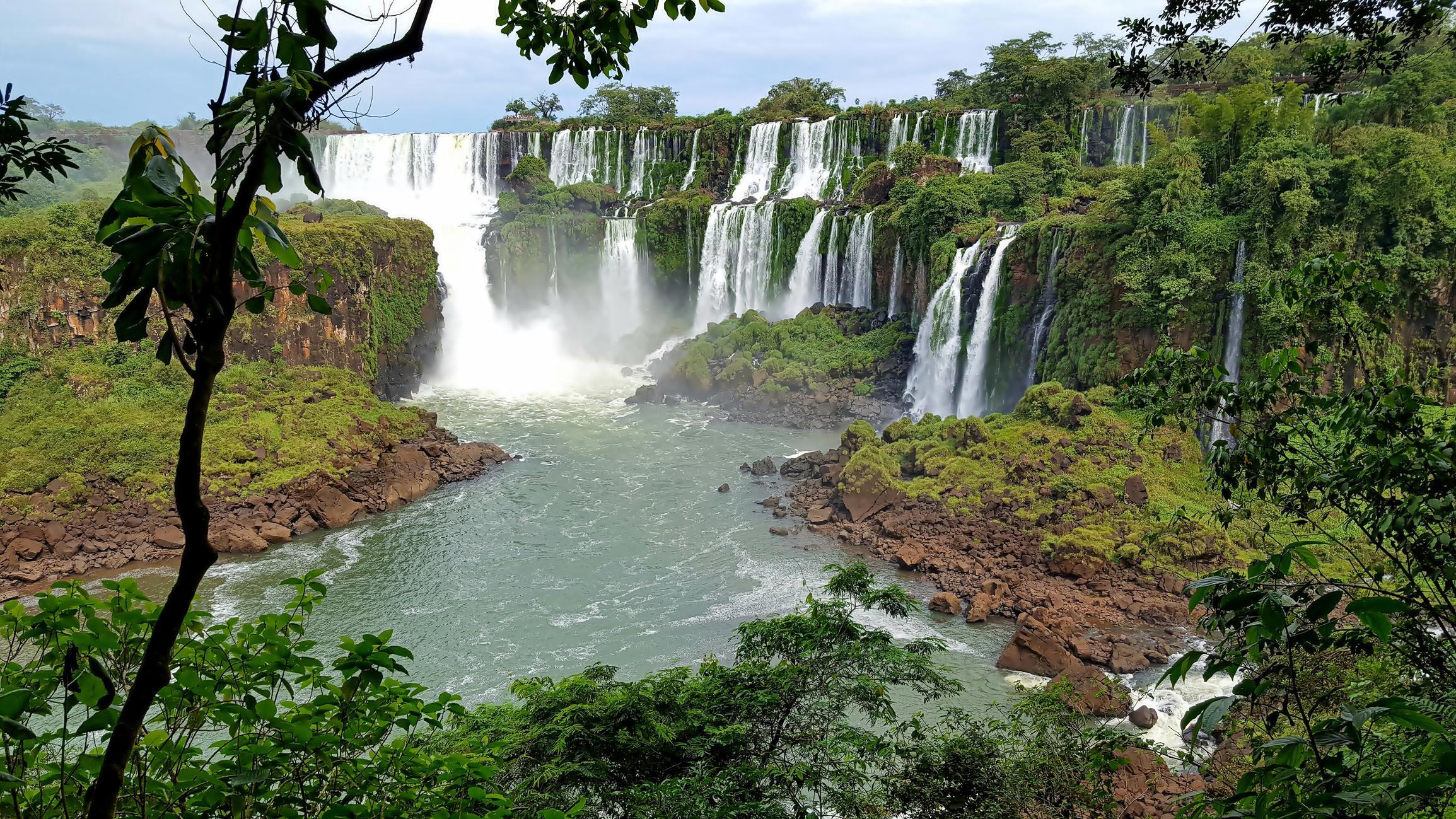
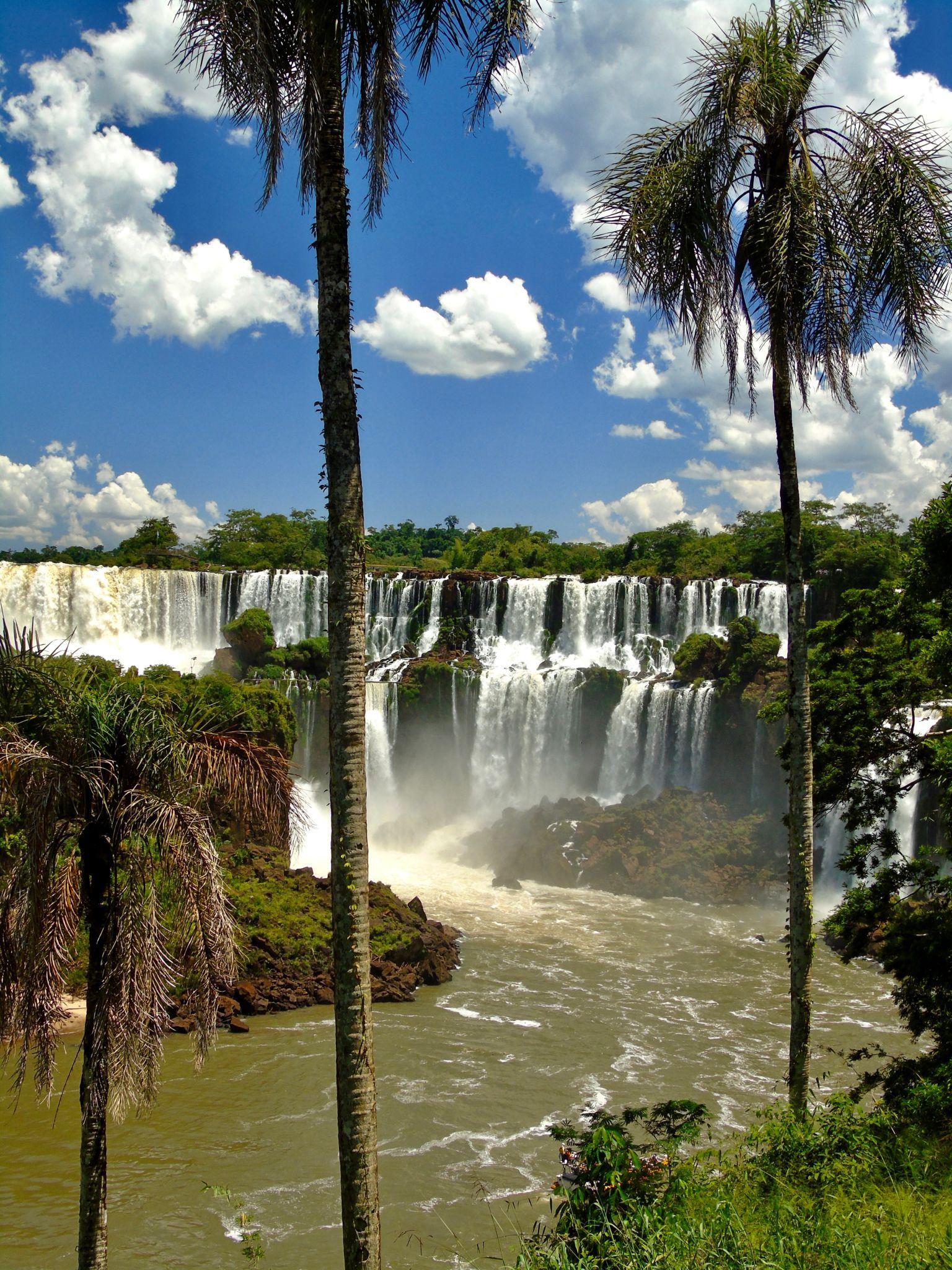
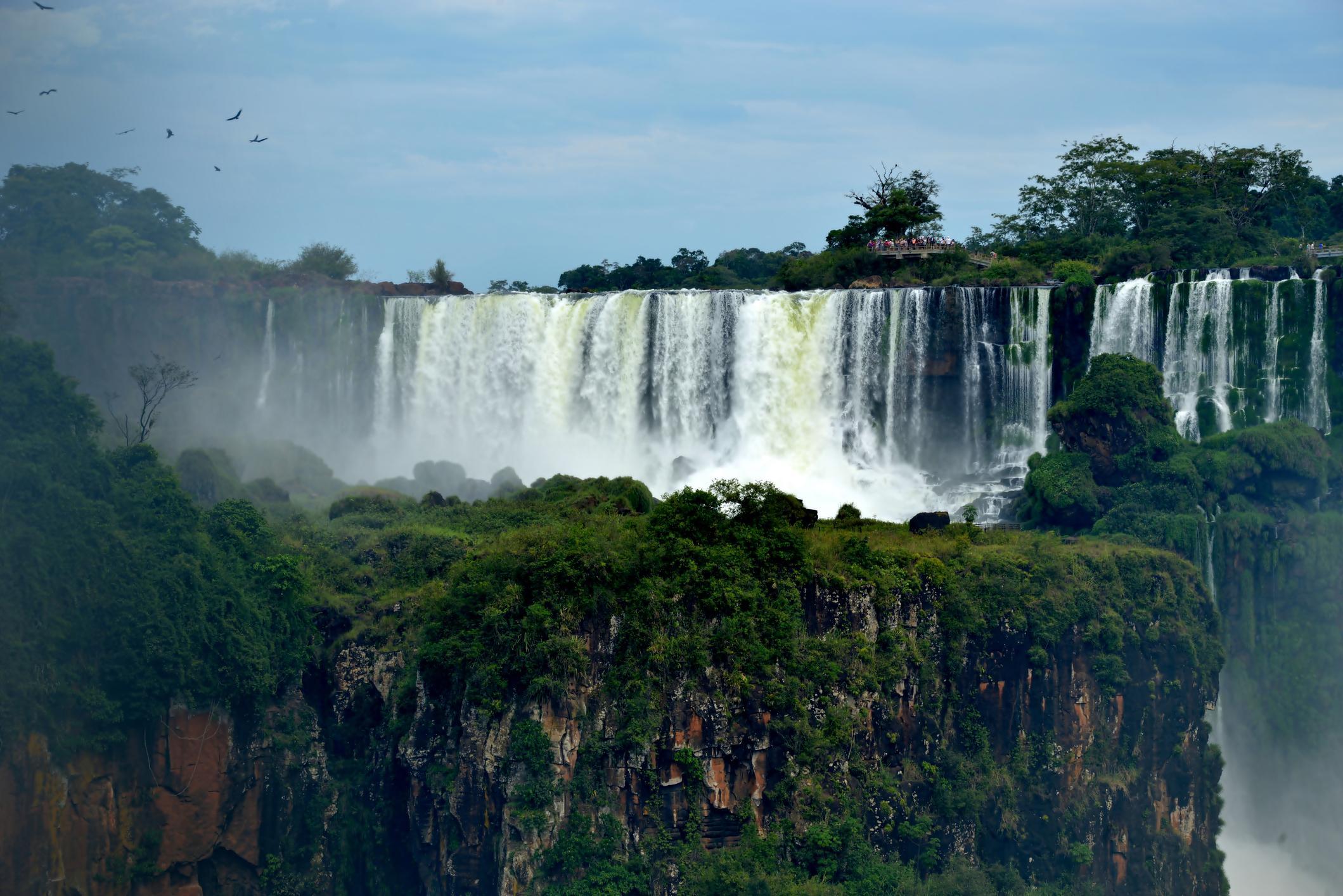
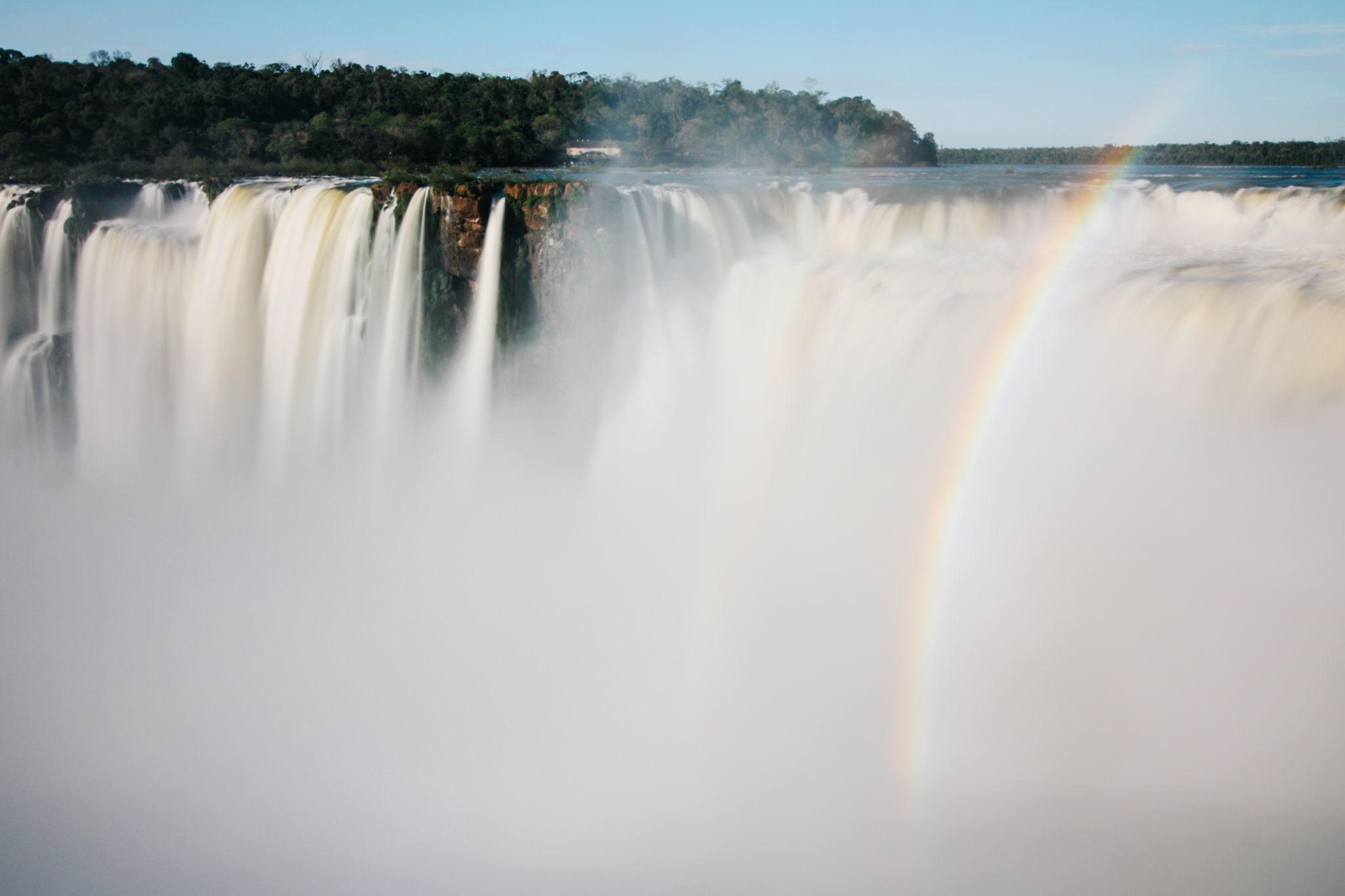
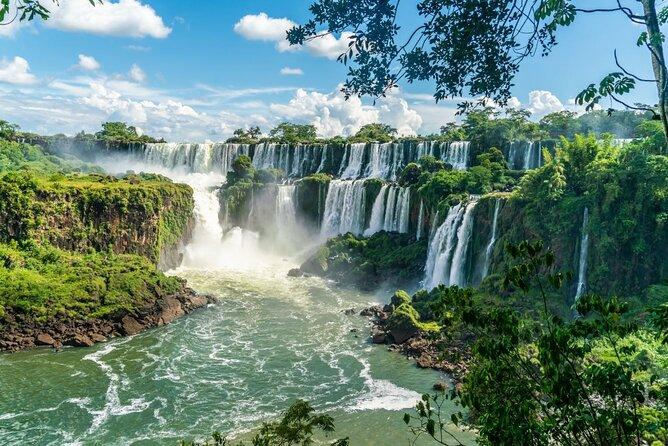
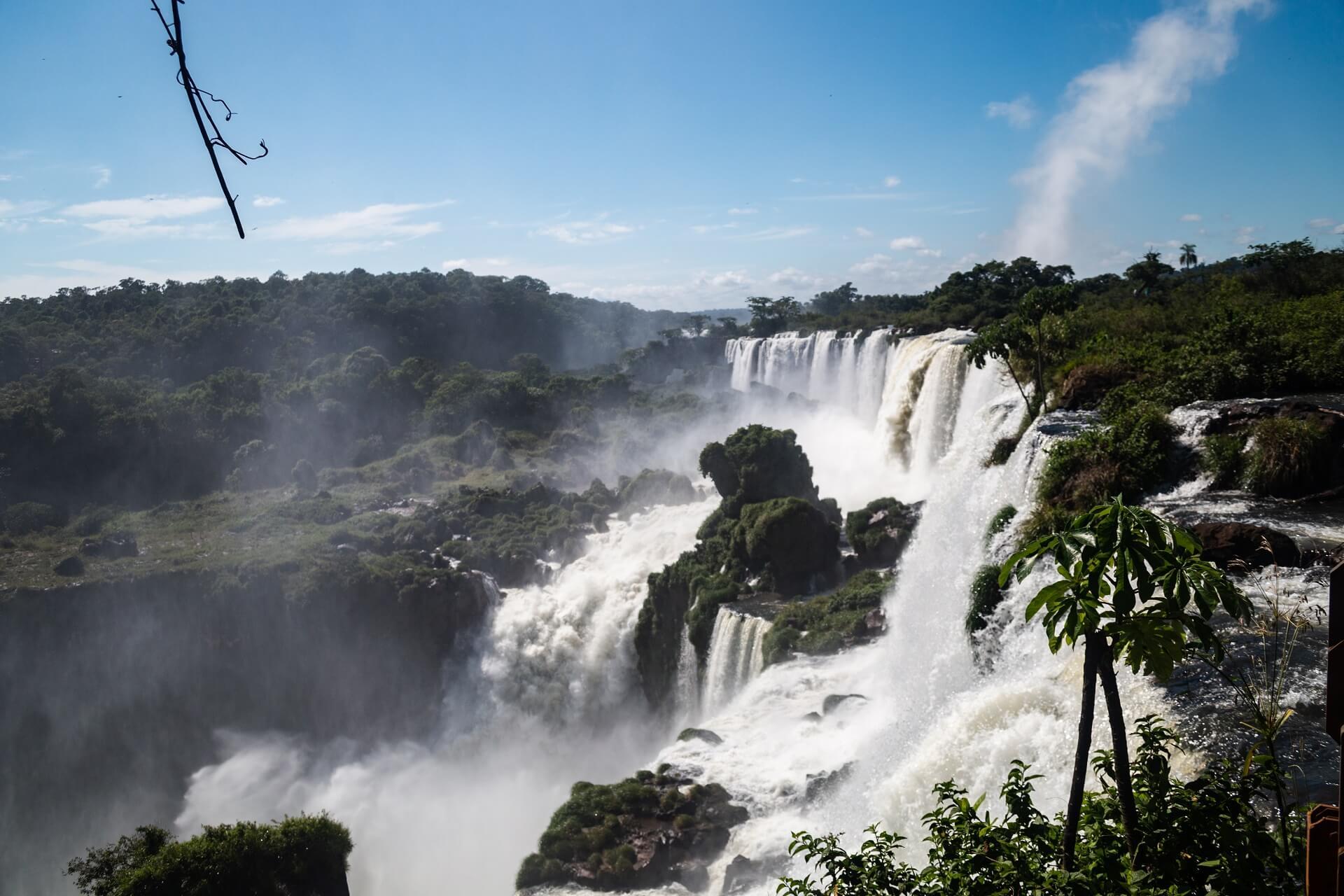
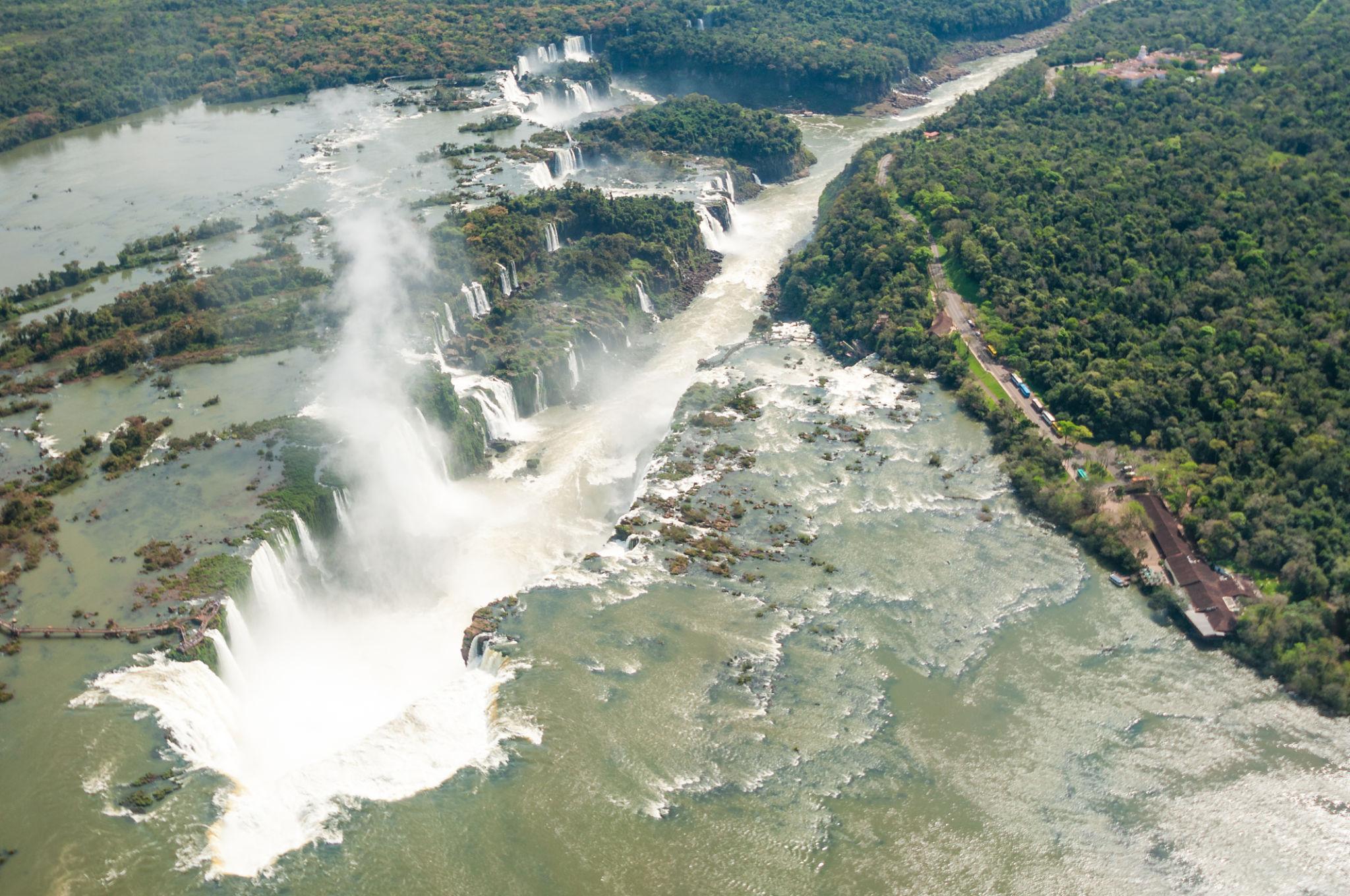
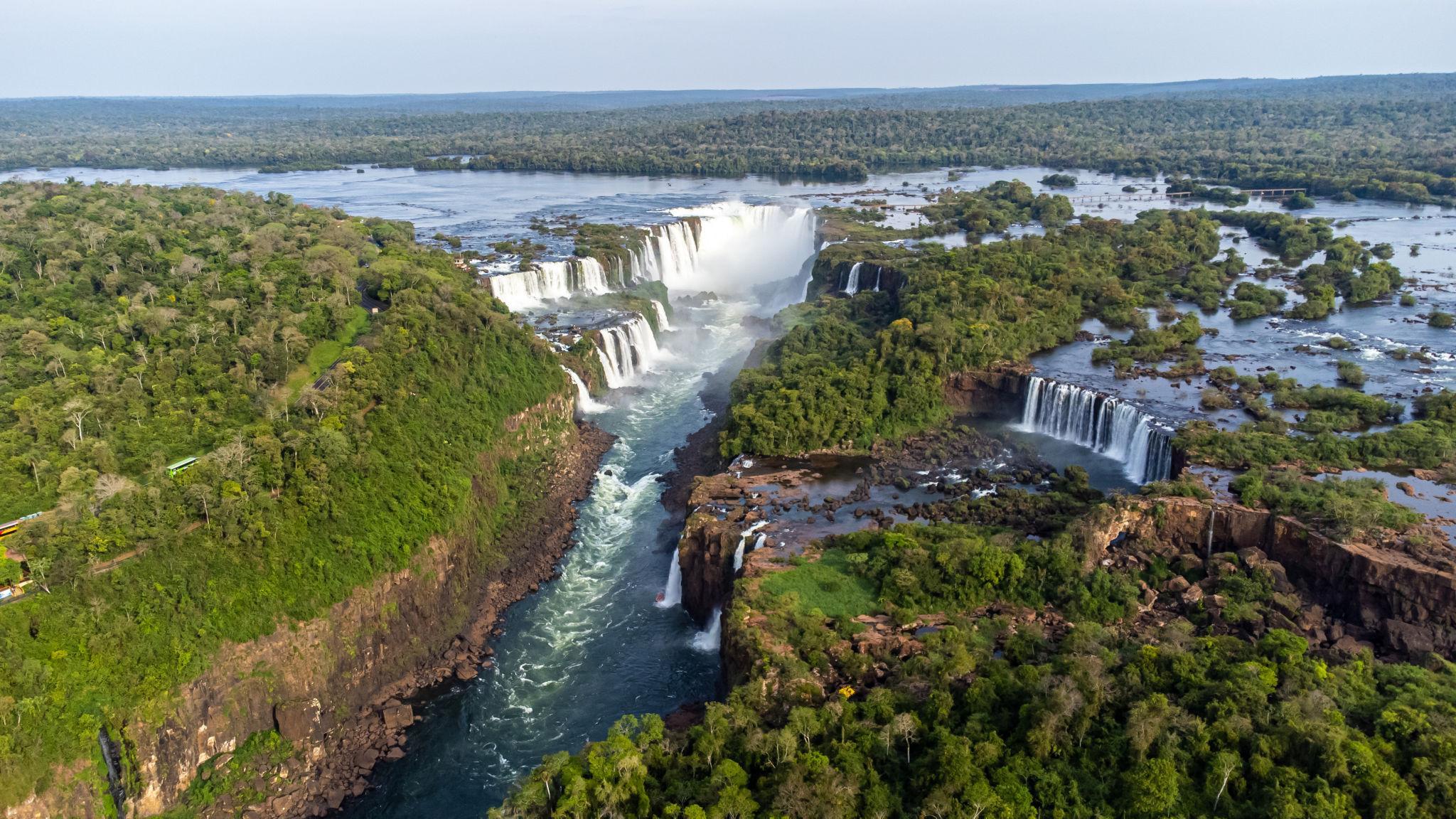
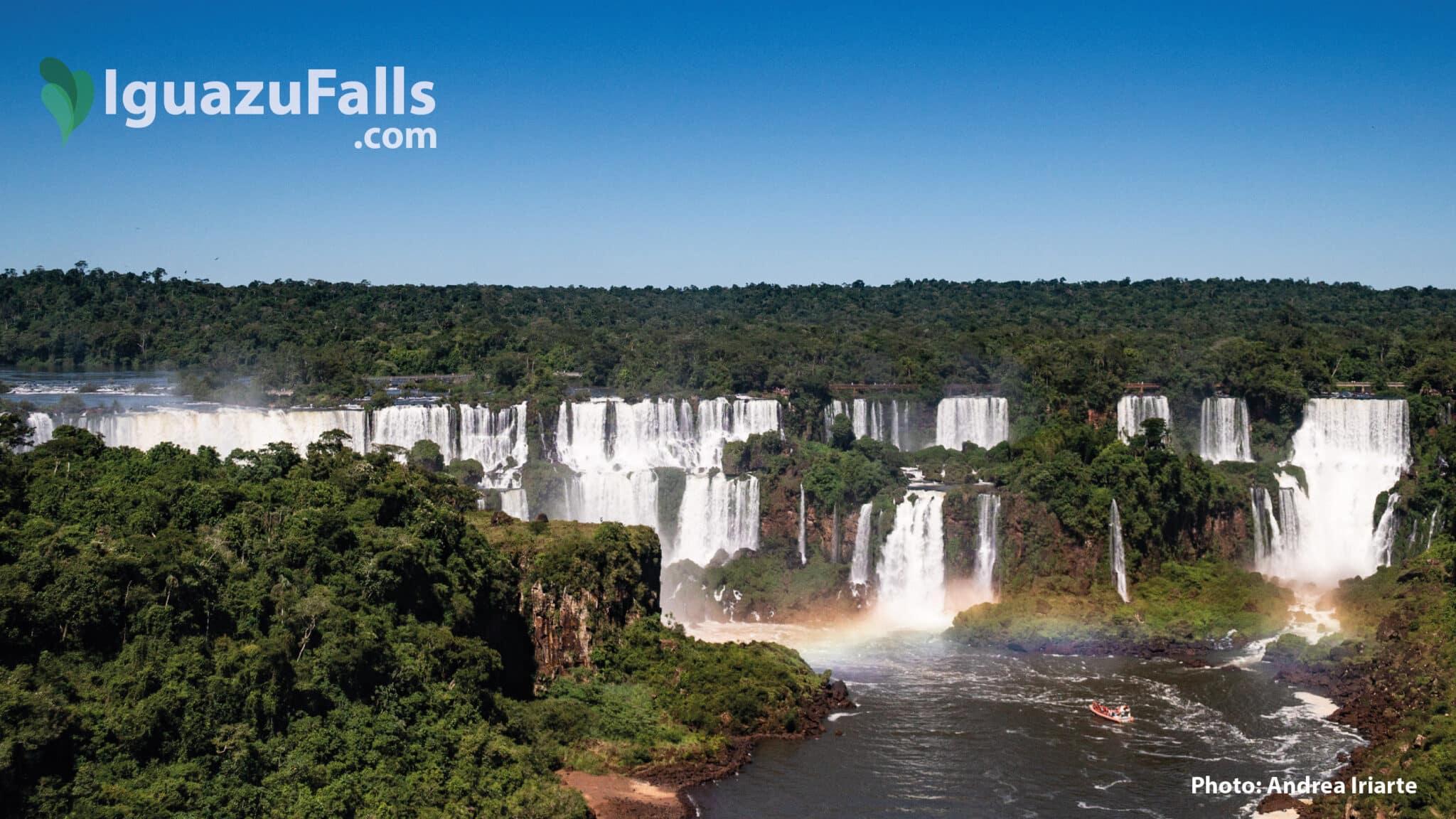
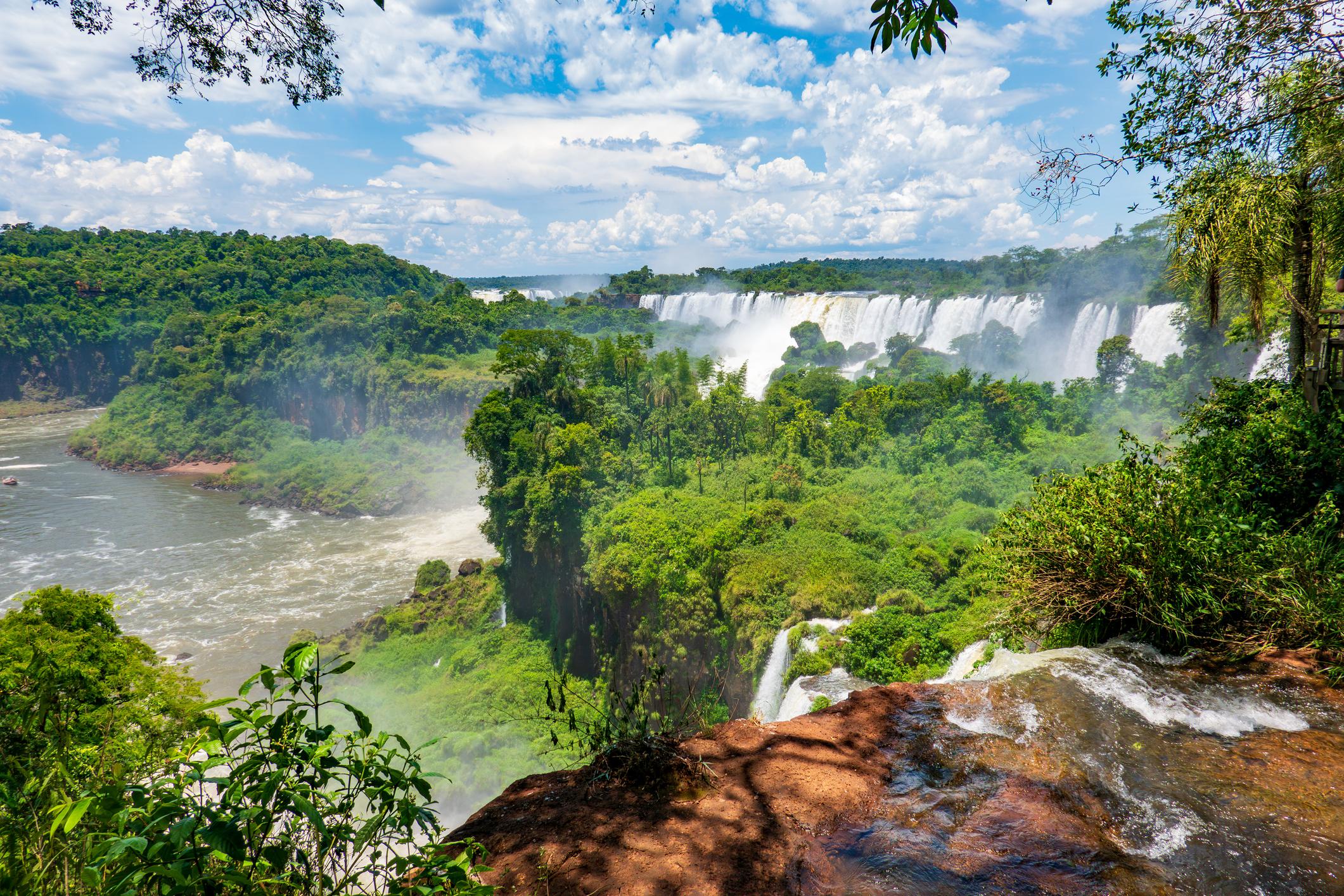
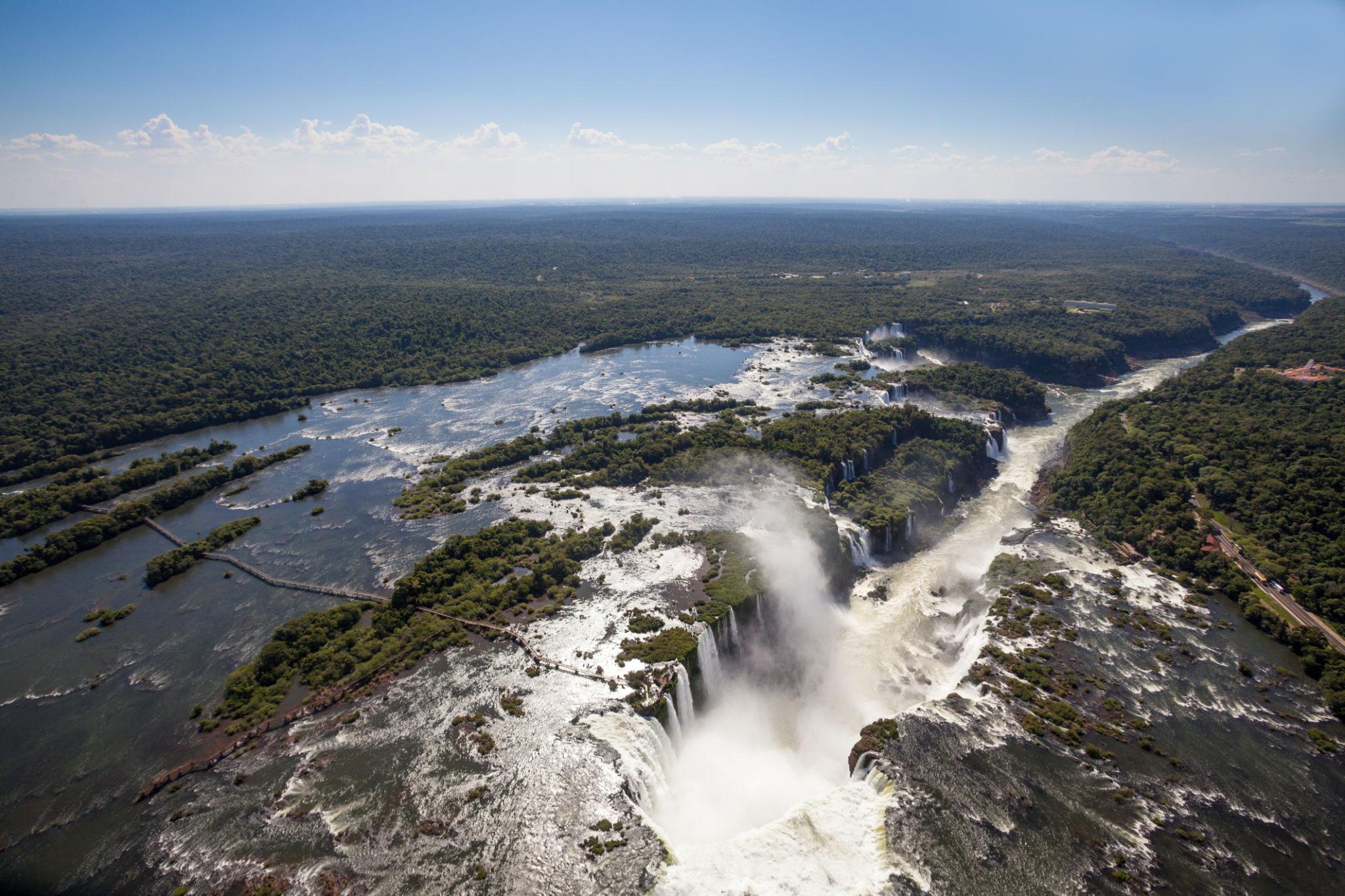
Iguazu Falls seen from above, cutting through dense subtropical rainforest


1. Introduction: What Makes Iguazu Falls Extraordinary?

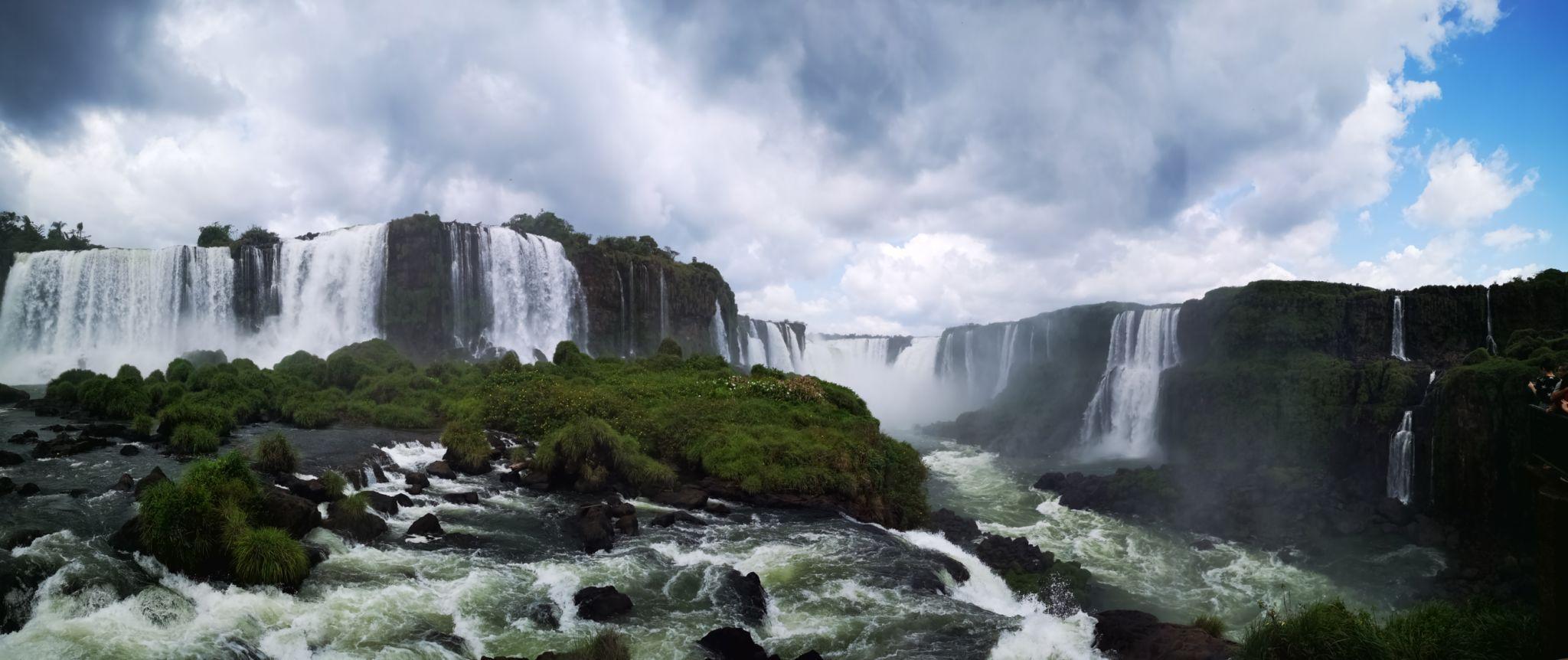
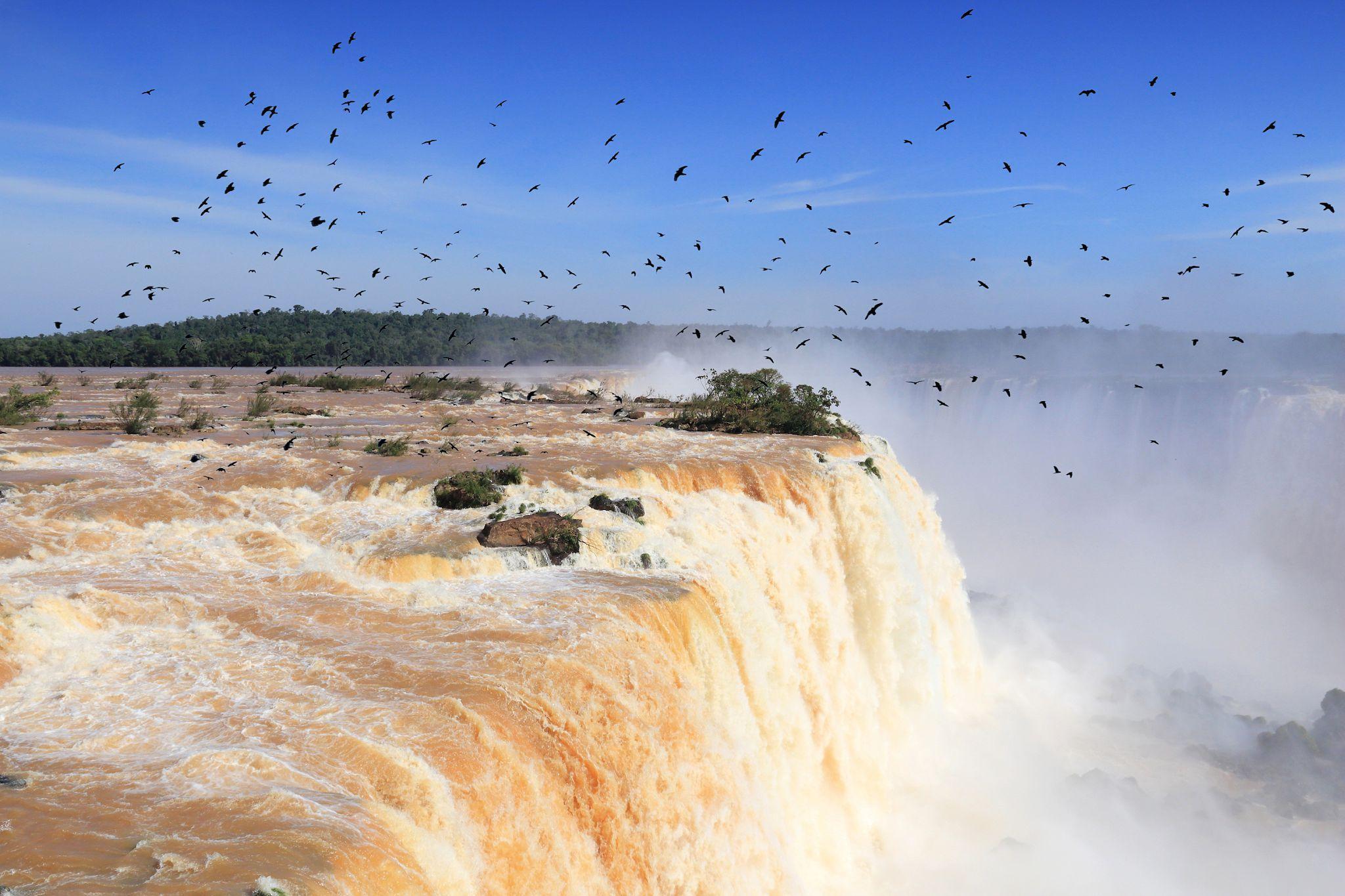
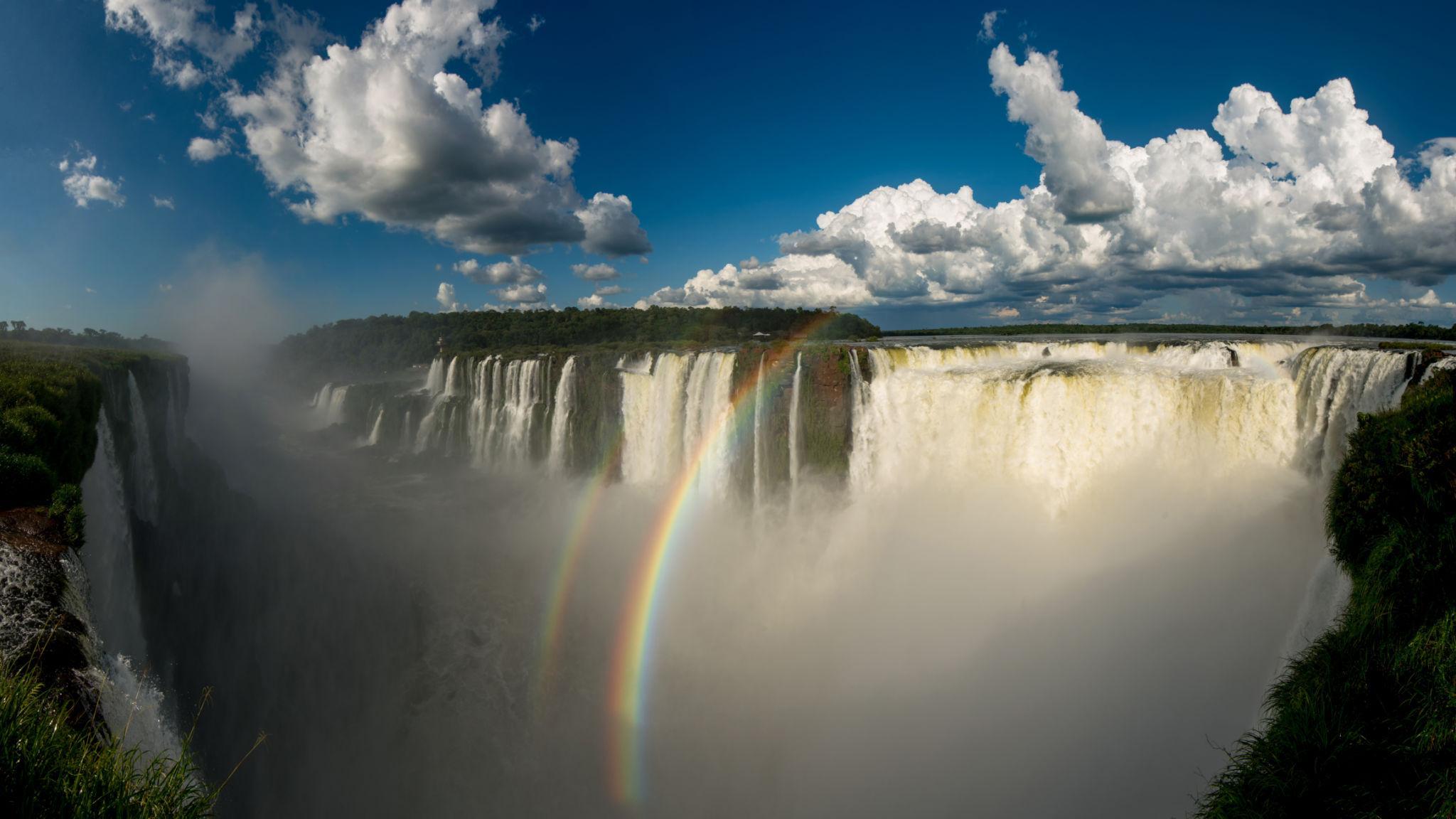
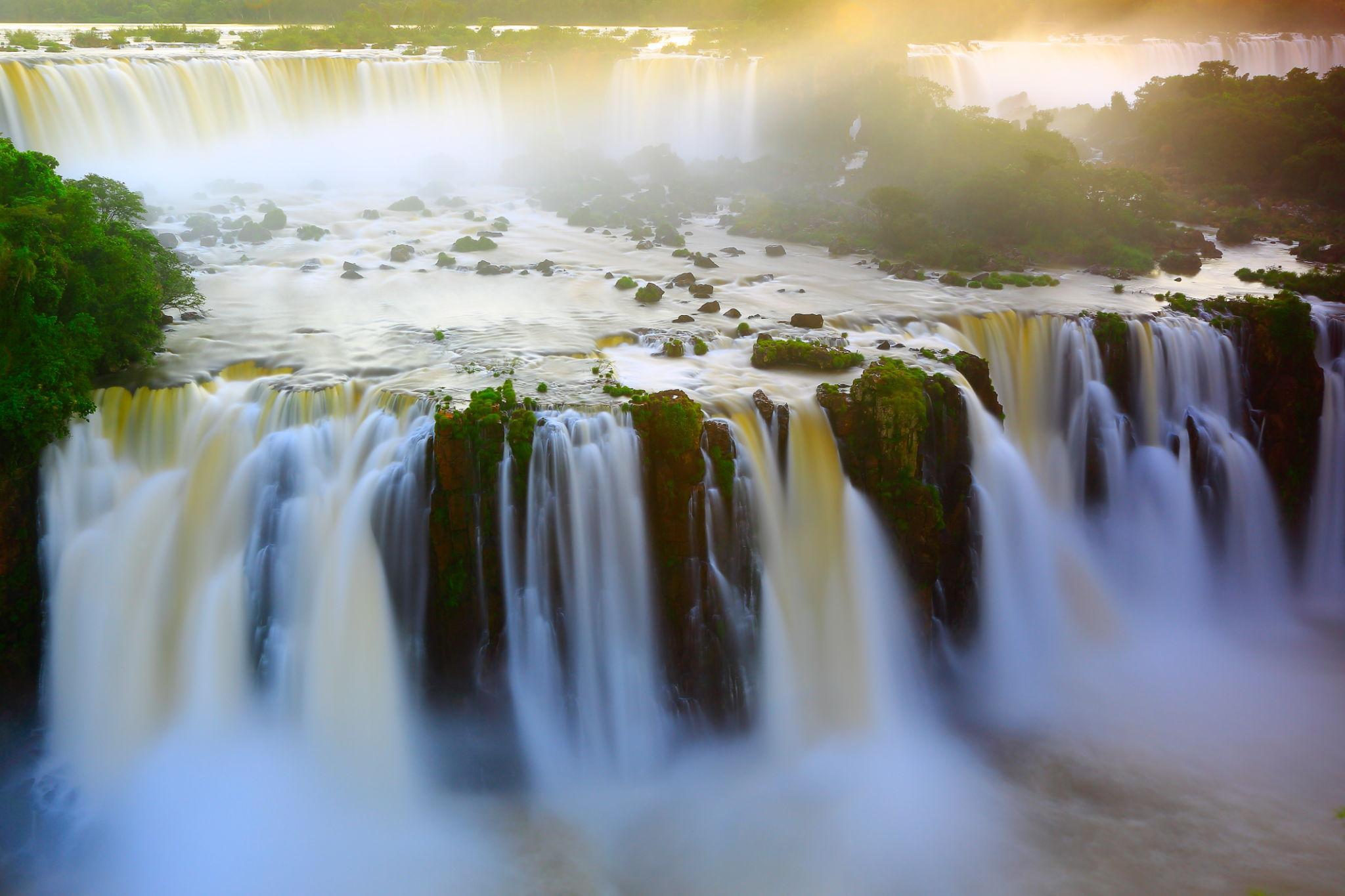
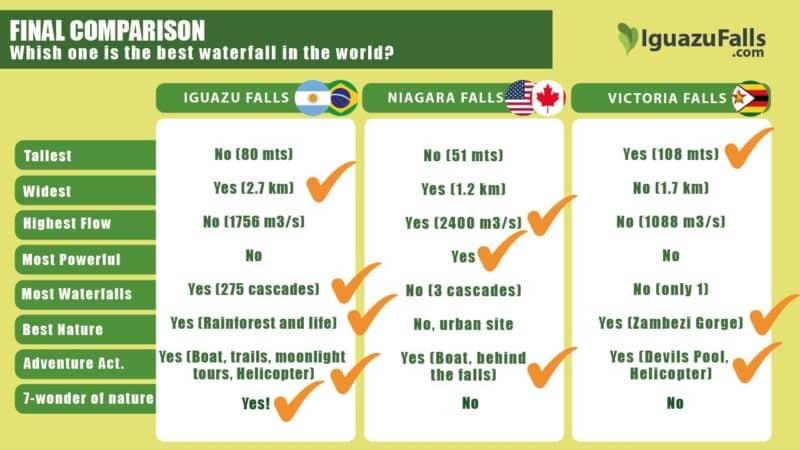
Iguazu Falls is not a single waterfall—it is a vast natural system of waterfalls, spread across nearly 2.7 kilometers (1.7 miles) and made up of around 275 individual cascades during average water flow.

Unlike many famous waterfalls that impress with height alone, Iguazu overwhelms through:

  • Sheer scale
  • Constant thunderous sound
  • Mist clouds rising like smoke
  • Dense rainforest surrounding every viewpoint

This is why visitors often describe Iguazu as “not beautiful, but powerful”—a place that dominates your senses rather than gently impressing them.


2. Exact Location & Geographic Setting
 

https://karakoramdiaries.com/media/files/0fdf6a63ef21d8a712f68633ace5ce08cd1914ac/439


https://karakoramdiaries.com/media/files/c2ce9271f832f08ddc19ef58b0d7b1a9c382530f/43a

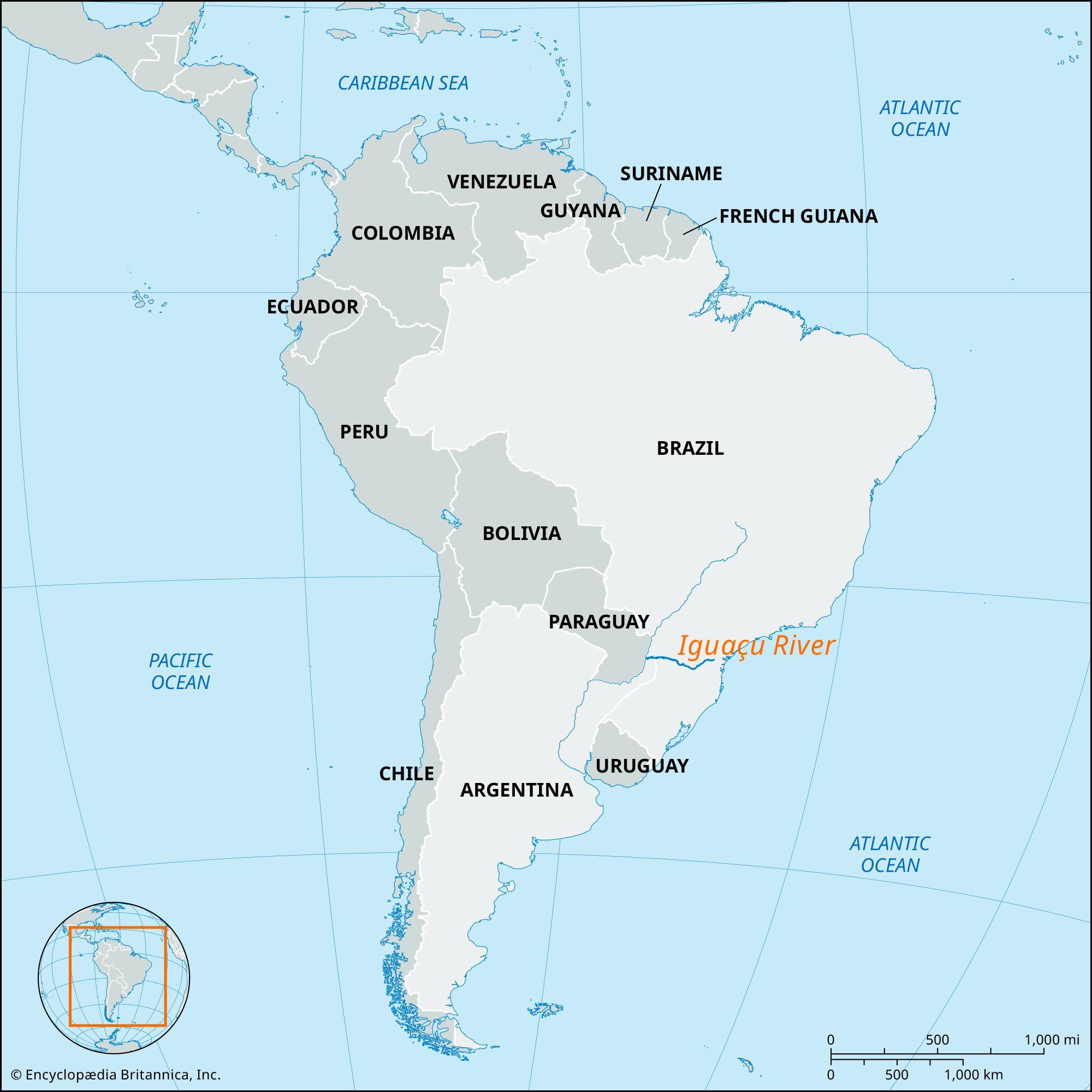
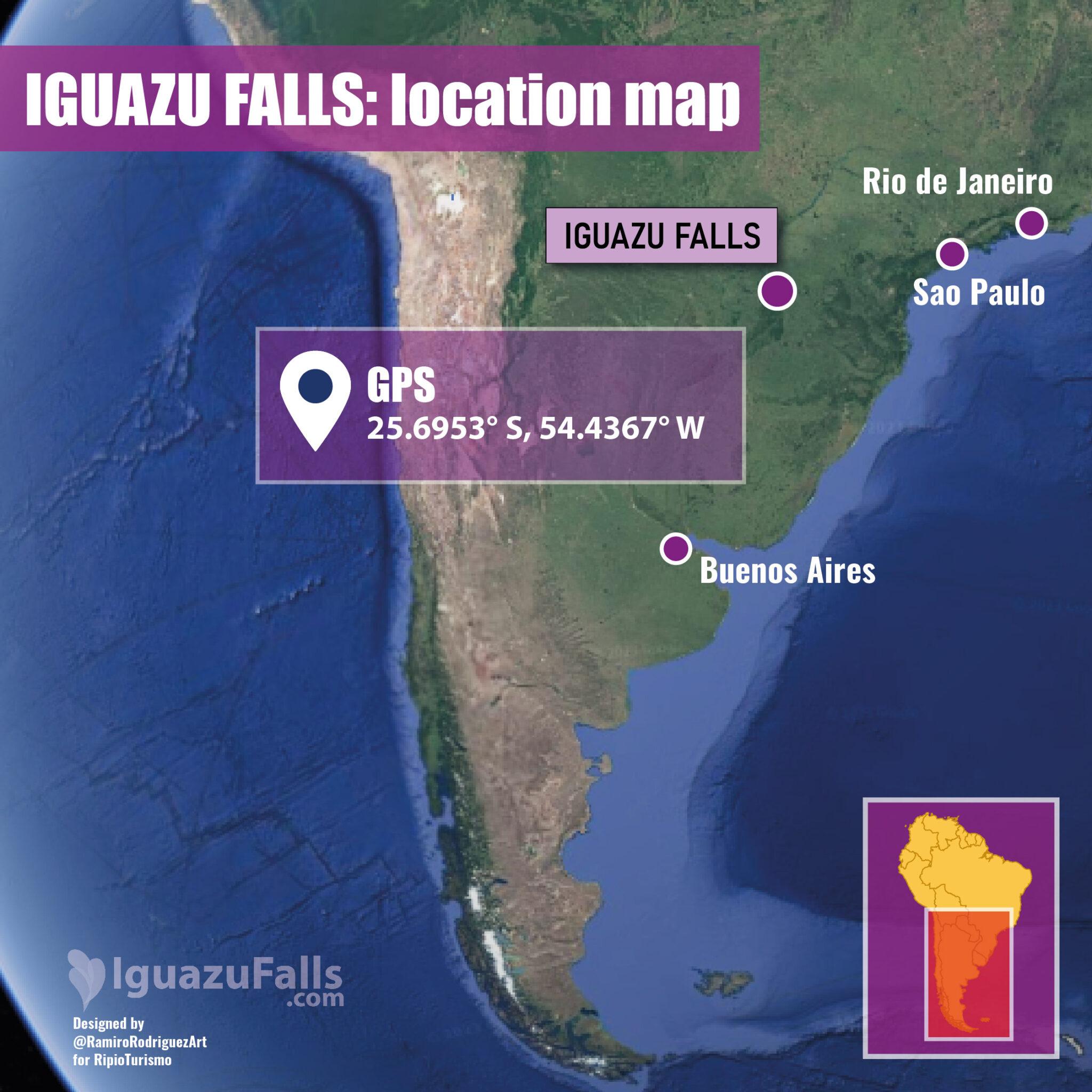
Map showing Iguazu Falls located on the border of Argentina and Brazil
 

Iguazu Falls is located on the IguazĂş River, at the exact border between:

  • Argentina (Misiones Province)
  • Brazil (Paraná State)

The nearest cities are:

  • Puerto IguazĂş, Argentina
  • Foz do Iguaçu, Brazil

The falls sit within two protected areas:

  • IguazĂş National Park (Argentina)
  • Iguaçu National Park (Brazil)

Both parks are recognized as UNESCO World Heritage Sites, protecting one of the most biodiverse rainforest regions in South America.


3. How Iguazu Falls Was Formed (Geology Explained Simply)
 

https://karakoramdiaries.com/media/files/7c69b4de6821047c43725fe7078ab6fed1d012ff/43b


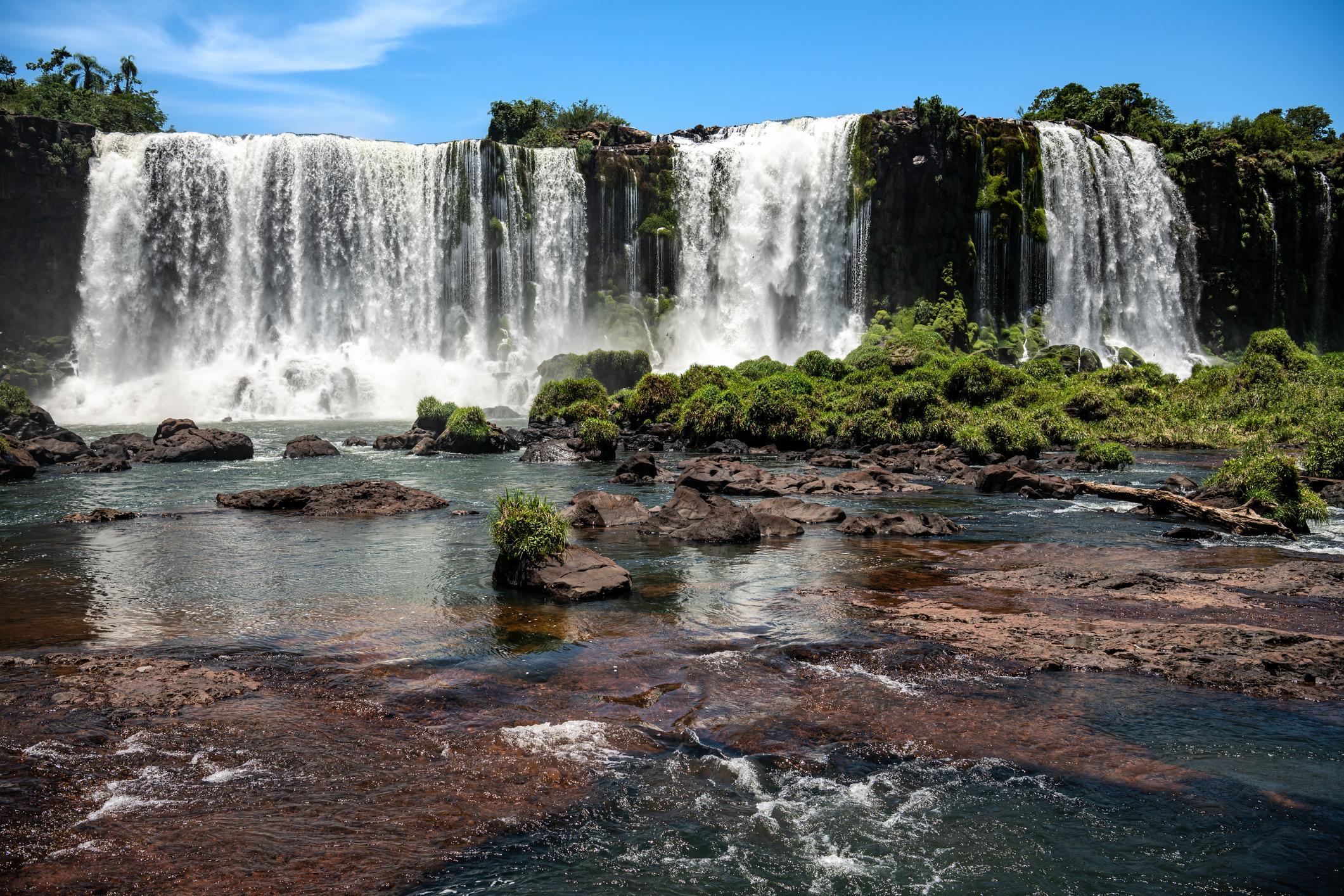
Basalt rock layers that form the steps of Iguazu Falls
 

Iguazu Falls was formed around 130 million years ago due to massive volcanic eruptions that created layers of basalt rock.

Over time:

  1. The IguazĂş River flowed across this volcanic plateau
  2. Softer rock eroded faster than harder basalt
  3. This created a stepped cliff system
  4. The falls slowly retreated upstream, forming today’s massive arc

Even now, Iguazu continues to change—erosion shifts the falls by a few centimeters each year.


4. Indigenous History & Meaning of the Name

 

https://karakoramdiaries.com/media/files/a3288f7115424d37b54ef10153f064e06ce414ea/43c


https://karakoramdiaries.com/media/files/c9686e4bee38d6ef63a5e63ea3ba1e0bcdf4fdb6/43d

The GuaranĂ­ people, original inhabitants of the Iguazu region
 

The name “Iguazu” comes from the Guaraní language:

  • “Y” = water
  • “Guasu” = big

Meaning: “Big Water”

According to Guaraní legend, a jealous serpent god split the river after a woman tried to escape with her lover by canoe—creating the falls as punishment.

Long before tourism, the GuaranĂ­ people lived sustainably in this rainforest, fishing, farming, and worshipping the river as sacred.


5. Global Importance & UNESCO Status
 

https://karakoramdiaries.com/media/files/066acd970902b68afb930c1a8092215fdc6fd211/43e


https://karakoramdiaries.com/media/files/a1f0d4a2e80004150e8fbbea00b5f7ea1444b9ad/43f

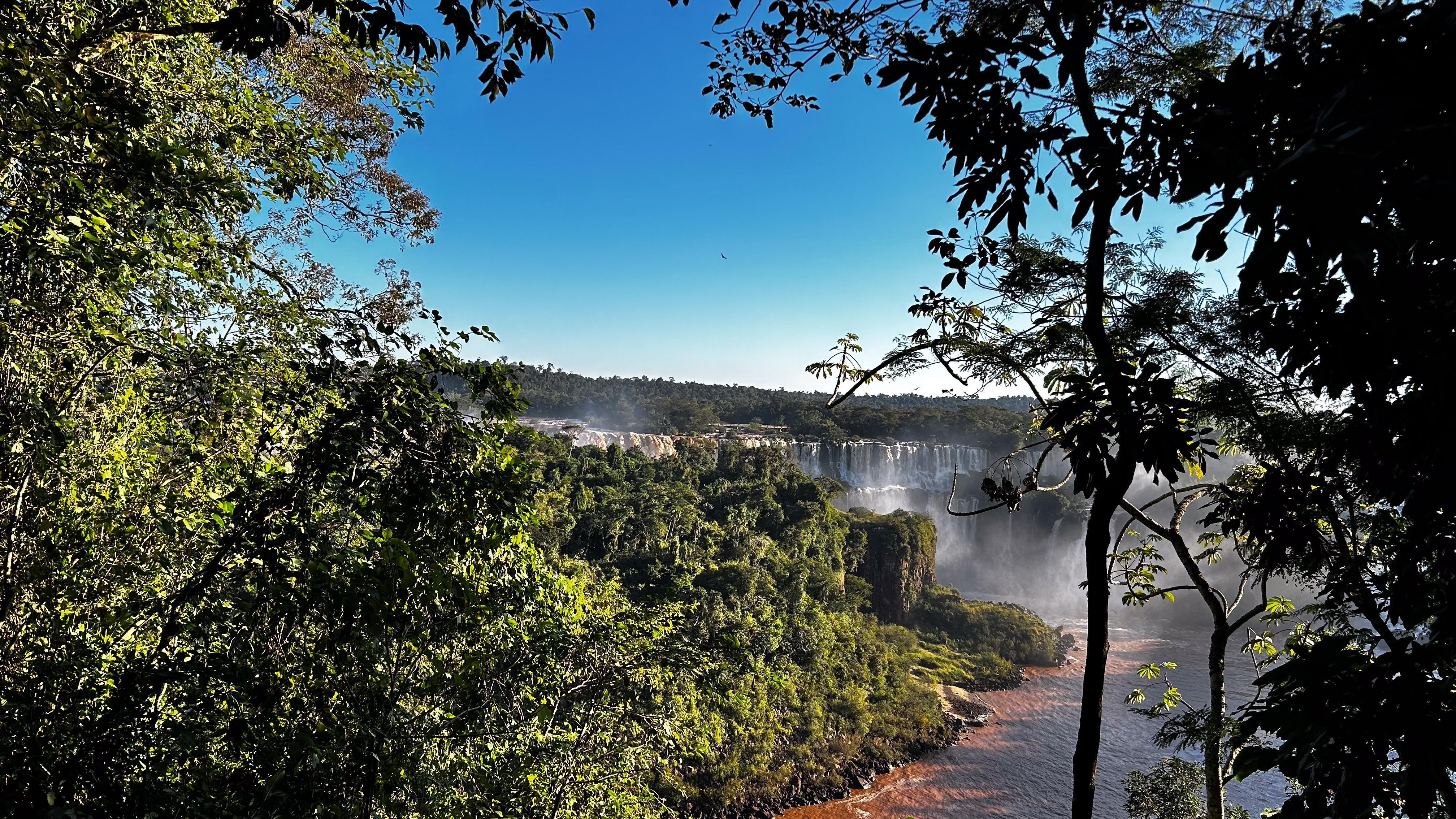
Subtropical rainforest surrounding Iguazu Falls, one of South America’s richest ecosystems
 

Iguazu Falls gained UNESCO World Heritage status due to:

  • Exceptional natural beauty
  • Rare subtropical rainforest ecosystem
  • Hundreds of plant and animal species
  • Critical conservation value

The surrounding forest is home to:

  • Jaguars (rarely seen)
  • Tapirs
  • Toucans
  • Over 400 bird species

6. Why Iguazu Falls Is Considered One of the World’s Greatest Waterfalls
 

https://karakoramdiaries.com/media/files/6d0e1050797b03d8826ea5ad224adba68621f692/440


https://karakoramdiaries.com/media/files/5dd8b53aacfc461407333cffac2e4acce3337ebf/441

Comparison highlighting Iguazu’s massive width compared to other famous waterfalls
 

WaterfallWidthHeight
Iguazu Falls~2.7 km60–82 m
Niagara Falls~1.2 km51 m
Victoria Falls~1.7 km108 m

Iguazu wins on width, volume, and immersion, making it one of the most powerful waterfall systems on Earth.


Iguazu Falls – Complete Guide (2)

Argentina Side, Brazil Side, Trails & Devil’s Throat


1. Argentina Side of Iguazu Falls (Up-Close Experience)
 

https://karakoramdiaries.com/media/files/e076fa133a86ed3f260850a0dc70993ae366a649/442


https://karakoramdiaries.com/media/files/ac3e7b007d7ab0ba379faa8ab62d9da35c5444f4/443

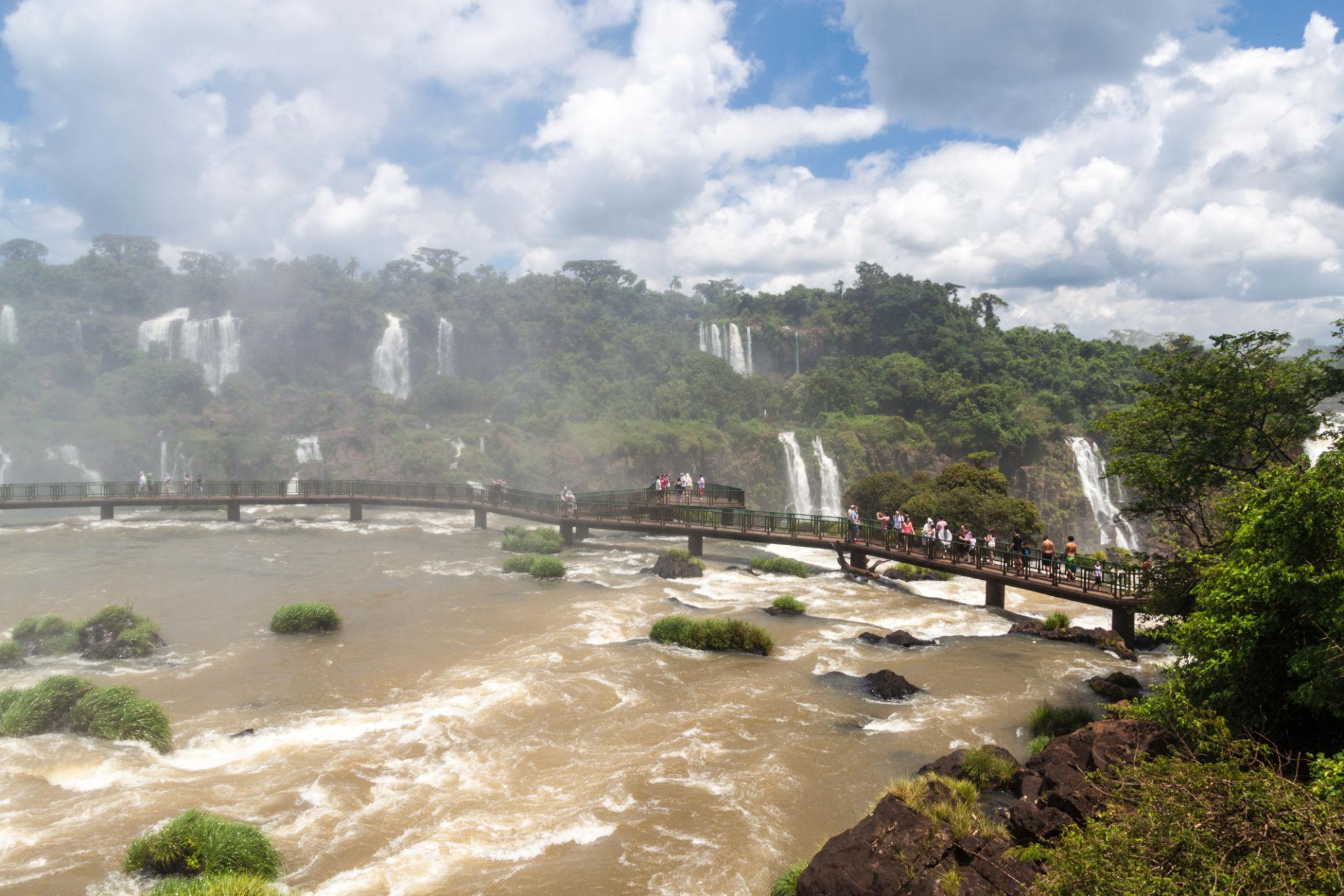
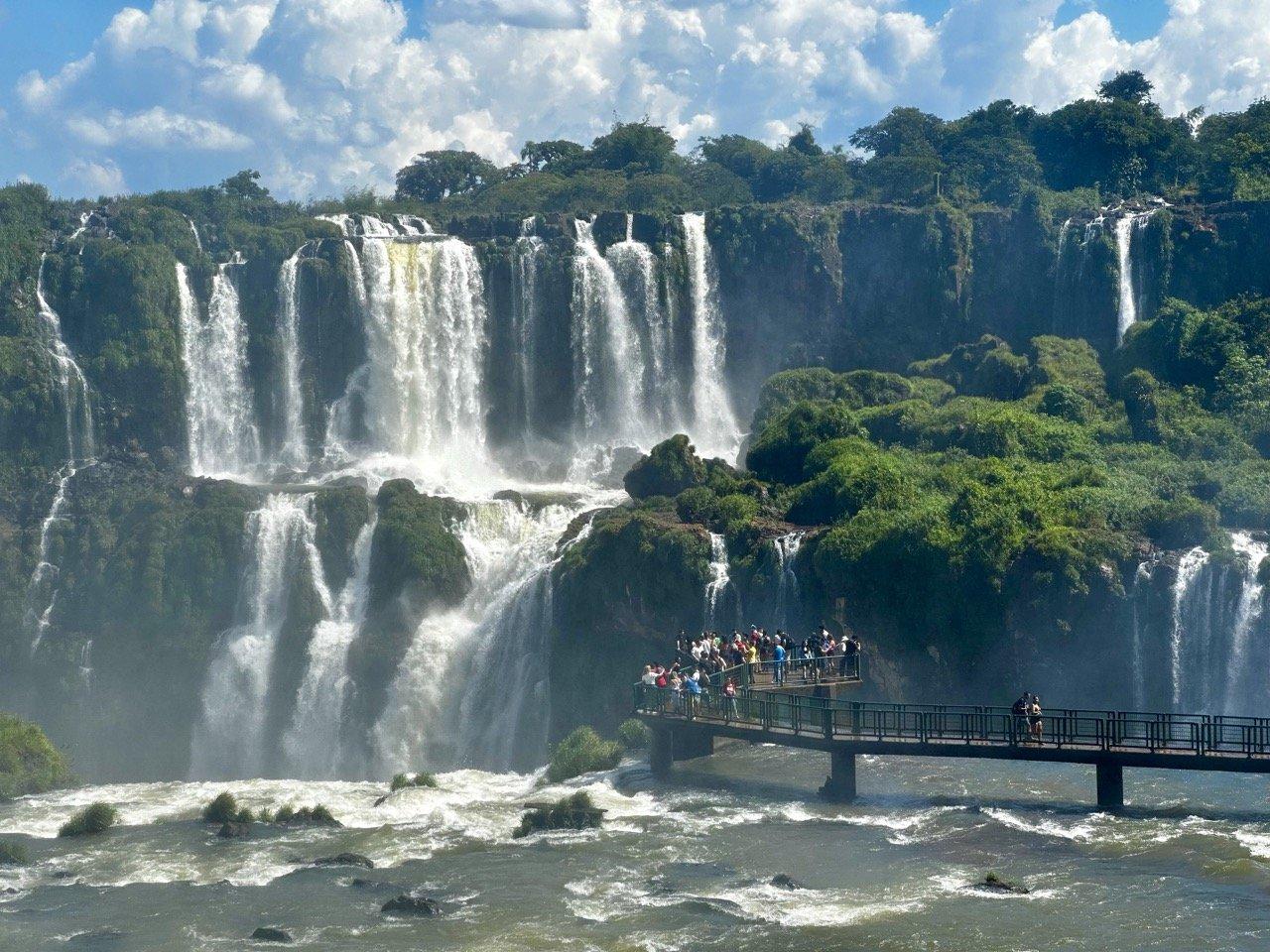
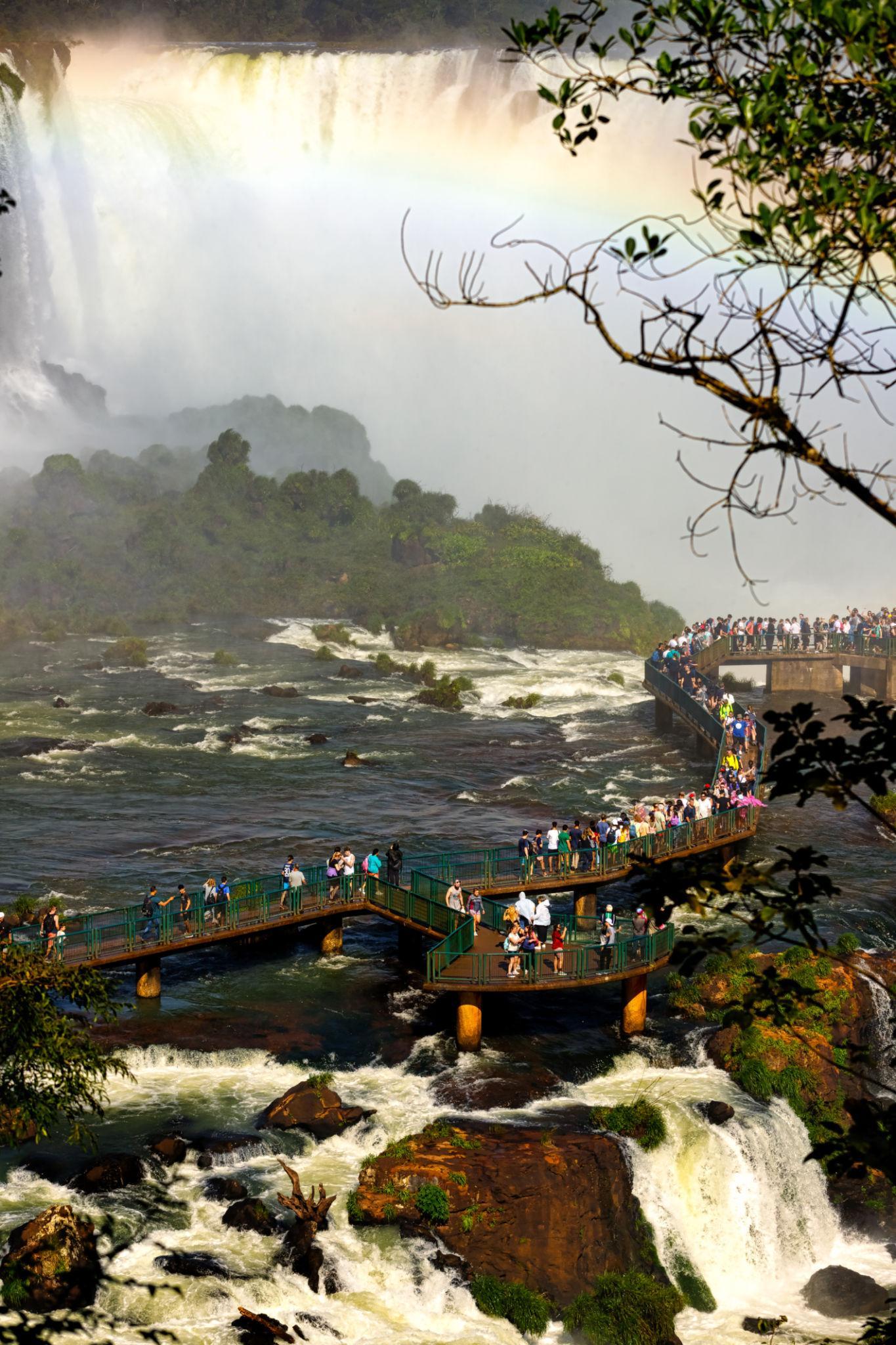
Walkways on the Argentina side allow visitors to stand directly above and beside the waterfalls
 

The Argentina side offers the most detailed and immersive experience of Iguazu Falls. This side lets you walk very close to the water and explore the falls from multiple angles.

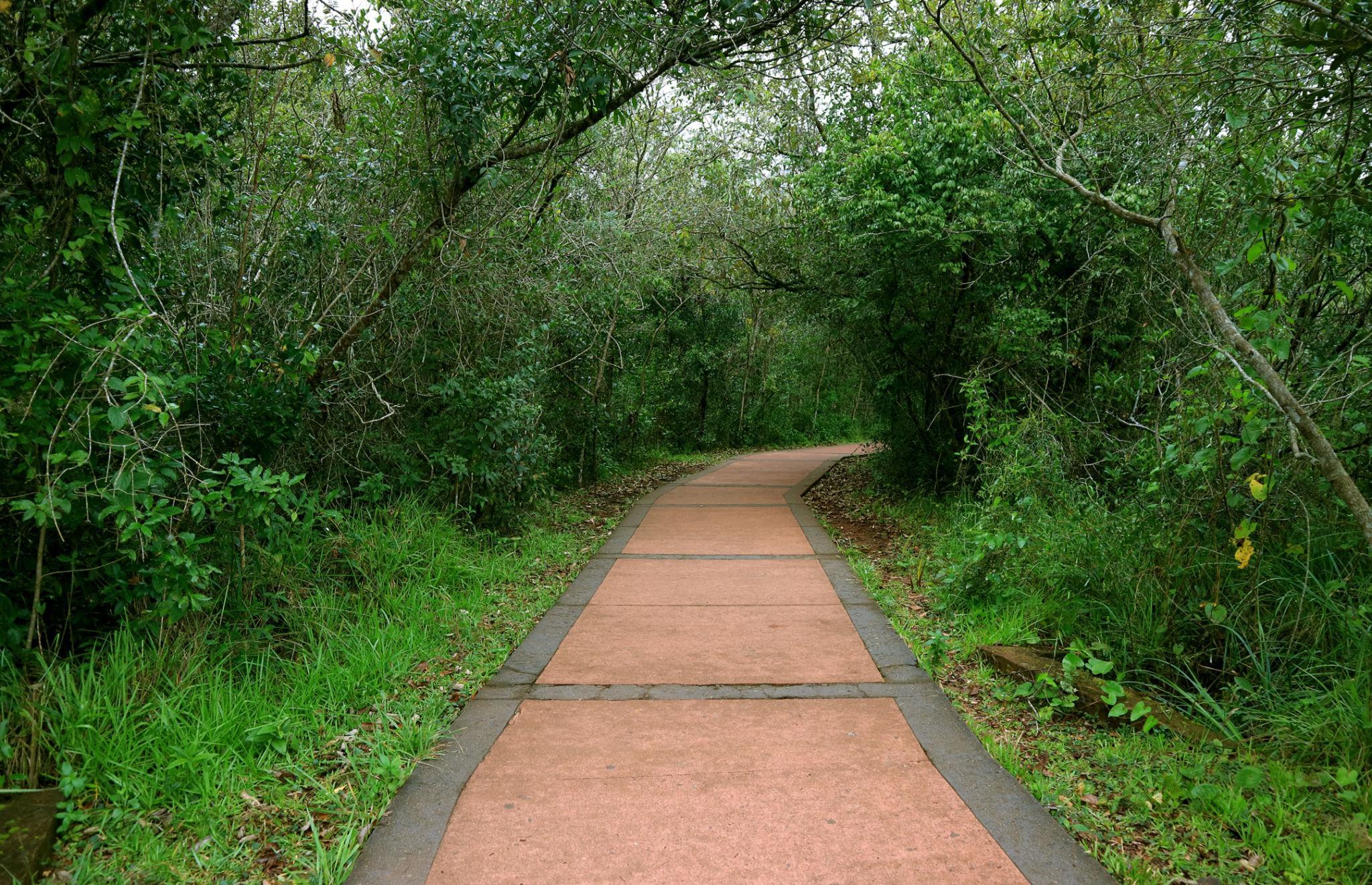
Most visitors spend an entire day here because the park is large and the trails are long but easy to walk.

Key features of the Argentina side include:

  • Extensive metal walkways above the river
  • Multiple trail circuits with different viewpoints
  • Easy access to Devil’s Throat
  • More time spent inside the waterfall system

This side is best for travelers who want to explore slowly and see the falls in detail.


2. Main Trails and Circuits on the Argentina Side
 

https://karakoramdiaries.com/media/files/9a3e61b6bcc8abec08f195526c3132d5a4a98cc0/444


https://karakoramdiaries.com/media/files/ac9c957760424d463fbc0a28712e09dcd11a9415/445

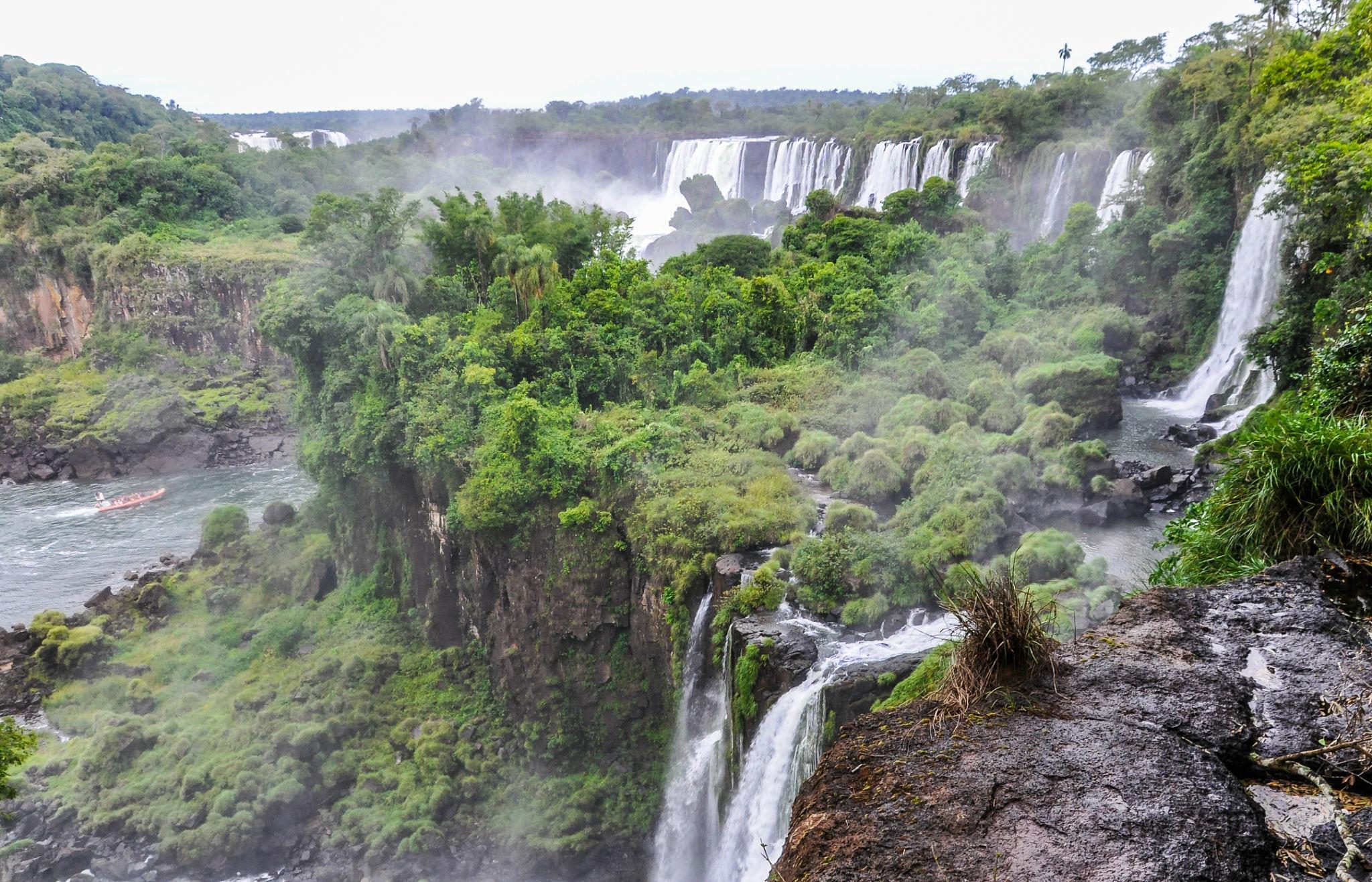
Upper and Lower Circuits on the Argentina side offer different heights and perspectives
 

Upper Circuit

The Upper Circuit is a flat and easy walkway that runs above several waterfalls. It provides wide views and is suitable for all ages.

This trail:

  • Takes about one hour
  • Offers dry viewpoints
  • Shows the river before it drops over the edge

Lower Circuit

The Lower Circuit takes you closer to the base of the falls. You will feel more mist and hear the water more clearly.

This trail:

  • Includes stairs and slopes
  • Takes around 1.5 to 2 hours
  • Offers dramatic side and front views of the falls

Both circuits are well maintained and clearly marked.


3. Devil’s Throat (Garganta del Diablo)
 

https://karakoramdiaries.com/media/files/5a9295d8fa430d03c34c8f7145f47117fb940f31/446


https://karakoramdiaries.com/media/files/08d55d01921d987568b19a5fd67bc17b74d6c36f/447

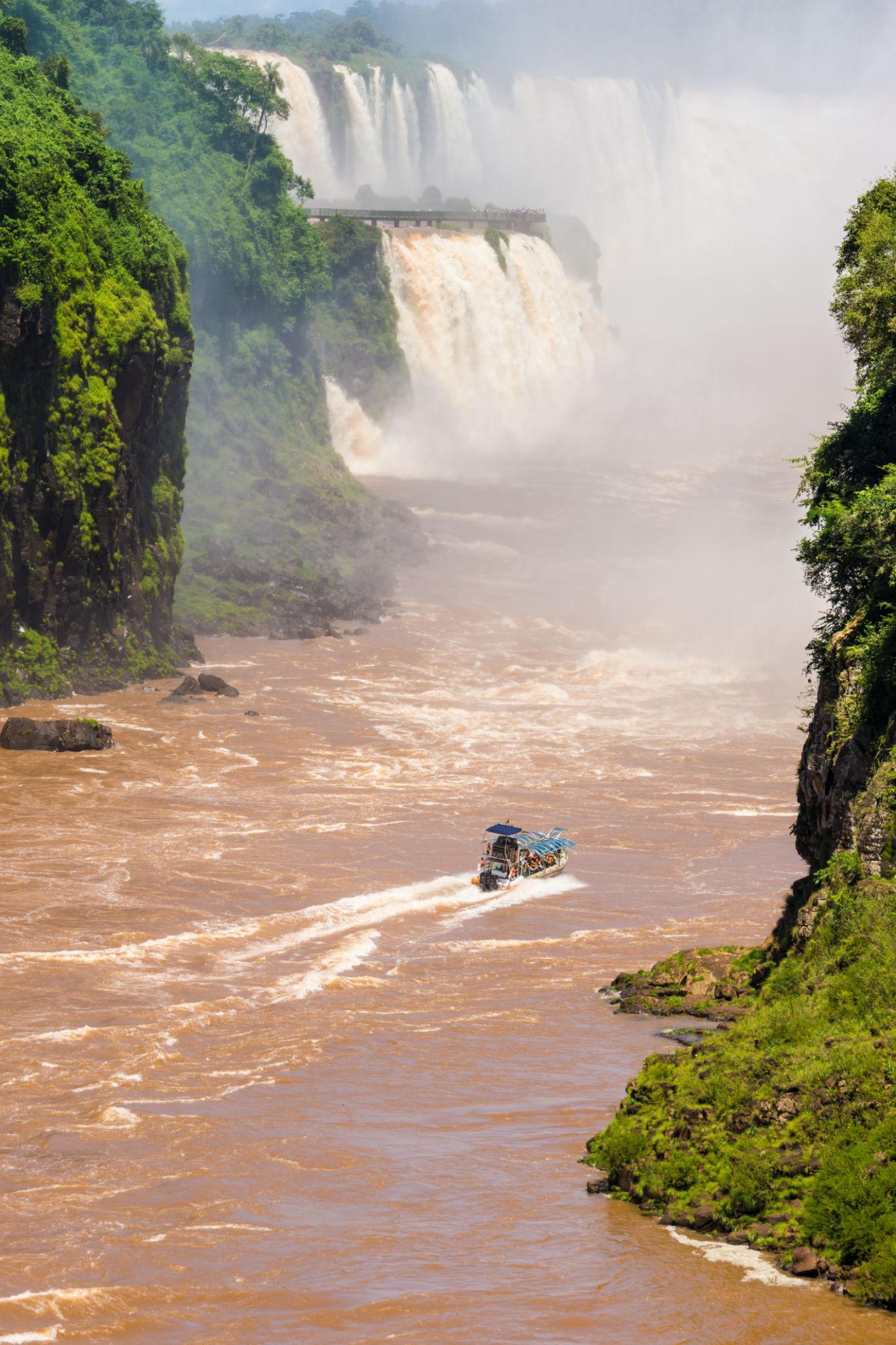
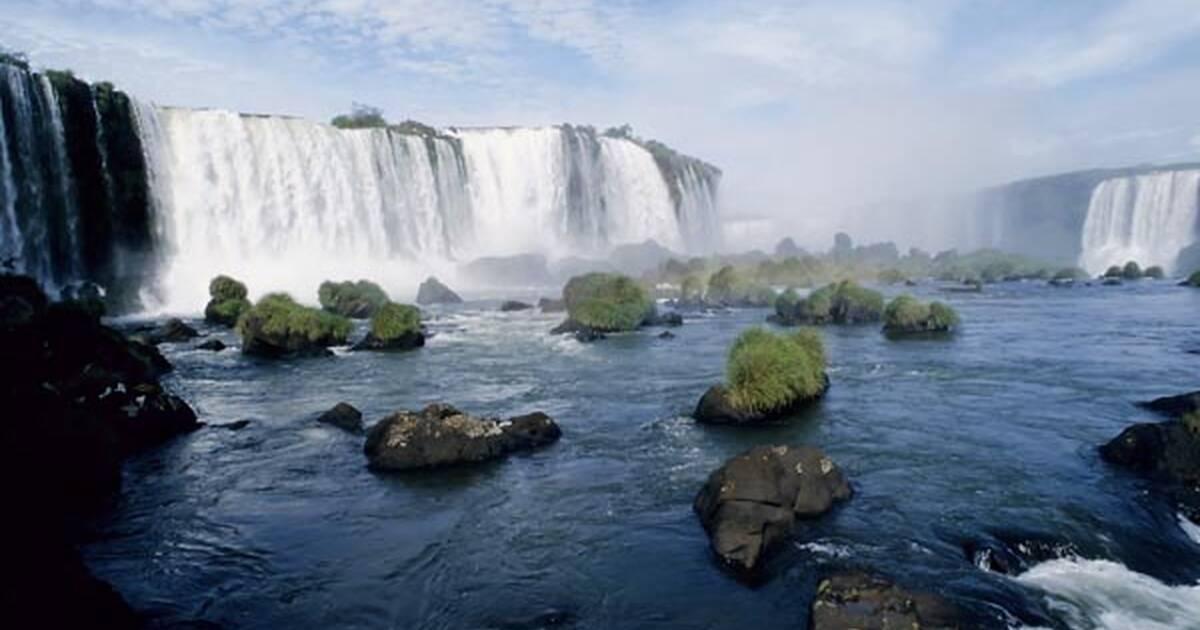
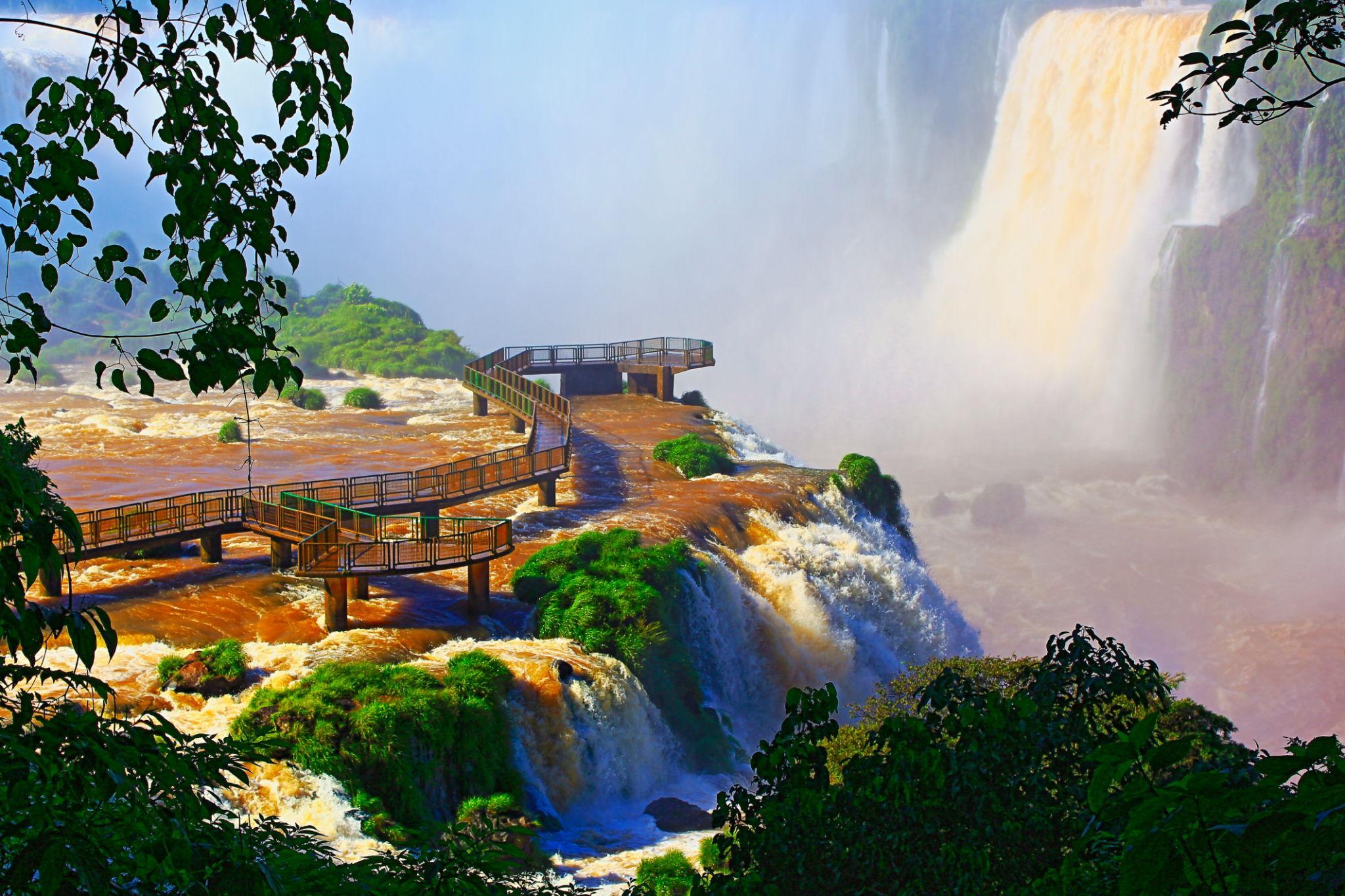
The Devil’s Throat is the most powerful and famous section of Iguazu Falls
 

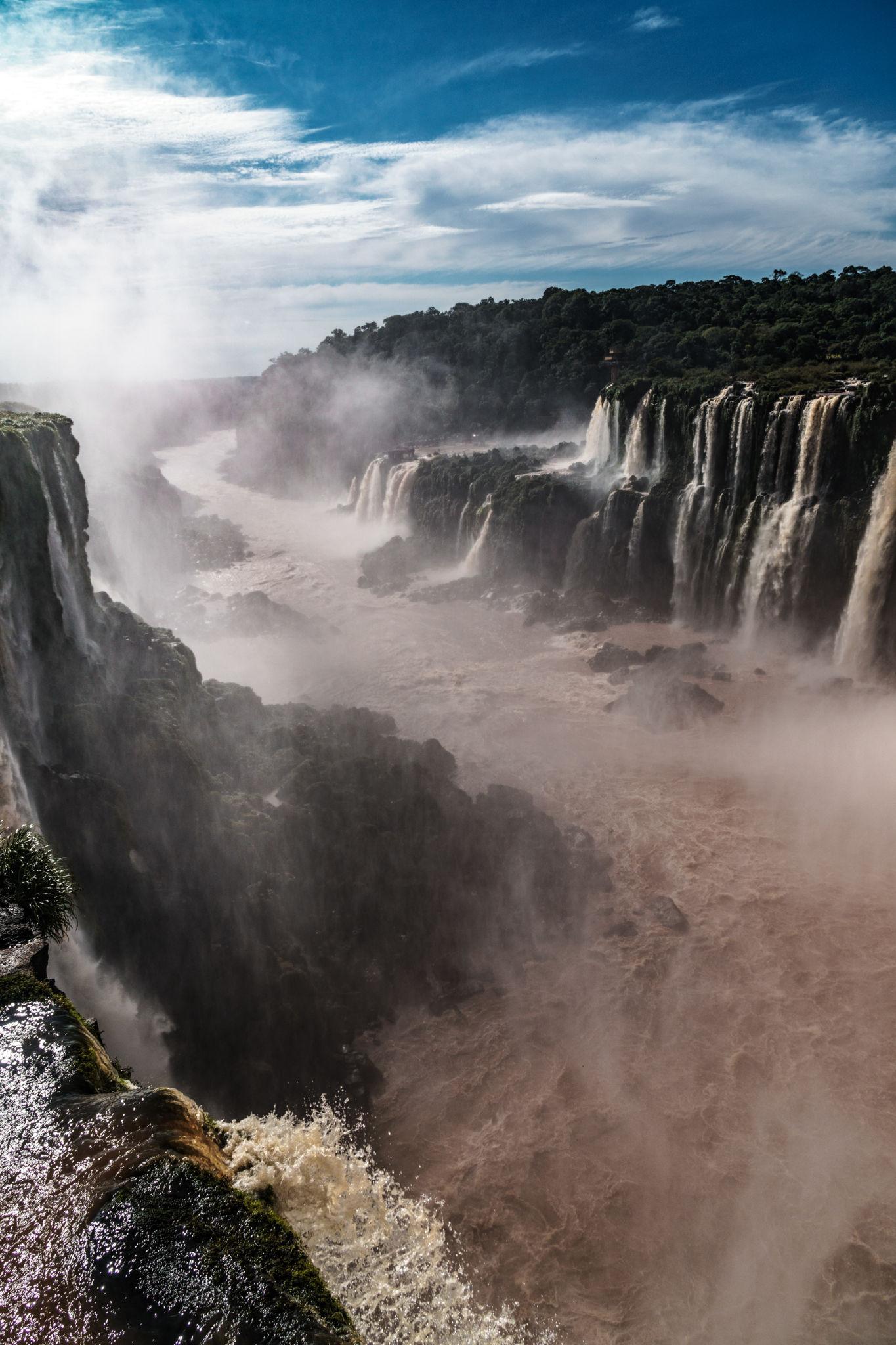
Devil’s Throat is the most powerful part of Iguazu Falls and the main highlight of the entire park.

It is a massive U-shaped drop where several waterfalls crash into a deep gorge. The sound is constant and very loud, and the mist often blocks the view for a few seconds at a time.

To reach Devil’s Throat:

  • Visitors take a small ecological train
  • Then walk along a metal bridge over the river
  • The calm river suddenly drops into the gorge

You should expect to get wet here, especially during high water season. Waterproof covers for phones and cameras are strongly recommended.


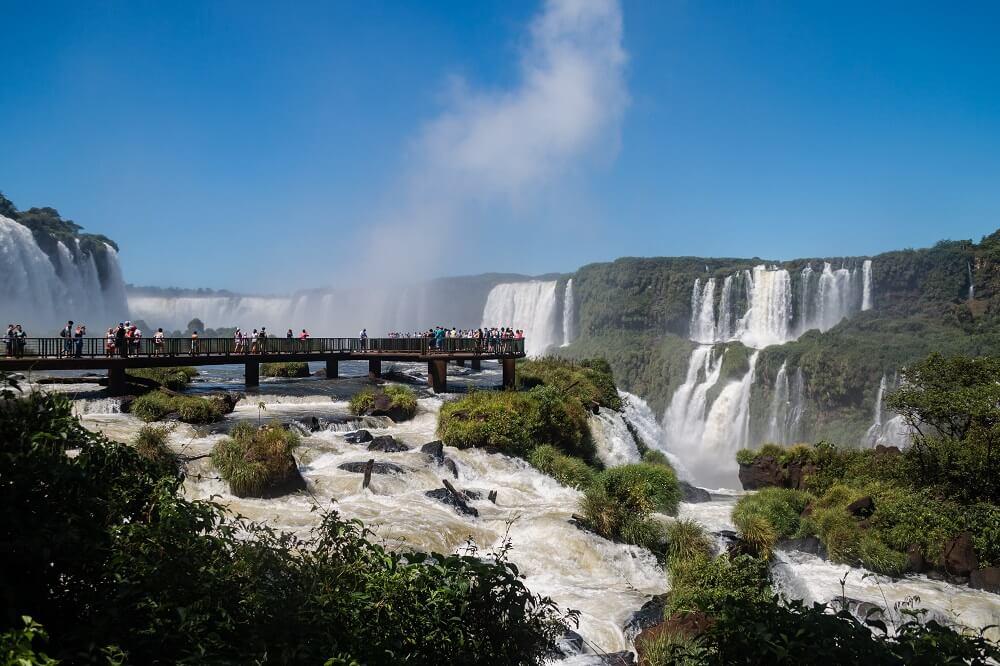
4. Brazil Side of Iguazu Falls (Panoramic Views)
 

https://karakoramdiaries.com/media/files/f04b1d726c615672552fa5116aa5b958d8d41676/448


https://karakoramdiaries.com/media/files/5fd7e33e01c871f02cbf9f6b0c1feec774b09cf5/449

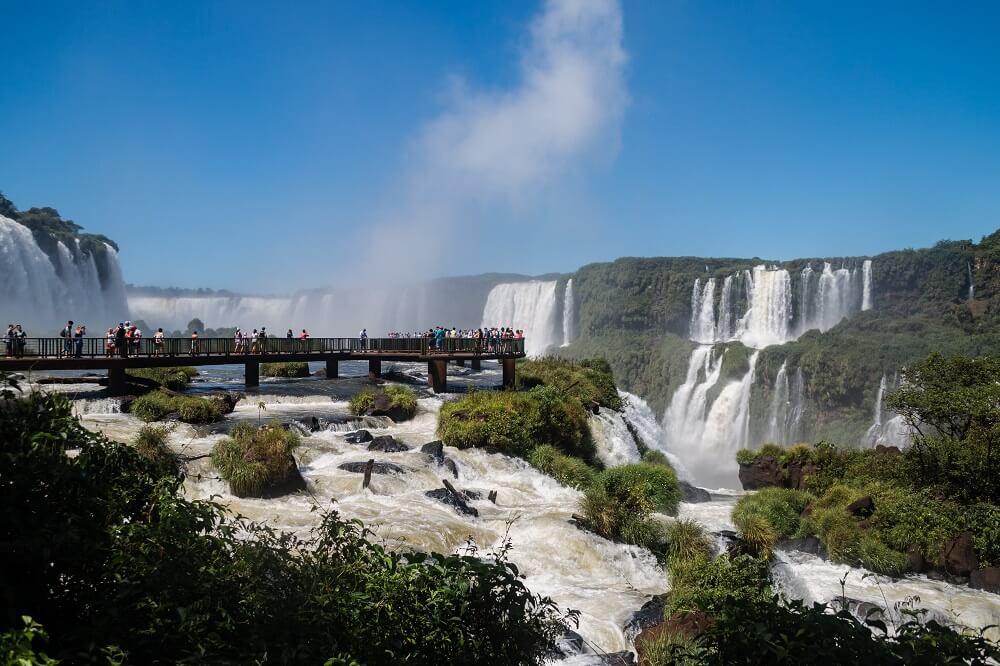
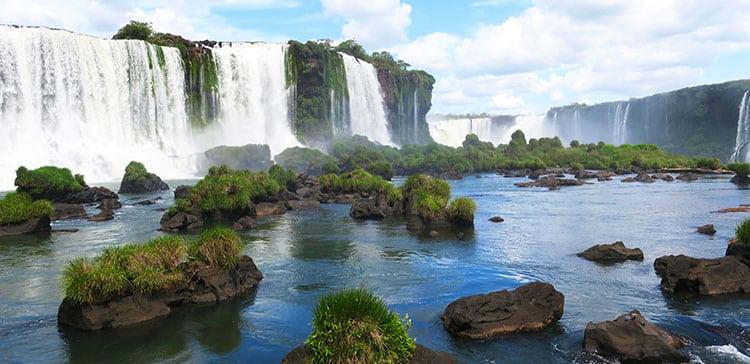
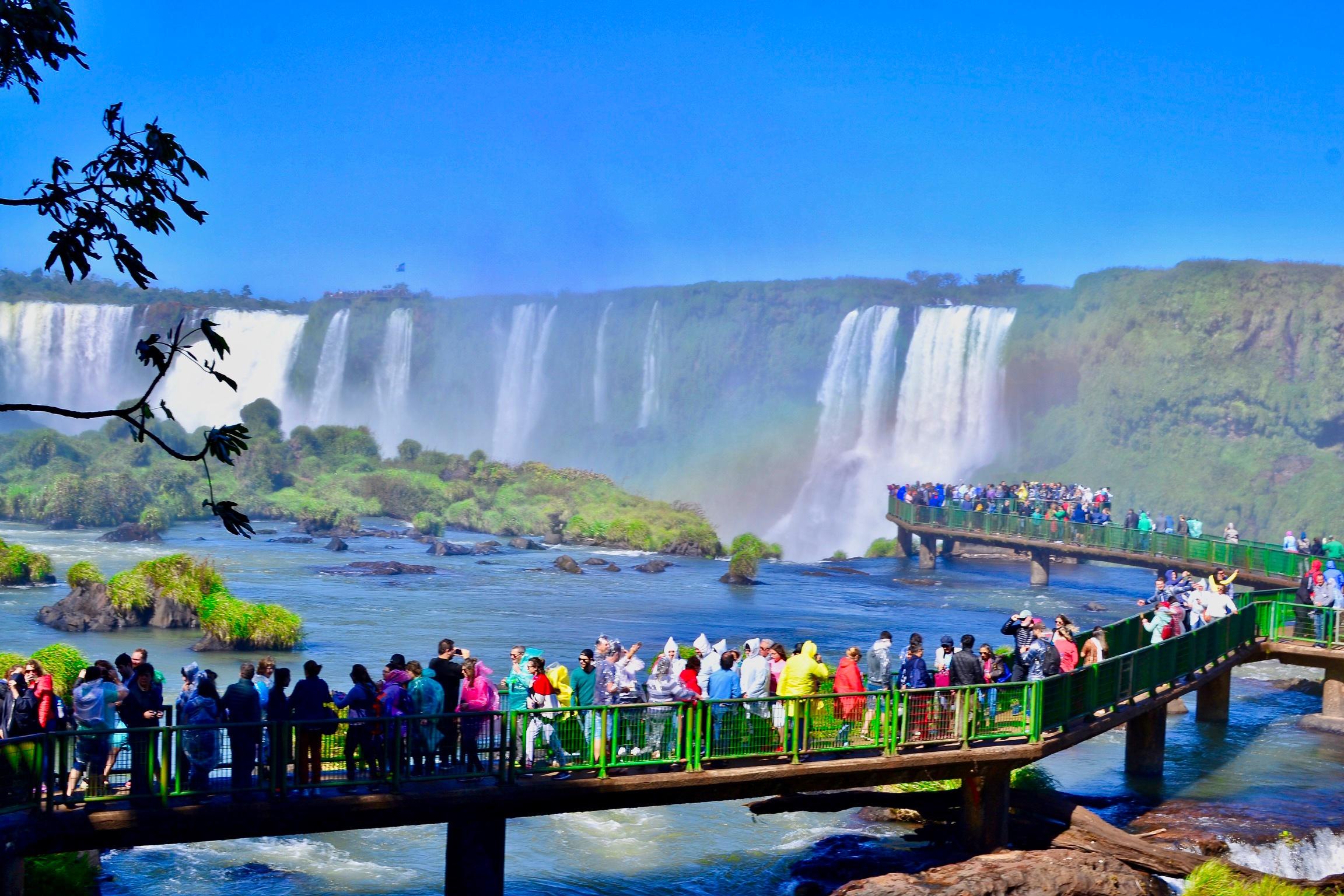
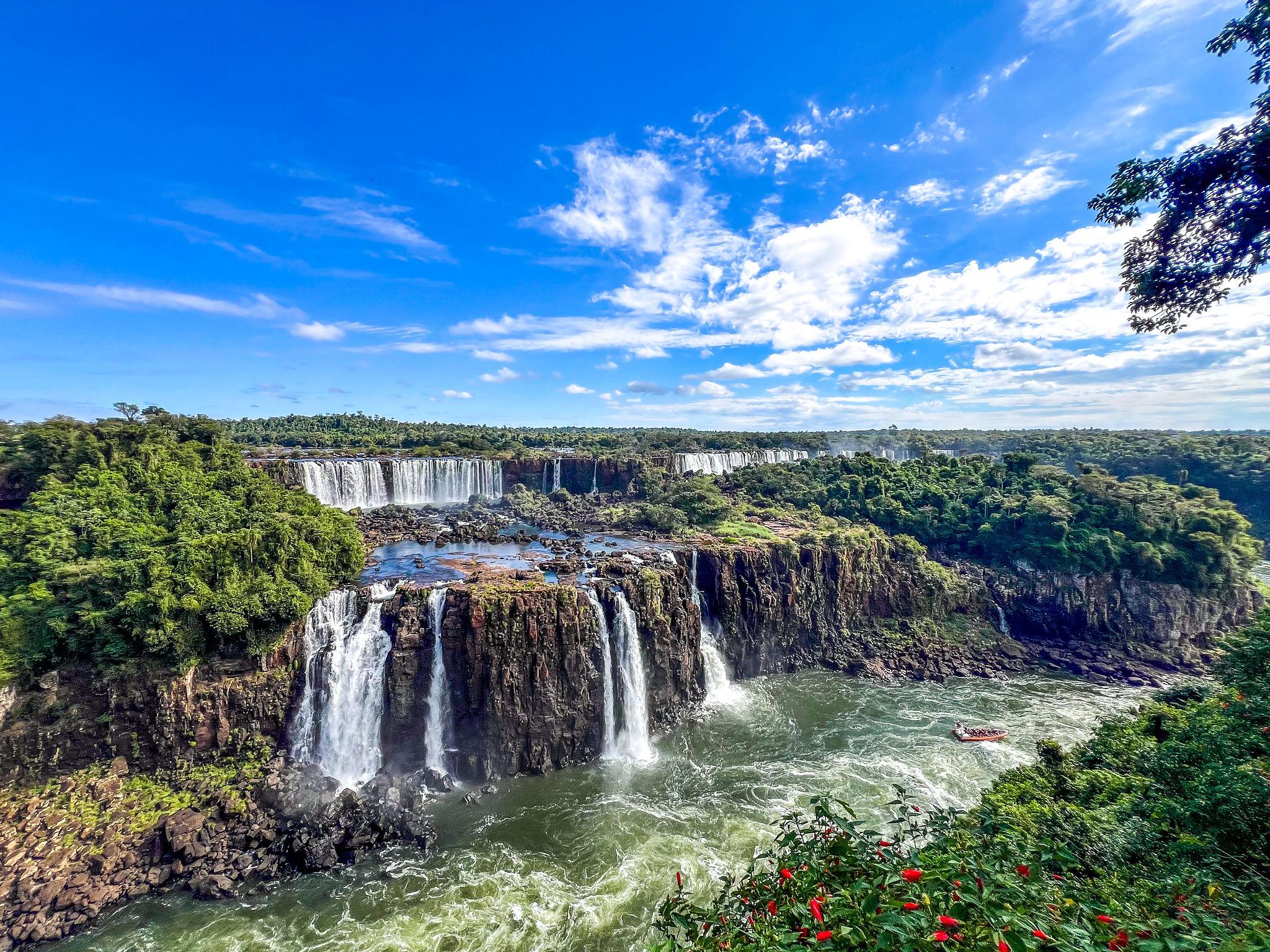
The Brazil side offers wide panoramic views of the entire waterfall system
 

The Brazil side offers fewer trails, but it provides the best wide views of Iguazu Falls. From this side, you can see most of the waterfall system in one glance.

This visit usually takes three to four hours, making it ideal for travelers with limited time.

The Brazil side is known for:

  • Open viewpoints with clear sightlines
  • Excellent photo opportunities
  • A dramatic final walkway near Devil’s Throat

While you cannot walk as close to individual falls as on the Argentina side, the overall view is unmatched.


5. Which Side Should You Visit?

If time allows, visiting both sides gives the most complete experience.

In simple terms:

  • The Argentina side lets you feel inside the waterfalls
  • The Brazil side lets you see the full scale of the falls

Many travelers choose to start in Argentina and finish in Brazil for the best balance.


Iguazu Falls – Complete Guide (3)

Best Time to Visit, Weather, Water Levels & Crowds


1. Best Time to Visit Iguazu Falls Overall
 

https://karakoramdiaries.com/media/files/cbb897d6f8ac4801f296b1734183198ef95df433/44a


https://karakoramdiaries.com/media/files/de7accd96932d2149a168af9de94155a2528bb34/44b

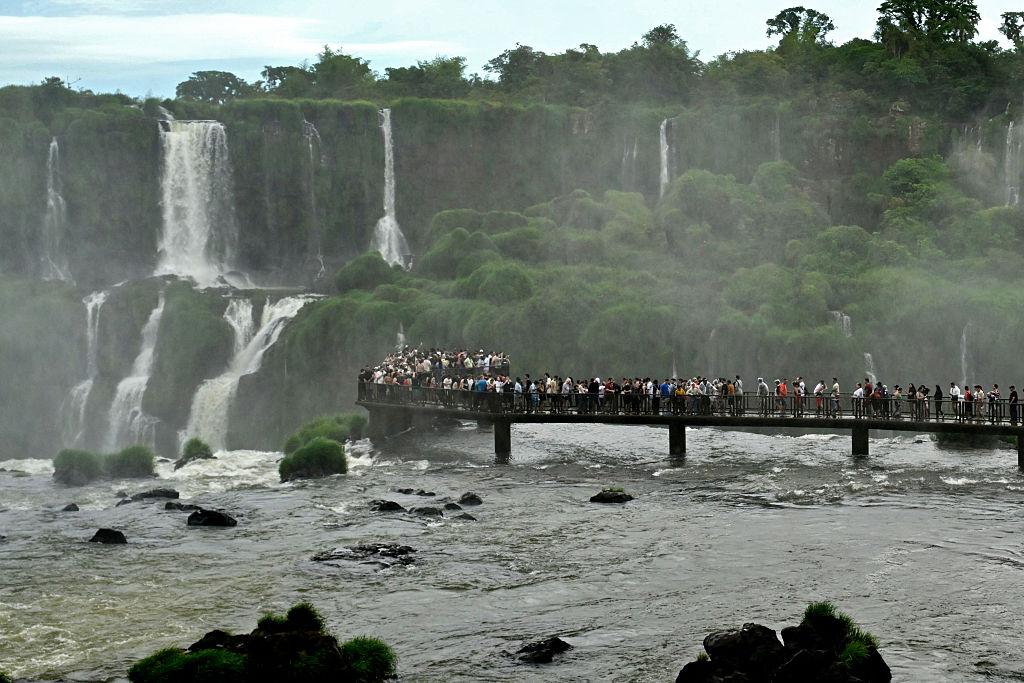
Moderate water flow and clear views during the shoulder seasons at Iguazu Falls
 

The best time to visit Iguazu Falls is during the shoulder seasons, when weather, water flow, and crowds are balanced.

The most recommended months are:

  • March to May
  • August to October

During these periods, temperatures are comfortable, the waterfalls remain strong, and the parks are less crowded than peak season.

This is the best choice for most travelers.


2. Iguazu Falls by Season
 

https://karakoramdiaries.com/media/files/4145b41a96bb8864b950604c58e547dc90b8a8f0/44c


https://karakoramdiaries.com/media/files/34864b98a98a2208e07124043ba7c77240fe9cc8/44d

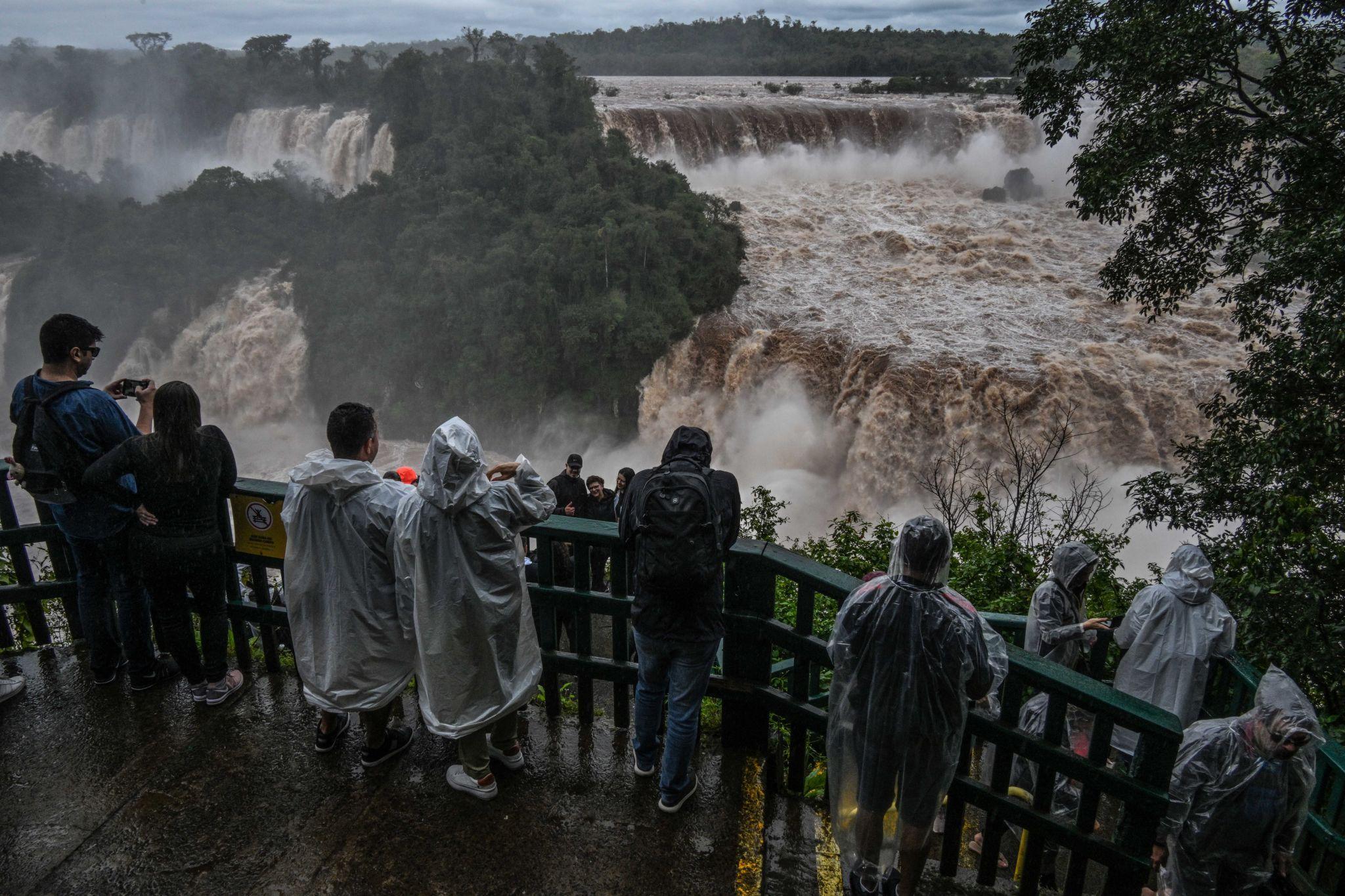
Seasonal water level changes significantly affect the look and feel of the falls
 

Summer (December to February)

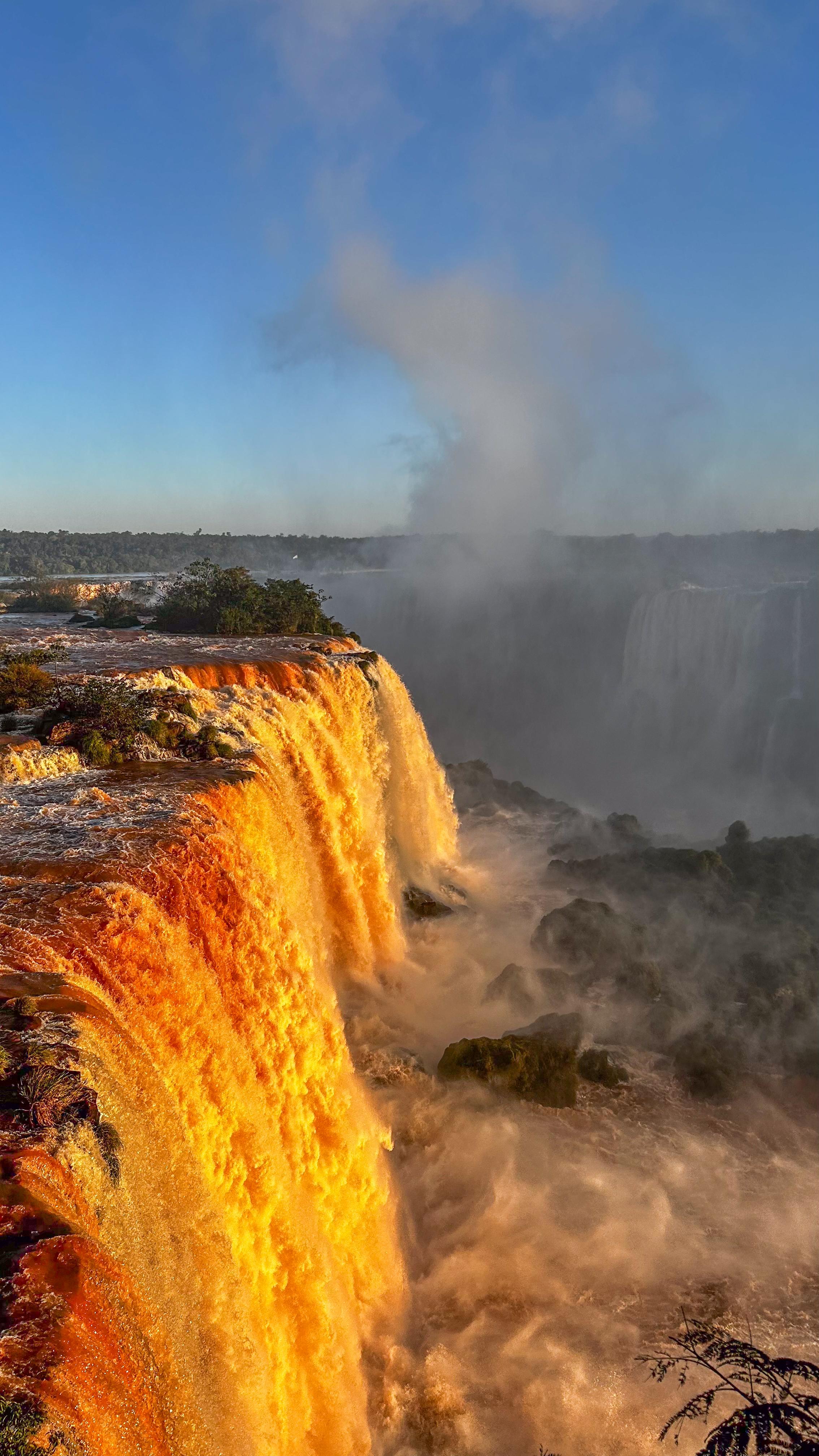
Summer brings heavy rain and high humidity. Water levels are at their strongest, and the falls look extremely powerful.

During this season:

  • Water volume is very high
  • Mist is strong, especially at Devil’s Throat
  • Temperatures are hot and humid
  • Crowds are at their highest

Some trails may close temporarily if water levels rise too much.


Autumn (March to May)

Autumn is one of the best seasons to visit Iguazu Falls.

During this season:

  • Water flow remains strong
  • Weather becomes cooler
  • Trails are fully open most of the time
  • Fewer tourists compared to summer

This season offers a good balance between comfort and dramatic scenery.


Winter (June to July)

Winter is cooler and drier. The waterfalls are still impressive, but less powerful than in summer.

During winter:

  • Water levels are lower
  • Views are clearer with less mist
  • Temperatures are mild to cool
  • Crowds increase due to school holidays

This season is ideal for photography and long walks.


Spring (August to October)

Spring is another excellent time to visit.

During this season:

  • Water levels begin to rise again
  • Temperatures are pleasant
  • Wildlife activity increases
  • Visitor numbers are moderate

Spring combines comfort with improving water flow.


3. Water Levels and Their Impact on Your Visit
 

https://karakoramdiaries.com/media/files/83a9502d6880c5446823b0aebd2ad2168b5bd546/44e


https://karakoramdiaries.com/media/files/7666a15e506de6ef8b3b92d5d8751ba79a0becd3/44f

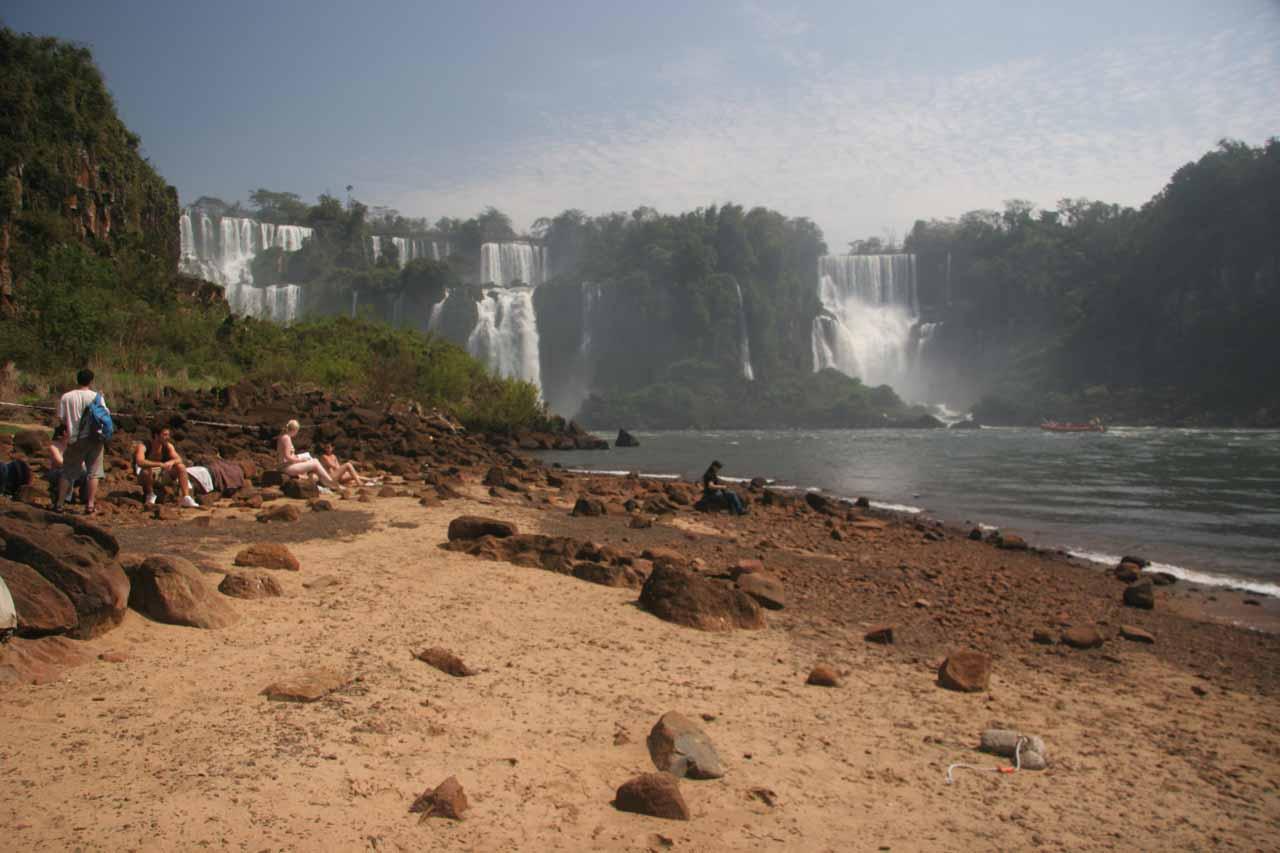
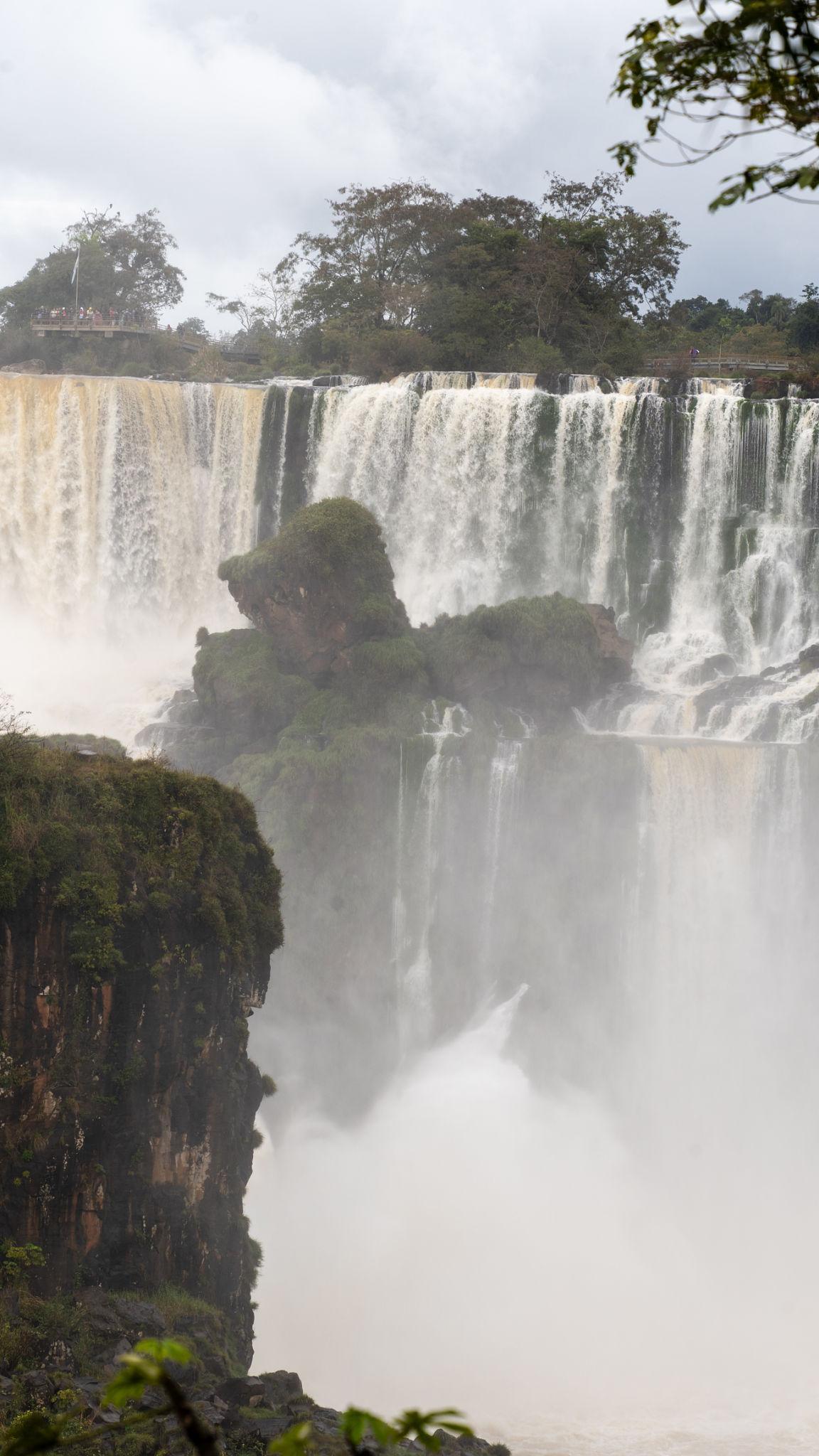
High water creates mist and power, while low water offers clearer views
 

Water levels change how Iguazu Falls feels and looks.

High water levels:

  • Make the falls louder and more powerful
  • Create heavy mist
  • Reduce visibility in some areas
  • Increase chances of getting wet

Lower water levels:

  • Allow clearer views of rock formations
  • Keep walkways drier
  • Reduce the dramatic force of the falls

Neither condition is bad. It depends on whether you prefer power or clarity.


4. Crowds and Peak Visiting Times
 

https://karakoramdiaries.com/media/files/d96adb142a1f7ede4d5906eadf01409dbd98b60d/450


https://visitbrasil.com/wp-content/uploads/2024/07/4-23.jpg

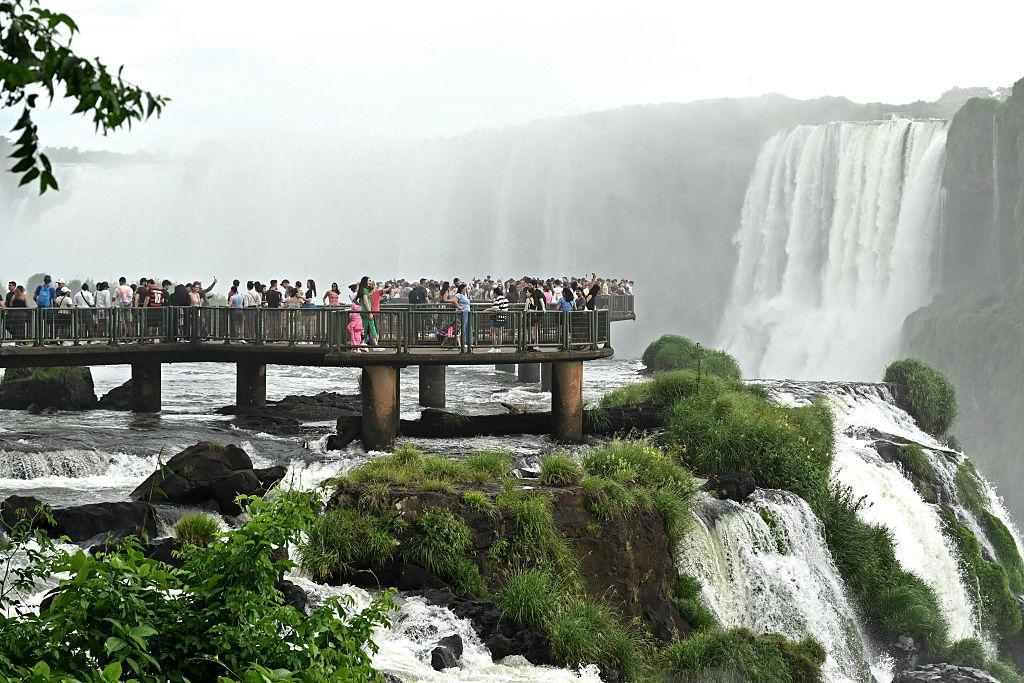
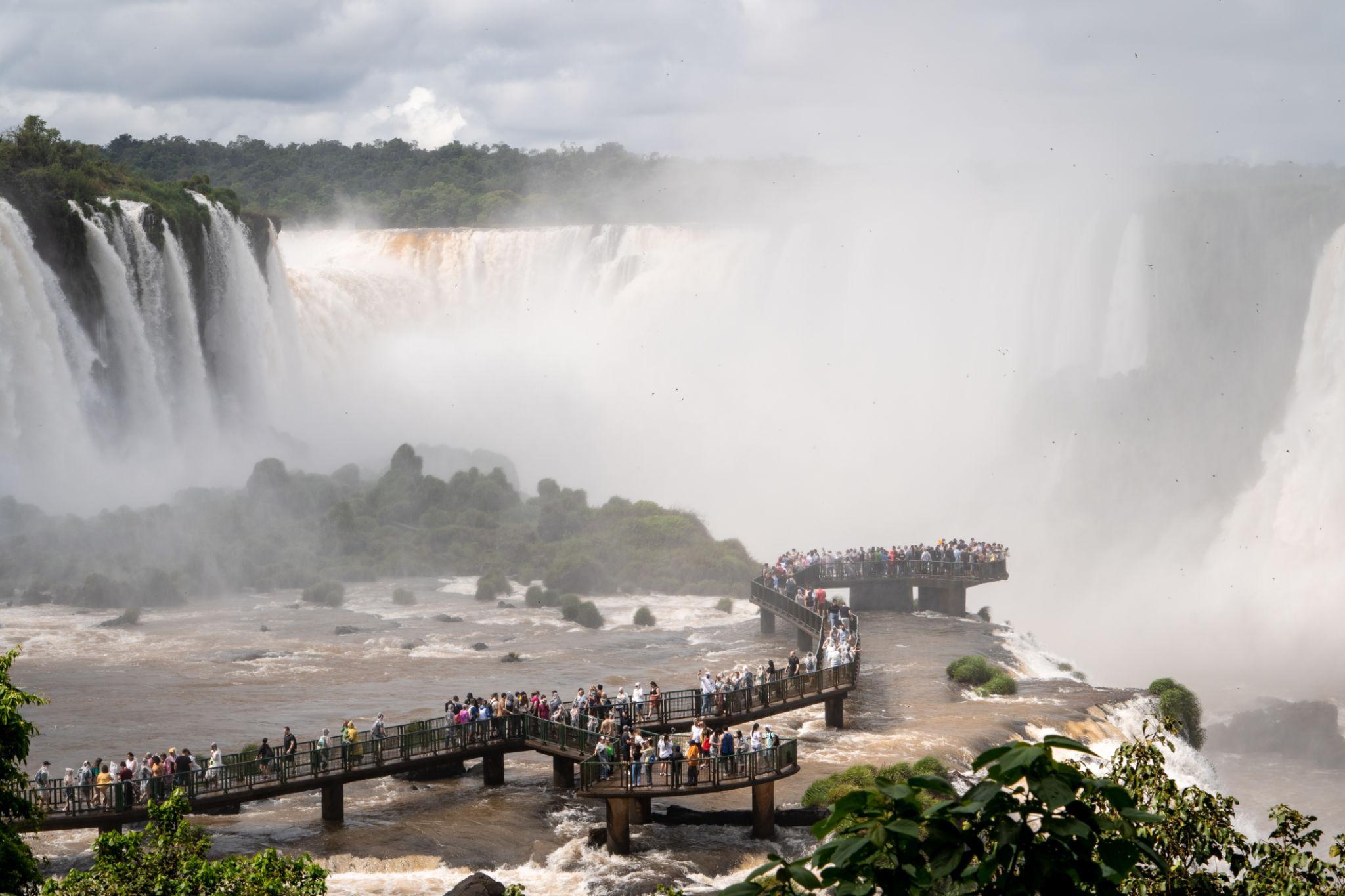
Crowds build quickly during the day, especially in peak season
 

Iguazu Falls is one of South America’s most visited natural attractions, so crowds matter.

Crowds are highest during:

  • December to February
  • July school holidays
  • Long weekends and public holidays

To avoid crowds:

  • Enter the park early in the morning
  • Visit Devil’s Throat first
  • Avoid weekends if possible

Early mornings offer quieter trails and better light.


5. Best Time of Day to Visit
 

https://karakoramdiaries.com/media/files/3af0af21718ad75722b7f7dc2428e7f3f9c10432/452


https://karakoramdiaries.com/media/files/4ac2bbff5b524a7870db72e80334fa26fee02817/453

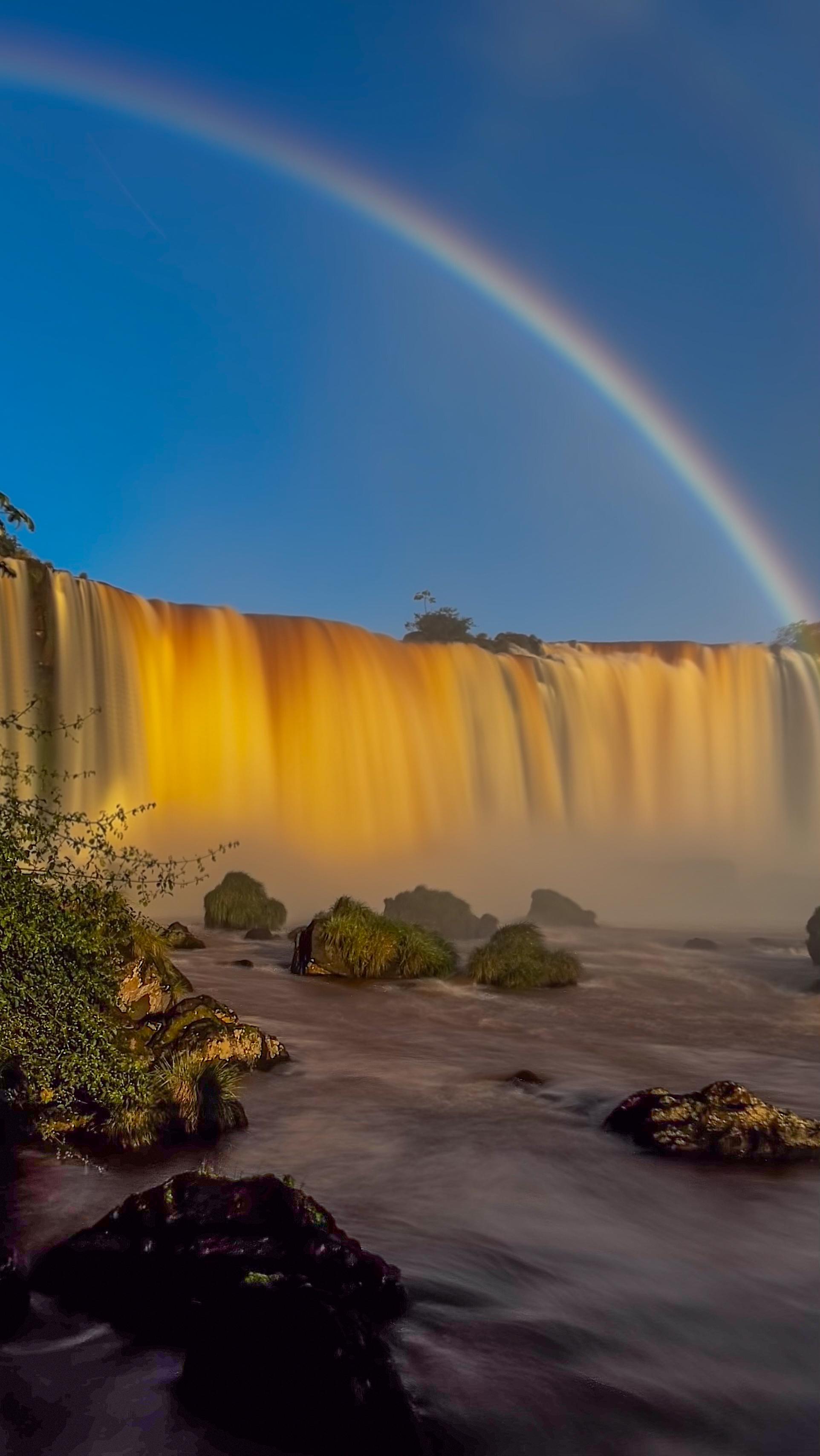
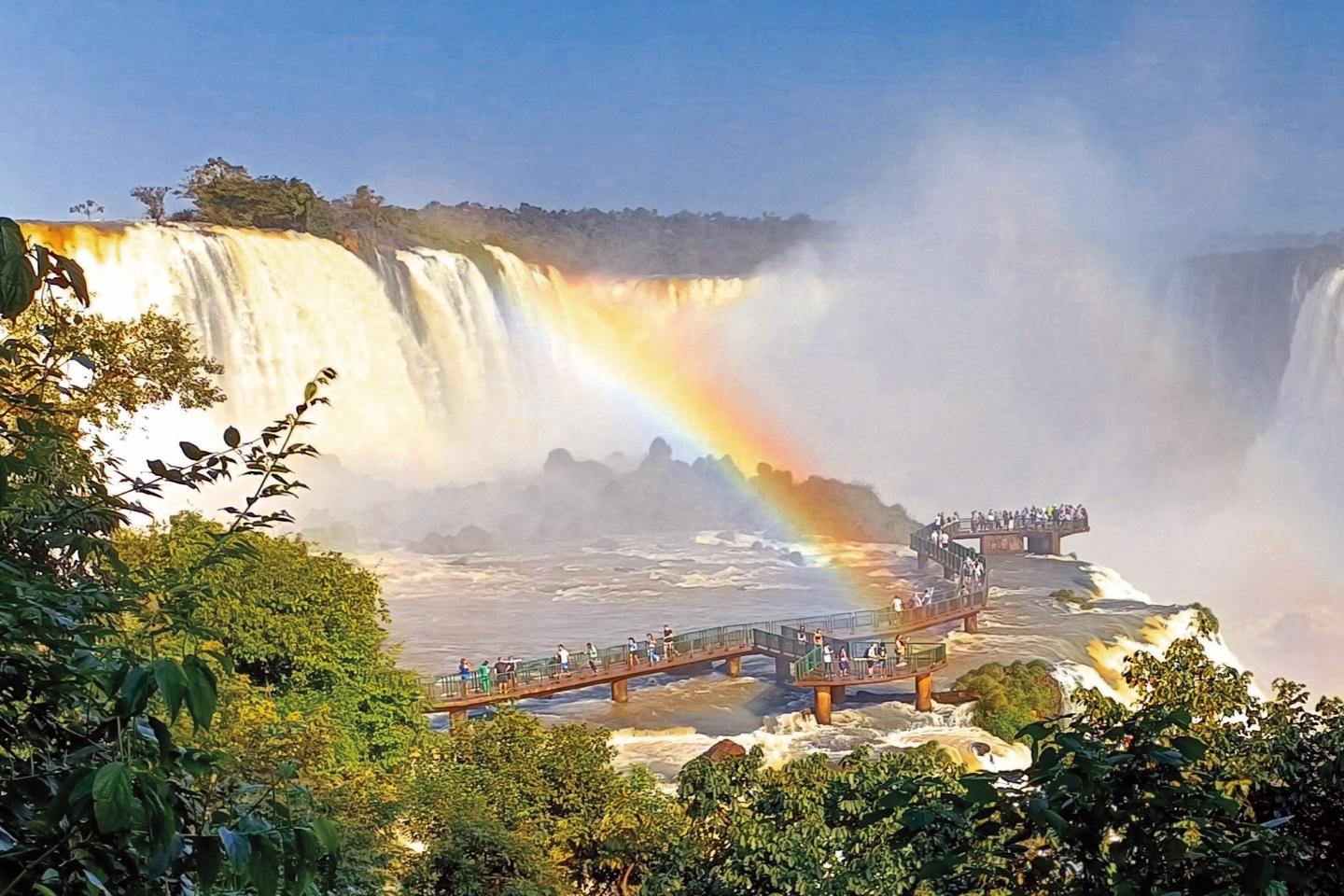
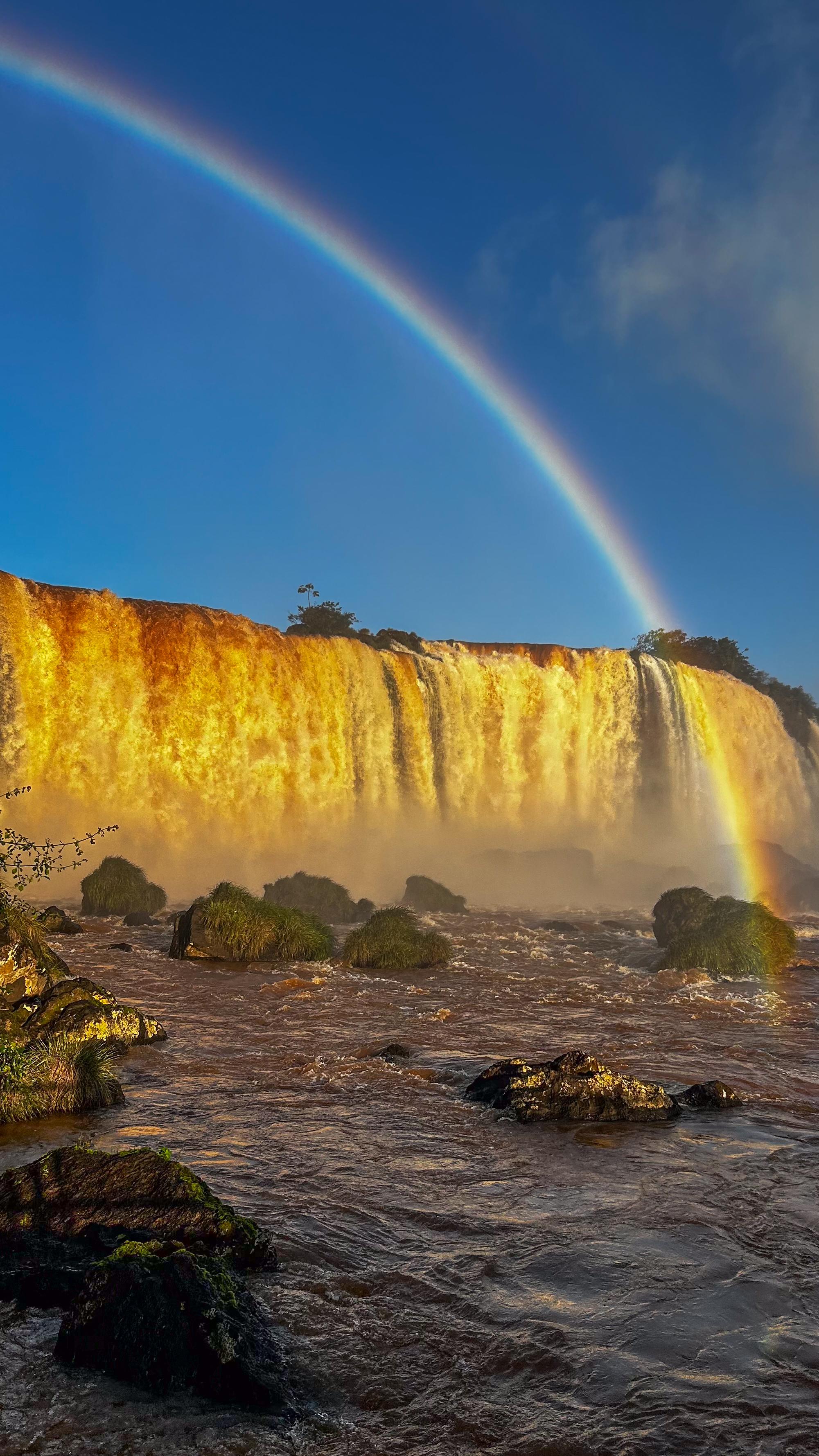
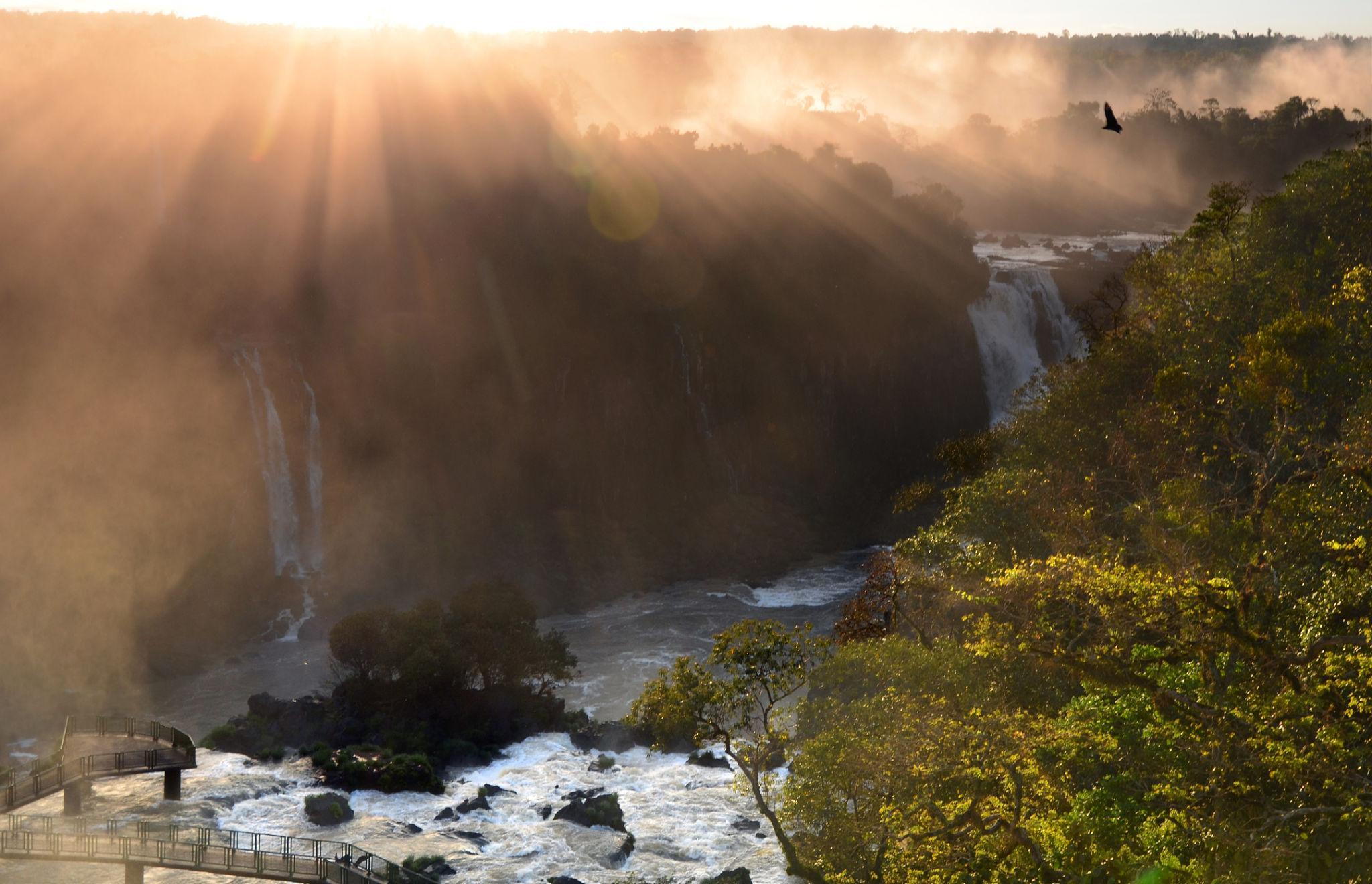
Morning light offers calm views, while afternoon light often creates rainbows
 

Time of day affects your experience.

Morning visits:

  • Fewer people
  • Cooler temperatures
  • Calm atmosphere

Afternoon visits:

  • More crowds
  • Higher chance of rainbows
  • Stronger mist near the falls

Many visitors prefer mornings for comfort and afternoons for photography.
 

Iguazu Falls – Complete Guide (4)

How to Get There, Transport Options & Border Crossings


1. Getting to Iguazu Falls by Air


The two main airports serving Iguazu Falls are located in Argentina and Brazil
Image credit: AgĂŞncia Brasil / Wikimedia Commons

Flying is the easiest and fastest way to reach Iguazu Falls.

There are two main airports:

  • Puerto IguazĂş International Airport (Argentina)
  • Foz do Iguaçu International Airport (Brazil)

Both airports have regular flights from major cities such as Buenos Aires, SĂŁo Paulo, and Rio de Janeiro.

After landing, the falls are about:

  • 25 minutes from Puerto IguazĂş Airport
  • 20 minutes from Foz do Iguaçu Airport

Taxis, rideshares, and hotel transfers are widely available.


2. Getting to Iguazu Falls by Bus


https://karakoramdiaries.com/media/files/14019988a92023b21c8fbafb2b615c6ce575da38/454


https://karakoramdiaries.com/media/files/b02b70815b8520a272deb770f0bd96f6ab0a8257/455

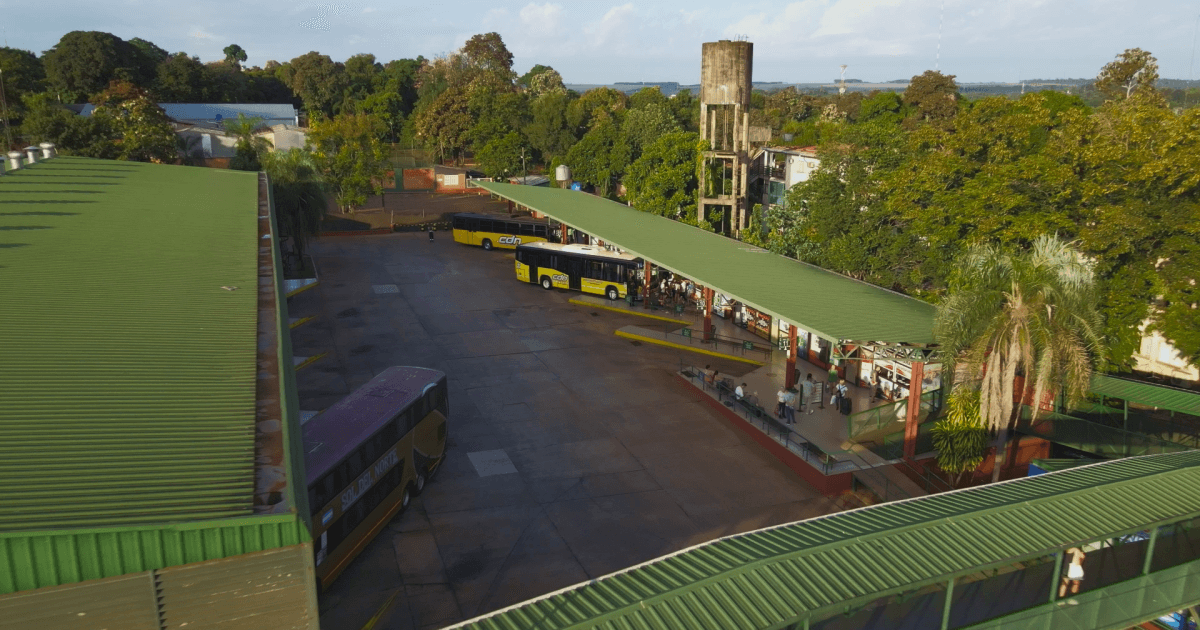
Long-distance buses connect Iguazu Falls with major cities in Argentina and Brazil
 

Long-distance buses are a popular option for budget travelers.

From Argentina:

  • Overnight buses run from Buenos Aires to Puerto IguazĂş
  • Travel time is around 16 to 18 hours

From Brazil:

  • Buses connect Foz do Iguaçu with cities such as SĂŁo Paulo and Curitiba
  • Travel times vary depending on distance

Bus terminals are located in both cities and connect easily to hotels and the national parks.


3. Local Transport to the National Parks

https://karakoramdiaries.com/media/files/51eac6b471a284d3341d8c0c63d0f1a286262a18/456


https://karakoramdiaries.com/media/files/d36550fc4422fde2c3bb4169c939e24e583e79f0/457

Public buses and taxis provide easy access to both sides of Iguazu Falls
 

Once in Puerto Iguazú or Foz do Iguaçu, reaching the parks is simple.

Common transport options include:

  • Public buses running directly to the park entrances
  • Taxis and rideshare services
  • Organized tours with hotel pickup

Public buses are reliable, affordable, and clearly marked for the national parks.


4. Crossing the Border Between Argentina and Brazil


https://karakoramdiaries.com/media/files/06be19ff5cbfb5dba362873de9cba10fa3d48b9f/458


https://karakoramdiaries.com/media/files/bf0d80b16262738fcdcb9b2e3d6a600cf75e4cc4/459

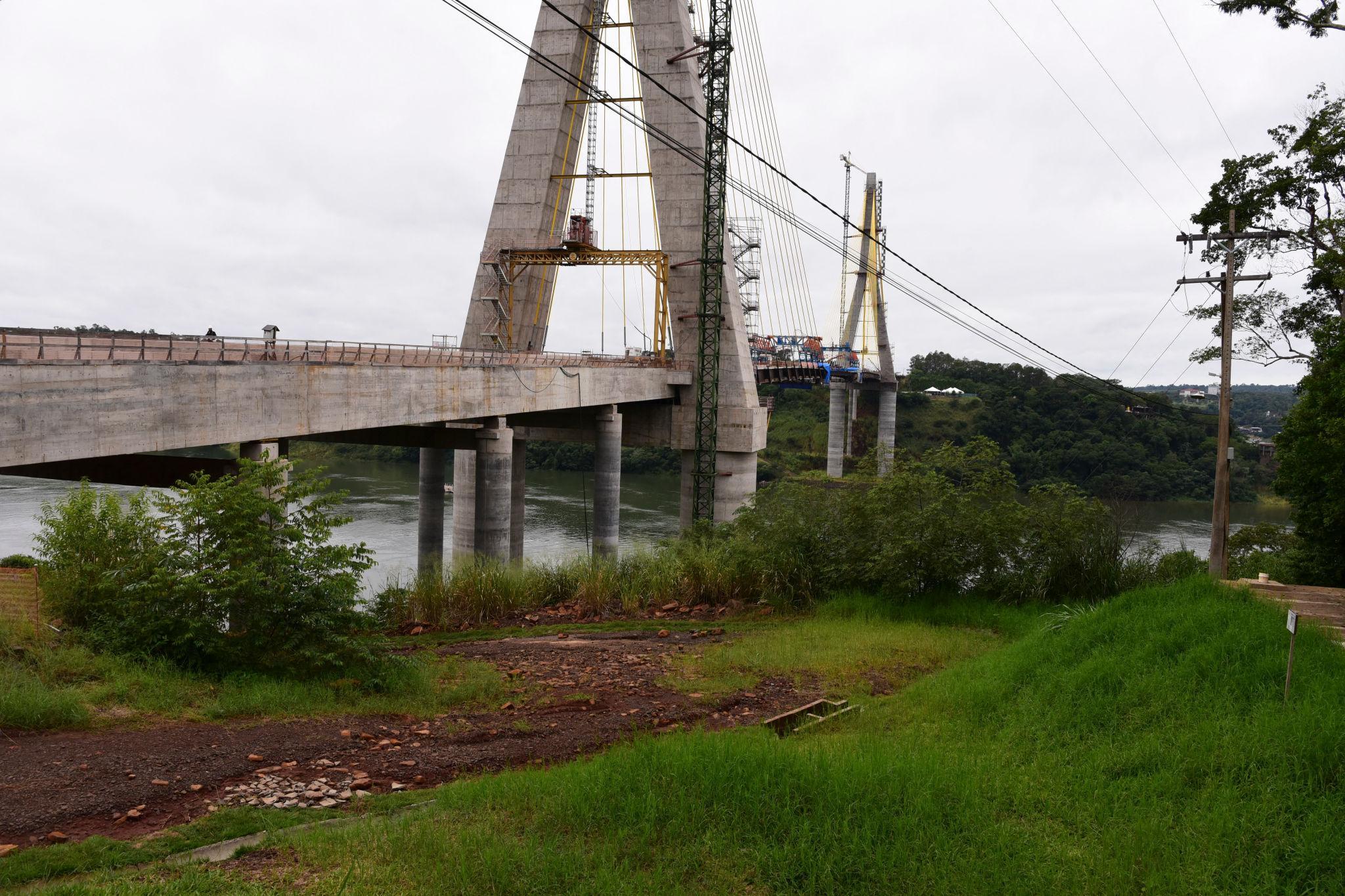
The Tancredo Neves Bridge connects Argentina and Brazil near Iguazu Falls
 

Many visitors cross the border to see both sides of the falls.

Important points to know:

  • You must carry your passport
  • Border checks are usually quick but can take longer during peak season
  • Visa requirements depend on your nationality

Border crossings can be done by:

  • Taxi
  • Public bus
  • Guided tour

Always check visa rules before traveling, especially if you plan to cross on your own.


5. Moving Between the Argentina and Brazil Sides in One Day


https://karakoramdiaries.com/media/files/24ceb64daa89fed836c1d896777837adb1274ee6/45a


https://karakoramdiaries.com/media/files/cc3f47ce8fa4a09f6213d4326b5a7aacf3f6da71/45b

Many travelers visit both sides of Iguazu Falls in a single day
 

Visiting both sides in one day is possible but requires planning.

To do this comfortably:

  • Start early in the morning
  • Visit the Argentina side first
  • Cross to Brazil in the afternoon
  • Keep extra time for border checks

This option works best during low or shoulder seasons.


6. Entry Points and Park Access


https://karakoramdiaries.com/media/files/f413cccdaf5807e3d59738188fd094ad8e13ea7a/45c


https://karakoramdiaries.com/media/files/83e65bf2123ab640cb74e300e0ea3226c15afadc/45d

Main entrances to Iguazu National Park in Argentina and Brazil
 

Each side of Iguazu Falls has a separate entrance and ticket system.

Key things to remember:

  • Tickets are not shared between countries
  • Argentina offers discounted second-day entry
  • Brazil tickets are usually valid for one day only

Arriving early helps avoid lines and heat.


Iguazu Falls – Complete Guide (5)

Entrance Fees, Opening Hours & How Much Time You Need


1. Entrance Fees for Iguazu Falls


https://karakoramdiaries.com/media/files/48c138b410e9ebe240aed3fe1ff9757b4021450d/45e


https://karakoramdiaries.com/media/files/83e65bf2123ab640cb74e300e0ea3226c15afadc/45d

Ticket counters at the national park entrances on both sides of Iguazu Falls
Image credit: Parques Nacionales Argentina

Entrance fees are separate for the Argentina and Brazil sides, and prices may change slightly each year.

Argentina Side (IguazĂş National Park)

  • Higher entrance fee compared to Brazil
  • Discounted second-day ticket available
  • Reduced prices for local residents and students

This ticket gives access to all main circuits, including Devil’s Throat.

Brazil Side (Iguaçu National Park)

  • Slightly lower entrance fee
  • One-day access only
  • Includes park transport to viewpoints

Tickets can be purchased online or at the entrance, but buying in advance saves time during busy seasons.


2. Opening Hours of the Parks


https://visitbrasil.com/wp-content/uploads/2024/07/4-23.jpg


https://karakoramdiaries.com/media/files/668f37d8c8de8ceafa1092495a78aaaa0efef934/461

Early entry allows visitors to experience Iguazu Falls with fewer crowds
 

Opening hours vary slightly by season.

Argentina Side

  • Usually opens between 8:00 and 9:00 AM
  • Closes around 5:00 to 6:00 PM
  • Last entry is typically mid-afternoon

Brazil Side

  • Usually opens around 9:00 AM
  • Closes around 5:00 PM

Arriving early is strongly recommended, especially for Devil’s Throat.


3. How Much Time You Need on Each Side


https://karakoramdiaries.com/media/files/5a73b747ec74bdd97d5f05bf1ea48d0707e87e50/462


https://karakoramdiaries.com/media/files/07fd89a40a3755e21a5884640f23eaf59b66df35/463

Time spent at Iguazu Falls varies depending on the side and walking pace
 

Time planning is important to avoid rushing.

Argentina Side

You should plan:

  • 6 to 8 hours for a comfortable visit
  • A full day if you want to explore all circuits slowly
  • Extra time for breaks and viewpoints

This side rewards patience and slow walking.

Brazil Side

You should plan:

  • 3 to 4 hours total
  • Less walking but more open viewpoints
  • Time for photos and short stops

This side is ideal for half-day visits.


4. One-Day vs Two-Day Visit Planning


https://nickandmichellesbigadventure.com/wp-content/uploads/2020/03/wp-15842796397417945806412214463826-scaled.jpg


https://karakoramdiaries.com/media/files/f8b5f622dcf940ae97164f7cea68e98da6bf8ac3/465

Planning your visit length helps avoid rushing and missed viewpoints
 

One-Day Visit

A one-day visit works if:

  • You have limited time
  • You choose only one side
  • You start early in the morning

This option is common but fast-paced.

Two-Day Visit

A two-day visit is ideal if:

  • You want to visit both sides
  • You prefer a relaxed pace
  • You want better photo opportunities

Many travelers visit Argentina on day one and Brazil on day two.


5. Facilities Inside the Parks


https://karakoramdiaries.com/media/files/cf2f328d24859d56d55d2b610b12525e60b21895/466


https://karakoramdiaries.com/media/files/ec2b67d5467580f9f9fea7878374ced969f38129/467

Visitor facilities inside the parks include rest areas, cafés, and information centers
 

Both parks are well organized and visitor-friendly.

Facilities include:

  • Restrooms
  • CafĂ©s and snack areas
  • Souvenir shops
  • Information centers

Food options are limited and slightly expensive, so carrying water and light snacks is a good idea.

 

Iguazu Falls – Complete Guide (6)

Boat Rides, Extra Activities & Guided Experiences


1. Gran Aventura Boat Ride (Argentina Side)


https://karakoramdiaries.com/media/files/3977dced04b7d0c7bc81b01a3f4124e14c683b8e/468


https://karakoramdiaries.com/media/files/e3e097dc79d8161b2a2448f6c0930a8b081cd013/469

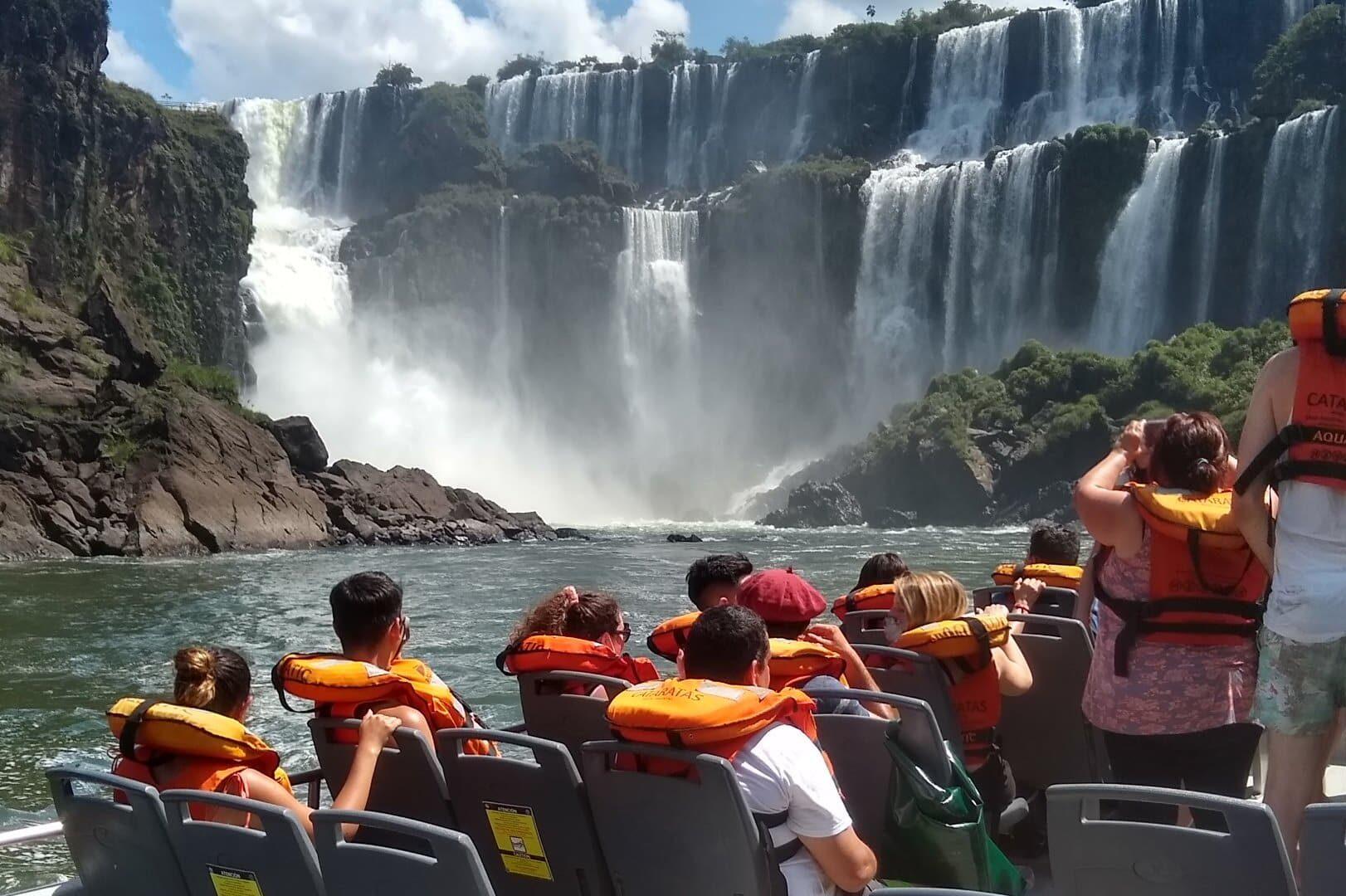
Speedboats take visitors close to the base of the waterfalls during the Gran Aventura ride
 

The Gran Aventura boat ride is the most popular paid activity at Iguazu Falls. It combines a short jungle drive with a high-speed boat ride into the spray of the falls.

This experience:

  • Lasts about two hours in total
  • Includes a short rainforest trail
  • Ends with a fast boat ride directly into the mist

You will get completely wet. Waterproof bags are provided, but phones and cameras should be protected.

This activity is optional, but many visitors say it adds excitement and a different perspective to the visit.


2. Macuco Trail and Jungle Walks


https://karakoramdiaries.com/media/files/b45025e873feadc8319fb1c1e40554d871b61289/46a


https://karakoramdiaries.com/media/files/ac3e7b007d7ab0ba379faa8ab62d9da35c5444f4/443

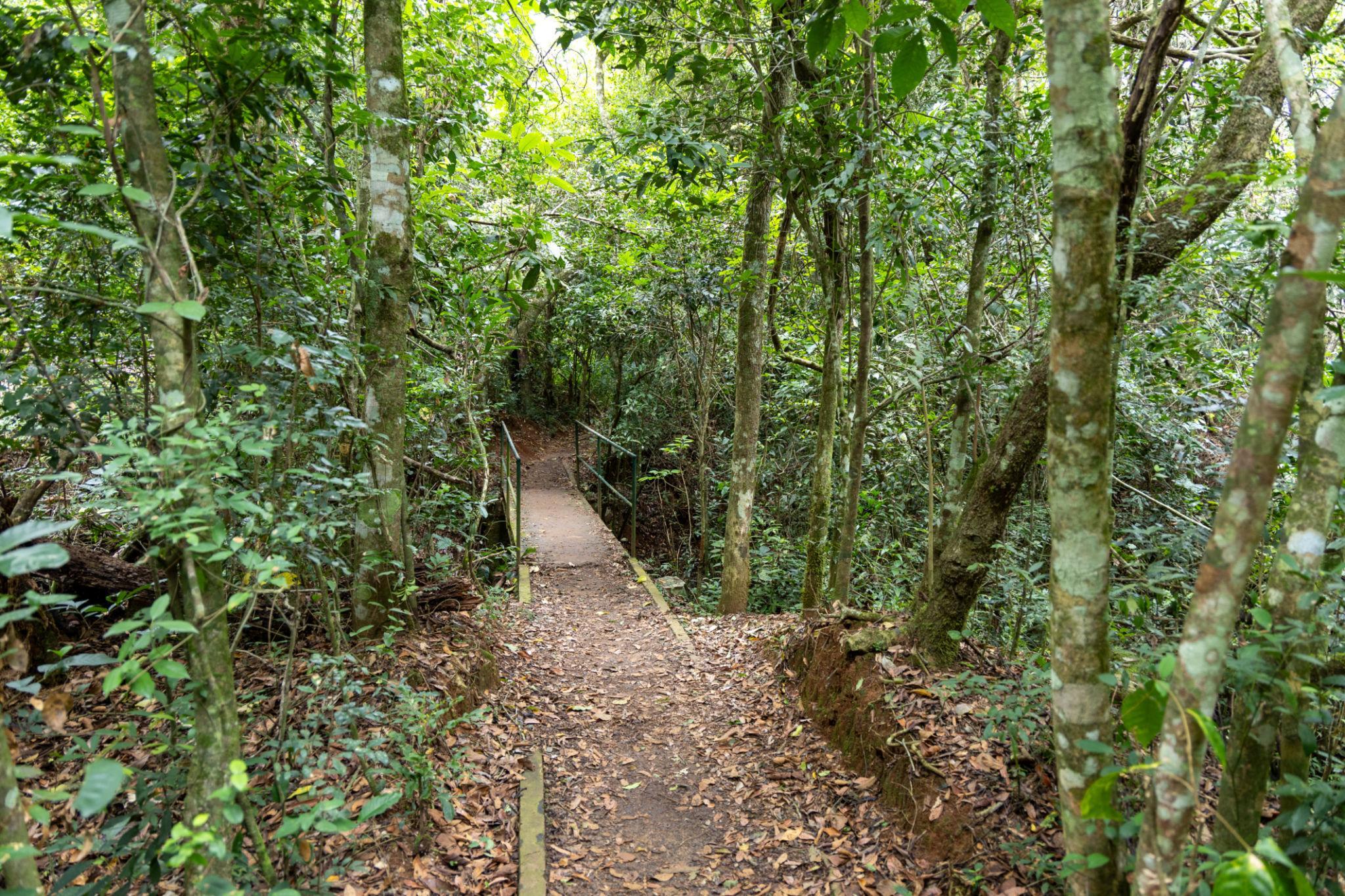
The Macuco Trail leads through quiet rainforest away from the main crowds
 

The Macuco Trail is a quieter walking trail on the Argentina side. It moves away from the waterfalls and focuses on the surrounding rainforest.

This trail:

  • Is about 7 kilometers round trip
  • Takes two to three hours
  • Offers chances to see birds, monkeys, and butterflies

It is a good option for visitors who want a break from busy walkways and enjoy nature at a slower pace.


3. Helicopter Ride (Brazil Side)


https://karakoramdiaries.com/media/files/6ba87a3e83d9c05cb1be02e25ab50e3e4505ff87/46c


https://karakoramdiaries.com/media/files/2776719358ab17c0c13820174f929a26843e33be/46d

Aerial views of Iguazu Falls from a short helicopter flight on the Brazil side
 

Helicopter flights are available on the Brazil side only.

This experience:

  • Lasts around 10 minutes
  • Offers a full aerial view of the entire waterfall system
  • Provides a clear view of Devil’s Throat from above

It is expensive and short, but it gives a perspective that cannot be seen from the ground.


4. Guided Tours vs Self-Guided Visits


https://www.southamerica.travel/wp-content/uploads/2019/08/iguazu-falls-tour-group-scaled.jpg


https://karakoramdiaries.com/media/files/f61aaea514254d189a51b437263f522f1f1f6724/46f

Both guided and self-guided visits are common at Iguazu Falls
 

Most visitors explore Iguazu Falls on their own. The parks are well marked and easy to navigate.

Guided Tours

Guided tours:

  • Provide historical and environmental information
  • Handle transport and timing
  • Are helpful for short visits

Self-Guided Visits

Self-guided visits:

  • Allow full flexibility
  • Let you spend more time at viewpoints
  • Are better for photography and relaxed pacing

Both options work well. The choice depends on time and travel style.


5. Is It Worth Paying for Extra Activities?


https://karakoramdiaries.com/media/files/07fd89a40a3755e21a5884640f23eaf59b66df35/463

Optional activities add variety but are not required to enjoy Iguazu Falls
 

Extra activities are not required to enjoy Iguazu Falls, but they can enhance the visit.

In general:

  • The boat ride is the most popular and memorable
  • Jungle trails add calm and nature
  • Helicopter rides are optional luxury experiences

The waterfalls themselves remain the main highlight.


Iguazu Falls – Complete Guide (7)

Wildlife, Nature & Responsible Visiting


1. The Natural Environment Around Iguazu Falls


https://karakoramdiaries.com/media/files/ac3e7b007d7ab0ba379faa8ab62d9da35c5444f4/443
https://karakoramdiaries.com/media/files/5dd8b53aacfc461407333cffac2e4acce3337ebf/441

Dense subtropical rainforest surrounds Iguazu Falls on both the Argentina and Brazil sides
 

Iguazu Falls is located inside one of South America’s most important subtropical rainforests. The environment around the falls is protected and carefully managed to preserve its natural balance.

The rainforest:

  • Stays green throughout the year
  • Supports a wide range of plant species
  • Plays a major role in water regulation and climate balance

Walking through the park feels like moving through a living ecosystem rather than a single attraction.


2. Wildlife You May See at Iguazu Falls


https://karakoramdiaries.com/media/files/7ed28031fea3428609396624c50f0db45cfe7069/473


https://karakoramdiaries.com/media/files/1625434cebb5e5c4cf7cac668ab24444f9ec05b7/474

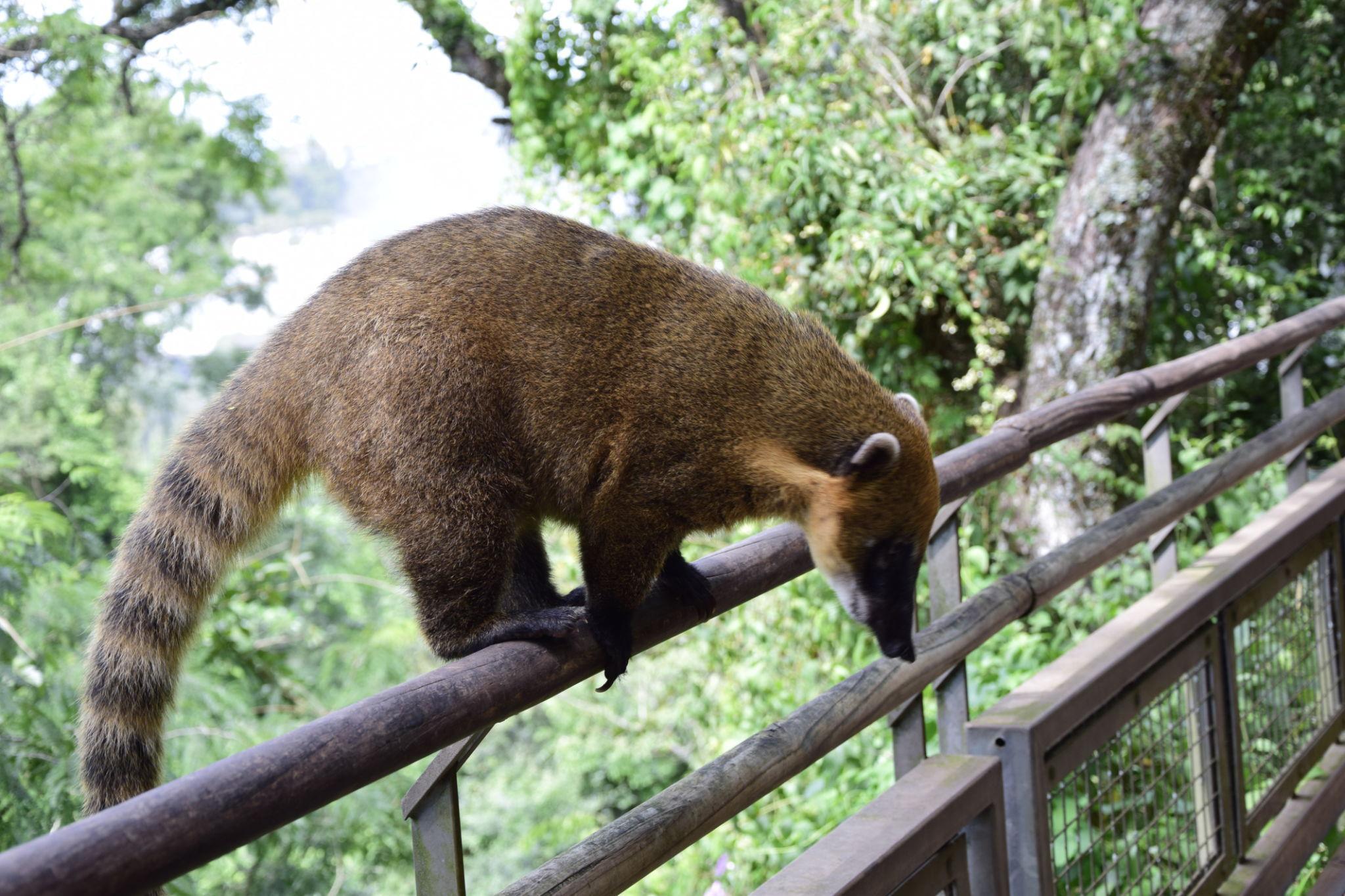
Coatis and toucans are among the most commonly seen animals in Iguazu National Park
 

Wildlife sightings are common, especially on the Argentina side.

Animals you may see include:

  • Coatis, often near walkways
  • Toucans and parrots in the trees
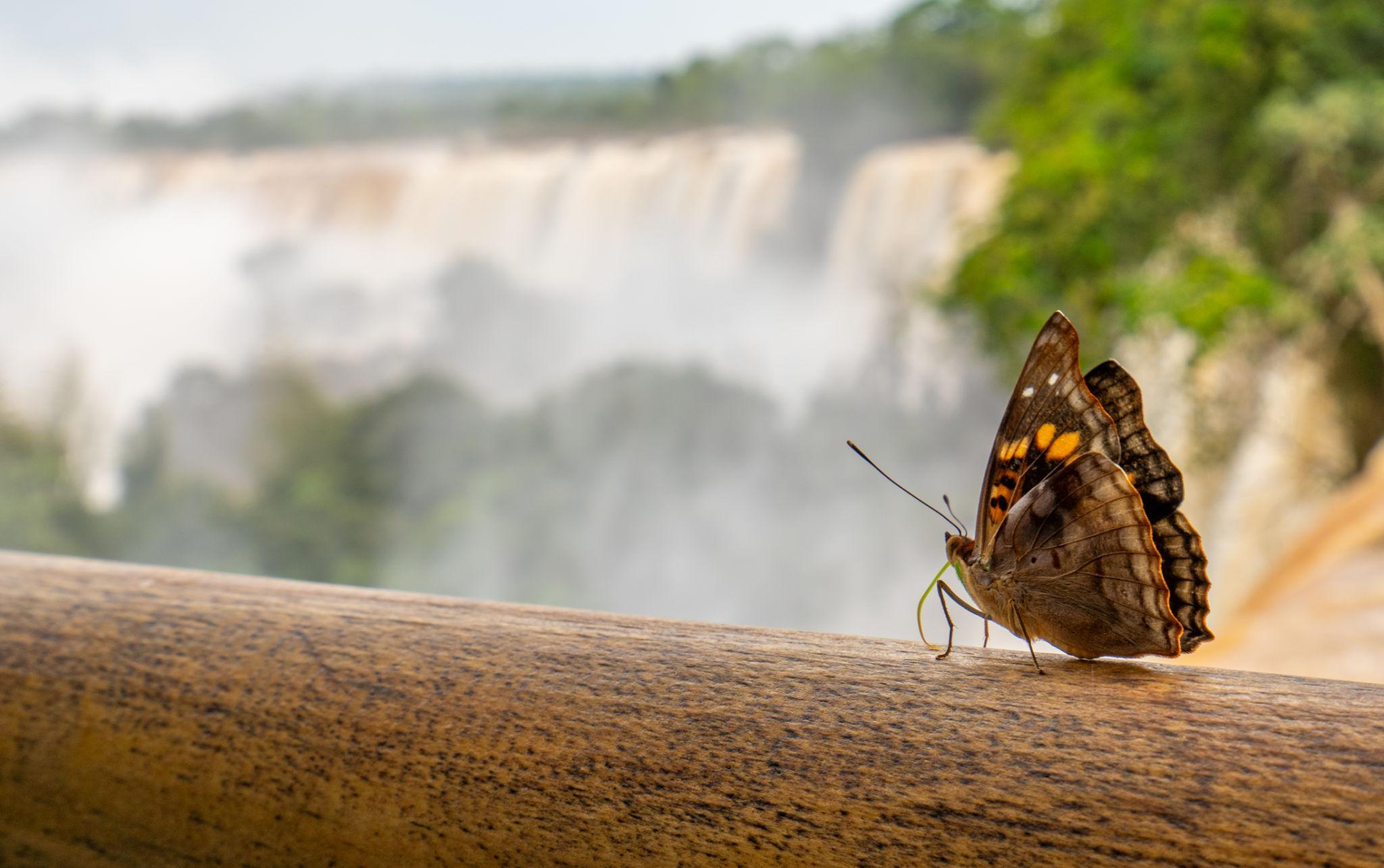
  • Butterflies in large numbers
  • Lizards and small reptiles

Larger animals such as jaguars and tapirs live in the park but are rarely seen by visitors.


3. Birds and Insects of Iguazu


https://karakoramdiaries.com/media/files/6e75d23a0574afce62799aab4afcd882f53d6680/475


https://karakoramdiaries.com/media/files/38c07d9eb6f585cb2e363aa8d83443b1b9fcc722/476

Colorful birds and butterflies are a constant presence around Iguazu Falls
 

Iguazu National Park is especially known for birdlife.

The park is home to:

  • More than 400 bird species
  • Large butterflies active during warm months
  • Insects that play an important role in the ecosystem

Early morning is the best time for birdwatching.


4. Safety Around Wildlife

https://karakoramdiaries.com/media/files/8665243ef242a2b13ff662d0943d369e8ba0e206/477


https://karakoramdiaries.com/media/files/fbea31c7083ef34d19f4b946b94b60560c709e34/478

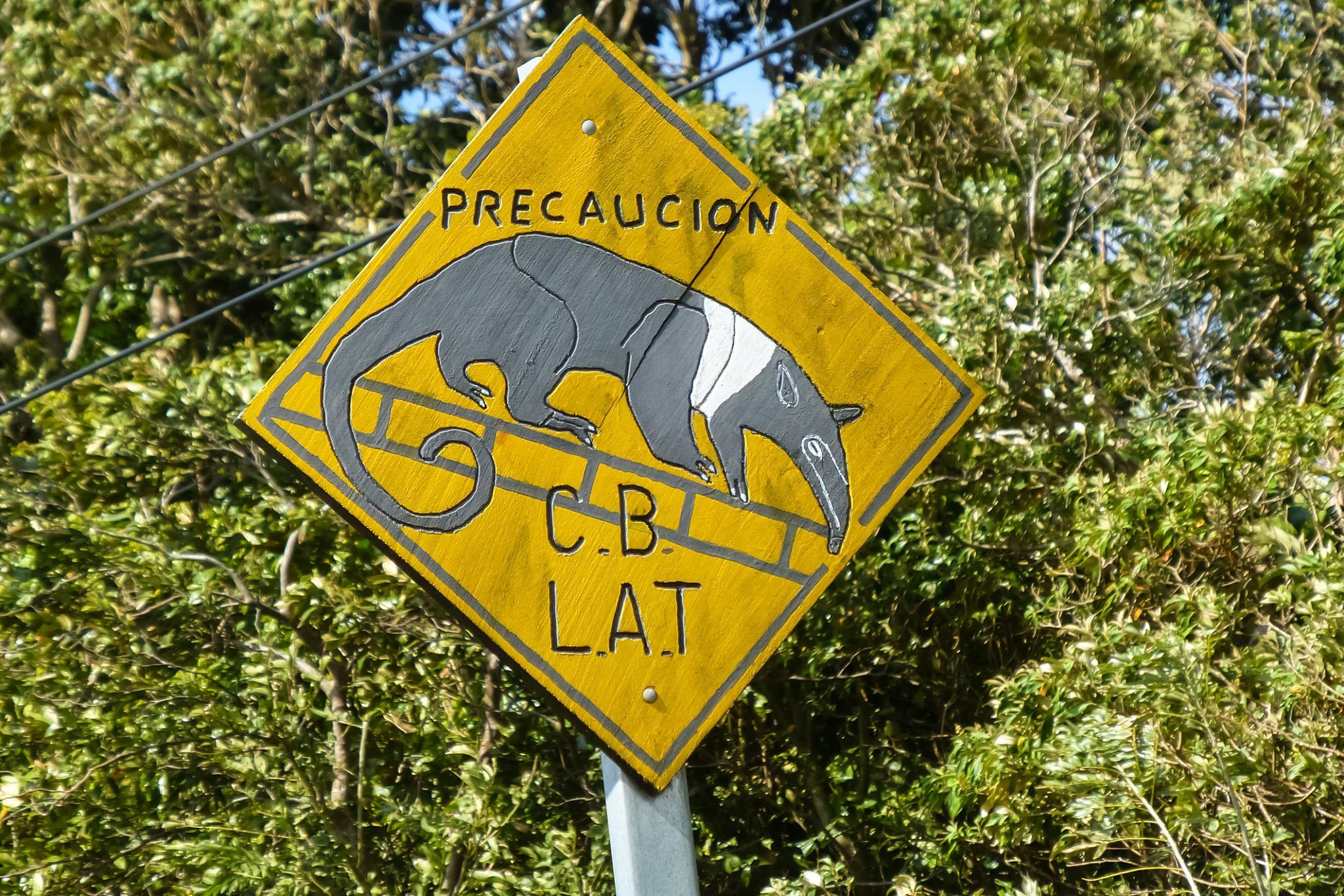
Warning signs remind visitors not to feed or approach wildlife
 

Wild animals in the park are used to people, but they are not tame.

Important safety rules include:

  • Do not feed animals
  • Keep food secured at all times
  • Do not touch or chase wildlife
  • Follow park signs and instructions

Coatis may look friendly, but they can bite if threatened or fed.


5. Responsible and Sustainable Visiting


https://karakoramdiaries.com/media/files/eaef52968c5b1fa7aa44f27a0584221e72e9b648/479


https://karakoramdiaries.com/media/files/07fd89a40a3755e21a5884640f23eaf59b66df35/463

Conservation efforts help protect Iguazu Falls for future generations
 

Responsible tourism helps protect Iguazu Falls and its environment.

Visitors are encouraged to:

  • Stay on marked trails
  • Avoid littering
  • Respect wildlife and plants
  • Support local and park-approved services

These simple actions help keep the park safe and natural.


Iguazu Falls – Complete Guide (8)

Where to Stay, Best Areas & Accommodation Options


1. Best Areas to Stay Near Iguazu Falls


https://karakoramdiaries.com/media/files/785d945abc09e7f398ed686b0d47223dc0b2437c/47b


https://karakoramdiaries.com/media/files/27d2588aefa0cf36945c13e534c23eec15208909/47c


https://karakoramdiaries.com/media/files/f57ecf7ab22801babae3310ffc719189faf9b32d/47d

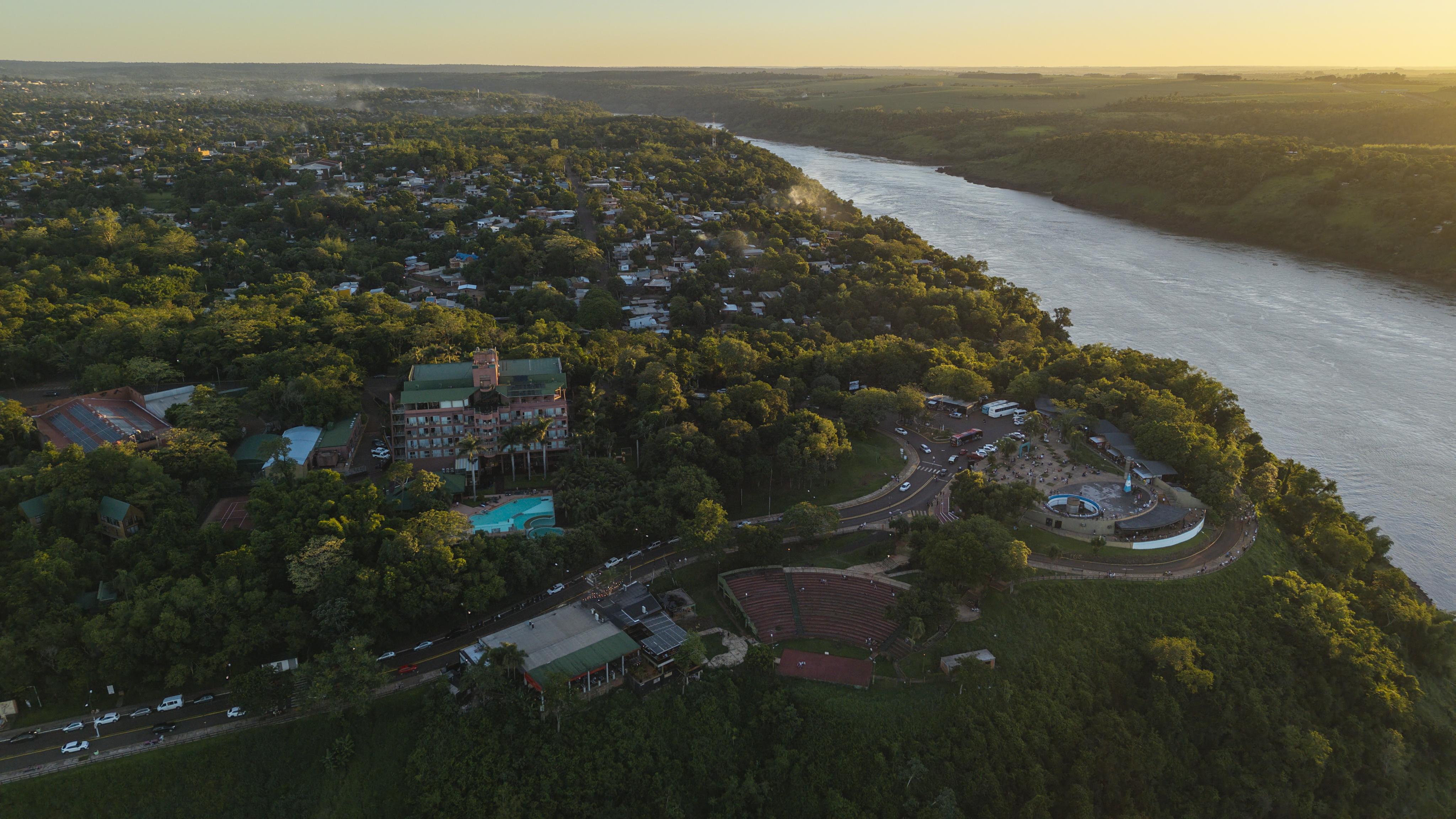
Main areas where visitors stay when visiting Iguazu Falls
 

There are three main areas where travelers choose to stay. Each area offers a different experience, depending on budget and travel style.

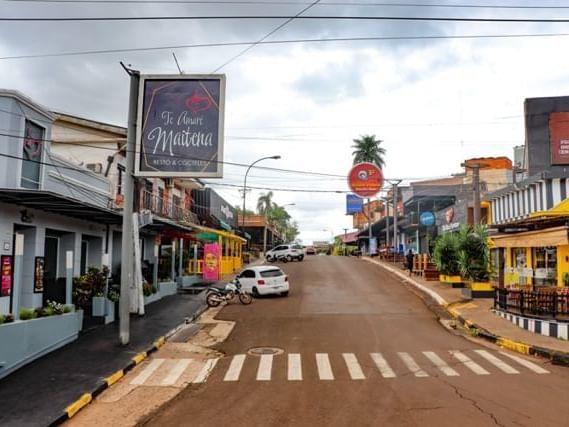
Puerto IguazĂş (Argentina)

Puerto IguazĂş is a small and relaxed town close to the Argentina side of the falls.

This area is popular because:

  • It is close to IguazĂş National Park
  • Restaurants and shops are easy to reach
  • Prices suit budget and mid-range travelers

This is the most common choice for first-time visitors.


Foz do Iguaçu (Brazil)

Foz do Iguaçu is a larger and more modern city on the Brazil side.

This area is known for:

  • A wide range of hotels
  • Easy access to the Brazil side viewpoints
  • Good transport connections

It works well for short stays or travelers arriving from Brazil.


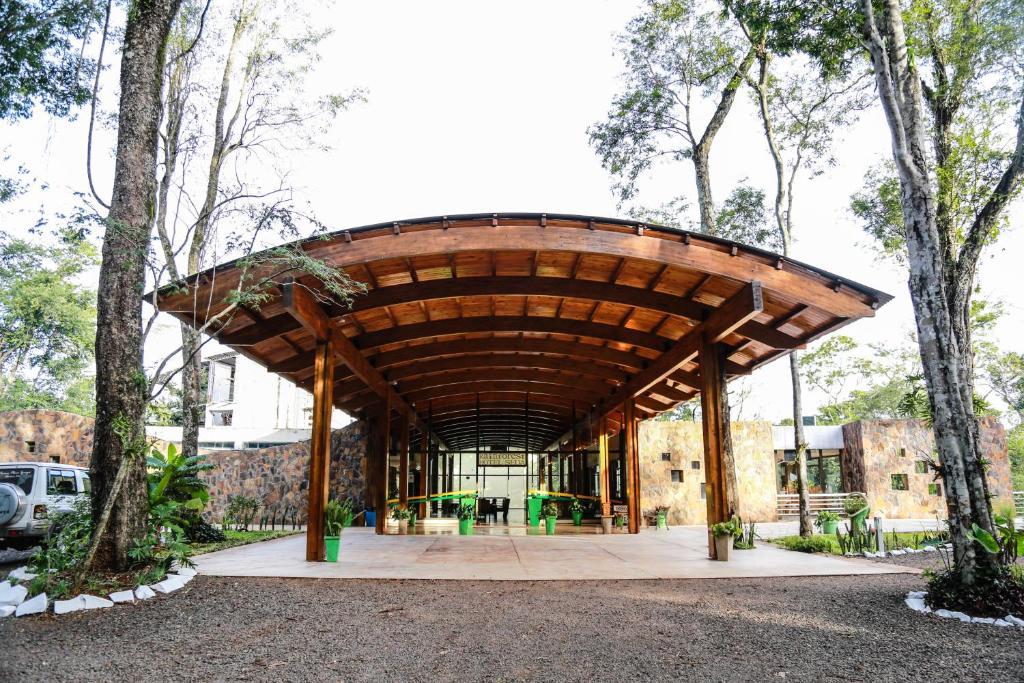
Inside the National Park

A small number of hotels are located inside or right next to the national park.

Staying here offers:

  • Early access to the falls
  • Quiet surroundings
  • Direct views of the river or waterfalls

This option is more expensive but very convenient.


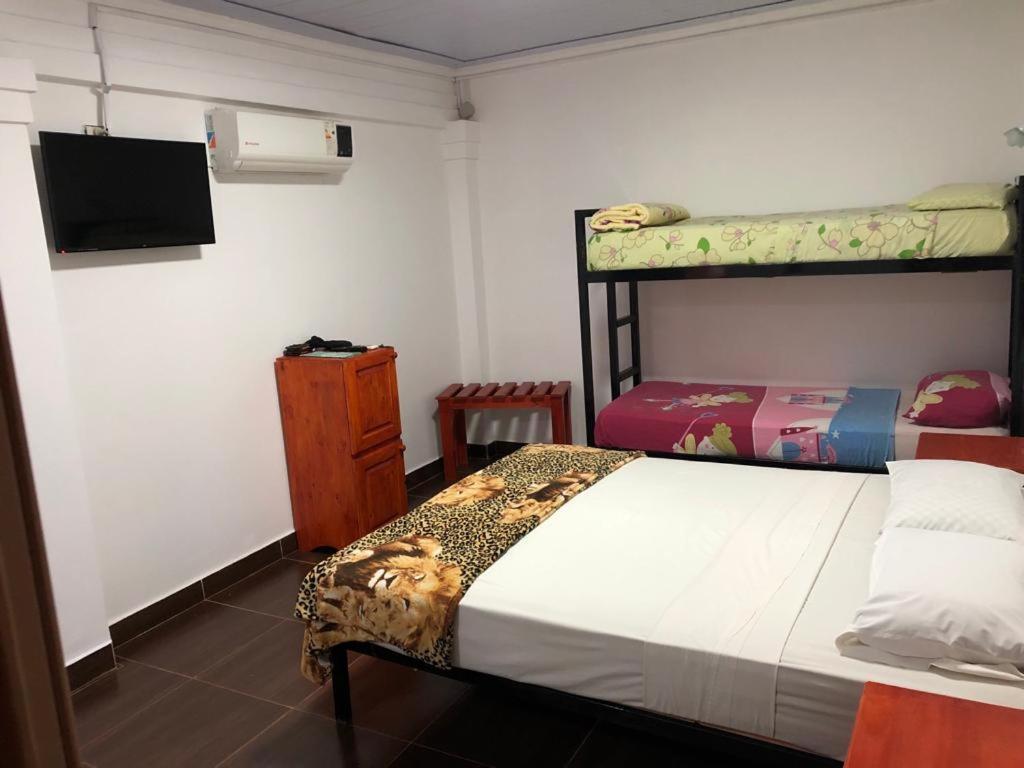
2. Budget Accommodation Options


https://karakoramdiaries.com/media/files/10b5ba798237b1a32970ca468d7564fa84fa6408/47e


https://karakoramdiaries.com/media/files/e5c4011cd8237f7bc0ef39dcaf8b9d537e8349e2/47f

Budget hotels and hostels are widely available near Iguazu Falls
 

Budget travelers have many choices in both Puerto Iguazú and Foz do Iguaçu.

Budget accommodation usually offers:

  • Clean private or shared rooms
  • Basic facilities
  • Easy access to buses and taxis

This option suits backpackers and short stays.


3. Mid-Range Hotels


https://karakoramdiaries.com/media/files/6153f0b97fb44420cd413a37979f8e6219fc3f36/480

Mid-range hotels offer comfort, space, and good facilities
 

Mid-range hotels are the most popular choice for couples and families.

These hotels usually provide:

  • Comfortable rooms
  • Swimming pools
  • On-site restaurants
  • Tour booking assistance

They offer good value and a comfortable base after long walking days.


4. Luxury Hotels and Resorts


https://karakoramdiaries.com/media/files/2978e0c34dbebfc46bf96c994436a5790a22017a/481


https://karakoramdiaries.com/media/files/d051bf1ddf82f79c6af34f7f4e59707f081296ad/482

Luxury hotels near Iguazu Falls offer views, privacy, and premium service
 

Luxury hotels near Iguazu Falls focus on comfort, views, and exclusive access.

Luxury stays often include:

  • Large rooms with views
  • Spa and wellness facilities
  • Fine dining
  • Early or late access to park areas

These hotels suit travelers looking for a relaxed and premium experience.


5. How Many Nights Should You Stay?


https://karakoramdiaries.com/media/files/9ee0df7c8a647ff45e95abfac028ef5651be0ac5/483


https://karakoramdiaries.com/media/files/329a970dfa7f977b158a7450f283716d1b46ac73/484

Staying two nights allows enough time to explore both sides of Iguazu Falls
 

Most travelers stay:

  • 2 nights for a relaxed visit
  • 3 nights if visiting both sides and doing extra activities

One night is possible but often feels rushed.


6. Booking Tips and Practical Advice


https://karakoramdiaries.com/media/files/3b69df951b3d4c18c3cb681597fbb9bba88d799c/485


https://karakoramdiaries.com/media/files/6cc71d91778fcdda0eb8709e9348240b251afe5e/486

Booking early helps secure better prices during peak seasons
 

When booking accommodation:

  • Book early during high season
  • Check distance to park transport
  • Confirm border access if staying in Brazil and visiting Argentina
  • Choose hotels with early breakfast options

Location and timing matter more than luxury.


Iguazu Falls – Complete Guide (Final)

Food, Practical Tips, Common Mistakes & Final Advice


1. Where and What to Eat Near Iguazu Falls


https://karakoramdiaries.com/media/files/8f98b68c4d83cf50f7c863fe577a2c5e38b43236/487


Local restaurants in Puerto Iguazú and Foz do Iguaçu serve regional Argentine and Brazilian food
 

Food options are better outside the national parks. Inside the parks, food is limited and more expensive.

Puerto IguazĂş (Argentina)

Puerto Iguazú offers small restaurants and cafés with local flavors.

Common food options include:

  • Grilled meat and simple steaks
  • Empanadas and pasta
  • Local desserts and ice cream

Prices are reasonable, and portions are usually generous.


Foz do Iguaçu (Brazil)

Foz do Iguaçu has more variety and larger restaurants.

You will commonly find:

  • Brazilian buffet-style meals
  • Rice, beans, grilled chicken, and beef
  • Fresh juices and tropical fruits

This side offers more dining choices, especially in the evening.


2. What to Pack for Iguazu Falls


https://karakoramdiaries.com/media/files/ee16ee0fa7f21a4101793582e1cf4b24fef9f948/488


https://karakoramdiaries.com/media/files/343ae8e26ca054cfcc1f6cbfe5781dddc9059adc/489

Proper clothing and footwear make a big difference when visiting Iguazu Falls
 

Packing correctly makes your visit more comfortable.

Important items to bring:

  • Comfortable walking shoes
  • Light rain jacket or poncho
  • Sunscreen and hat
  • Reusable water bottle
  • Waterproof cover for phone or camera

Light clothing is best due to humidity.


3. Common Mistakes Visitors Make


https://karakoramdiaries.com/media/files/f7de2ceba56a8c7fc2c49b79c2794d64553076ea/48a


https://karakoramdiaries.com/media/files/c7eb0e16884361920843ddad1dbf974d71c3d9a3/48b

Midday crowds and wet walkways are common challenges for unprepared visitors
 

Many visitors enjoy Iguazu Falls more when they avoid these common mistakes.

Common mistakes include:

  • Arriving late in the day
  • Underestimating walking time
  • Ignoring weather and water levels
  • Feeding wildlife
  • Rushing both sides in one short day

Planning and starting early improve the experience.


4. Accessibility and Walking Conditions


https://karakoramdiaries.com/media/files/02191a90b8159f02233641bb89b3af856f7ba6be/48c


https://karakoramdiaries.com/media/files/2befaa5294a434815812ce307118167cb31530e2/48d

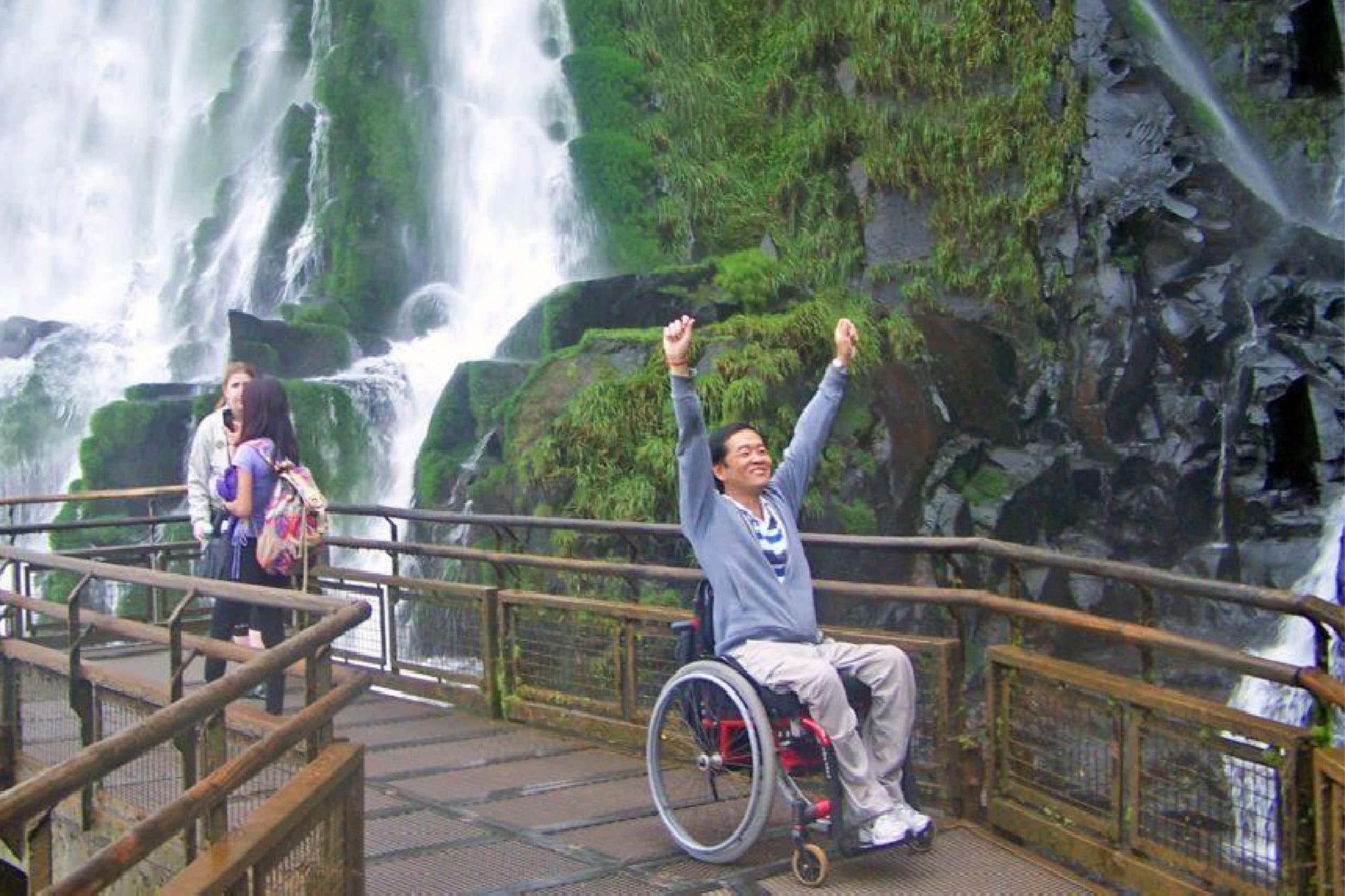
Many walkways at Iguazu Falls are flat and accessible for visitors with limited mobility
 

Iguazu Falls is one of the more accessible natural attractions.

Important points:

  • Many paths are flat and wide
  • Wheelchair access is available on major routes
  • Some lower trails include stairs
  • Staff assistance is available at main areas

The Argentina side offers better overall accessibility.


5. Is Iguazu Falls Worth Visiting?


https://karakoramdiaries.com/media/files/3f4c1f57331bb5d5e049c2573006d675163eed03/48e


https://karakoramdiaries.com/media/files/ba449739344cd8c7d0c72b9f8081d75a5babb84a/48f

Wide views and constant movement make Iguazu Falls unforgettable for most visitors
 

Iguazu Falls is considered one of the most impressive natural sights in the world for good reason.

It offers:

  • Massive scale and power
  • Easy access and good facilities
  • A mix of nature, wildlife, and comfort
  • Experiences suitable for all ages

Very few visitors leave disappointed.


6. Final Travel Advice


https://karakoramdiaries.com/media/files/1b0a69d74c5ab68f9e3505f103f40618a51e5987/490


https://visitsouthamerica.co/wp-content/uploads/2025/09/Cataratas_Foz_do_Iguacu_Parana_Brasil-1024x768.jpg

Early morning visits offer calm views and a quieter atmosphere at Iguazu Falls
 

To get the best experience:

  • Visit early in the morning
  • Spend more time on the Argentina side
  • Add the Brazil side for views
  • Respect wildlife and park rules
  • Take your time and walk slowly

Iguazu Falls is not a place to rush.