The 1996 Mount Everest Disaster: When Ambition Met the Death Zone
Introduction: A Season That Changed Everest Forever

Climbers moving along the exposed summit ridge of Mount Everest during the 1990s.
Camp IV at the South Col, the final staging point before summit night.
In May 1996, the upper slopes of Mount Everest became the setting for one of the most studied tragedies in mountaineering history. Eight climbers died during a summit push that began under clear skies and ended in a violent storm.
The disaster did not occur because of one reckless decision or one sudden mistake. It unfolded slowly. It developed from small delays, overlapping ambitions, changing weather, and the physiological limits of the human body at extreme altitude.
To understand what happened on May 10 and 11, 1996, it is necessary to step back and examine the culture of Everest at that time.
The Rise of Commercial Everest
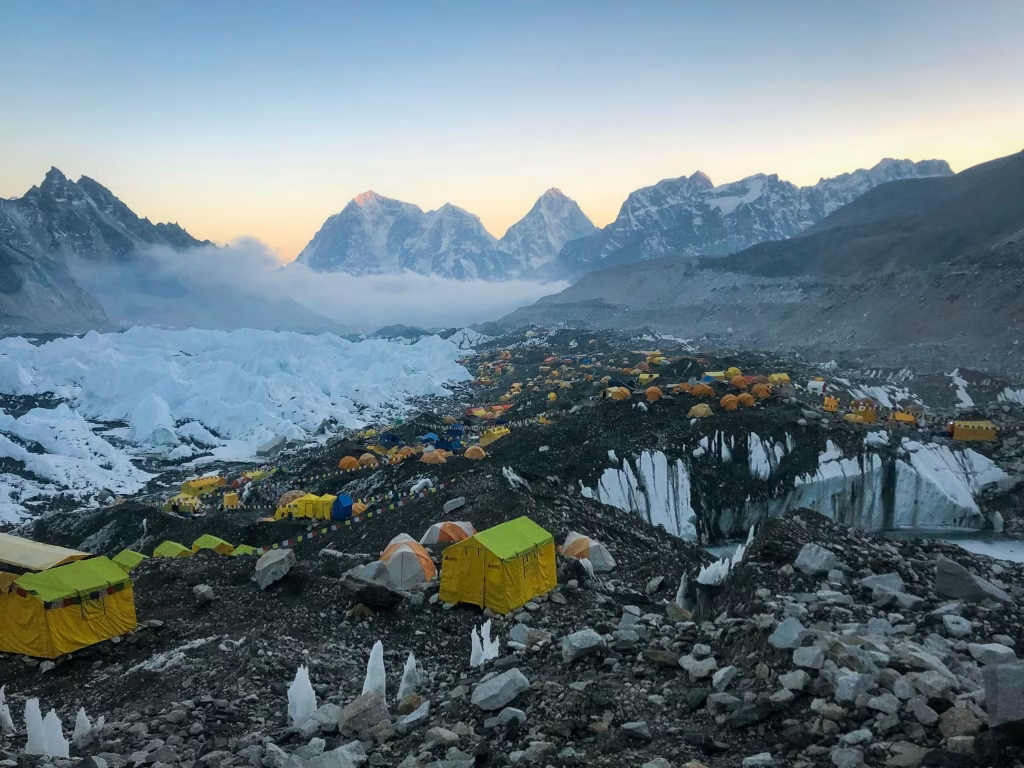
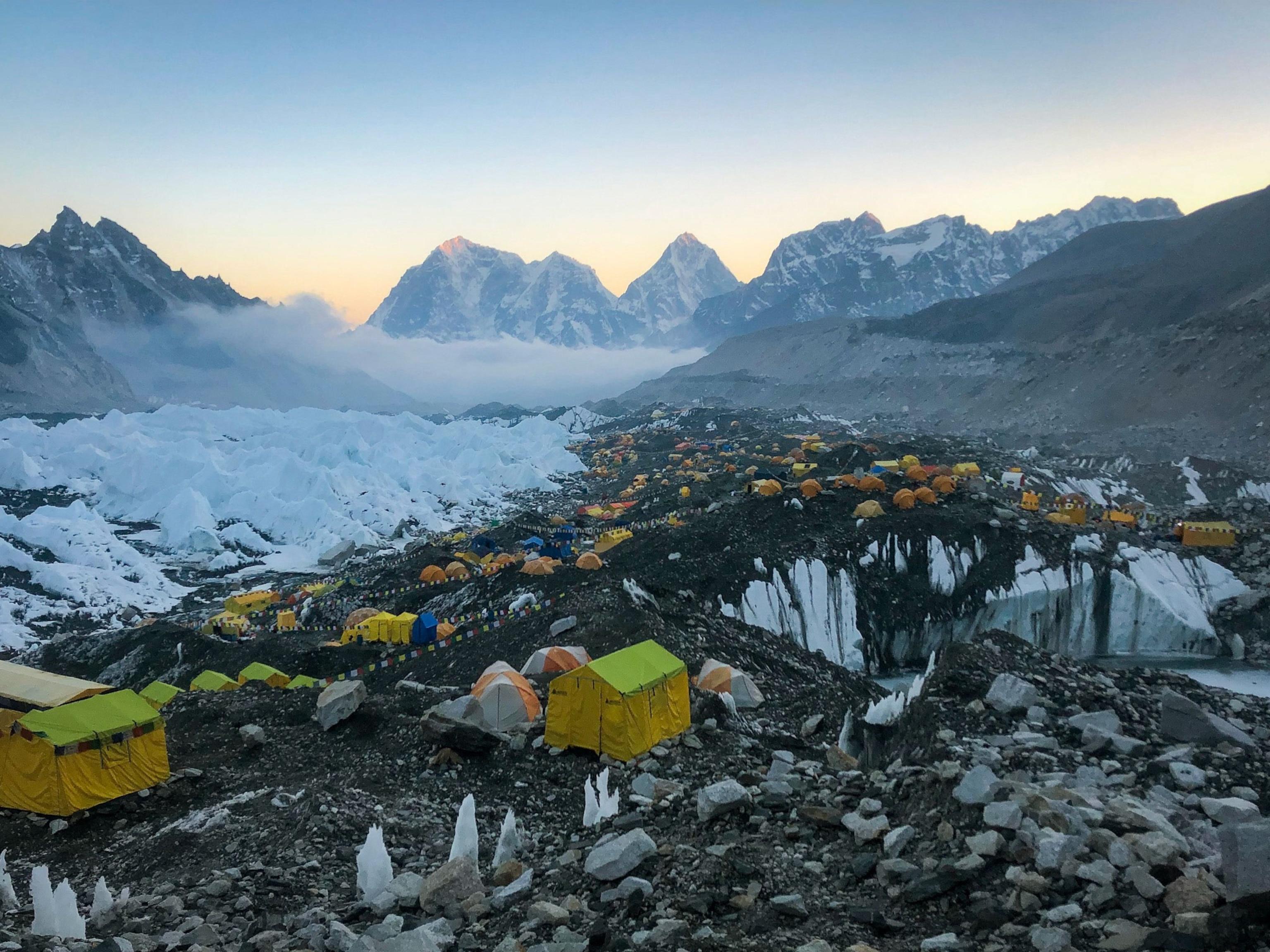
Everest Base Camp during the 1990s commercial climbing expansion.
Climbers moving through the Khumbu Icefall supported by fixed ropes.
By the mid 1990s, Everest was no longer limited to national expeditions and elite alpinists. Guided commercial expeditions had opened the mountain to paying clients who, with preparation and financial resources, could attempt the summit under professional supervision.
Two prominent teams were on the mountain in 1996.
Adventure Consultants led by Rob Hall.
Mountain Madness led by Scott Fischer.
Both leaders were respected. Hall had guided several successful Everest summits. Fischer was known for strength and bold high altitude experience. Their clients trusted their judgment completely.
The model was structured and systematic. Weeks of acclimatization rotations. Fixed ropes installed by Sherpa teams. Oxygen cylinders staged at high camps. Defined summit windows based on weather forecasts.
The structure created confidence. It also created expectations.
The Mountain Above 8,000 Meters
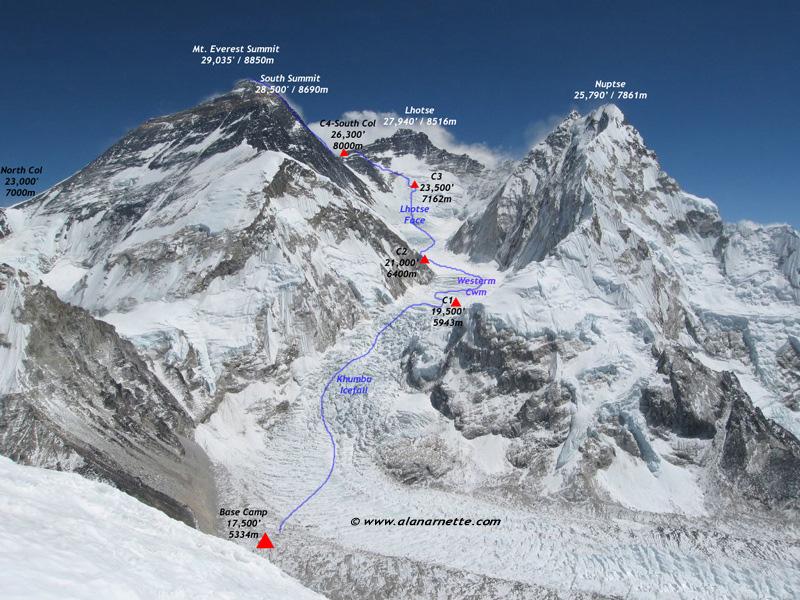
The South Col route from Nepal, the most frequently climbed path to the summit.
The Hillary Step before its collapse, a technical obstacle near the summit.
The South Col route begins with the Khumbu Icefall, crosses the Western Cwm, ascends the Lhotse Face, and reaches Camp IV at the South Col around 8,000 meters.
Above this point lies the death zone. At this altitude, oxygen levels are insufficient to sustain the human body for extended periods. Mental clarity declines. Coordination weakens. Even simple decisions require effort.
From Camp IV, climbers ascend to the Balcony, then the South Summit, traverse an exposed ridge, climb the Hillary Step, and finally reach the summit at 8,848 meters.
Time is critical. Climbers typically depart before midnight to summit early and descend before afternoon weather changes. Turnaround times are strict because descending in darkness at high altitude dramatically increases risk.
On May 10, 1996, those margins began to narrow.
The Summit Push Begins
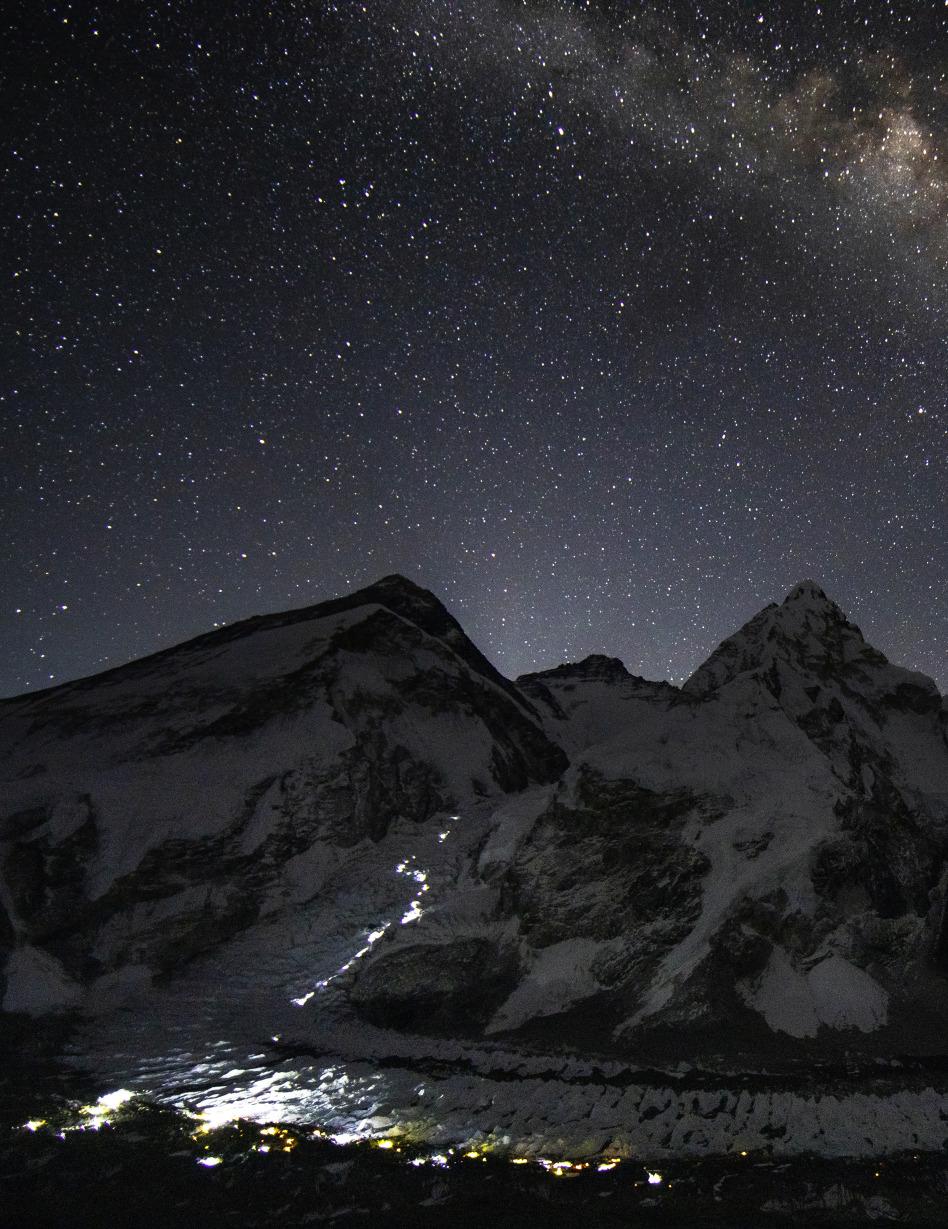
Headlamps forming a slow-moving line during a summit push on Everest.
The Balcony at approximately 8,400 meters, where oxygen changes are common.
Late on May 9, climbers left Camp IV in darkness. Headlamps created a silent chain of light rising into the night. The air was dry and painfully cold.
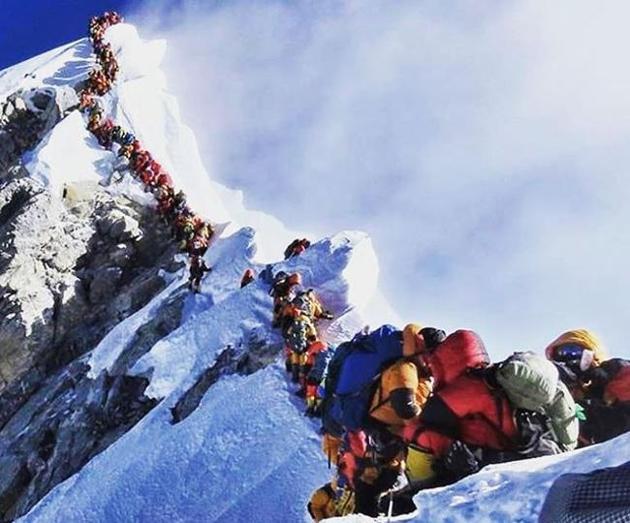
Progress was slower than expected. Fixed ropes had not been fully secured at some sections above. A queue developed near the Balcony. Climbers stood waiting at nearly 8,500 meters while oxygen cylinders drained steadily.
By dawn, the ridge above was crowded. Several expeditions were attempting the summit on the same day. Each minute spent stationary reduced physical reserves.
The weather still appeared manageable. The sky was clear. The summit was visible.
The delays, however, were becoming serious.
Congestion at the Hillary Step
Climbers navigating the Hillary Step before its collapse in 2015.
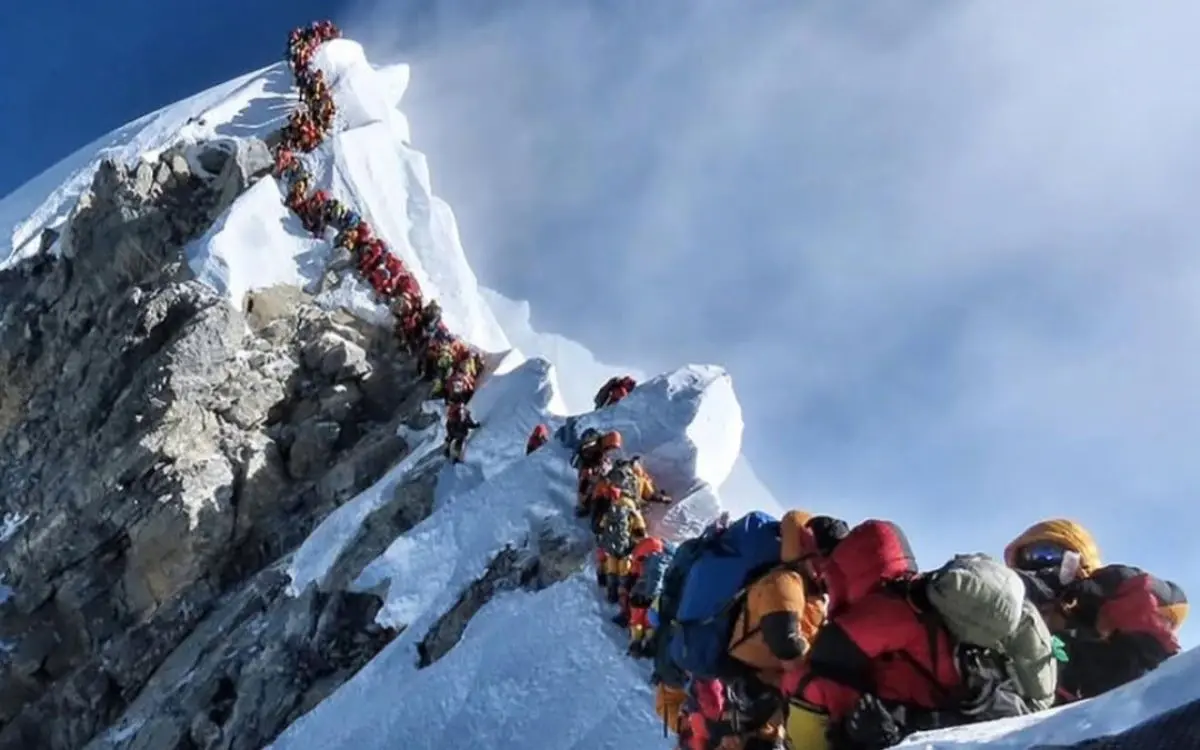
Congestion forming along the summit ridge during peak summit windows.
Near the Hillary Step, the bottleneck intensified. Climbers moved one at a time along fixed ropes. The ropes had not been fully placed when the first teams arrived. Guides worked to secure them as clients waited.
Standing still at that altitude consumes oxygen and energy. Hands freeze. Toes lose sensation. Concentration fades.
Some climbers reached the summit after 1:00 PM. Others arrived after 2:00 PM. The recommended turnaround time had passed.
Doug Hansen, climbing with Rob Hall, had nearly reached the summit the previous year but turned back. Now he continued upward despite fatigue. Scott Fischer, strong earlier in the expedition, appeared unusually tired.
The summit was achieved by several climbers. Photographs were taken. Brief celebrations occurred.
The descent began too late.
The Weather Turns
Clouds gathering over the upper slopes of Everest.
Climbers descending during deteriorating weather conditions.
By mid afternoon, clouds began forming rapidly. Winds increased. Snow swept across the ridge. Visibility dropped.
Descending climbers struggled to identify landmarks. Oxygen supplies ran low. Fatigue intensified.
A group near the South Col became disoriented in the whiteout. They were close to their tents but unable to see them. Some collapsed in the snow.
Rob Hall remained high on the mountain assisting Hansen. Hansen was severely exhausted and struggling to descend. Scott Fischer also slowed dramatically during descent and eventually stopped moving.
As darkness fell, the storm intensified.
Night in the Death Zone
Blizzard conditions striking the upper slopes of Mount Everest.
Tents at the South Col enduring extreme wind and snow.
Nightfall at 8,500 meters removes any remaining safety margin. Headlamps flickered weakly in blowing snow. Radio communication became fragmented.
Some climbers were located after spending hours exposed. Others could not be rescued.
Rob Hall maintained radio contact from near the South Summit for hours. His voice grew weaker. Oxygen supplies were nearly exhausted. Rescue above 8,700 meters during a storm was effectively impossible.
Scott Fischer was later found unresponsive high on the route.
By the morning of May 11, eight climbers had died.
The Human Toll
The Southeast Ridge where several climbers were stranded during the storm.
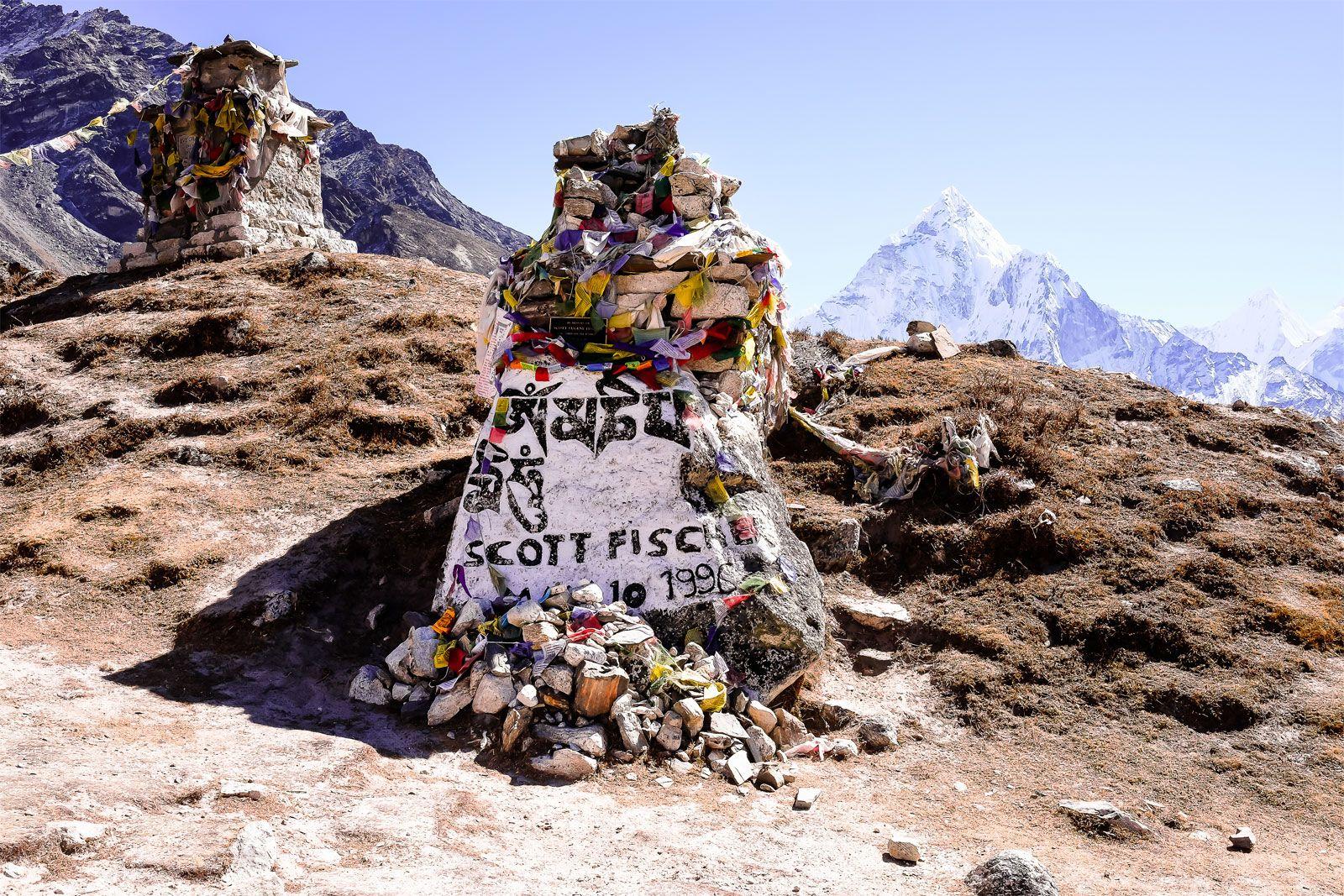
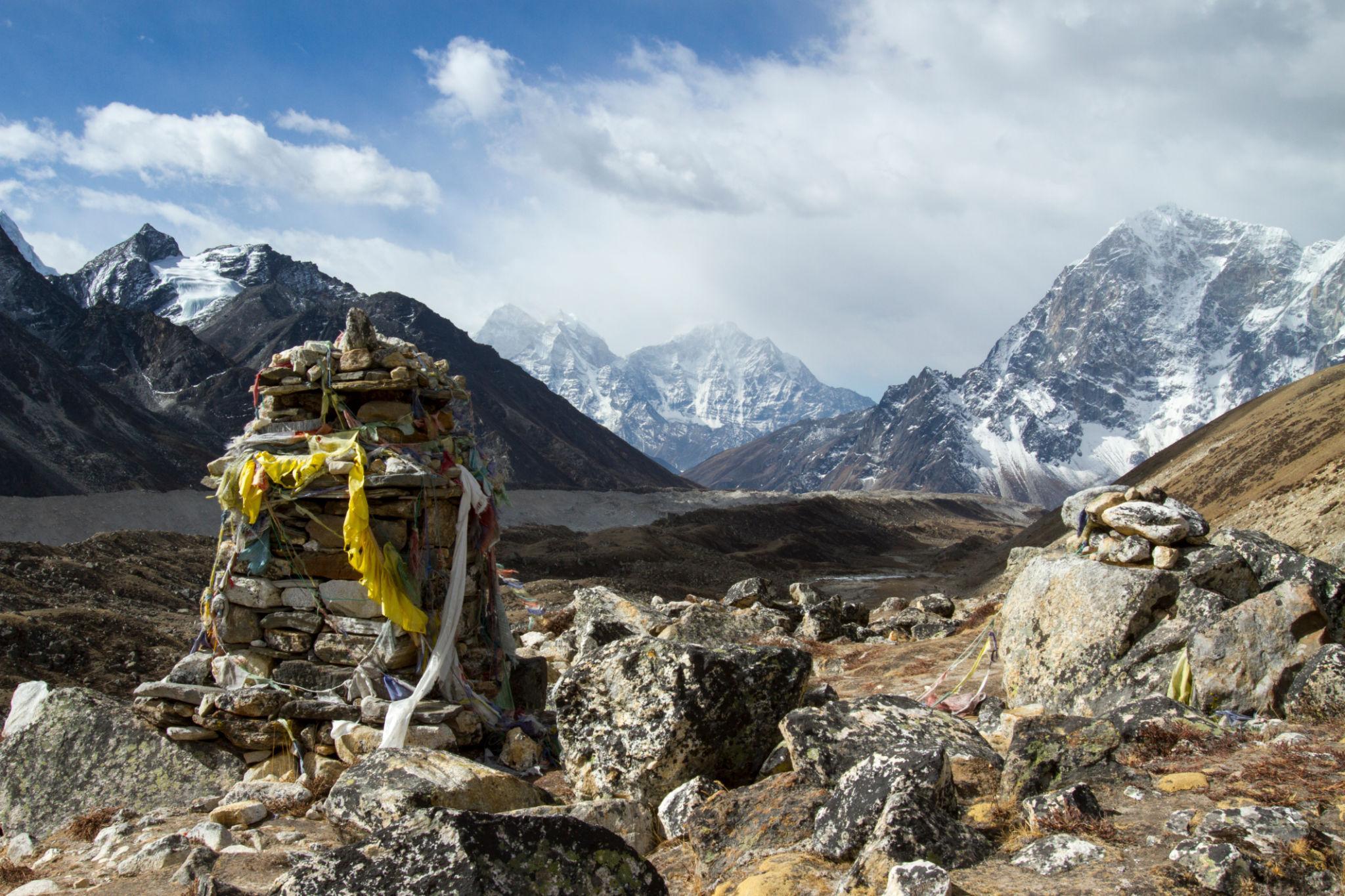
A memorial chorten in Nepal honoring climbers who lost their lives.
Among those who died were Rob Hall, Scott Fischer, Doug Hansen, Yasuko Namba, and Andy Harris.
Each loss resulted from a combination of late summit times, oxygen depletion, exposure, and deteriorating weather. There was no single catastrophic fall or avalanche. Instead, the tragedy unfolded gradually as options narrowed.
The mountain itself did not change. The storm passed. The ridge cleared.
But the season was permanently marked.
Aftermath and Debate
The disaster quickly became international news. Survivor accounts offered differing perspectives. Journalist Jon Krakauer, present during the climb, later published a detailed narrative that brought global attention to the events.
Questions followed.
Was commercial pressure influencing decisions
Were turnaround times enforced strongly enough
Had Everest become too crowded
Were clients sufficiently prepared to descend independently
The tragedy became a case study in high altitude risk management.
How Everest Changed
Congestion near the Everest summit in recent climbing seasons.
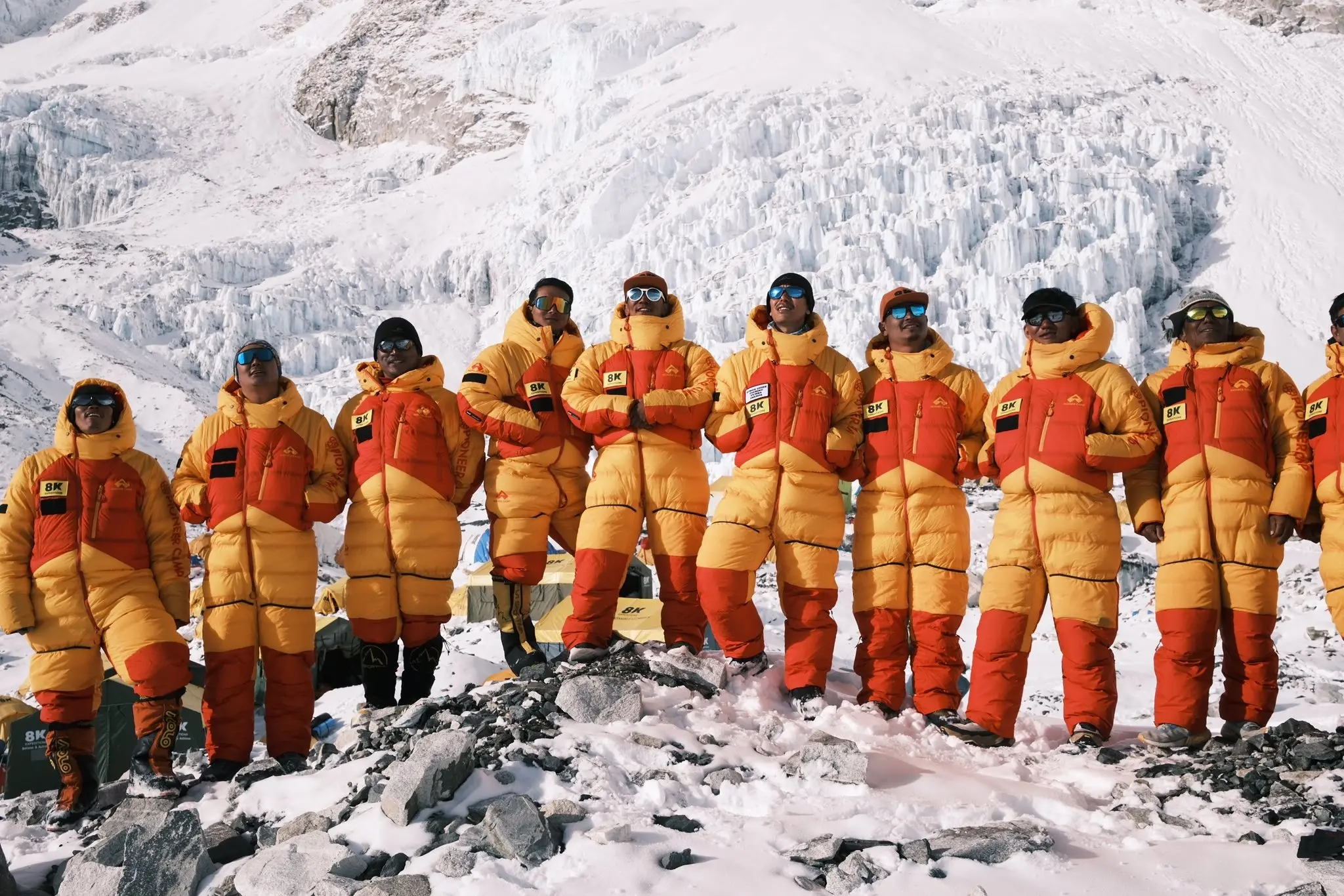
Sherpa teams installing fixed ropes before summit windows.
After 1996, guiding companies reviewed protocols. Weather forecasting improved. Rope fixing coordination became more structured. Turnaround policies were emphasized more strongly.
Yet Everest continued to grow in popularity. In some modern seasons, summit congestion has exceeded levels seen in 1996.
The lesson remains unchanged.
On Everest, reaching the summit is optional. Returning safely is mandatory.
The events of May 10 and 11, 1996 stand as a reminder that at extreme altitude, ambition must remain secondary to discipline. When small compromises accumulate in the death zone, consequences follow quietly but decisively.


![K2 Base Camp Trek: Ultimate Guide k2 Trek 2026 [UPDATED]](https://karakoramdiaries.com/storage/ultimate-guide-to-k2-base-camp-trek-full-document-150x150.png)