Bodies on K2 — Why They Are Never Brought Down
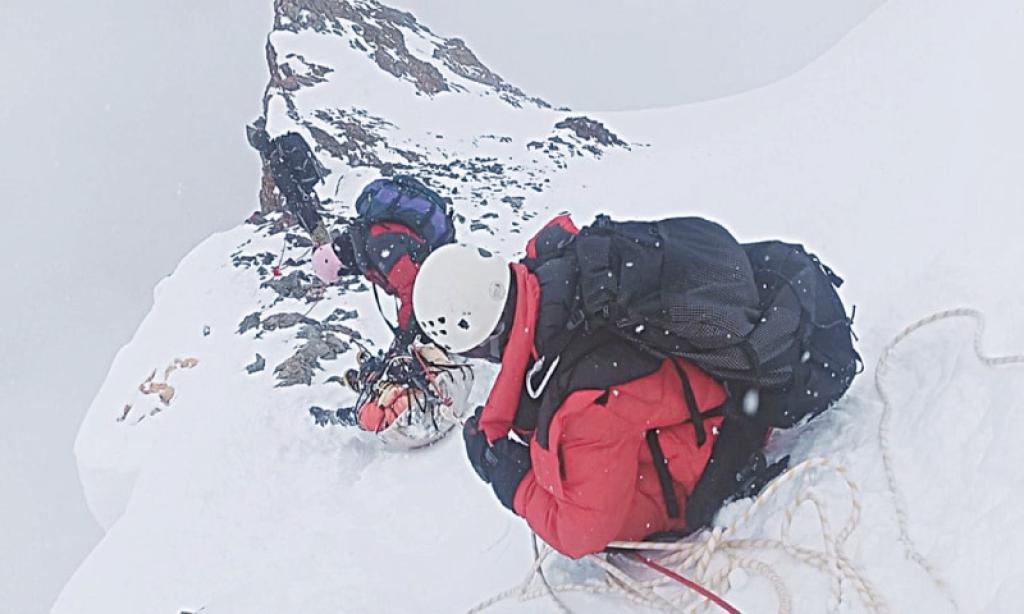
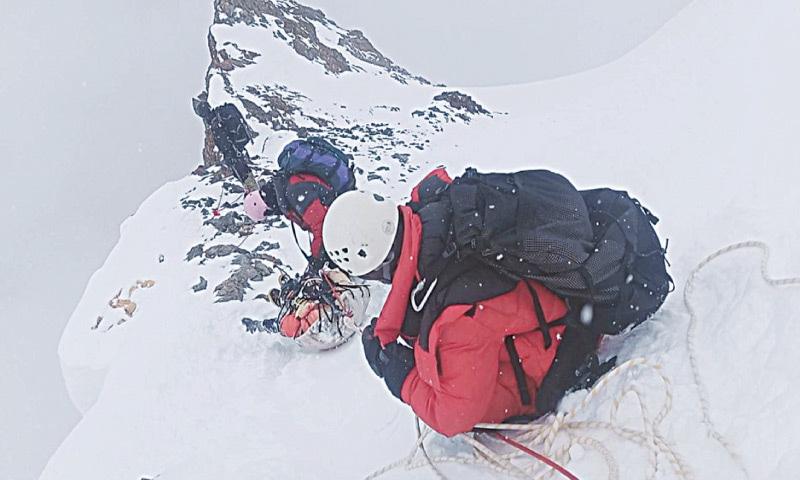
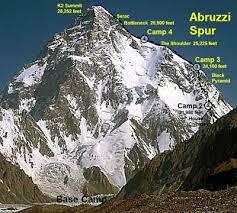
Caption: Climbers descending the Abruzzi Spur on K2 pass the remains of previous climbers who died high on the mountain, where recovery is not possible.
Image credit: Wikimedia Commons / Alpine Club Archive
Introduction: A Reality Unique to K2
On K2 , the bodies of climbers who die high on the mountain are almost never recovered. This is not a decision made lightly, nor is it a sign of disrespect. It is the result of geography, altitude, weather, and human limitation.
Since the first ascent in 1954, dozens of climbers have died above 7,000 meters on K2. Many of their bodies remain visible along established routes, especially on the Abruzzi Spur. Over time, these remains have become fixed points in the landscape, known quietly among climbers as landmarks.
Where Most Deaths Occur
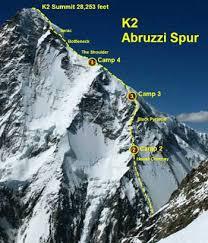
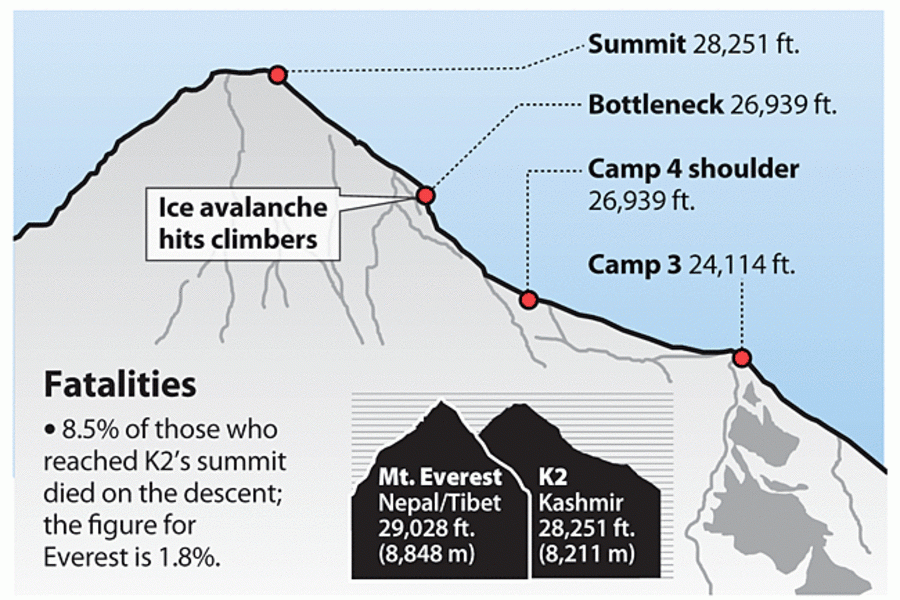
Caption: The upper sections of the Abruzzi Spur and the Bottleneck, where most K2 fatalities occur during descent from the summit.
Image credit: National Geographic / Alamy
Most deaths on K2 occur during descent from the summit, not during ascent. Climbers are often exhausted, dehydrated, and oxygen-deprived at this stage. Weather frequently deteriorates in the afternoon, which increases the risk of falls and exposure.
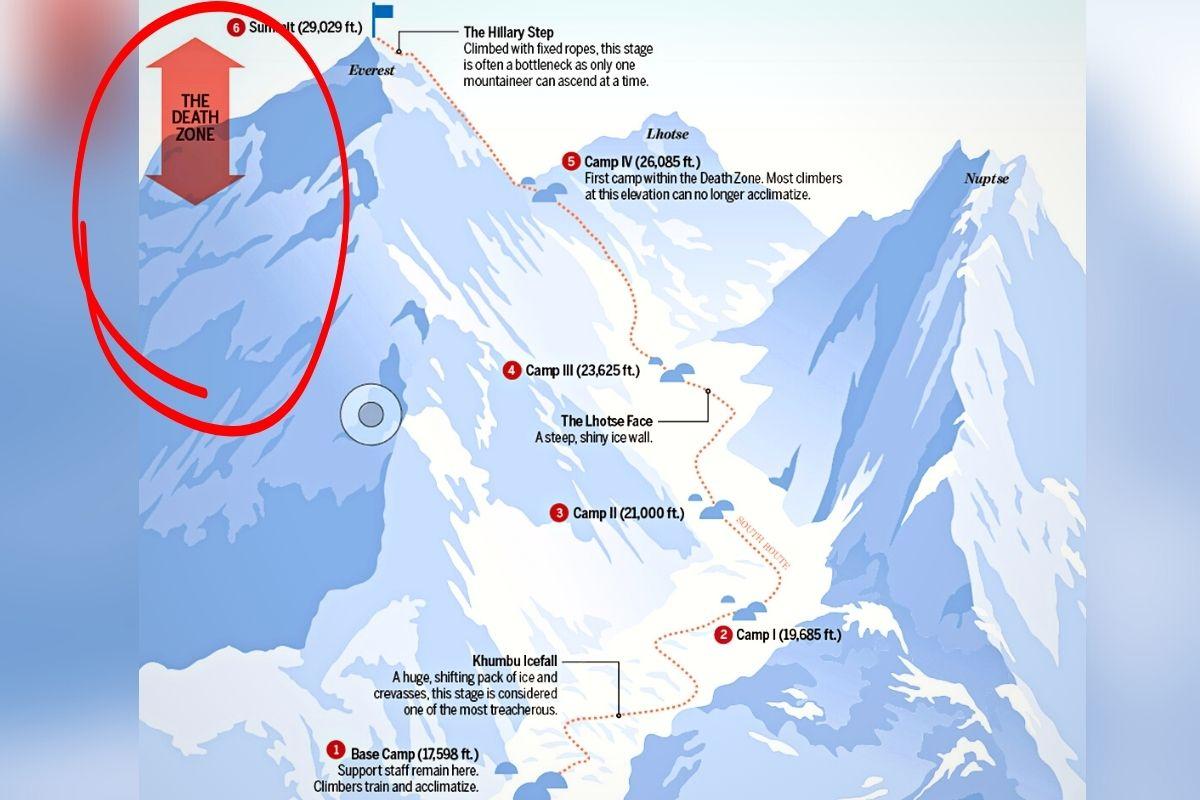
Above 8,000 meters, commonly referred to as the death zone, the human body begins to shut down. At this altitude, even simple movements require extreme effort, and the ability to assist another person is severely limited.
Why Body Recovery Is Almost Impossible
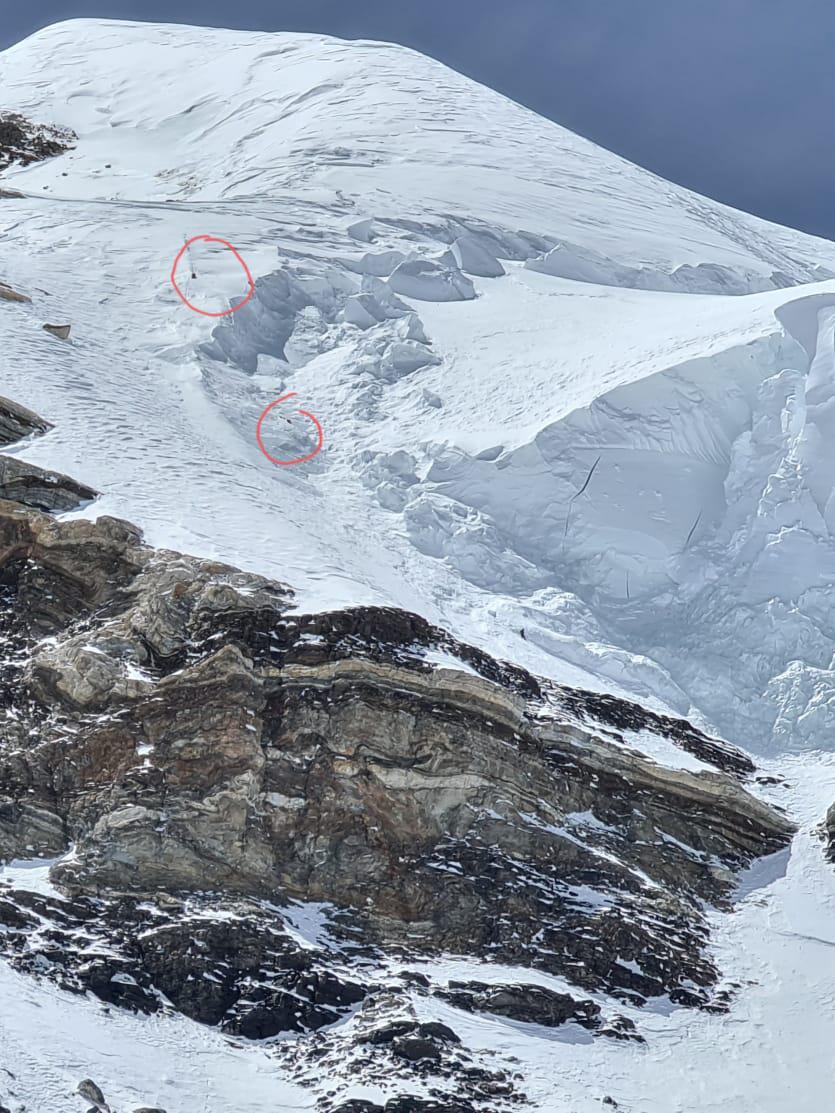
Recovering a body from K2 is usually impossible for several reasons. The terrain is extremely steep, with long sections of exposed rock and ice. Many bodies lie in locations that cannot be safely reached without significant risk to living climbers.
The weight of a frozen body at high altitude can exceed what multiple climbers are able to move safely. Even experienced rescue teams cannot operate effectively above 8,000 meters, where oxygen deprivation limits strength and judgment.
Weather conditions on K2 are unpredictable and violent. High winds and sudden storms make prolonged operations impossible. Helicopter rescues cannot reach these elevations, and there are no fixed rescue stations above base camp.
For these reasons, attempting to recover bodies would likely result in additional deaths.
Known Examples From Documented Expeditions
Several well-documented fatalities illustrate this reality. During the 2008 K2 disaster, multiple climbers died above the Bottleneck after a serac collapse destroyed fixed ropes. Their bodies were never recovered because the route remained too dangerous.
In other years, climbers who collapsed from exhaustion or fell during descent were left where they died. Fellow climbers often had no choice but to continue downward to survive themselves.
Mountaineering reports consistently state that above a certain altitude on K2, survival takes priority over recovery.
Ethical Decisions on the Mountain
The decision to leave a body on the mountain is not made casually. It is usually made in silence, under extreme conditions, by climbers who are themselves close to physical collapse.
In many cases, climbers report stopping briefly to assess whether assistance is possible. When it is clear that stopping would lead to additional deaths, they are forced to move on.
This reality has led to an unspoken understanding among high-altitude climbers that K2 is not a place where rescue can be guaranteed, and that death may mean remaining on the mountain permanently.
Bodies as Silent Markers
Over time, some bodies have become informal reference points used by climbers to judge their location on the route. These markers are never officially named, but they are known within the climbing community.
This is not done out of disrespect. It is a practical response to navigating one of the most dangerous mountains in the world, where fixed landmarks are rare and conditions change constantly.
Conclusion: A Mountain That Does Not Give Back
K2 does not allow the recovery of those it takes. This is not because climbers do not care, but because the mountain does not permit it.
Every climber who attempts K2 understands this reality before leaving base camp. The presence of bodies on the route serves as a permanent reminder of the risks involved and the limits of human intervention at extreme altitude.
K2 remains unchanged, and those who die on its upper slopes become part of its history.
References
- American Alpine Journal, multiple volumes (1954–present), K2 expedition reports.
- The Alpine Journal, “Fatalities and Ethics on K2,” historical analyses.
- National Geographic, K2: The Savage Mountain, archival features.
- Krakauer, Jon. High Exposure, sections on high-altitude rescue limits.
- UIAA Medical Commission, reports on human performance above 8,000 meters.